


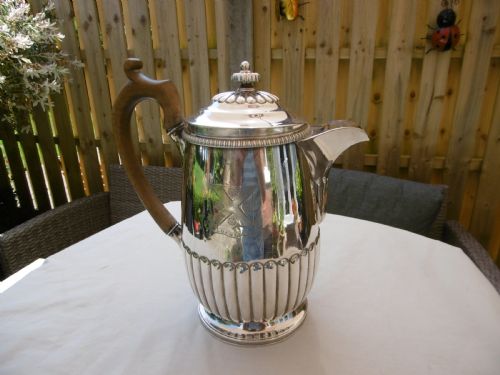


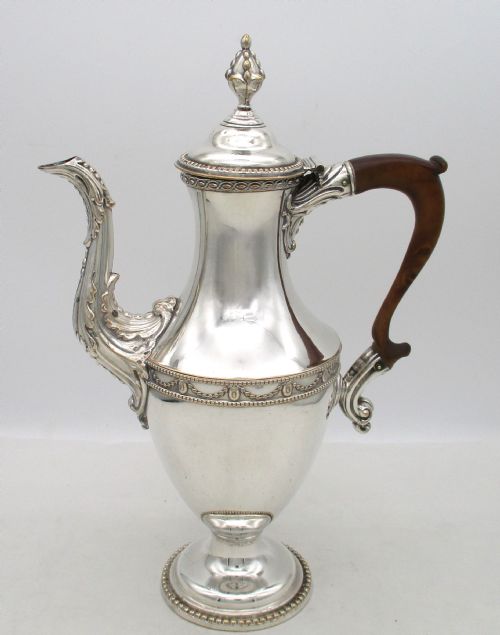


Georgian Silver Plated Coffee Pot
A georgian silver plated coffee pot brings the elegance of late eighteenth and early nineteenth-century dining tables straight into daily use.
Georgian Silver Plated Coffee Pot
A georgian silver plated coffee pot represents the height of domestic metalwork from the Georgian and Regency eras, combining practical utility with refined neoclassical styling. These vessels were designed to serve hot coffee in formal households, reflecting the growing popularity of imported hot beverages during the period.
How they were made
Makers constructed these vessels primarily by fusing a thin layer of silver to a thicker copper core, a method that defines genuine Old Sheffield plate. This technique allowed artisans to shape the combined metals while retaining the rich appearance of solid silver.
Casting and application of heavier mounts, handles, and spouts utilised additional materials such as wood, bone, and hardwood to prevent heat transfer during service. Artisans finished the surfaces through careful hammering, soldering, and polishing to achieve a smooth exterior finish.
Georgian Silver Plated Coffee Pot Retail Price Guide 2026
Typical asking prices for georgian silver plated coffee pot among the pieces listed under this phrase on Sellingantiques today, from the lower quarter to the upper quarter. They describe what is for sale here now, not the wider market.
Listings feature items primarily from the eighteenth and nineteenth centuries, incorporating materials such as silver plate, copper, bone, and hardwood.
What varies in quality
The standard of a georgian silver plated coffee pot depends heavily on the crispness of its chased or engraved ornamentation and the integrity of the original fused metal layers. Finer examples display balanced proportions, sharp maker's marks or early punch marks, and well-preserved surface detailing that survives decades of polishing.
Construction details also dictate value, notably the quality of the insulating spacers on handles and the weight of the metal used in the body. Pieces carrying identifiable maker attributions or original heraldic crests demonstrate superior workshop origins compared to anonymous mass-produced equivalents.
Matthew Boulton·John Hoyland
The Georgian Silver Plated Coffee Pot Glossary
- Old Sheffield plate
- An early form of silver plating created by fusing a sheet of silver onto a copper ingot before rolling them together into sheets. This technique produced durable wares with distinctive warm copper undertones showing through worn highlights.
- Regency
- A stylistic period spanning the early nineteenth century characterised by classical restraint, Grecian influences, and clean architectural lines. Pieces from this era often feature bolder forms and restrained decorative motifs.
- Hardwood
- Dense timber utilised for insulating handle rings and insulators on coffee pots to protect the user's hand from heat. Ebony and rosewood appear frequently on better pieces.
- Bone
- Natural material shaped into small spacers or insulators fitted between the metal handle and the body of the pot. It functioned alongside wood to prevent heat conduction.
Georgian Silver Plated Coffee Pot: Frequently Asked Questions
Can I still use these pots for serving coffee?
While these vessels were originally built for serving hot beverages, most collectors now treat them as decorative display items. The historic solder joints and interior linings may not withstand modern culinary demands.
Displaying the pot on a sideboard or dining table preserves the delicate metalwork and prevents accidental damage to the antique structure.
How can I tell Old Sheffield plate from later electroplate?
Old Sheffield plate displays subtle hints of copper showing through along high points where the silver layer has thinned from historical polishing. Electroplated items usually show a base metal of nickel silver or brass beneath worn areas.
Examining the edges and interior often reveals the sandwich construction unique to fused plate methods.
What period do most of these coffee pots belong to?
The listings span the late eighteenth century through the nineteenth century, with a strong concentration of pieces from the Georgian and Regency eras. Makers during this time perfected the art of fused metal vessels.
Later nineteenth-century interpretations and early revival pieces also appear alongside the primary Georgian output.