
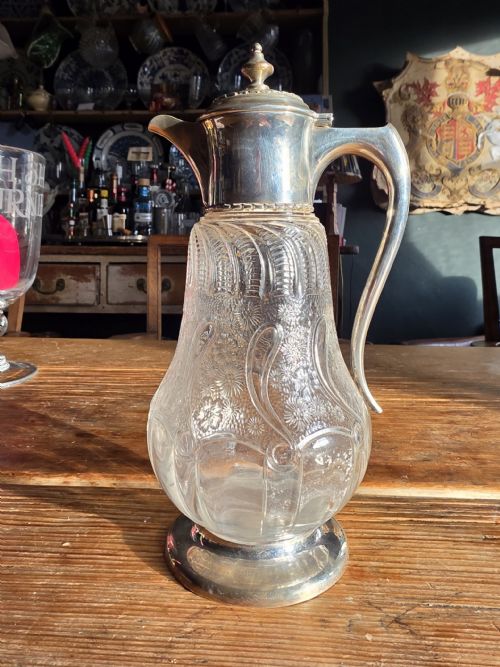
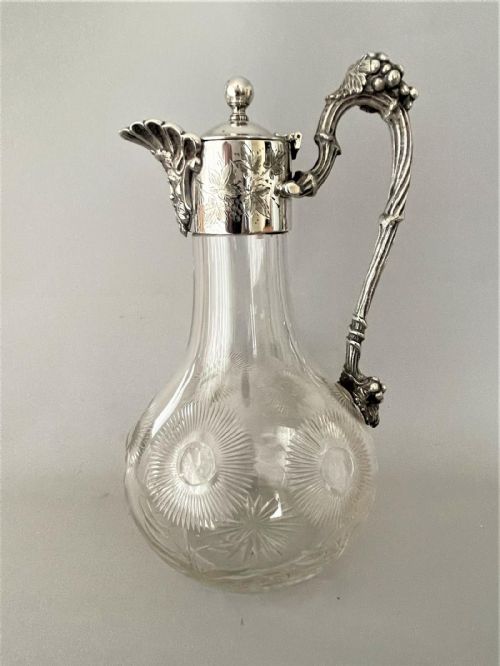


Engraved Silver Flagon
An engraved silver flagon brings considerable heft and historic character to the table, serving wine, beer or water with formal presence.
Engraved Silver Flagon
When you search for an engraved silver flagon, you encounter robust vessels designed for pouring wine, beer or water, often taking the form of claret jugs, ewers or communion flagons. These pieces date from the Georgian, Victorian and Edwardian periods, stretching into the early twentieth century and beyond.
The objects on this page bridge domestic service and ecclesiastical use, appearing as heavy silver-plated tankards, cut glass claret jugs with silver collars, and solid silver ewers. You are most likely to meet Victorian and nineteenth-century examples that combine glass bodies with engraved silver mounts.
Forms vary from tall wine decanters with engraved silver plating to lidded beer jugs and dedicated communion sets intended for formal ceremony. Each piece reflects the social rituals of its era, combining metalwork and glass to create functional table service.
How they were made
Makers combined solid silver, silver plate and Old Sheffield plate with cut and engraved glass, shaping metals through casting, hammering and soldering. Glass bodies were blown and wheel-cut before mounting in metal collars and hinged lids.
Engravers worked directly onto the silver surfaces using hand tools to incise foliate patterns, crests and decorative motifs. Handles were cast separately and insulated or attached securely to the main body to withstand regular pouring.
Object forms on this page range from claret jugs and wine decanters to beer tankards, communion sets and serving ewers.
What varies in quality
The weight of the metal and the crispness of the hand engraving distinguish finer vessels from standard production pieces. Solid silver and heavy Old Sheffield plate demonstrate greater material substance than later electroplated wares.
The quality of the glass body, particularly deep hand-cutting and clarity, matches the refinement of the metal mounts. Well-balanced handles and tightly fitting hinged lids indicate superior craftsmanship in the original workshop.
William Comyns·Elkington Mason·William Davenport·Orfèvrerie Produx Saint Hilaire
The Engraved Silver Flagon Glossary
- Flagon
- A large vessel with a handle and spout or lid, used historically for holding drinks such as wine or beer. These pieces often feature hinged covers and substantial handles.
- Ewer
- A large jug with a wide spout and a shaped handle, traditionally used for pouring water or wine at the table. They frequently appear in silver or silver plate from the nineteenth century.
- Old Sheffield Plate
- A composite material made by fusing a thin sheet of silver to a thicker copper base before rolling and forming. This technique predates modern electroplating.
- Claret Jug
- A specialised container designed for serving red wine, typically pairing a glass body with a silver or silver-plated mount, handle and hinged lid.
- Silver Plate
- Base metal coated with a thin layer of silver through electroplating or older immersion methods. It offered the appearance of solid silver at a lower cost.
Engraved Silver Flagon: Frequently Asked Questions
What is an engraved silver flagon used for?
These vessels served liquids such as wine, beer, cider or water during formal dining and ecclesiastical ceremonies. Their lidded designs kept contents covered while seated on the sideboard or table.
Today they function effectively as decorative centrepieces, flower vases or working decanters for contemporary gatherings.
How do I clean an engraved silver flagon?
Clean silver components using a soft cloth and a gentle, non-abrasive polish formulated specifically for silver or silver plate. Avoid getting harsh chemical cleaners onto the glass bodies or into hinged mechanisms.
Wash glass interiors with warm, soapy water and rinse thoroughly, keeping moisture away from any organic insulation within handles.
Are these pieces solid silver or plated?
The listings include both solid silver items and pieces made from silver plate, Old Sheffield plate or copper. Hallmarks on the metal mounts generally indicate solid sterling silver.
Plated items utilise a base metal core beneath a silver skin, requiring gentle handling to preserve the exterior layer over decades of use.
How can I tell the period of a jug?
Stylistic indicators such as Victorian Rococo Revival curves, Edwardian proportions or Georgian simplicity help date the metalwork. Maker marks and silver hallmarks provide precise clues to the year of manufacture.
Glass cutting styles and manufacturing techniques also align with specific decades from the nineteenth and early twentieth centuries.