




Vintage Silver Pitcher
A vintage silver pitcher brings tactile weight and polished brilliance to a table, spanning functional water vessels, claret jugs and cocktail shakers.
Vintage Silver Pitcher
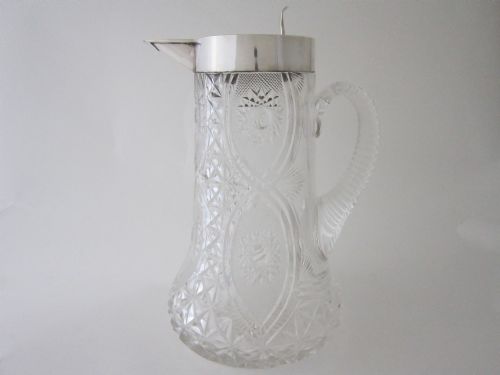
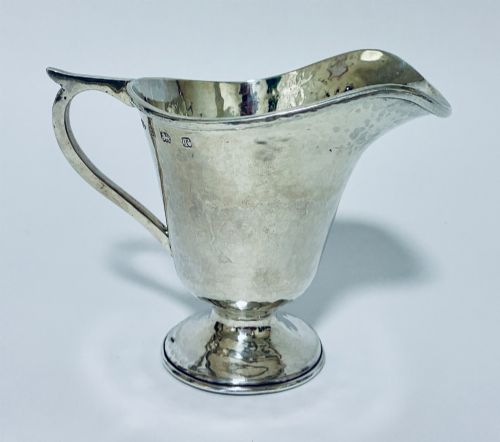
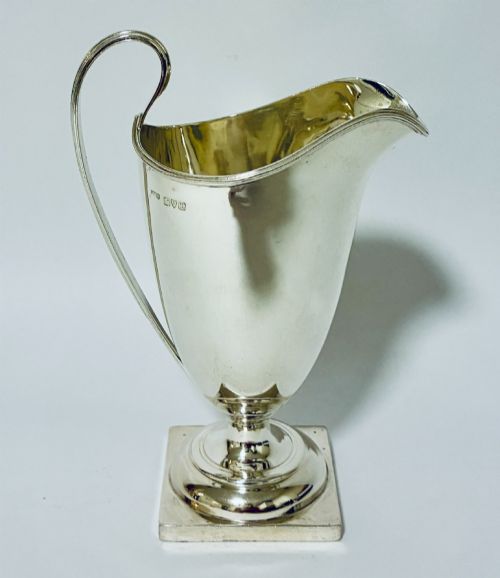
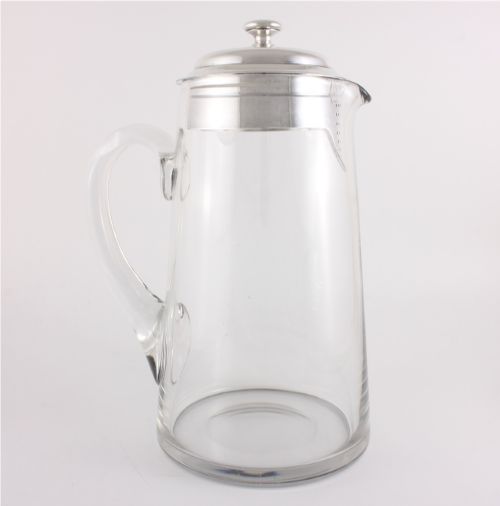
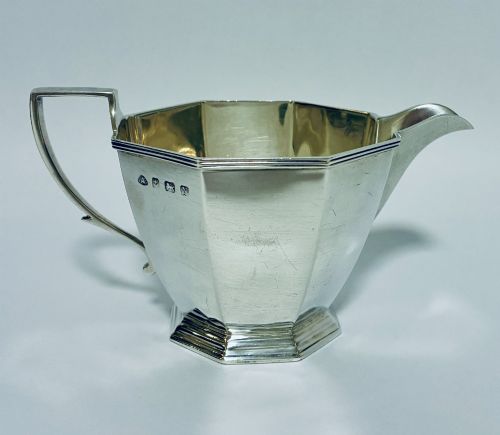
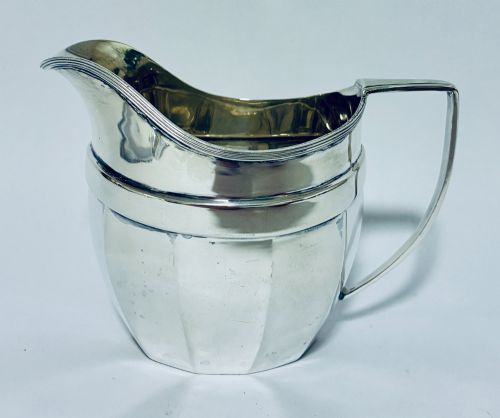
A vintage silver pitcher encompasses a diverse group of pouring vessels designed for water, wine, cream, cocktails and lemonade. The selection on this page stretches from the nineteenth century through the Edwardian and Art Deco eras, capturing changing domestic habits.
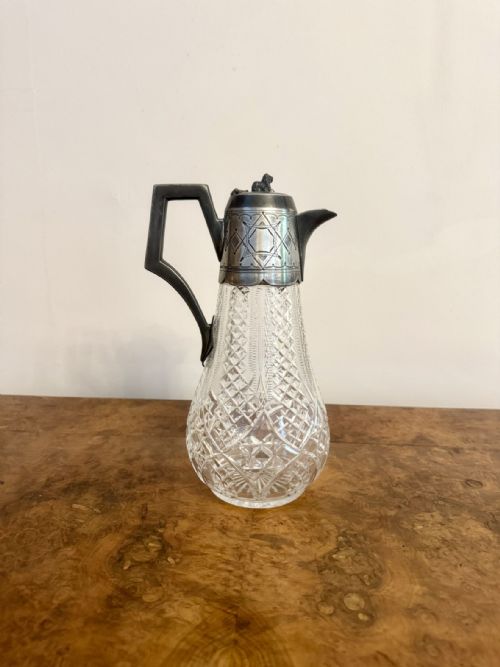
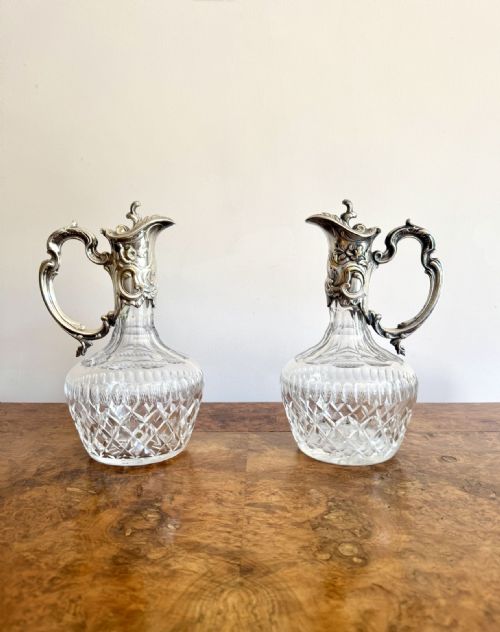
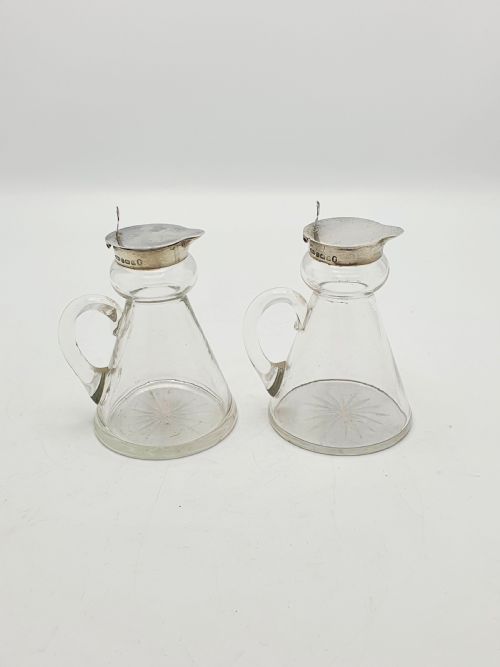
Claret jugs and whisky noggins dominate the glass-and-silver combinations, while solid sterling and silver plate serve for milk jugs, water pitchers and cocktail shakers. Forms range from heavy cut-glass bodies with silver mounts to novelty owl jugs and Tudric pewter.
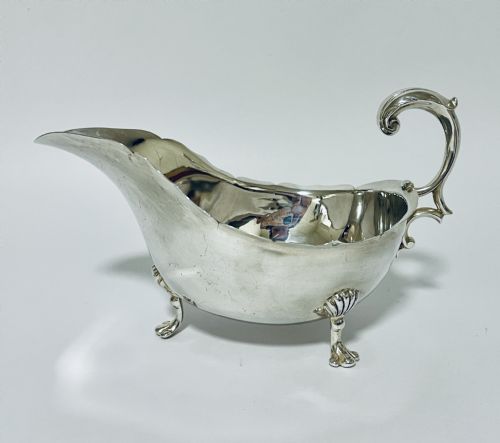
Origin points include English, Irish and French makers, spanning styles from Georgian restraint to Arts and Crafts simplicity and Neoclassical revival. Buyers encounter everything from small cream jugs to large lemonade vessels equipped with ice tubes.
Materials and construction
Makers combined sterling silver and silver plate with blown, moulded, cut and cranberry glass, pairing metal collars, handles and hinged lids with crystal bodies. Pewter also appears alongside enamel work in specific Arts and Crafts pieces.
Smiths utilised casting, spinning, hammering and engraving techniques to shape the metal components, mounting them securely onto glass bodies with collars and star-cut bases. Handle construction often involved insulated mounts or cane work to handle temperature.
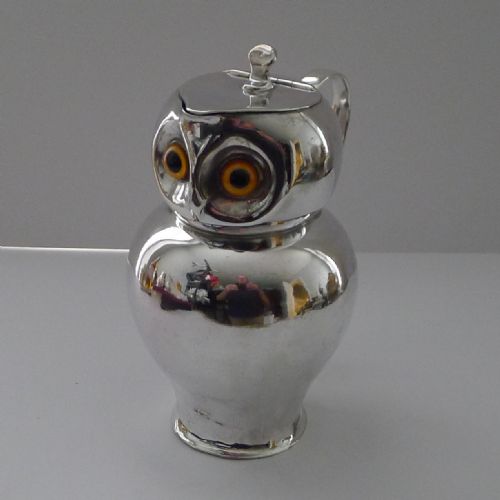
Among the pouring vessels hides a novelty silver-plated owl jug complete with blinking glass eyes.
Distinguishing finer examples
Quality rests on the crispness of the chasing and engraving, the weight and purity of the metal, and the integration between silver mounts and glass bodies. Substantial gauge silver and well-balanced handles distinguish superior specimens.
The clarity and depth of cut glass, the precision of hinged lids, and the integrity of silver plating or hallmarks separate standard production items from workshop pieces created by known designers and silversmiths.
Christofle·Mappin and Webb·Archibald Knox for Liberty and Co·George Unite·Robert Pringle and Sons·Elkington and Co·James Dixon and Sons·Tiffany
The Vintage Silver Pitcher Glossary
- Silver Plate
- Base metal coated with a thin layer of silver through electroplating or older processes like Sheffield plating. It provides the appearance of solid silver at a lower weight and cost.
- Claret Jug
- A pouring vessel specifically designed for serving claret or red wine at the table. These typically feature a glass body with a silver handle, collar and hinged lid.
- Whisky Noggin
- A small vessel used for serving a single measure of whisky. They often appear with matched silver labels and star-cut bases.
- Tudric Pewter
- A trade name used by Liberty and Co for a range of pewterware produced during the early twentieth century. It frequently incorporates stylized Art Nouveau motifs and enamel cabochons.
- Argyll
- A covered gravy warmer equipped with an internal heating core or compartment to keep sauces hot during a meal.
Vintage Silver Pitcher: Frequently Asked Questions
What is a claret jug?
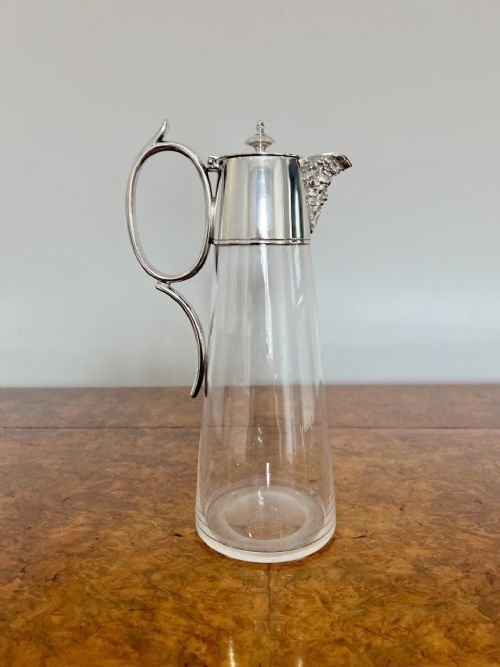
A claret jug is a specialised pouring vessel designed for serving red wine at the dining table. These pieces typically combine a decorative glass body with a hinged silver lid and handle.
Victorian and Edwardian versions often feature elaborate cut glass and silver mounts, making them decorative centrepieces as well as functional tableware.
How do I clean a silver plated pitcher?
Cleaning requires a soft cloth and a specialised silver polish formulated to lift tarnish without abrasive scratching. Care must be taken around glass mounts and engraved details to avoid residue accumulation.
Submerging pieces with hollow handles or insulated joints in water should be avoided to prevent moisture trapping inside the construction.
What is the difference between sterling and silver plate?
Sterling silver denotes an alloy containing a high percentage of pure silver, valued for its intrinsic material worth and durability. Silver plate consists of a base metal coated with a thin layer of silver.
Hallmarks usually stamp sterling pieces, whereas silver plate often bears maker-specific marks indicating the plating technique used during manufacture.
Can these pitchers hold hot liquids?
Most vintage pitchers and jugs serve cold liquids such as water, lemonade, wine, cream or cocktails. Vessels designed with internal ice tubes or glass bodies are not intended for boiling liquids.
Argylls and specific gravy warmers represent the exception, featuring dedicated internal compartments designed specifically to keep sauces warm.