





Antique Church Metalwork
These antique church metalwork pieces span centuries of ecclesiastical craftsmanship, offering collectors enduring bronze, brass, and copper artefacts for the home.
Antique Church Metalwork
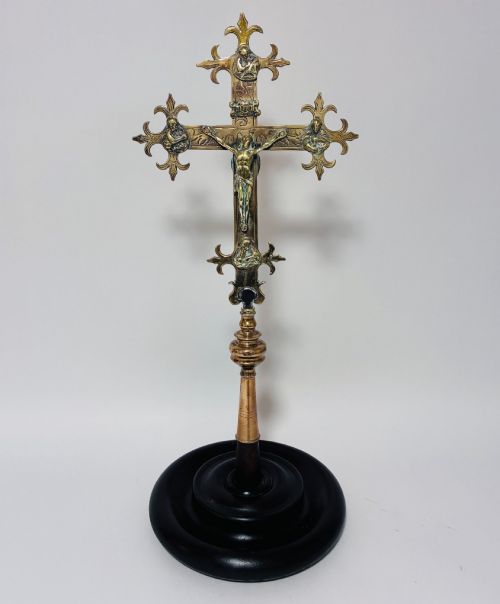
When buyers search for antique church metalwork, they encounter sacred and liturgical vessels spanning from the sixteenth century to the early twentieth century. These items include heavy altar candlesticks, lecterns, bells, and communion vessels fashioned for ecclesiastical settings.
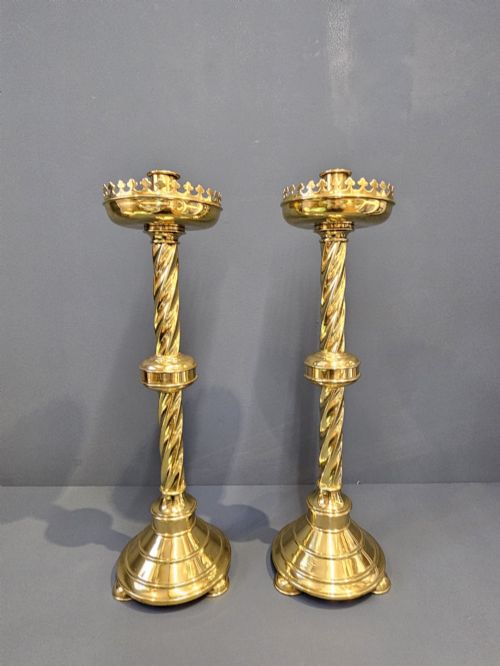
The most common examples on this page are nineteenth-century brass candlesticks and Victorian Gothic revival pieces. These standard liturgical furnishings reflect the heavy production of church metalwork during the industrial and revival periods.
Earlier pieces from the sixteenth century, such as gilded copper pyxes and ciboria, appear alongside robust Amsterdam School designs from around nineteen hundred. French bronze bells and eighteenth-century flagons further broaden the range of ecclesiastical forms available to collectors.
Materials and construction
Brass, copper, and bronze form the physical foundation of these ecclesiastical objects, shaped through casting, hammering, and assembly. Artisans utilised wrought iron for structural support on pricket candlesticks and combined base metals with gold gilding to elevate sacred vessels.
Engraving decorates many of the copper and silver-plated surfaces, revealing meticulous hand-tooled patterns from periods ranging from medieval revival styles to twentieth-century Amsterdam School aesthetics. Old Sheffield plating and silver plating provide durable reflective finishes on communion chalices and jugs.
Antique Church Metalwork Retail Price Guide 2026
Typical asking prices for church metalwork among the pieces listed under this phrase on Sellingantiques today, from the lower quarter to the upper quarter. They describe what is for sale here now, not the wider market.
Materials across the selection include brass, bronze, copper, wrought iron, and silver plate, frequently enhanced with gold gilding.
Assessing quality in ecclesiastical metal
Quality rests in the crispness of the casting and the depth of hand-engraving across the metal surface. Pieces displaying fine toolwork on gilded copper or balanced proportions in heavy brass demonstrate superior workshop output.
The integrity of the construction distinguishes standard ecclesiastical production from exceptional artistic output. Robust assembly in iron and brass combined with authentic period patination elevates the standing of pieces such as pricket candlesticks and church bells.
The Antique Church Metalwork Glossary
- Pricket
- A sharp metal spike on a candlestick designed to hold a candle in place. This form is common on altar candlesticks.
- Pyx
- A small round container used in Christian churches to carry the Eucharist. Early examples feature engraved gilded copper.
- Lectern
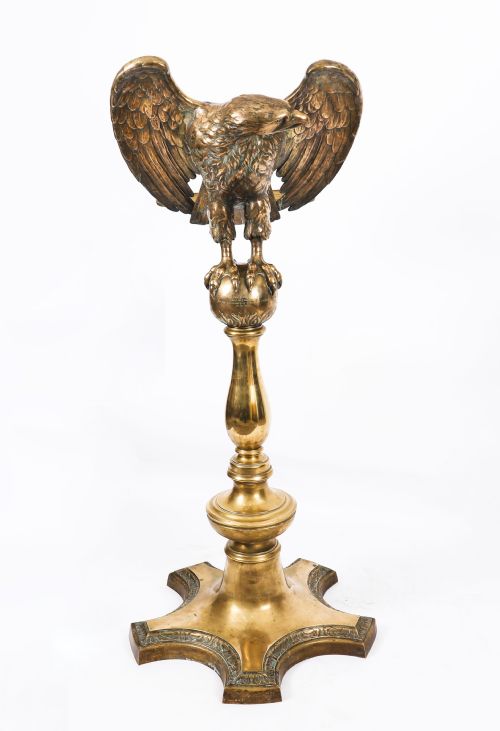
- A tall stand with a sloping top to hold a book for reading aloud. Brass eagle designs are traditional in nineteenth-century churches.
- Old Sheffield Plated
- A composite material made by fusing a sheet of silver to a thicker bar of copper. This technique was widely utilised before electroplating.
- Amsterdam School
- An architectural and design style originating in the Netherlands around nineteen hundred. It is characterised by expressive, sculptural metalwork.
Antique Church Metalwork: Frequently Asked Questions
What is church metalwork?
Church metalwork encompasses utilitarian and sacred objects fashioned from bronze, brass, copper, and silver for use in religious services. These items include candlesticks, bells, chalices, and lecterns made across various European styles.
Collectors prize these survivals for their robust metallurgy and the high standard of craftsmanship applied to ecclesiastical commissions over the centuries.
How were church candlesticks used?
Church candlesticks stood upon altars to provide light during liturgies and ceremonies, often holding large candles upon metal prickets. Their scale and heavy brass or iron construction ensured stability during frequent church services.
Over time, these ecclesiastical furnishings transitioned from active altars into domestic interiors where their sculptural forms gained appreciation.
How do I date antique metalwork?
Dating antique church metalwork relies on identifying stylistic markers, manufacturing techniques, and material compositions specific to particular eras. For instance, sixteenth-century pieces often exhibit hand-engraved gilded copper, while nineteenth-century items frequently show Victorian Gothic Revival influences.
Comparing structural forms, such as Amsterdam School prickets or Old Sheffield plating, helps place an object within its historical period.
How do I care for antique brass?
Antique brass and copper require minimal intervention to preserve the natural patination accumulated over centuries of handling and age. Dusting with a soft cloth and avoiding harsh chemical polishes protects the historic surface finish.
Maintaining stable indoor humidity prevents active corrosion on exposed iron and bronze components.