Exhibit Antiques has dated this Georgian Glass Mell Decanter to the Georgian era.
This is an independent date report produced by Sellingantiques using its own proprietary system. The process uses the photographs shown on this page. The system is never told the date the dealer has declared. This report shows that the two dates corroborate.
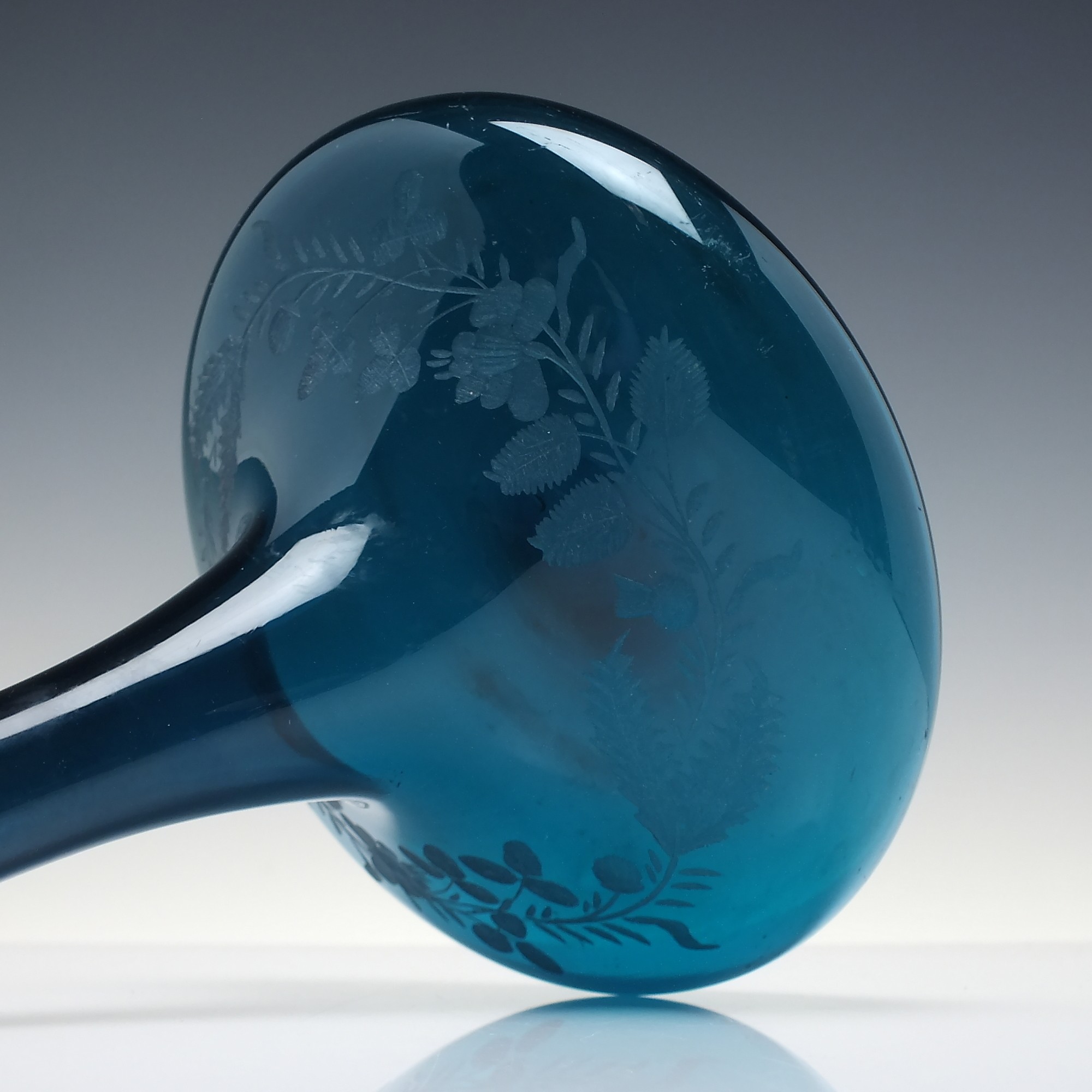
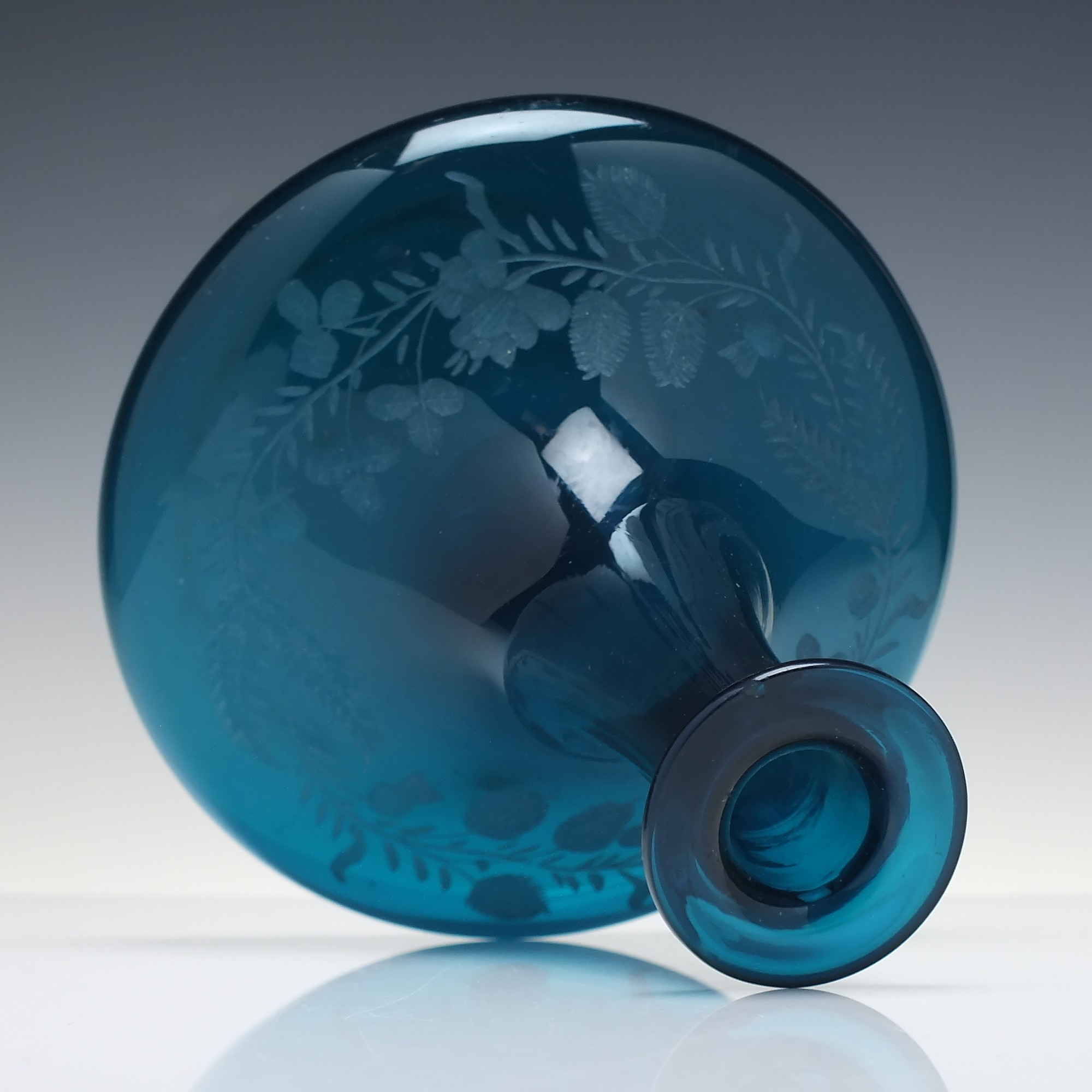
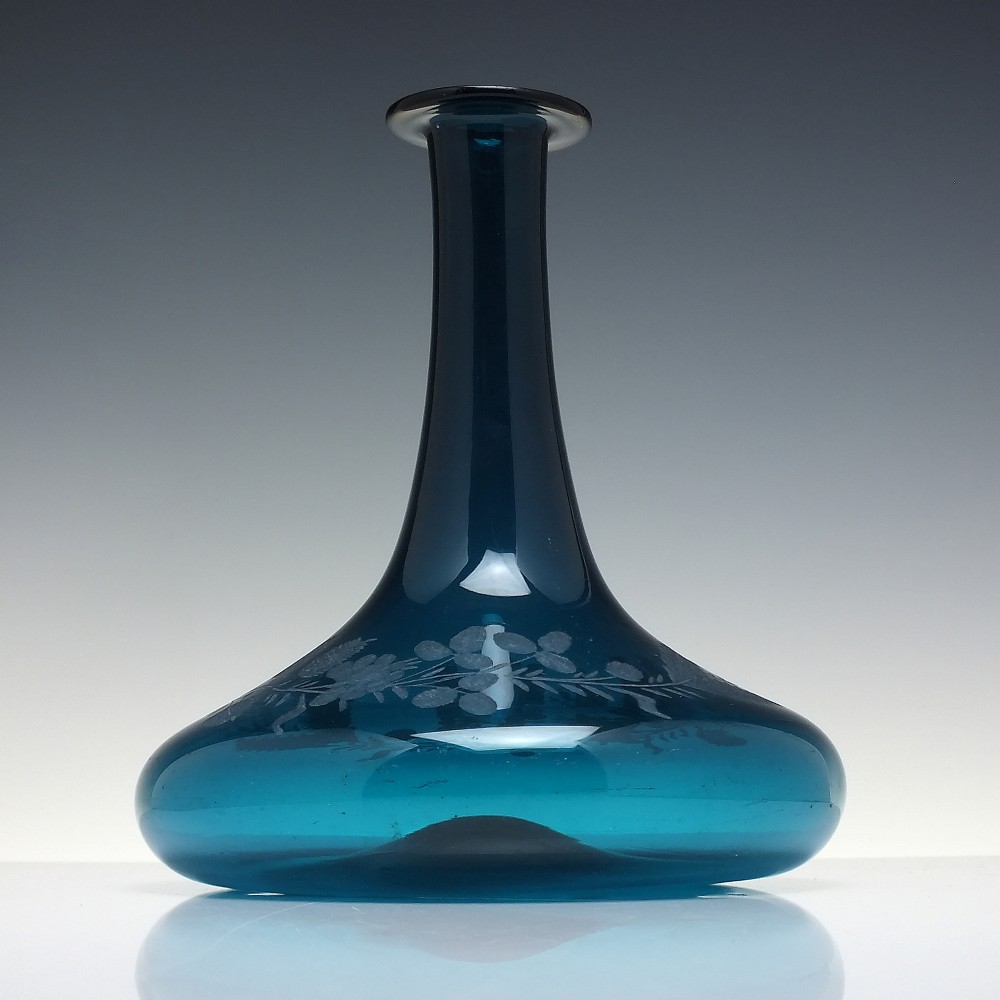
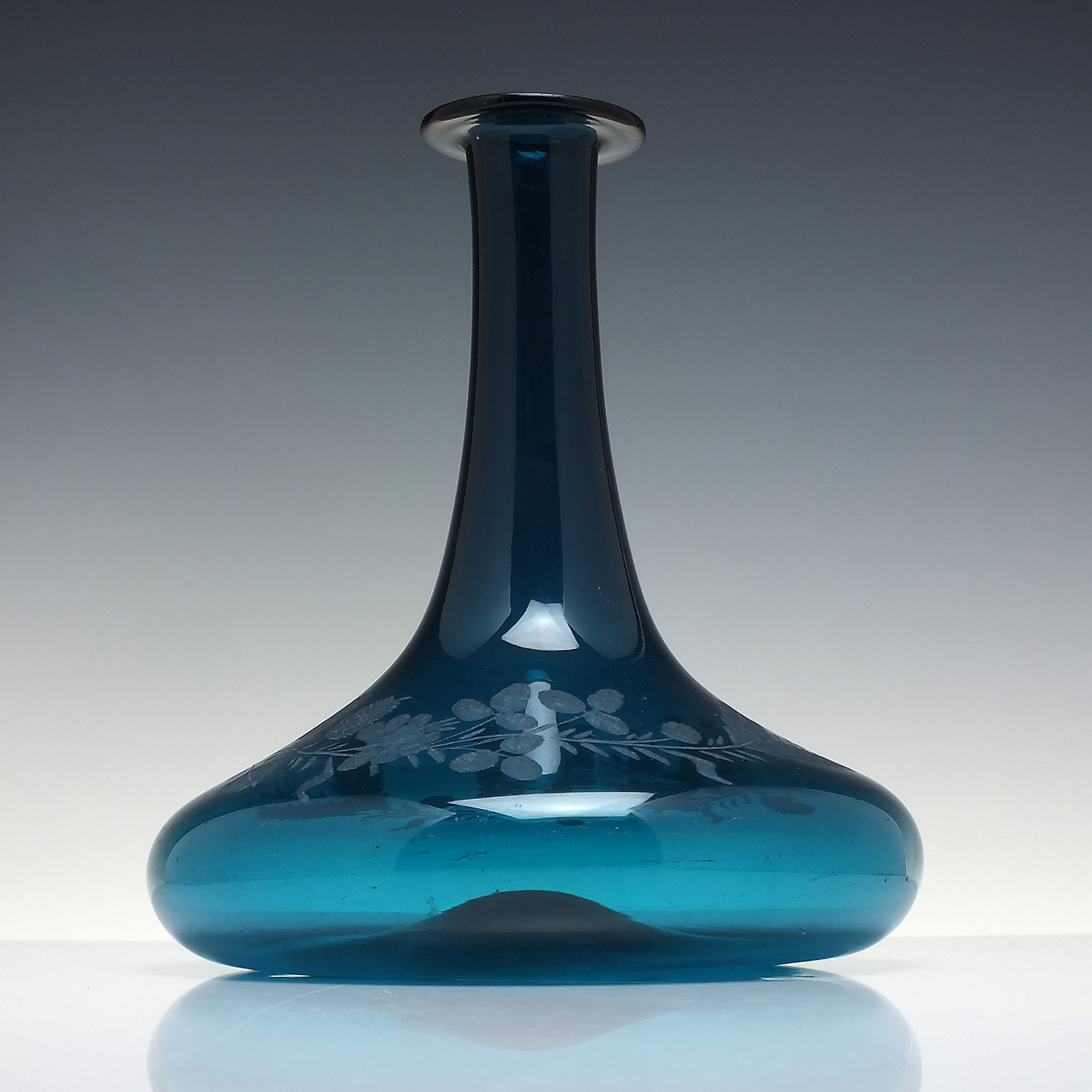
A rare early 19th century Peacock Blue glass Mell decanter, dating to c1830.
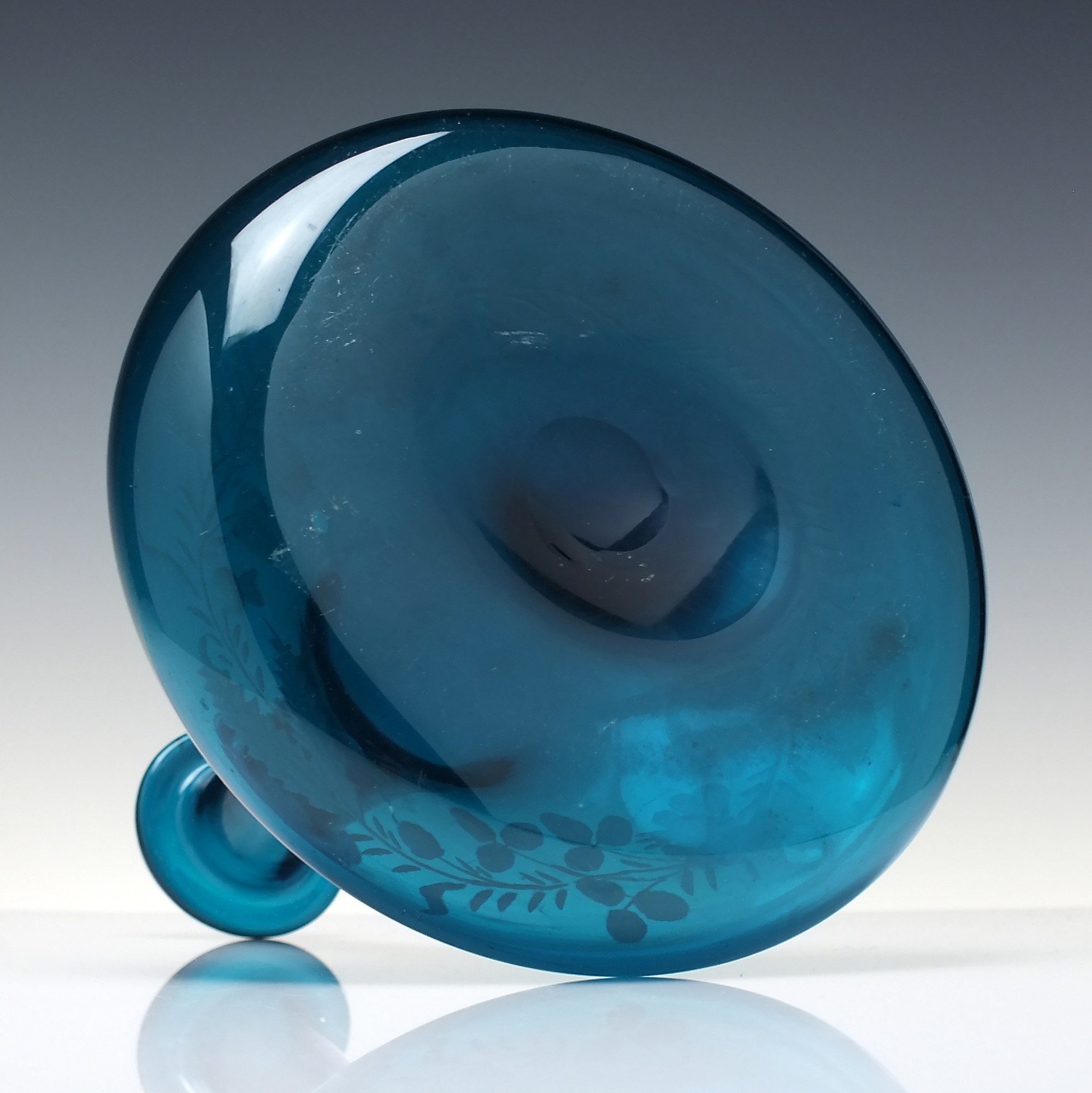
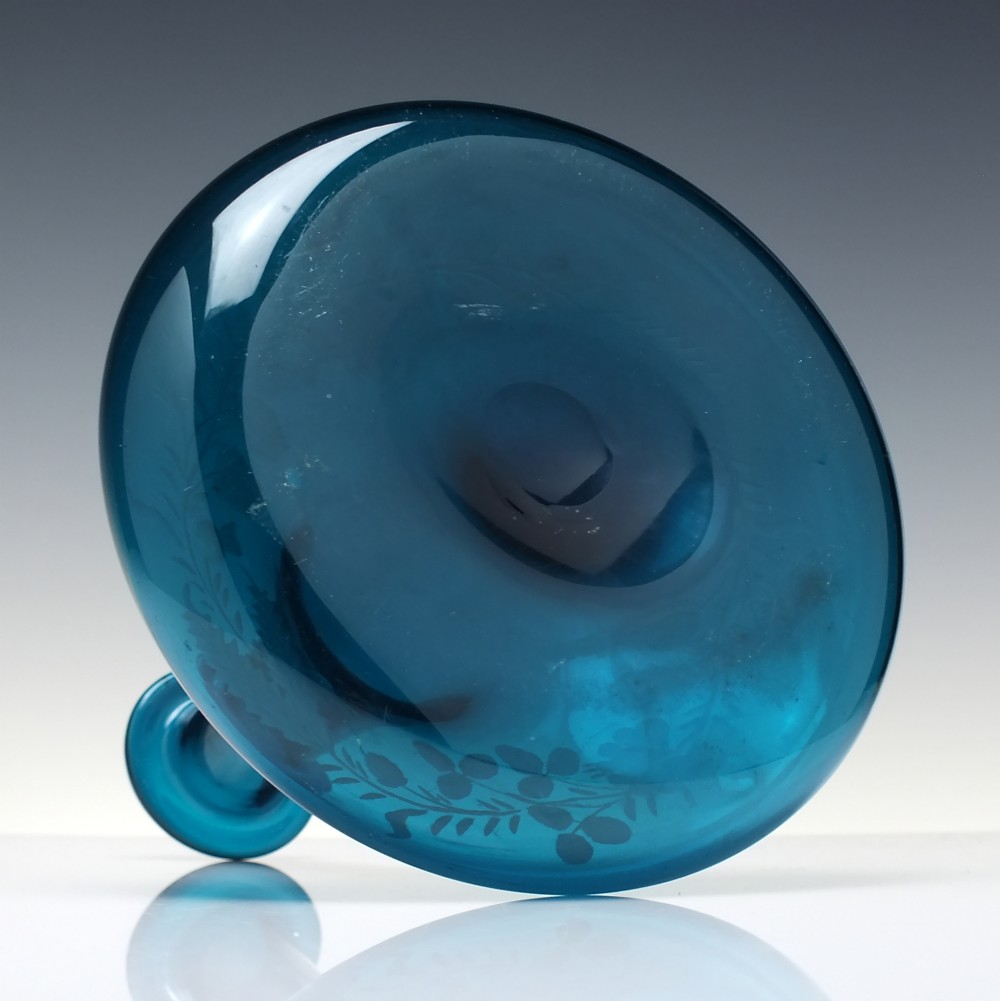
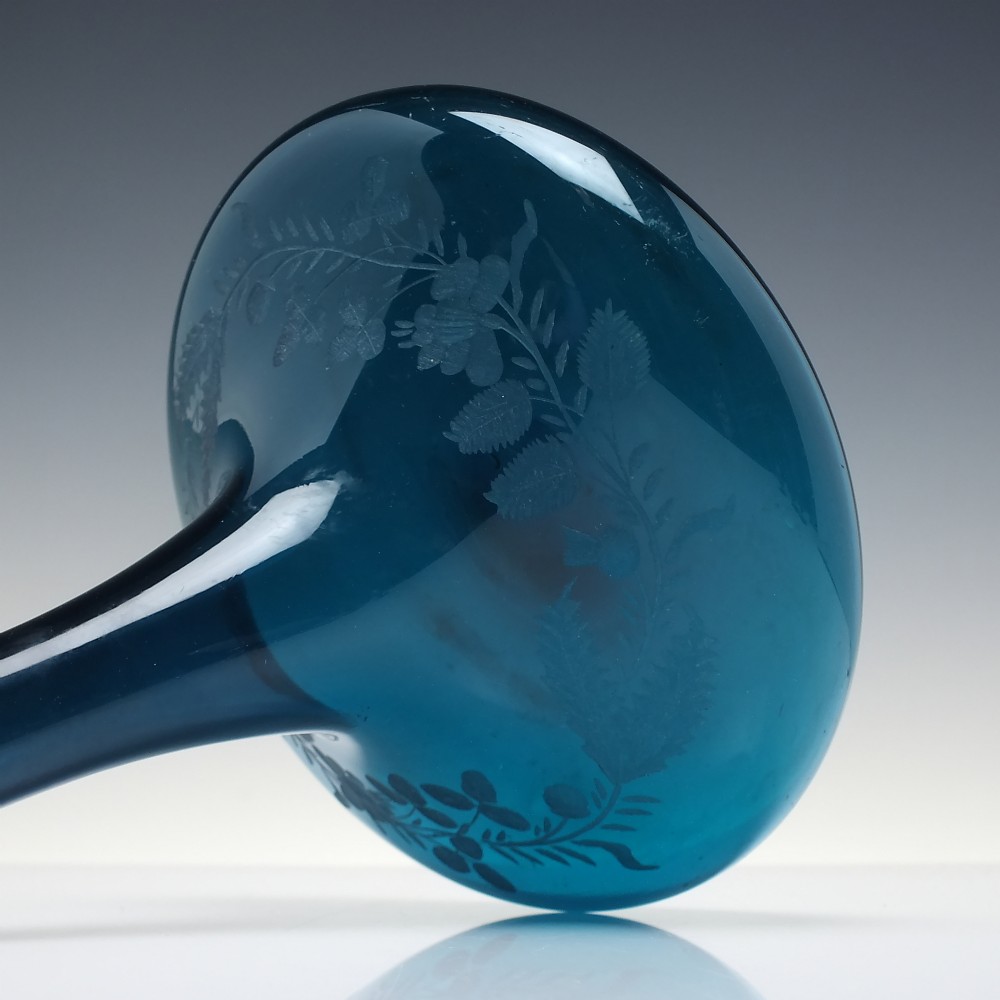
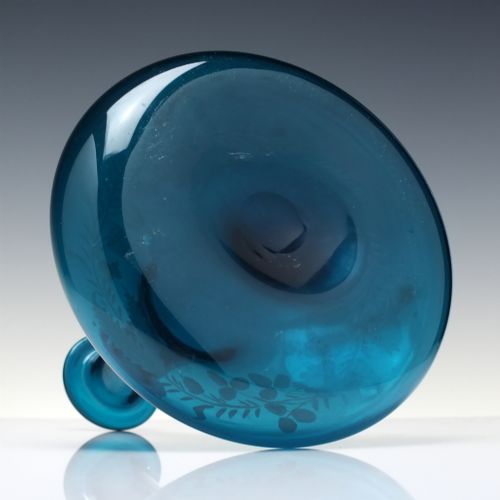
The shoulders are engraved with roses, thistles and shamrocks, representing England, Scotland and Ireland, commonly referred to as Union engraving, very occationally seen on Mell decanters. Polished pontil to the base.
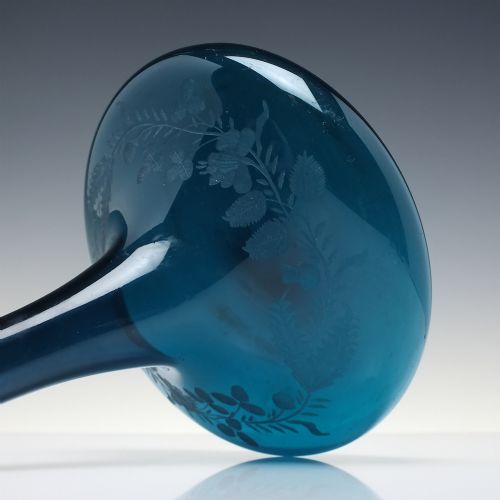
The decanter is made in Peacock Blue glass, a very distinctive blue colour which started in the early 19th century. See Historical Context below.
Date & Origin
England, c1830. Period of King William IV.
Condition
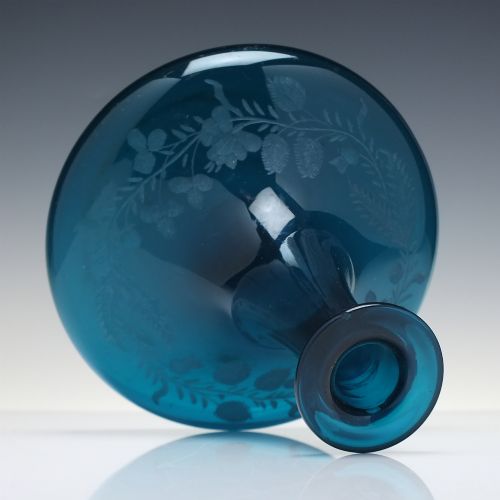
Very good, Single small shallow nibble on the rim as shown, which is very minor. No chips, cracks or restoration, clean and clear internally.
Dimensions
Height: 19.5cm
Diameter: 16cm.
Weight: 478 grams
Historical Context - Peacock Blue Glass
Peacock Blue is one of the more unusual colours encountered in British glassmaking during the late Georgian and early Victorian periods.
Unlike the deep, intense cobalt blue commonly associated with Bristol glass, Peacock Blue has a distinctive turquoise or blue-green appearance, with the colour changing considerably according to the thickness of the glass and the light passing through it.
The colour was produced in relatively limited quantities compared with more conventional clear, green and cobalt blue glass, making surviving example scarce.
The Napoleonic Wars (1803–1815) disrupted European trade and the supply of various raw materials used in glassmaking, including cobalt-bearing minerals and it is thought that Peacock Blue was first developed as a substitute during this period.
By the 1820s and 1830s, Peacock Blue was being used for a small range of decorative and table glass, including wine glasses and decanters.
Historical Context - Union Engraving
The engraved roses, thistles and shamrocks represent the three national emblems of England, Scotland and Ireland.
This combination became particularly significant following the Acts of Union of 1800, which came into effect on 1 January 1801, creating the United Kingdom of Great Britain and Ireland.
The three floral emblems became a popular decorative motif on glass, ceramics and other objects during the early 19th century, symbolising the political union of the three nations.
Union engraving is encountered on drinking glasses, rummers and decanters, although surviving examples combining this decoration with the rarer Peacock Blue glass are considerably less common.
Exhibit Antiques has dated this Georgian Glass Mell Decanter to the Georgian era.
This is an independent date report produced by Sellingantiques using its own proprietary system. The process uses the photographs shown on this page. The system is never told the date the dealer has declared. This report shows that the two dates corroborate.
Specialists in 18th & 19th century antique glass
You can view the stock and full dealer information on the Exhibit Antiques Profile Page
Rare Peacock Blue Georgian Union Engraved Glass Mell Decanter C1830