


Nineteenth Century Decanter
Nineteenth century decanter selections bring heavy cut crystal, silver plate and rich coloured glass to the table from Georgian, Regency and Victorian eras.
Nineteenth Century Decanter
When you search for a nineteenth century decanter, you meet heavy vessels designed for serving wine, claret, port and spirits at the dining table. The examples listed here range from Georgian ship's forms and Regency wine coasters to tall Victorian cut crystal tantalus sets and Venetian lattico glassewers.
You will encounter pieces in clear glass, lead crystal, colour over crystal, and silver plate alongside novelty duck jugs and French cider decanters. Most originate from English and French makers, spanning production dates from roughly eighteen hundred through the late Victorian period.
How they were made
Makers shaped these vessels through glass blowing and hand cutting, often utilising lead crystal or clear glass blanks that received deep geometric facets on the wheel. Artisans added applied silver plate mounts, sterling silver collars, and engraved motifs such as dolphins or foliate patterns.
Specialised techniques include casing colour over crystal to allow striking cuts through outer layers of glass, alongside delicate lattico glass threads fused into Venetian ewers.
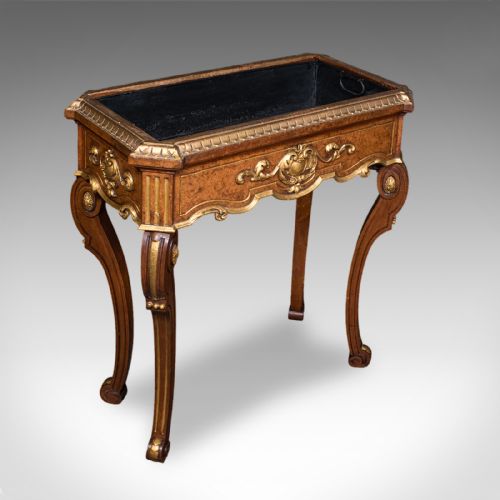
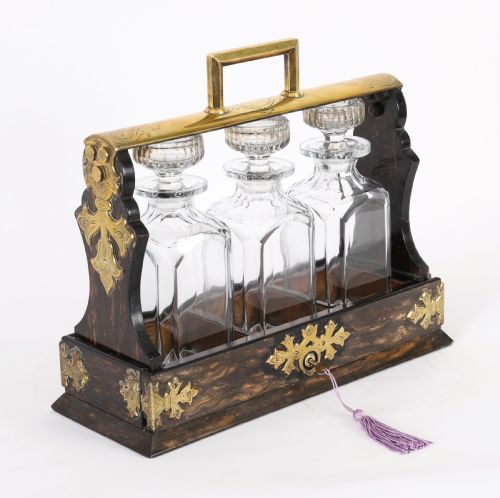
Object types on this page include wine coasters, jardiniere tables, tantalus sets, claret jugs, and novelty duck decanters.
What varies in quality
The standard of a nineteenth century decanter depends upon the crispness of the wheel cutting, the clarity of the metal, and the weight of the glass. Superior examples show deep, sharp facets that catch the light cleanly, while lesser pieces display softer edges and minor bubbles in the melt.
Mounts and hardware also divide the range, distinguishing simple silver plate from fully marked sterling silver mounts by makers like Asprey alongside complete matching sets and stands.
Richardsons Birmingham·Asprey And Co
The Nineteenth Century Decanter Glossary
- Tantalus
- A locked wooden frame securing decanters to prevent unauthorized access while displaying the bottles inside. It typically holds two or three cut crystal decanters with stoppers.
- Hock decanter
- A tall, slender wine vessel traditionally used for German white wines. These often feature coloured glass over clear crystal.
- Ship's decanter
- A form with a wide flat base and conical body designed to remain stable at sea. The broad footprint prevents tipping during motion.
- Lattico glass
- Opaque white glass threads worked into clear vessels in net or ribbon patterns. This technique originates from Venetian glasshouses.
- Claret jug
- A pouring vessel with a handle and spout, mounted in silver plate or sterling silver. They frequently accompany nineteenth century dining settings.
Nineteenth Century Decanter: Frequently Asked Questions
What is a nineteenth century decanter used for?
These vessels served wine, claret, port, cider and mixed drinks like lemonade or Pimm's at the dining table. They held liquids for serving while adding visual decoration to sideboard displays.
Many pieces remained locked inside a tantalus frame when not in use to protect expensive spirits.
How do I identify a Victorian decanter?
Victorian pieces often display heavier cut crystal patterns, novelty forms such as ducks, or coloured overlays. They frequently incorporate silver plated or sterling silver mounts dating from the mid to late nineteenth century.
Earlier Georgian and Regency examples tend toward simpler profiles like the broad base of a ship's decanter.
Are stoppers original to these decanters?
Matching stoppers complete a decanter set, though replacements occur frequently due to breakage over long periods of use. Examining the fit, glass colour, and cut pattern helps determine if a stopper belongs to the bottle.
Sets and tantalus groupings generally preserve their original components more reliably.
How should I clean an old decanter?
Careful washing with warm water and soft bottle brushes removes interior residue without scratching the delicate lead crystal. Harsh chemicals and sudden temperature changes risk damaging antique glass.
Wooden frames and silver mounts require separate maintenance suited to metal and wood.
What materials make up these pieces?
The listings show clear glass, lead crystal, and cut crystal alongside silver plate and sterling silver mounts. Some pieces also integrate wood like walnut, plus papier-mache and lacquer.
Venetian and English glasshouses utilised coloured glass layers and opaque white threads for decoration.