26,129  PAGES BROWSED TODAY PAGES TODAY • 92 ANTIQUES UPLOADED TODAYNEW ARRIVALS
GIFTS
92 ITEMS ADDED TODAY
Sort Order
Items Per Page
Browse Categories
Sort order
Relevant Links
Items per page
ID #SA1243682
FOR SALE
£295
Email Phone
Save
Antique Japanese Seto Ware Blue & White Crane Vase – Katō Keiichi, Seishōen Kiln, Meiji / Taishō Period, C.1890–1920
For sale by Oliver Sargent Antiques
for sale €345     $375
£295

Oliver Sargent Antiques

Sellingantiques Verified Since Jul 2013
Browse dealers 105 items
  • About Us
    Specialists in vintage military watches & clocks and antique oriental ceramics & works of art
Id #SA1243682
PDF SHARE
SAVE

Antique Japanese Seto Ware Blue & White Crane Vase – Katō Keiichi, Seishōen Kiln, Meiji / Taishō Period, C.1890–1920

1900 - 1920
Description

Rare Antique Japanese Porcelain Vase | Signed Katō Keiichi | Meiji Period Sometsuke Blue & White Ceramics

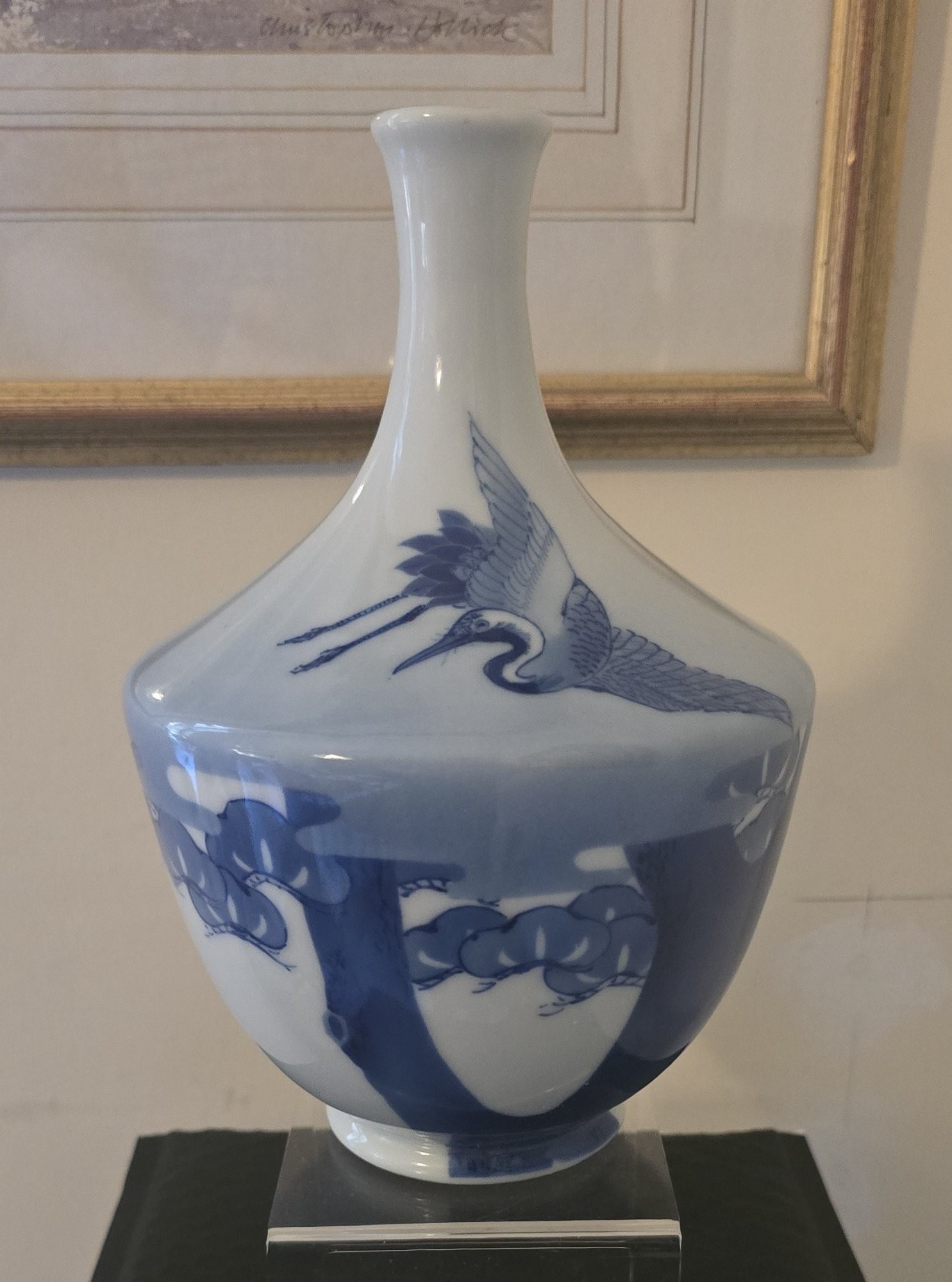
An exceptionally elegant antique Japanese Seto porcelain bottle vase, beautifully decorated in traditional underglaze cobalt blue and white (Sometsuke), attributed to the master ceramicist Katō Keiichi (加藤慶一) of the renowned Seishōen (青嶂園) kiln, Seto, Aichi Prefecture, Japan.
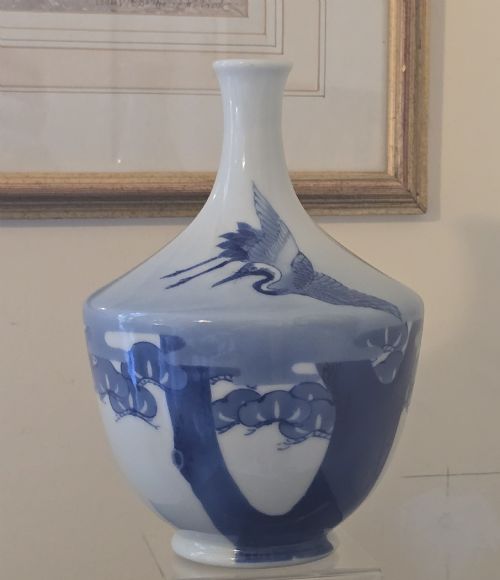
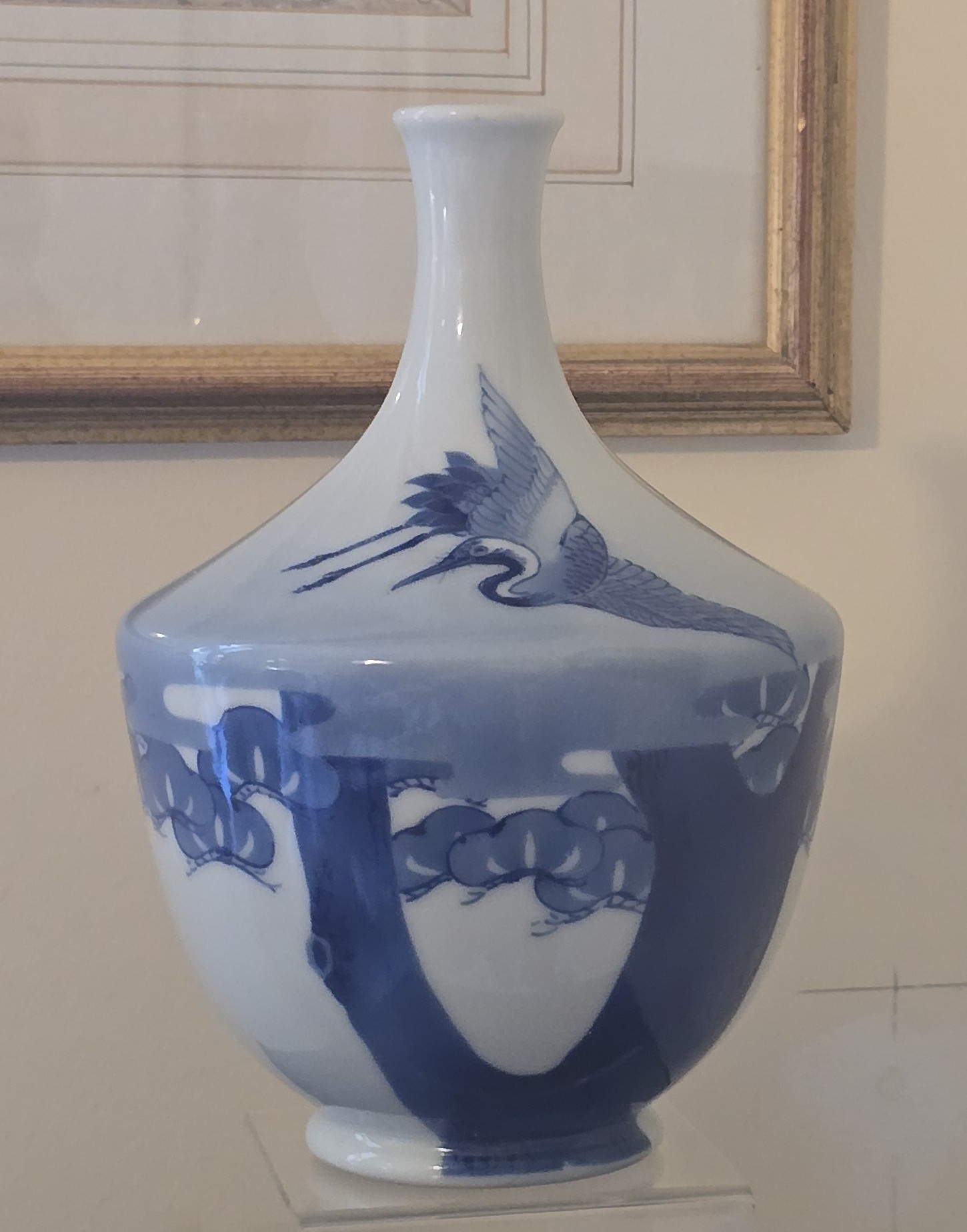
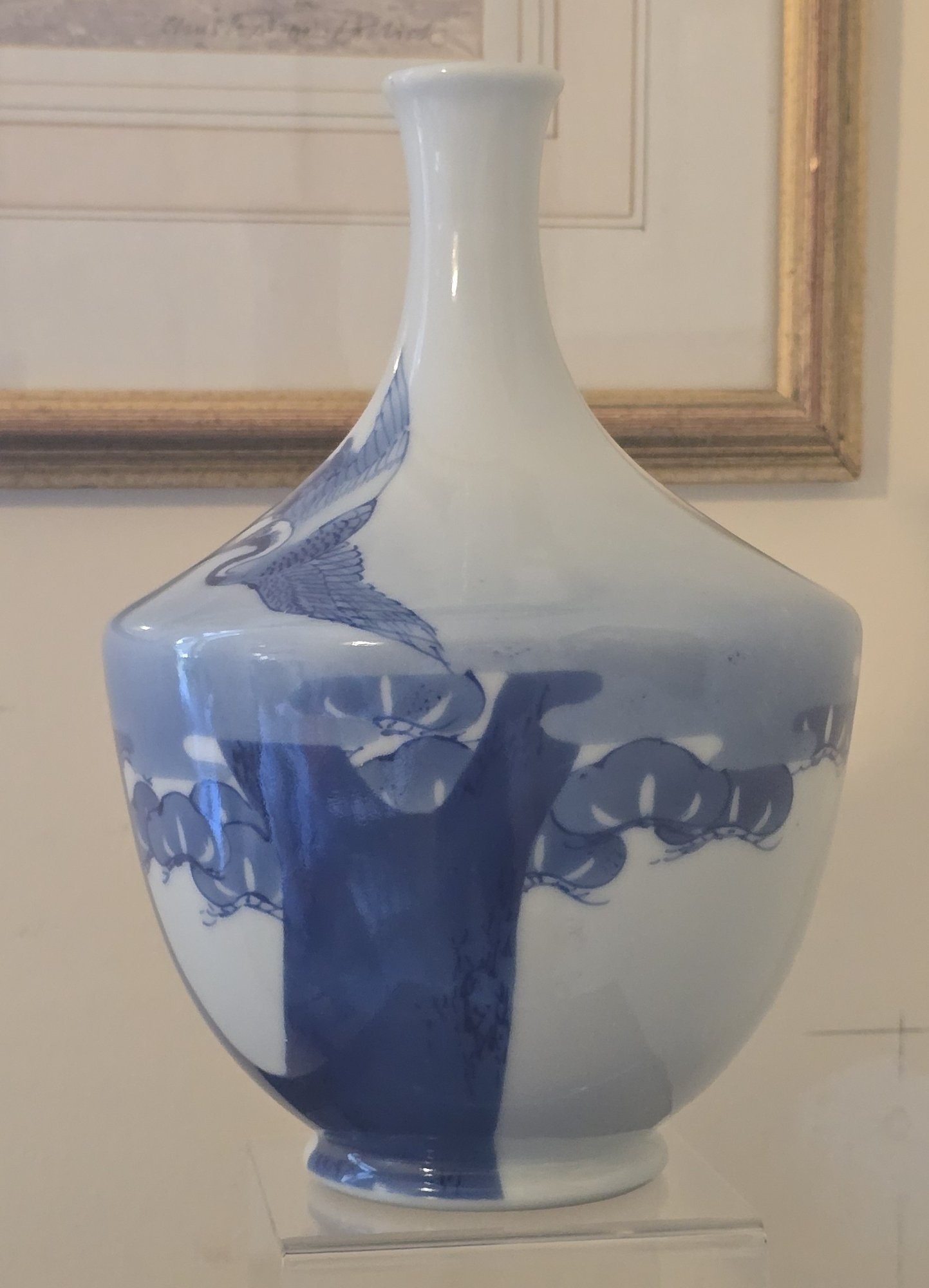
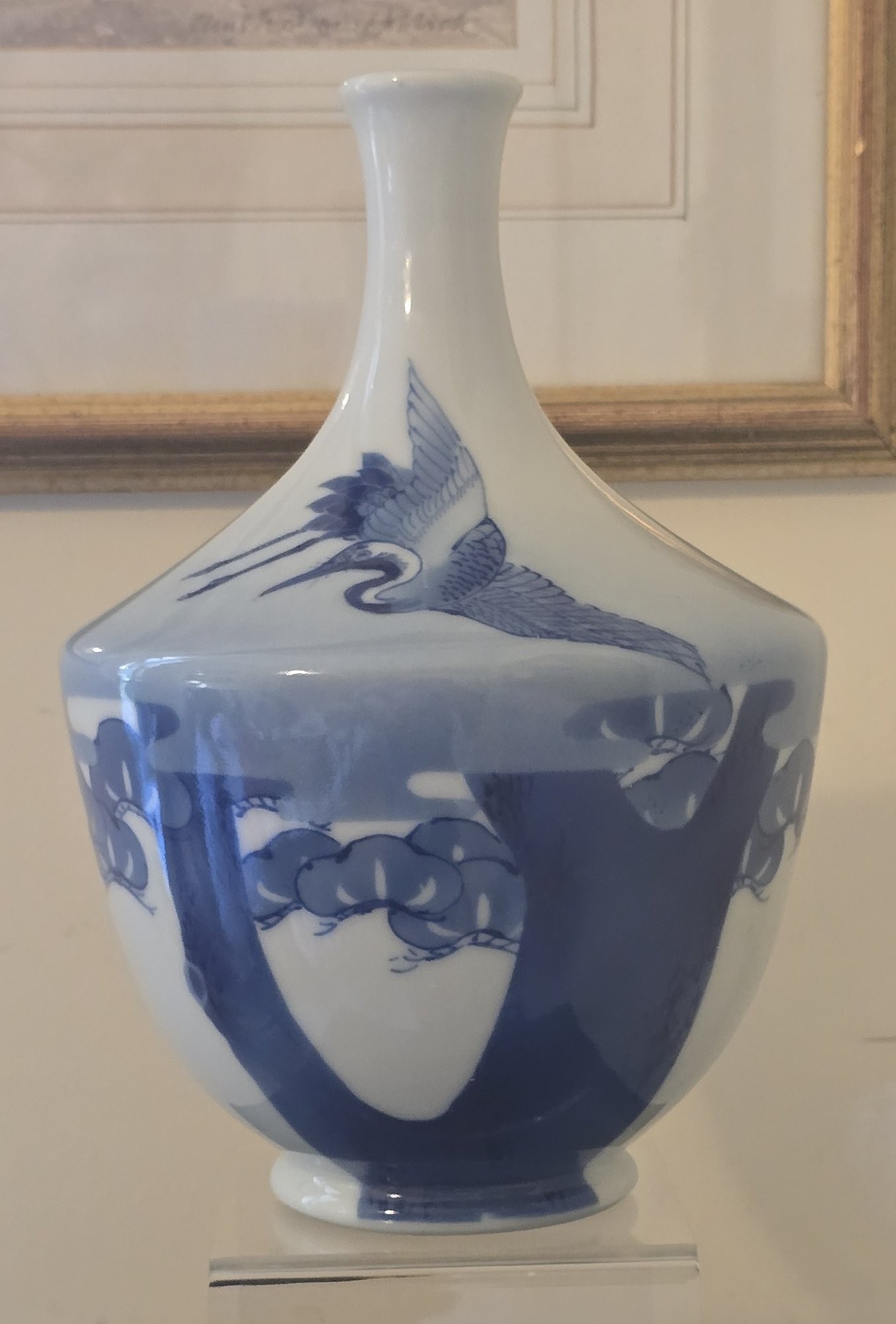
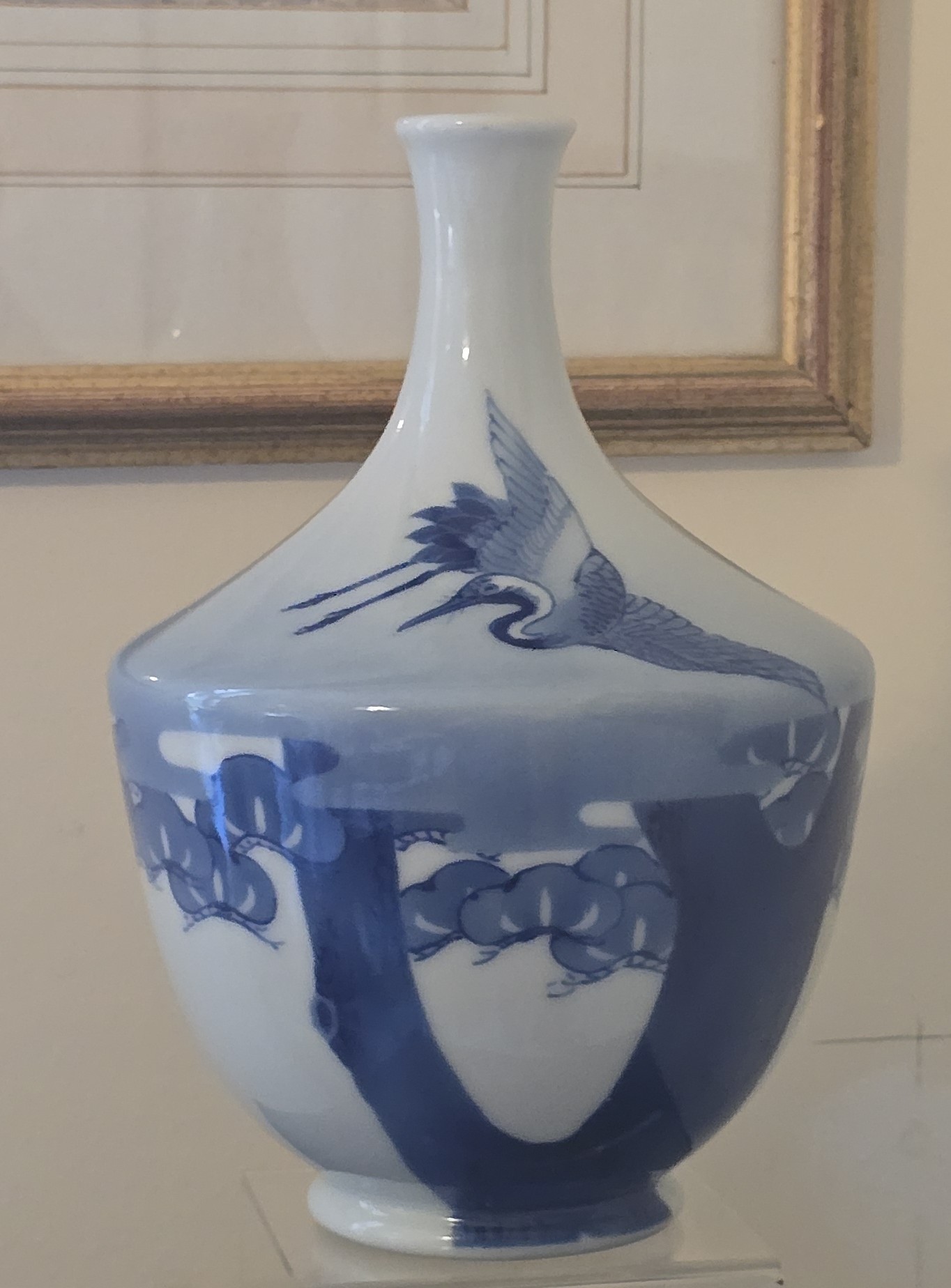
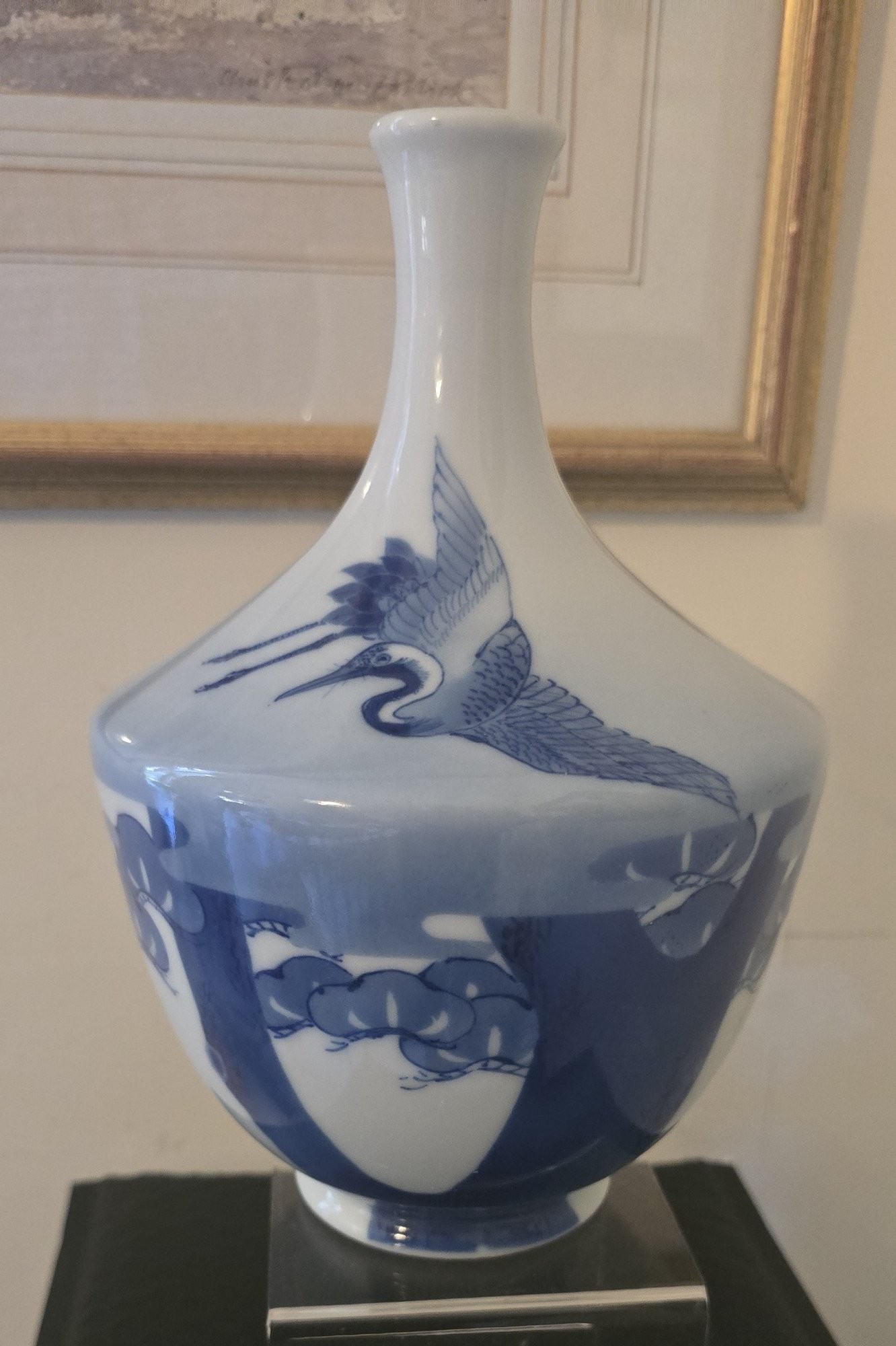
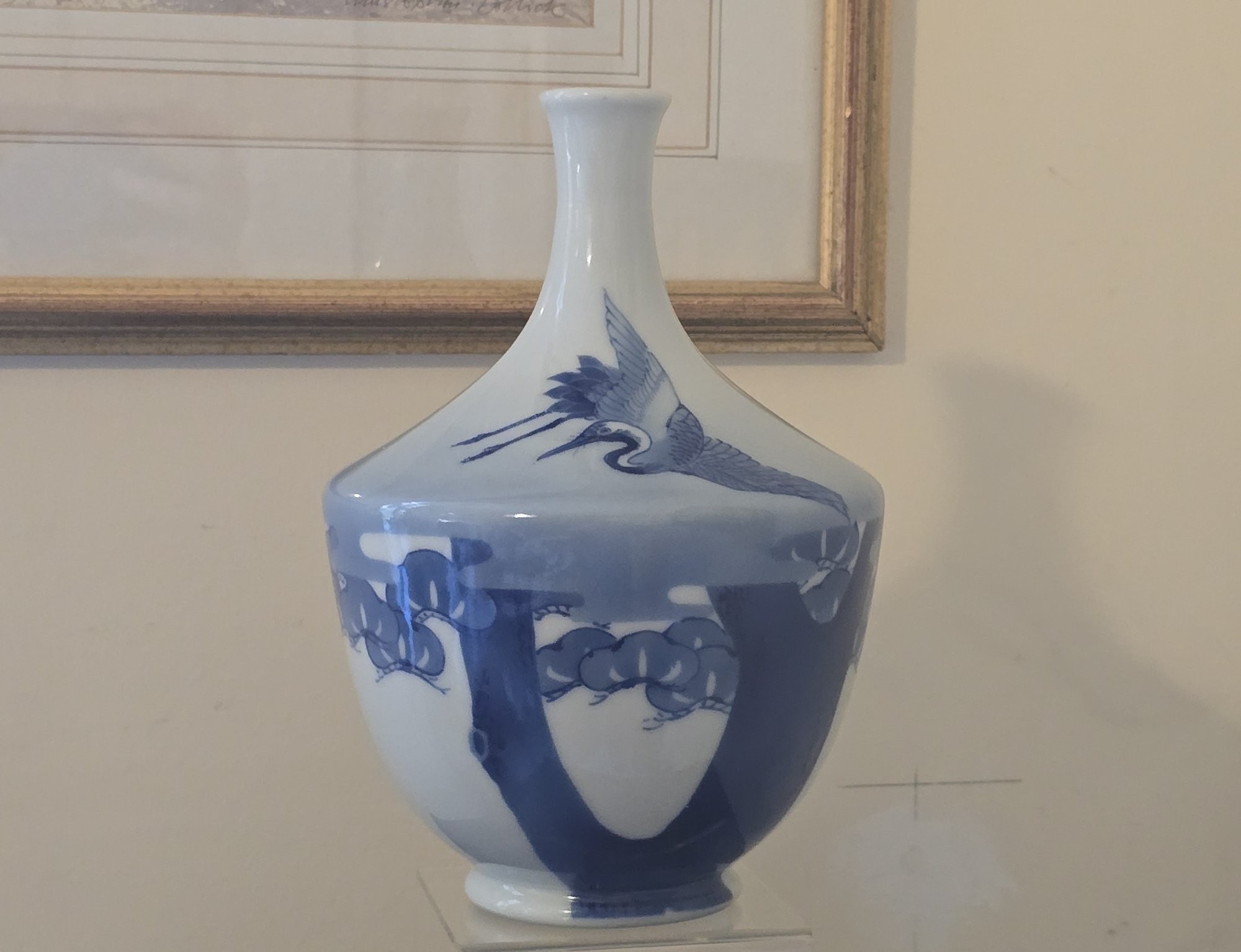
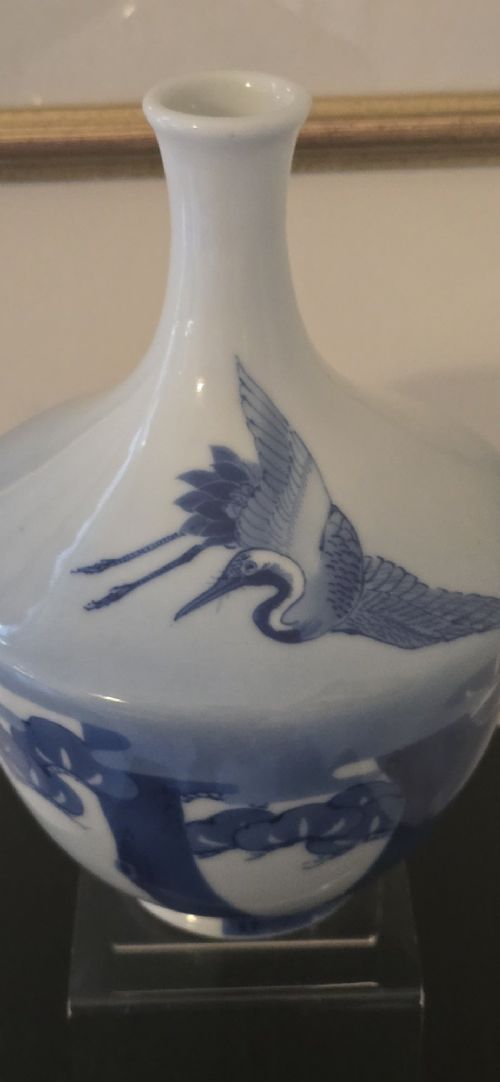
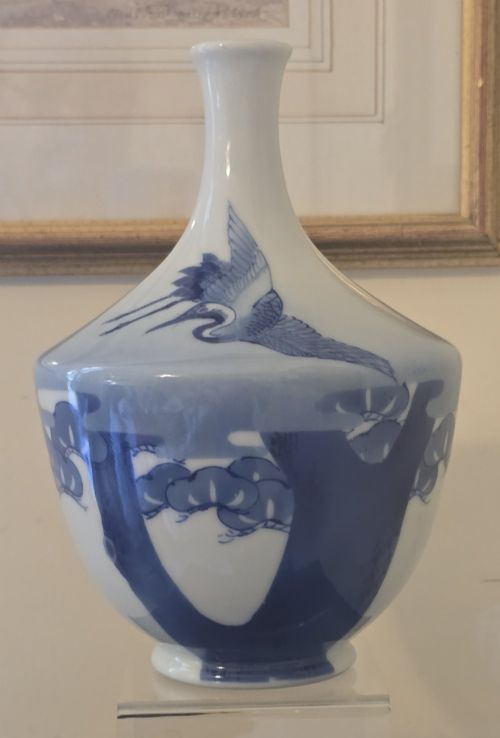
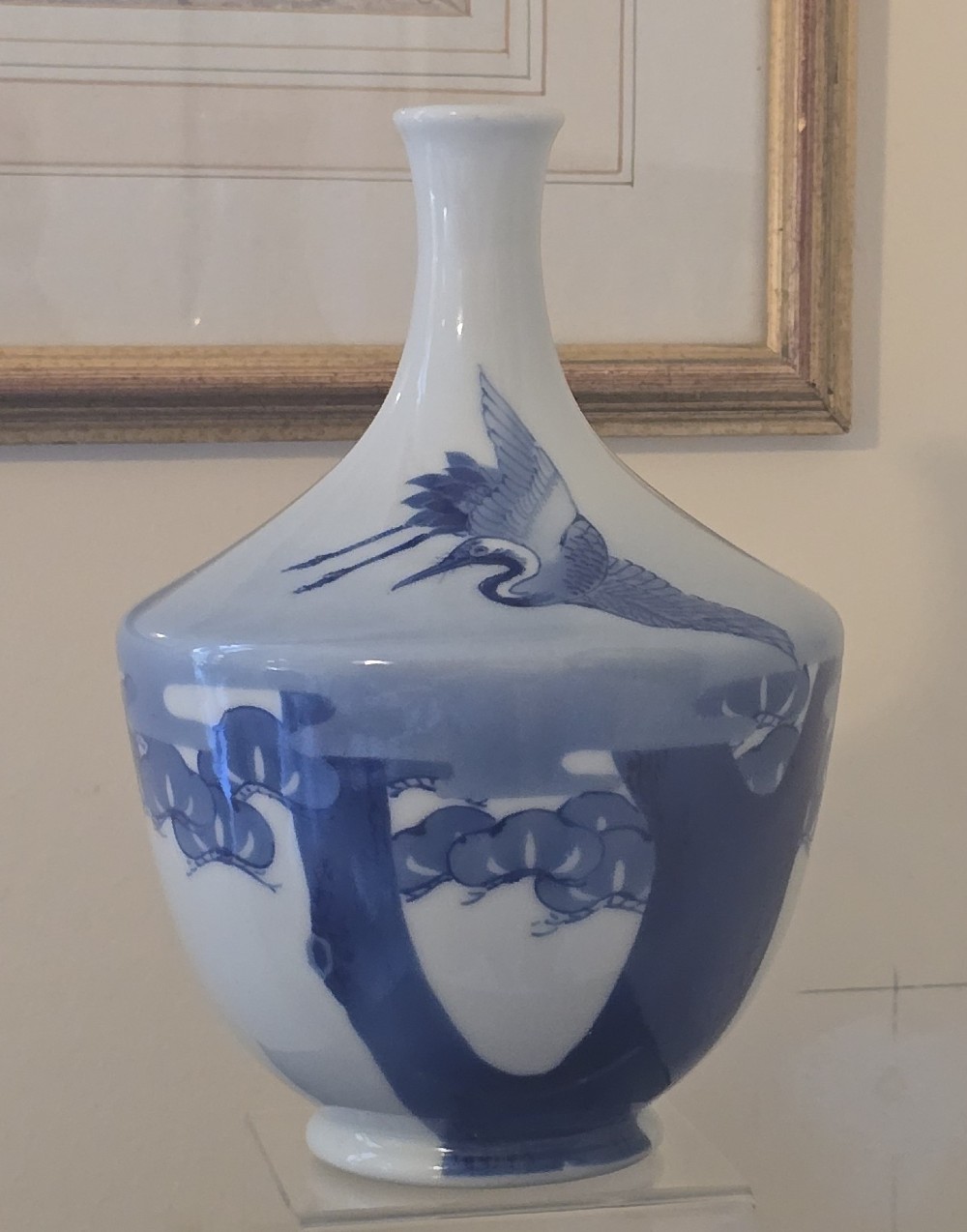
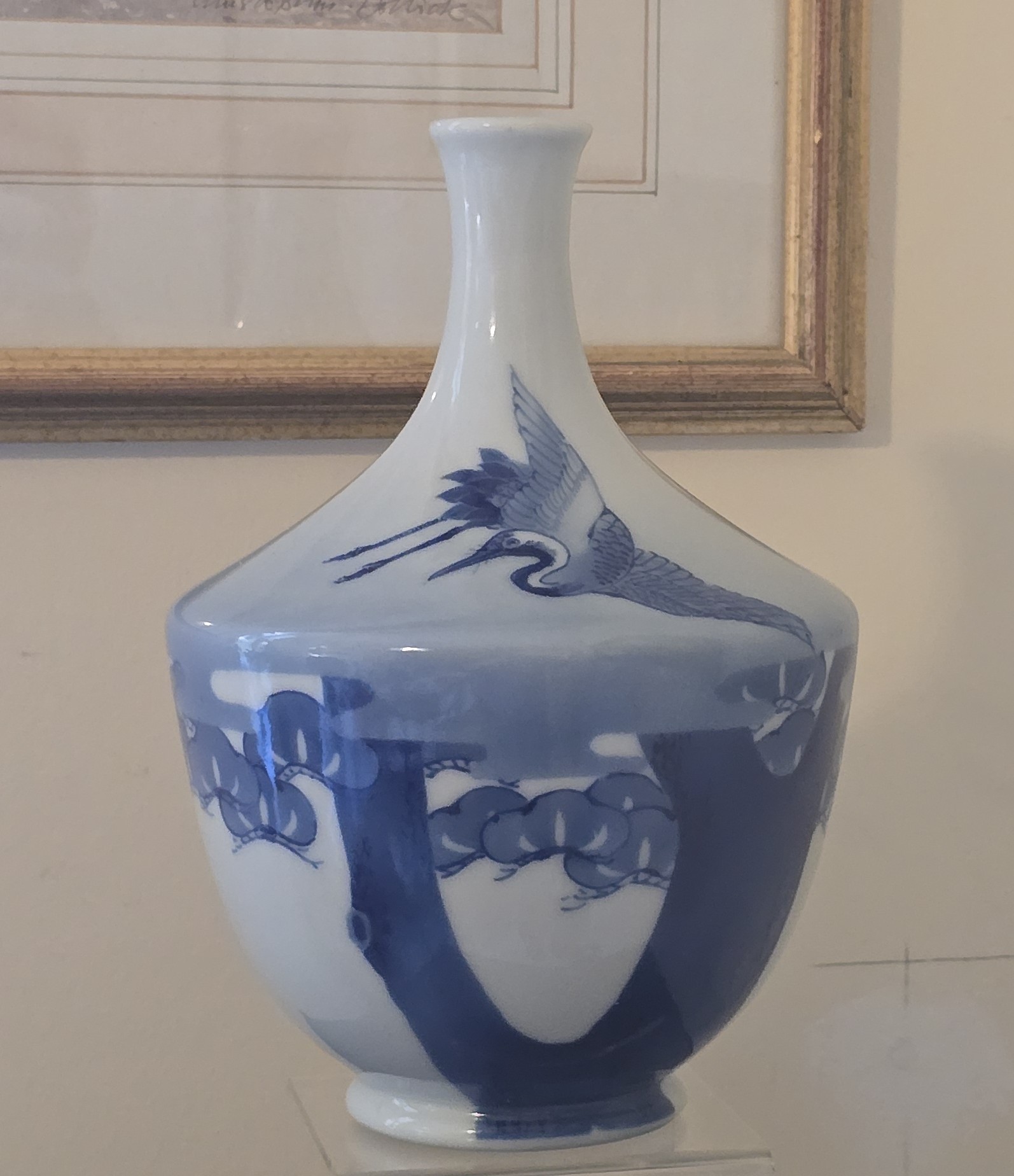
Dating to the late Meiji to early Taishō period, circa 1890–1920, this distinctive Japanese studio pottery piece combines a beautifully balanced Sorori-gata bottle silhouette with an atmospheric, hand-decorated composition featuring an auspicious Japanese crane (Tsuru) in flight above stylised pine trees (Matsu).

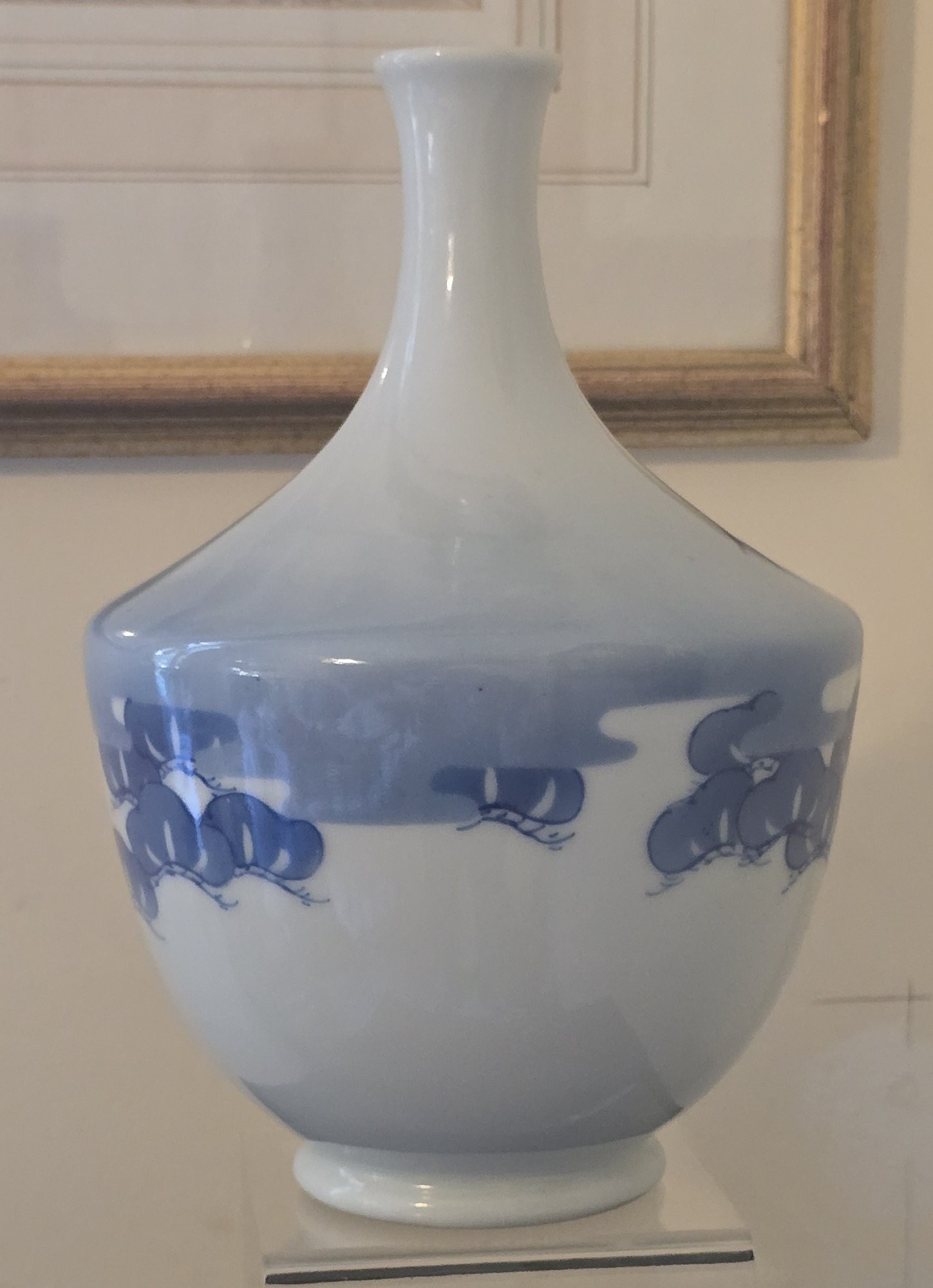
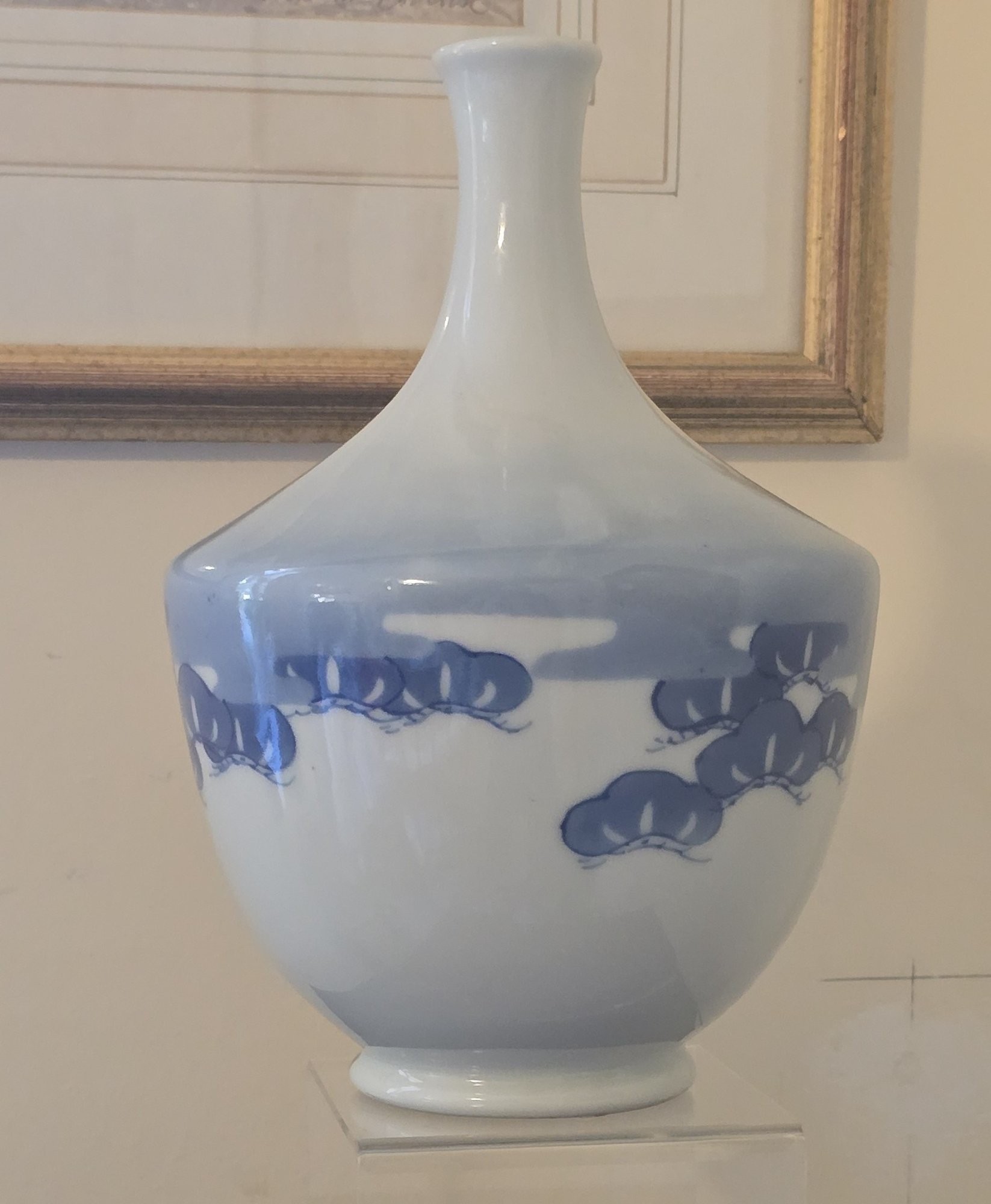
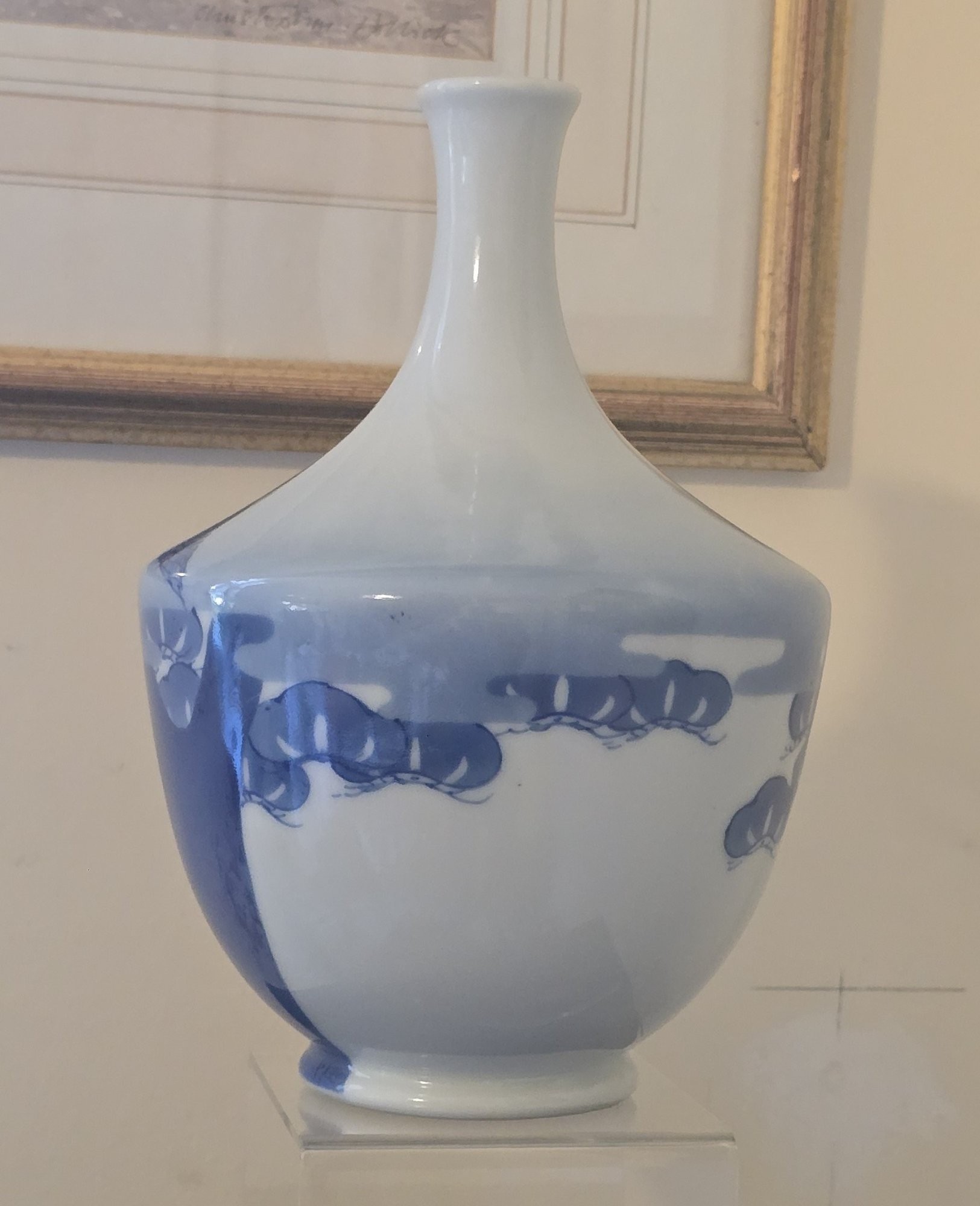
The graceful teardrop-shaped body rises into a slender, elongated neck, creating an elegant profile characteristic of traditional Japanese bottle-form porcelain. Its luminous white porcelain ground provides a striking contrast to the rich cobalt-blue decoration, making this a particularly attractive example of antique Japanese blue and white ceramics.
Exceptional Japanese Decorative Artistry

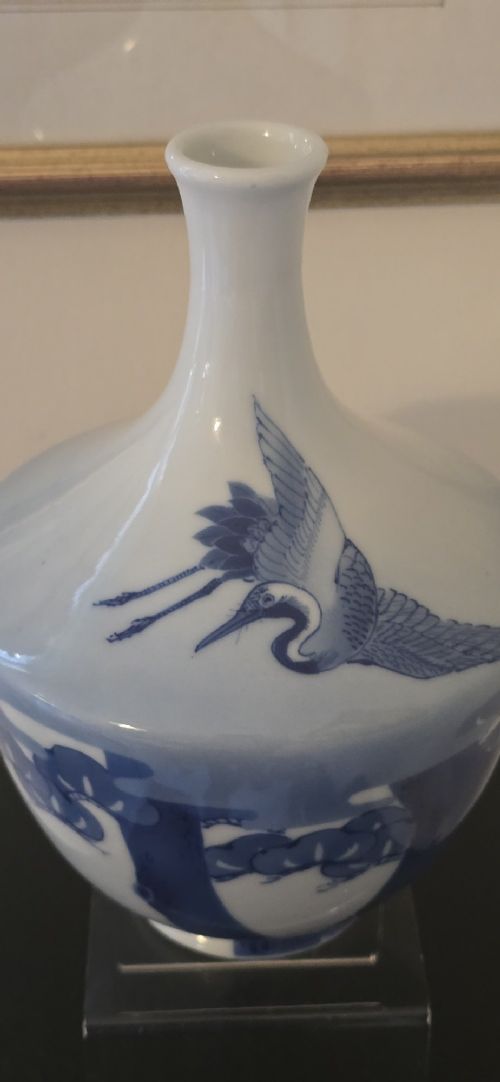
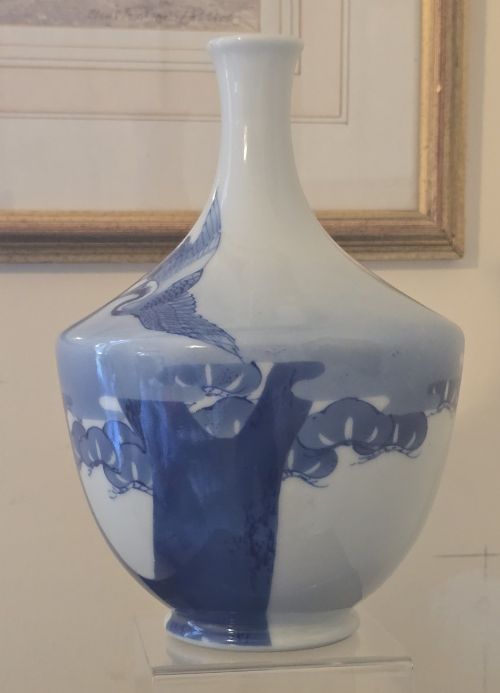
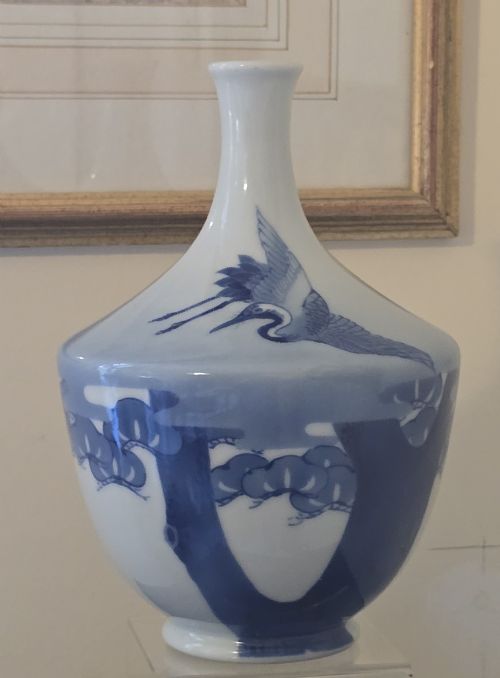
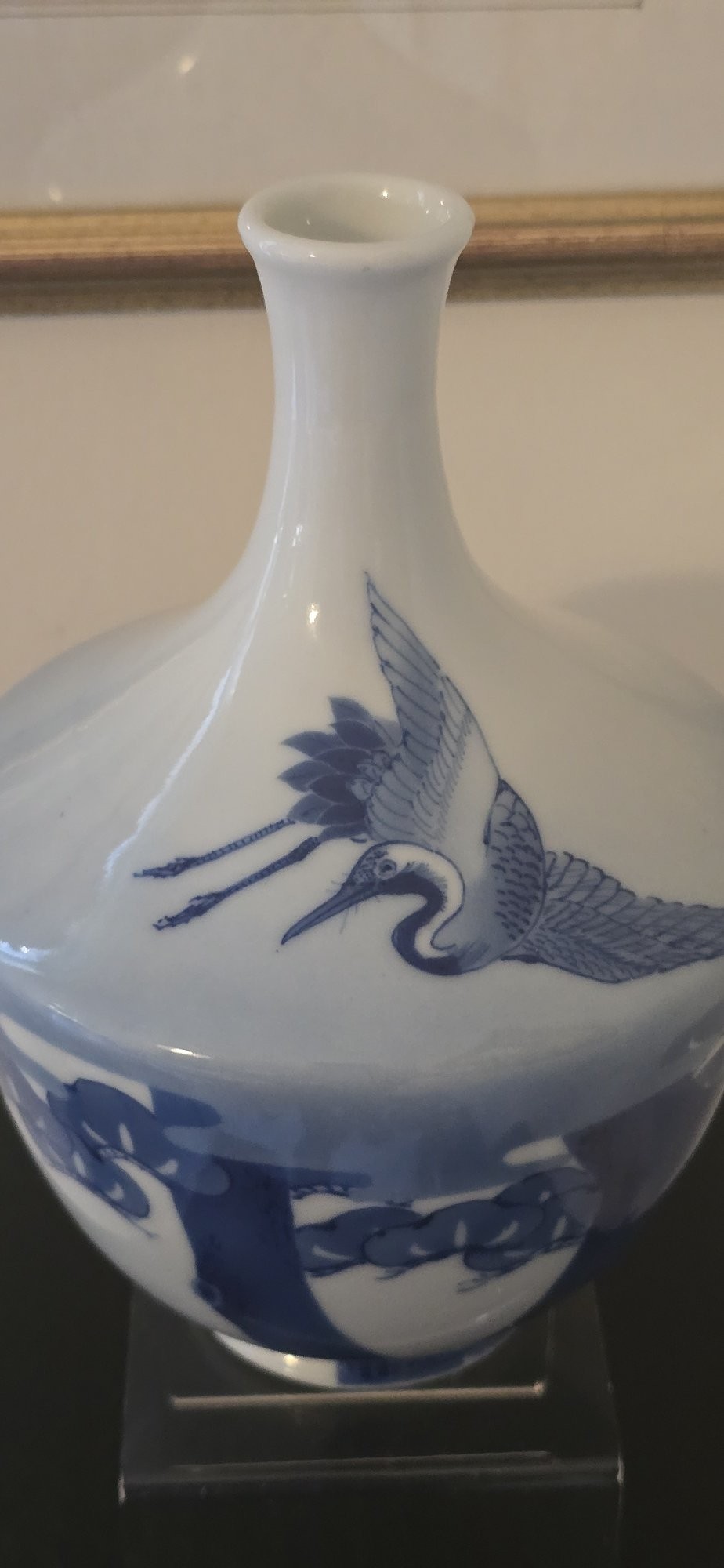
The central decoration depicts a magnificent flying crane against an atmospheric background of softly graduated cobalt blue. The crane and pine tree motif is deeply rooted in Japanese artistic tradition, symbolising longevity, prosperity, good fortune and enduring strength.
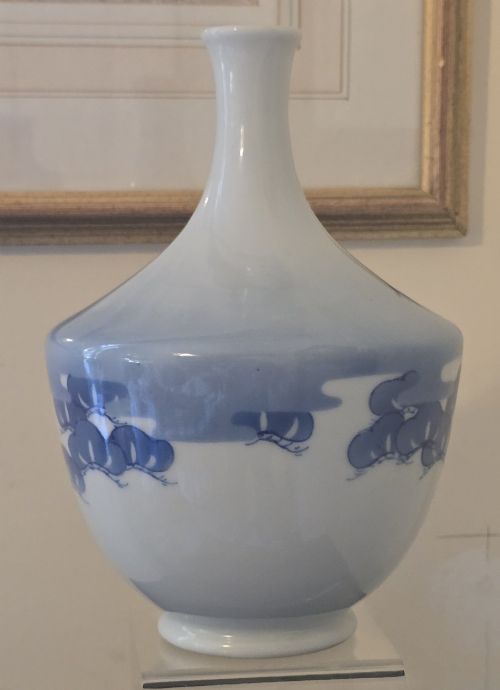
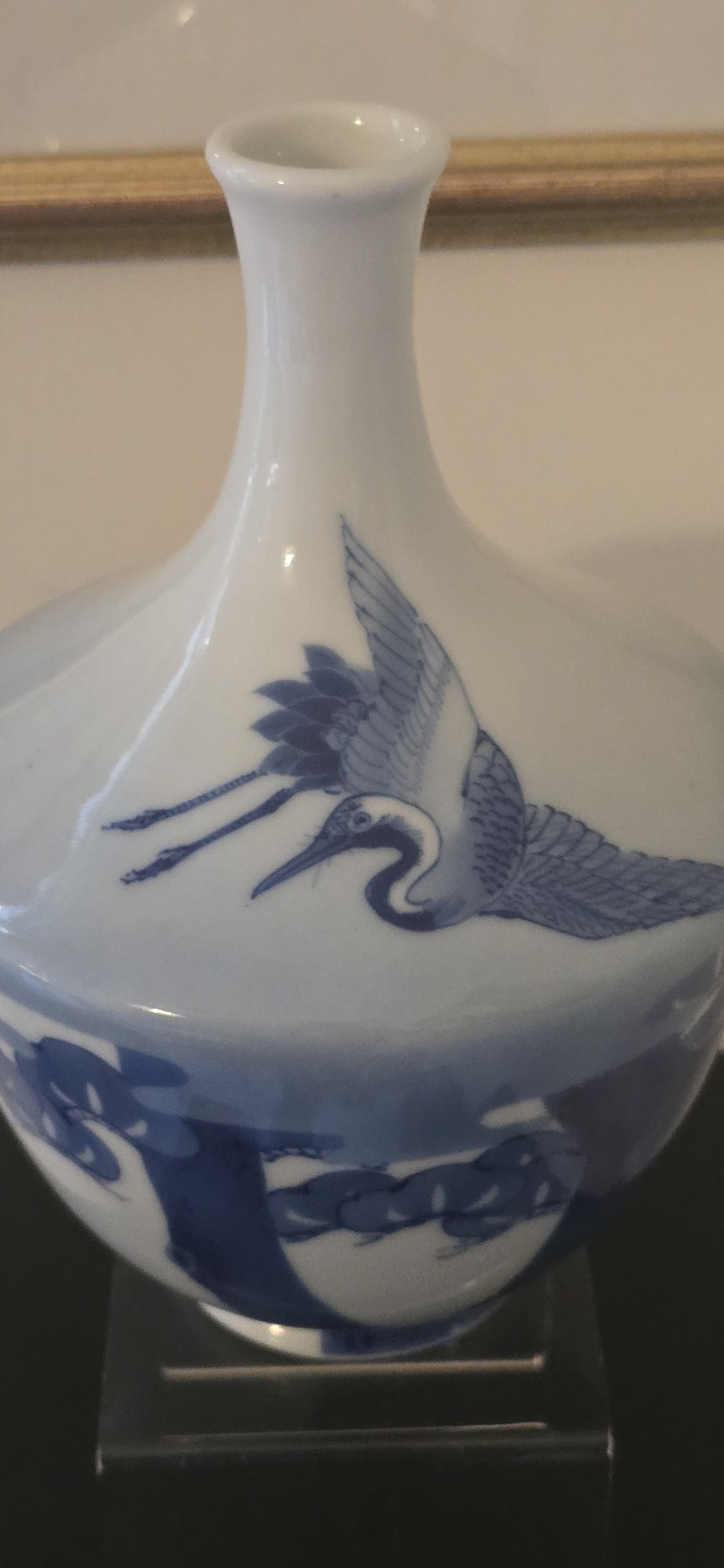
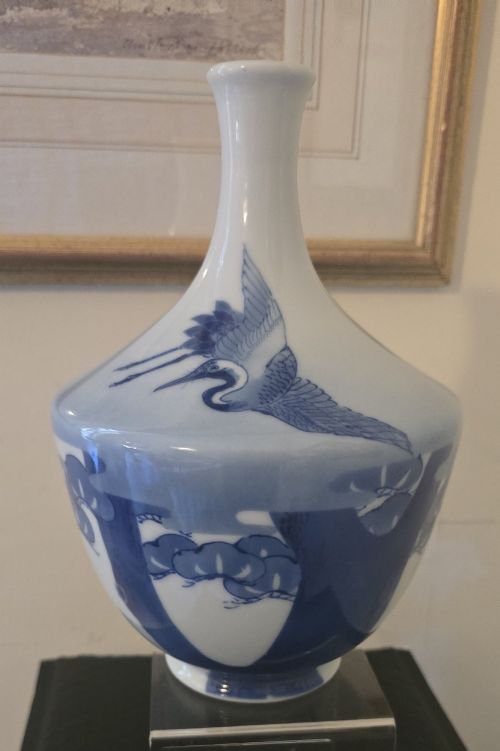
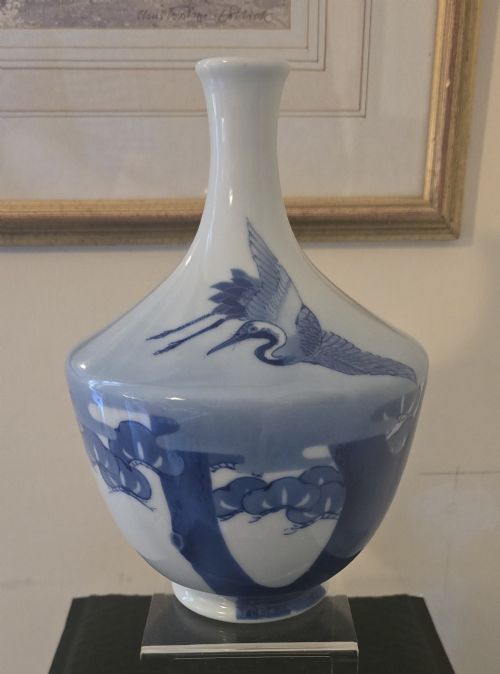
Of particular interest is the apparent use of the traditional Fukizumi (blown cobalt) technique, producing a delicate, mist-like blue background that evokes clouds and atmospheric movement. This subtle effect contrasts beautifully with the more precisely executed hand-painted details of the crane and surrounding landscape.
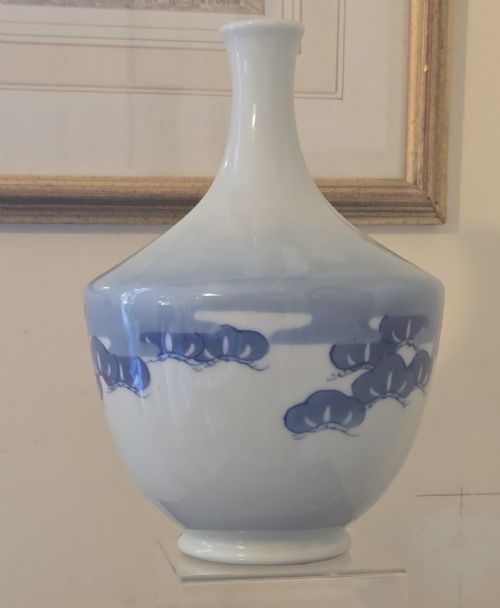
The combination of traditional Japanese symbolism, refined porcelain craftsmanship and distinctive decorative technique makes this vase an appealing addition to a collection of Meiji period Japanese porcelain, Seto ware, signed Japanese ceramics or Oriental decorative antiques.
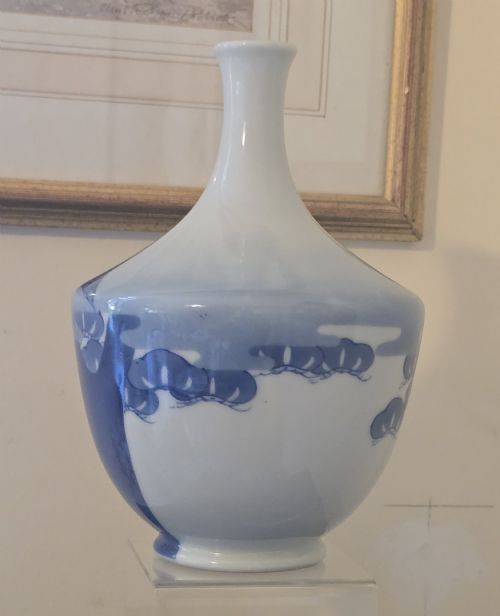
Katō Keiichi – Seishōen Kiln Attribution

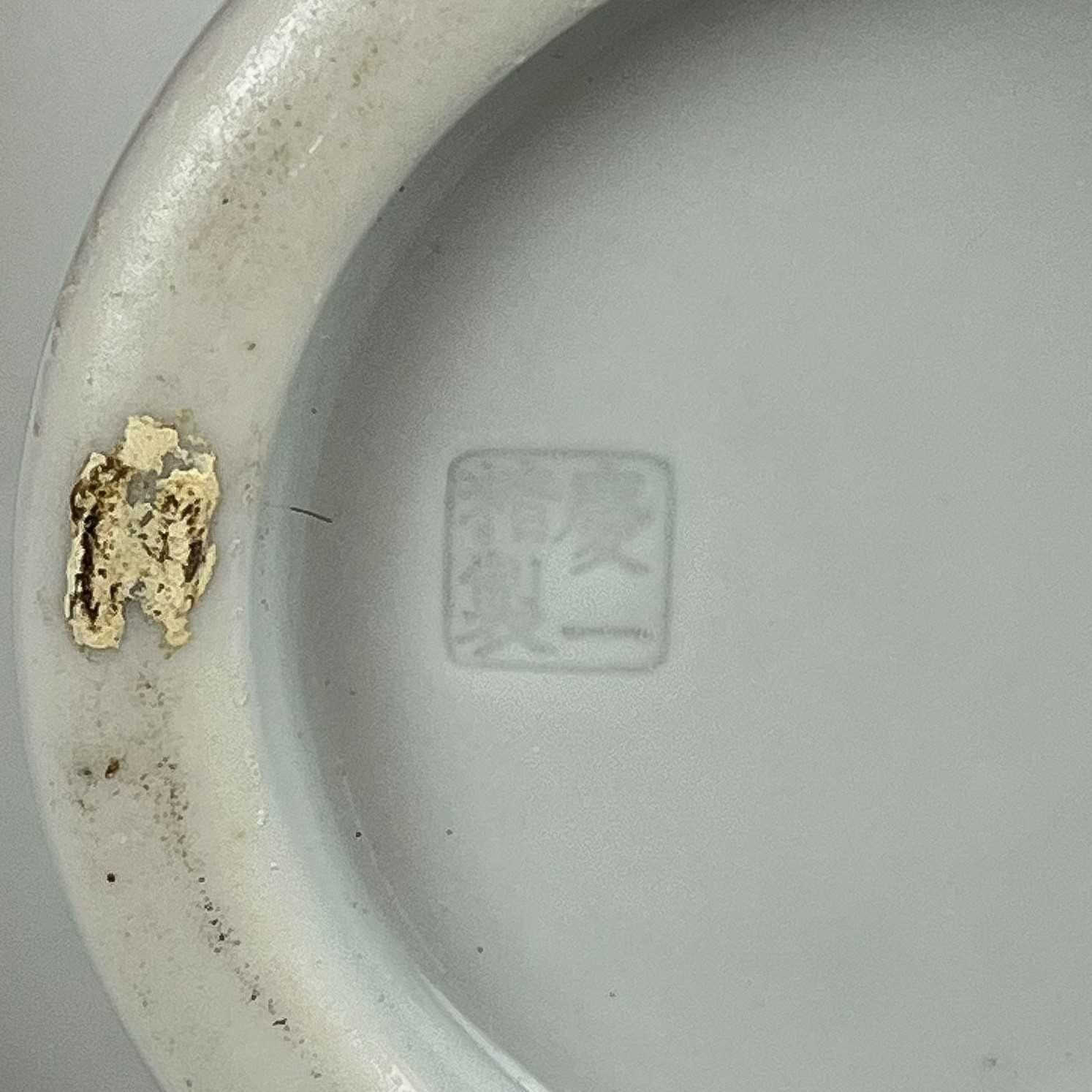
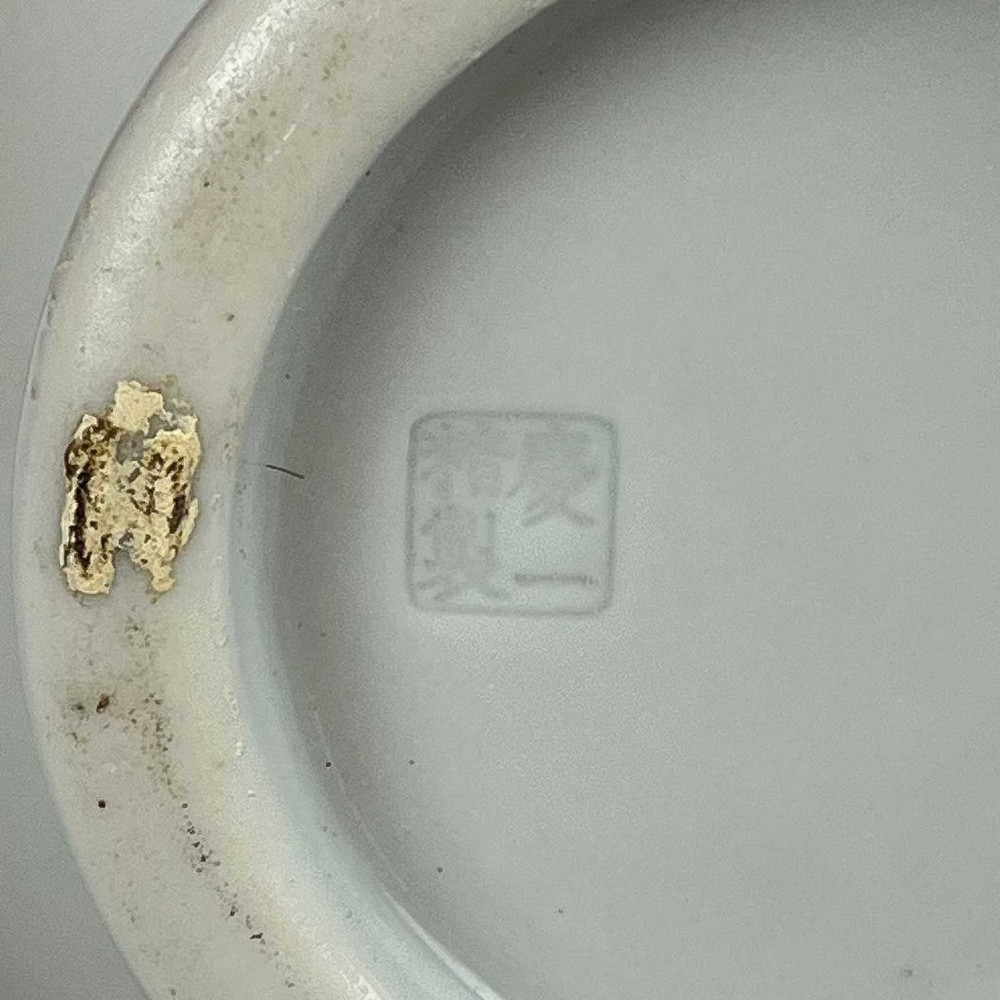
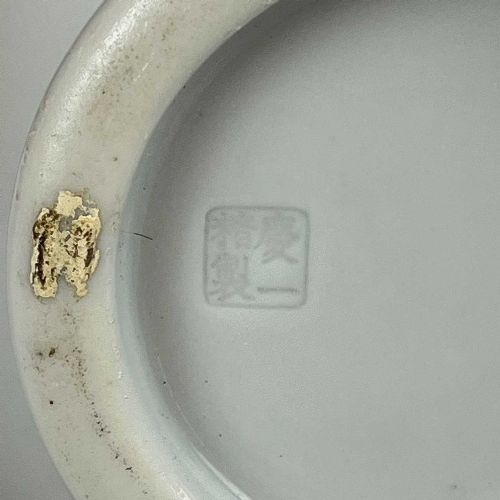
The underside bears a distinctive impressed square intaglio seal mark reading Keiichi-sei (慶一製), identifying the maker as Katō Keiichi.

Associated with the Seishōen kiln in Seto, Aichi Prefecture, Katō Keiichi's work represents the rich ceramic heritage of one of Japan's most historically important porcelain-producing regions.
The personal impressed seal provides an important point of interest for collectors of signed Japanese pottery and antique Seto ceramics.

Detailed Specifications

• Object: Antique Japanese porcelain bottle vase
• Ceramic Type: Seto ware (Seto-yaki)

• Decoration: Underglaze cobalt blue and white (Sometsuke)

• Maker: Katō Keiichi (加藤慶一), attributed

• Studio / Kiln: Seishōen (青嶂園)

• Maker's Mark: Impressed square seal, Keiichi-sei (慶一製)
• Origin: Seto, Aichi Prefecture, Japan

• Period: Late Meiji to early Taishō era

• Estimated Date: Circa 1890–1920

• Form: Sorori-gata elongated bottle vase

• Decorative Motif: Flying Japanese crane (Tsuru) and pine trees (Matsu)
• Technique: Hand-painted cobalt decoration with apparent Fukizumi blown-blue effect

• Height: Approximately 24 cm (9.45 inches)

• Maximum Diameter: Approximately 17 cm (6.69 inches)

• Colour: White porcelain with cobalt-blue decoration
• Price: £295.00

• Delivery: Free, fully insured shipping within the United Kingdom

Condition Report

The vase presents in excellent antique condition, retaining its original form, glaze and decorative finish.
• No chips.

• No cracks or hairline fractures.

• No evidence of professional restoration.

• Glossy transparent glaze retains an attractive original lustre.

• Base footrim exhibits light, age-appropriate shelf wear and minor kiln-grit consistent with an antique ceramic object.

Please refer to the photographs for a detailed appreciation of the decoration, glaze, footrim and impressed maker's mark.

Offered at £295.00, including complimentary fully insured UK delivery.

Date of Manufacture

Oliver Sargent Antiques has dated this Japanese Seto Porcelain Vase to the 1920s.

Independent Date Check ID 09705774
Dealer's Item Date1920s
Sellingantiques Date1920s
Sellingantiques agingItem 95-130 years old
Test ResultsPassed dating check
Why Sellingantiques dated this piece to THE 1920s:
Impressed square seal on the base: Keiichi-sei for maker Katō Keiichi.
Blown-blue shading behind the crane: delicate studio glaze work.
Hand-painted cobalt brushwork: fine feather details on the crane.
Unglazed foot rim: natural soiling and remnant of an old label.

This is an independent date report produced by Sellingantiques using its own proprietary system. The process uses the photographs shown on this page. The system is never told the date the dealer has declared. This report shows that the two dates corroborate.

Reference Numbers
Sellingantiques Reference
SA1243682
Dealers Internal Reference
OSA1650
Description
Rare Antique Japanese Porcelain Vase | Signed Katō Keiichi | Meiji Period Sometsuke Blue & White Ceramics

An exceptionally elegant antique Japanese Seto porcelain bottle vase, beautifully decorated in traditional underglaze cobalt blue and white (Sometsuke), attributed to the master ceramicist Katō Keiichi (加藤慶一) of the renowned Seishōen (青嶂園) kiln, Seto, Aichi Prefecture, Japan.

fig 1. A Japanese blue and white porcelain vase featuring hand-painted motifs of a flying crane over pine branches.
fig 1. Antique Japanese Seto Ware Blue & White Crane Vase – Katō Keiichi, Seishōen Kiln, Meiji / Taishō Period, C.1890–1920

Dating to the late Meiji to early Taishō period, circa 1890–1920, this distinctive Japanese studio pottery piece combines a beautifully balanced Sorori-gata bottle silhouette with an atmospheric, hand-decorated composition featuring an auspicious Japanese crane (Tsuru) in flight above stylised pine trees (Matsu).

“
The graceful teardrop-shaped body rises into a slender, elongated neck, creating an elegant profile characteristic of traditional Japanese bottle-form porcelain.
Oliver Sargent Antiques

Its luminous white porcelain ground provides a striking contrast to the rich cobalt-blue decoration, making this a particularly attractive example of antique Japanese blue and white ceramics.

fig 2. A Japanese blue and white porcelain vase featuring hand-painted motifs of a flying crane over pine branches.
fig 2. Antique Japanese Seto Ware Blue & White Crane Vase – Katō Keiichi, Seishōen Kiln, Meiji / Taishō Period, C.1890–1920

Exceptional Japanese Decorative Artistry

The central decoration depicts a magnificent flying crane against an atmospheric background of softly graduated cobalt blue. The crane and pine tree motif is deeply rooted in Japanese artistic tradition, symbolising longevity, prosperity, good fortune and enduring strength.

fig 3. A Japanese blue and white porcelain vase featuring hand-painted motifs of a flying crane over pine branches.
fig 3. Antique Japanese Seto Ware Blue & White Crane Vase – Katō Keiichi, Seishōen Kiln, Meiji / Taishō Period, C.1890–1920

Of particular interest is the apparent use of the traditional Fukizumi (blown cobalt) technique, producing a delicate, mist-like blue background that evokes clouds and atmospheric movement. This subtle effect contrasts beautifully with the more precisely executed hand-painted details of the crane and surrounding landscape.

fig 4. A Japanese blue and white porcelain vase featuring hand-painted motifs of a flying crane over pine branches.
fig 4. Antique Japanese Seto Ware Blue & White Crane Vase – Katō Keiichi, Seishōen Kiln, Meiji / Taishō Period, C.1890–1920

The combination of traditional Japanese symbolism, refined porcelain craftsmanship and distinctive decorative technique makes this vase an appealing addition to a collection of Meiji period Japanese porcelain, Seto ware, signed Japanese ceramics or Oriental decorative antiques.

fig 5. A Japanese blue and white porcelain vase featuring hand-painted motifs of a flying crane over pine branches.
fig 5. Antique Japanese Seto Ware Blue & White Crane Vase – Katō Keiichi, Seishōen Kiln, Meiji / Taishō Period, C.1890–1920

Katō Keiichi – Seishōen Kiln Attribution

The underside bears a distinctive impressed square intaglio seal mark reading Keiichi-sei (慶一製), identifying the maker as Katō Keiichi.

Associated with the Seishōen kiln in Seto, Aichi Prefecture, Katō Keiichi's work represents the rich ceramic heritage of one of Japan's most historically important porcelain-producing regions.

fig 6. A Japanese blue and white porcelain vase featuring hand-painted motifs of a flying crane over pine branches.
fig 6. Antique Japanese Seto Ware Blue & White Crane Vase – Katō Keiichi, Seishōen Kiln, Meiji / Taishō Period, C.1890–1920

The personal impressed seal provides an important point of interest for collectors of signed Japanese pottery and antique Seto ceramics.

Detailed Specifications

• Object: Antique Japanese porcelain bottle vase

fig 7. A Japanese blue and white porcelain vase featuring hand-painted motifs of a flying crane over pine branches.
fig 7. Antique Japanese Seto Ware Blue & White Crane Vase – Katō Keiichi, Seishōen Kiln, Meiji / Taishō Period, C.1890–1920

• Ceramic Type: Seto ware (Seto-yaki)

• Decoration: Underglaze cobalt blue and white (Sometsuke)

• Maker: Katō Keiichi (加藤慶一), attributed

• Studio / Kiln: Seishōen (青嶂園)

• Maker's Mark: Impressed square seal, Keiichi-sei (慶一製)

fig 8. A Japanese blue and white porcelain vase featuring hand-painted motifs of a flying crane over pine branches.
fig 8. Antique Japanese Seto Ware Blue & White Crane Vase – Katō Keiichi, Seishōen Kiln, Meiji / Taishō Period, C.1890–1920

• Origin: Seto, Aichi Prefecture, Japan

• Period: Late Meiji to early Taishō era

• Estimated Date: Circa 1890–1920

• Form: Sorori-gata elongated bottle vase

• Decorative Motif: Flying Japanese crane (Tsuru) and pine trees (Matsu)

fig 9. A Japanese blue and white porcelain vase featuring hand-painted motifs of a flying crane over pine branches.
fig 9. Antique Japanese Seto Ware Blue & White Crane Vase – Katō Keiichi, Seishōen Kiln, Meiji / Taishō Period, C.1890–1920

• Technique: Hand-painted cobalt decoration with apparent Fukizumi blown-blue effect

• Height: Approximately 24 cm (9.45 inches)

• Maximum Diameter: Approximately 17 cm (6.69 inches)

• Colour: White porcelain with cobalt-blue decoration

fig 10. A Japanese blue and white porcelain vase featuring hand-painted motifs of a flying crane over pine branches.
fig 10. Antique Japanese Seto Ware Blue & White Crane Vase – Katō Keiichi, Seishōen Kiln, Meiji / Taishō Period, C.1890–1920

• Price: £295.00

• Delivery: Free, fully insured shipping within the United Kingdom

Condition Report

The vase presents in excellent antique condition, retaining its original form, glaze and decorative finish.

fig 11. A Japanese blue and white porcelain vase featuring hand-painted motifs of a flying crane over pine branches.
fig 11. Antique Japanese Seto Ware Blue & White Crane Vase – Katō Keiichi, Seishōen Kiln, Meiji / Taishō Period, C.1890–1920

• No chips.

• No cracks or hairline fractures.

• No evidence of professional restoration.

• Glossy transparent glaze retains an attractive original lustre.

• Base footrim exhibits light, age-appropriate shelf wear and minor kiln-grit consistent with an antique ceramic object.

Please refer to the photographs for a detailed appreciation of the decoration, glaze, footrim and impressed maker's mark.

Offered at £295.00, including complimentary fully insured UK delivery.

Date of Manufacture

Oliver Sargent Antiques has dated this Japanese Seto Porcelain Vase to the 1920s.

Independent Date Report ID 09705774
Dealer's Item Date1920s
Sellingantiques dating1920s
Sellingantiques agingItem 95-130 years old
Test ResultsPassed dating check
Why Sellingantiques dated this piece to the 1920s:
Impressed square seal on the base: Keiichi-sei for maker Katō Keiichi.
Blown-blue shading behind the crane: delicate studio glaze work.
Hand-painted cobalt brushwork: fine feather details on the crane.
Unglazed foot rim: natural soiling and remnant of an old label.

This is an independent date report produced by Sellingantiques using its own proprietary system. The process uses the photographs shown on this page. The system is never told the date the dealer has declared. This report shows that the two dates corroborate.

Reference Numbers
Sellingantiques Ref
SA1243682
Dealers Internal Ref
OSA1650
Oliver Sargent Antiques
Sellingantiques verified Since Jul 2013

Specialists in vintage military watches & clocks and antique oriental ceramics & works of art

Dealer Profile

You can view the stock and full dealer information on the Oliver Sargent Antiques Profile Page
PDF SHARE
SAVE
A Japanese blue and white porcelain vase featuring hand-painted motifs of a flying crane over pine branches.
1 / 14
Archive I A Japanese blue and white porcelain vase featuring hand-painted motifs of a flying crane over pine branches.

Antique Japanese Seto Ware Blue & White Crane Vase – Katō Keiichi, Seishōen Kiln, Meiji / Taishō Period, C.1890–1920
Archive II A Japanese blue and white porcelain vase featuring hand-painted motifs of a flying crane over pine branches. View II
Archive III A Japanese blue and white porcelain vase featuring hand-painted motifs of a flying crane over pine branches. View III
Archive IV A Japanese blue and white porcelain vase featuring hand-painted motifs of a flying crane over pine branches. View IV
Archive V A Japanese blue and white porcelain vase featuring hand-painted motifs of a flying crane over pine branches. View V
Archive VI A Japanese blue and white porcelain vase featuring hand-painted motifs of a flying crane over pine branches. View VI
Archive VII A Japanese blue and white porcelain vase featuring hand-painted motifs of a flying crane over pine branches. View VII
Archive VIII A Japanese blue and white porcelain vase featuring hand-painted motifs of a flying crane over pine branches. View VIII
Archive IX A Japanese blue and white porcelain vase featuring hand-painted motifs of a flying crane over pine branches. View IX
Archive X A Japanese blue and white porcelain vase featuring hand-painted motifs of a flying crane over pine branches. View X
Archive XI A Japanese blue and white porcelain vase featuring hand-painted motifs of a flying crane over pine branches. View XI
Archive XII A Japanese blue and white porcelain vase featuring hand-painted motifs of a flying crane over pine branches. View XII
Archive XIII A Japanese blue and white porcelain vase featuring hand-painted motifs of a flying crane over pine branches. View XIII
Archive XIV A Japanese blue and white porcelain vase featuring hand-painted motifs of a flying crane over pine branches. View XIV
Enlarged Archival View
Telephone 07804 225 614
Location
Sturminster
Newton
Dorset
United Kingdom
Verified Since Jul 2013
Items For Sale 105
Items Sold 402
Oliver Sargent Antiques
Verified Since Jul 2013
View Dealer Info
Location: Sturminster, Newton, Dorset, United Kingdom
Verified
Jul 2013
For Sale
105
Sold
402
A Japanese blue and white porcelain vase featuring hand-painted motifs of a flying crane over pine branches.
Antique Japanese Seto Ware Blue & White Crane Vase – Katō Keiichi, Seishōen Kiln, Meiji / Taishō Period, c.1890–1920
Ref: SA1243682
A Japanese blue and white porcelain vase featuring hand-painted motifs of a flying crane over pine branches.
Detail View 1
Detail View 2
Detail View 3
Detail View 4
Detail View 5
Detail View 6
Detail View 7
Detail View 8
Detail View 9
Detail View 10
Detail View 11
Detail View 12
Detail View 13
Archival Detail
Every single antique dealer on our platform is individually approved by our internal team. We verify their professional trade history, ethical standards, and photographic quality to ensure a secure, high-standard buying environment. Upon joining, every dealer agrees to a strict 9-point code of conduct. While issues can occasionally arise, our dealers typically resolve them swiftly and directly with the buyer. In fact, since our founding in 2002, Sellingantiques has only had to step in to help resolve an issue on roughly five occasions—a true testament to the quality of our dealers and their dedication to your happiness.
Our dealers are highly experienced in packing and shipping fragile, high-value antiques. Because you are in direct contact with the dealer, you will be able to easily go through all available shipping and insurance options together to ensure your item arrives safely.
Antiques are the ultimate green purchase. By choosing historical pieces over newly manufactured goods, you completely eliminate the carbon footprint of modern mass production while preserving exceptional, timeless craftsmanship.
Written by Sellingantiques from the dealer’s photographs and listing
  • ObjectVases
  • Period1900 - 1920
  • StyleMeiji Period
  • MaterialPorcelain, Glaze
  • ColourBlue and White
  • MotifsCrane in flight, Pine tree branches, Narrow tapered neck, Carinated body

This Seto ware porcelain bottle vase dates from the Meiji to Taishō period, circa 1890 to 1920. It takes a Sorori-gata silhouette with a narrow tapered neck and a carinated body, finished in a luminous white glaze with underglaze cobalt blue and white decoration. The hand-painted motifs depict an auspicious crane in flight and pine tree branches over a mist-like blue background. An impressed square intaglio seal mark is present on the underside. The visual details include a slender vertical neck opening at the top, a stepped footrim at the base, and soft cobalt shading behind the detailed bird and tree elements. Measurements are not given for this piece. It functions as a decorative accent placed on a sideboard top in a living room, hallway, or study today.

Seto ware refers to Japanese pottery and porcelain produced in and around Seto in Aichi Prefecture, historically renowned for its fine blue and white underglaze decoration.

It is created by applying cobalt oxide pigment directly onto unfired white clay before coating the surface with a clear glaze and firing at high kiln temperatures.

Authentic pieces feature precise hand-painted cobalt brushwork, characteristic maker marks or kiln seals, and natural wear patterns along the unglazed base ring.

A decorative porcelain vase acts as a refined accent when positioned on a sideboard, mantelpiece, or window sill alongside neutral natural materials.

Clean gently with lukewarm water and mild liquid soap using a soft cloth, avoiding abrasive pads or harsh chemical cleansers that could compromise the glaze.
items
Add keywords to the filter
Price
£100
£250000
Era
Period
Style
Material
Origin
Stock Location
Recently Added
Online Payments
Categories