



Japanese Crane Vases
Japanese crane vases combine delicate avian motifs with master metalwork, bronze casting, and porcelain traditions, offering timeless focal points for any room.
Japanese Crane Vases
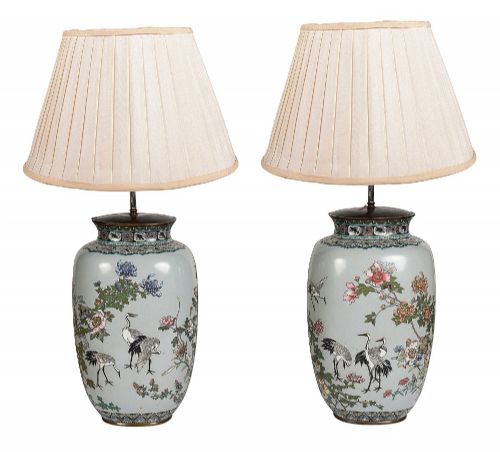
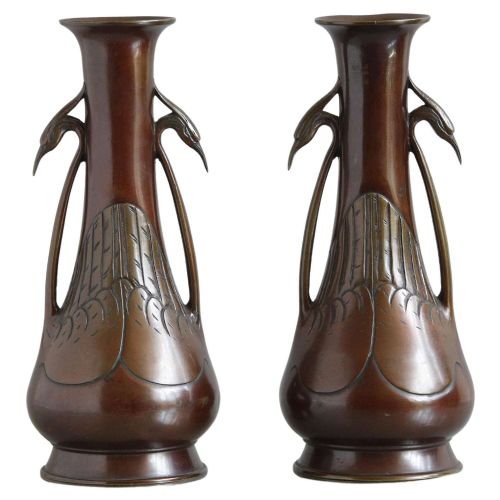
When you search for japanese crane vases, you are looking at decorative vessels that often feature crane and egret imagery executed across various forms. The pieces available include bronze vases with egret handle decoration, cloisonné enamel pairs, and stoneware jardinieres originating from the 19th century and early 20th century.
The version you are most likely to meet on this page is a Meiji period bronze or cloisonné piece, frequently found in pairs. These items showcase the distinct metalwork, porcelain, and stoneware traditions characteristic of late 19th and early 20th century Japanese craftsmanship.
How they were made
The makers utilised traditional bronze casting and mixed metal techniques to create vessels with applied sculptural elements such as egret handles. Cloisonné examples rely on delicate wirework soldered to metal bases to form cells which are then filled with coloured enamel.
Stoneware and porcelain pieces involve throwing clay on a wheel or moulding, followed by hand-painting underglaze or overglaze decorations depicting birds and natural scenes. Brass, copper, and silver elements further supplement the mixed metal compositions seen in these objects.
Japanese Crane Vases Retail Price Guide 2026
Typical asking prices for japanese crane vases among the pieces listed under this phrase on Sellingantiques today, from the lower quarter to the upper quarter. They describe what is for sale here now, not the wider market.
Egrets occasionally substitute for cranes on handles, proving that makers sometimes played fast and loose with ornithology.
What varies in quality
The standard of execution in the metalwork and enamel separates superior examples from ordinary production. Finely chased surface details on bronze handles and precise, flawless cloisonné wirework denote skilled artisan workshops rather than standard commercial output.
Artistic attribution also dictates standing, as pieces bearing signatures from notable makers command greater interest than unsigned work. The weight, balance, and complexity of the mixed metal alloys used in the body further distinguish high-grade items.
Makuzu Kozan II
The Japanese Crane Vases Glossary
- Cloisonné
- Enamelling technique where metal wire creates compartments on a base that receive coloured paste before firing. This method produces intricate patterns across vases and lamps.
- Meiji Period
- The era spanning from 1868 to 1912 in Japanese history, known for opening trade and exceptional decorative arts. Pieces from this time show distinct stylistic shifts.
- Jardiniere
- An ornamental pot or receptacle designed to hold plants or flowers. These large vessels often match the decorative themes of contemporary vases.
- Mixed metal
- The combination of different metallic elements such as bronze, brass, copper, and silver within a single object. Artisans used this to create contrasting colour and texture.
- Imari
- A type of Japanese porcelain decorated in underglaze blue and overglaze red, gold, and other colours. These ceramics formed a major part of export wares.
Japanese Crane Vases: Frequently Asked Questions
What are Japanese crane vases made of?
These vessels are constructed from materials including bronze, cloisonné enamel, porcelain, stoneware, and mixed metals.
Individual pieces often incorporate brass, copper, or silver accents to enhance the sculptural design.
How do I date a Japanese bronze vase?
Dating relies on stylistic markers, manufacturing techniques, and period attributions such as the Meiji era or the late 19th century.
Makers' marks and specific casting methods also help place the object within a precise timeframe.
Were Japanese vases used for flowers?
Many of these vessels functioned as traditional flower holders or decorative display pieces in interiors.
Larger forms, such as jardinieres and heavy jars, served practical botanical purposes alongside ornamental roles.
What is Meiji period metalwork?
Meiji period metalwork encompasses bronze, brass, and mixed metal items produced between 1868 and 1912.
This era is celebrated for sophisticated patination and detailed avian or floral motifs.