


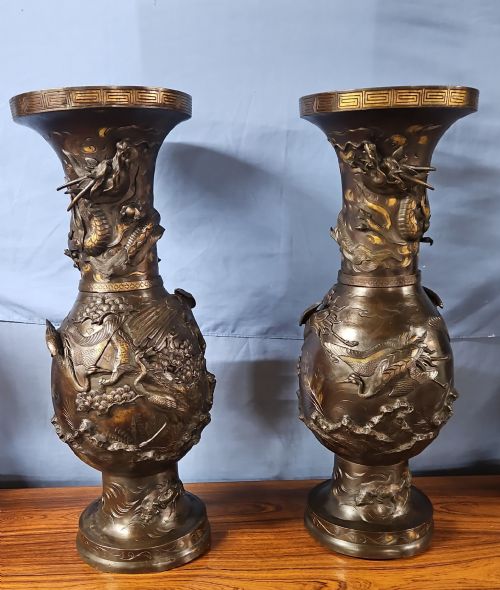


Meiji Relief Pair
These meiji relief pair selections bring together matched Japanese metalwork and ceramics featuring high-relief decoration.
Meiji Relief Pair
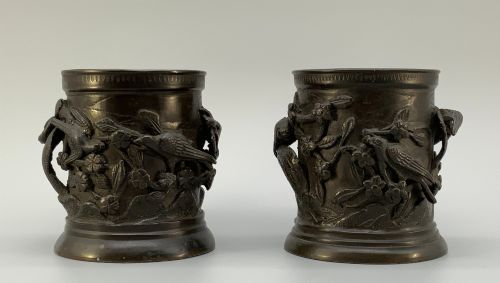
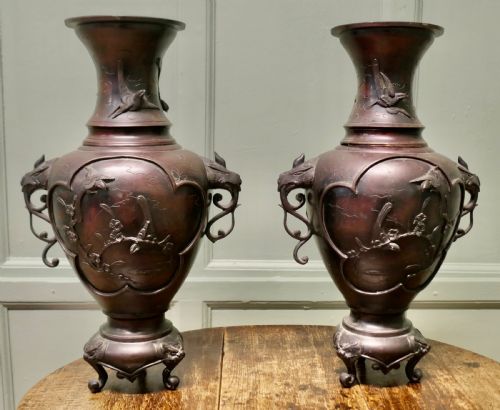
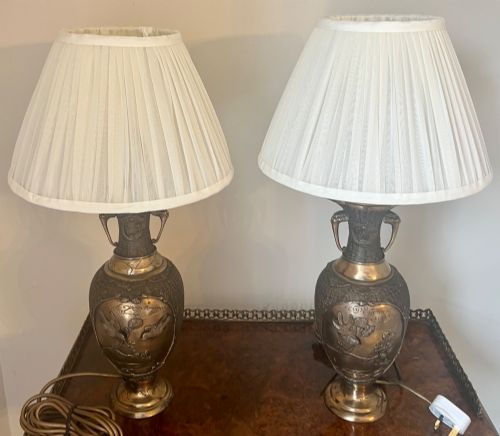
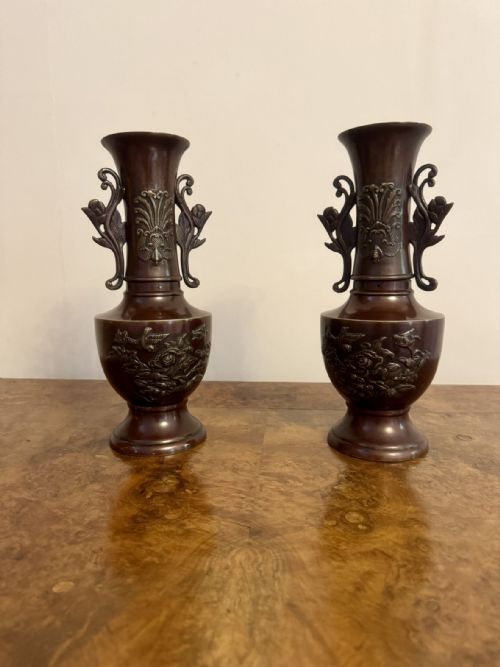
A meiji relief pair consists of matched decorative objects created during the Japanese Meiji period, predominantly taking the form of bronze vases, lamps, and wall panels. These symmetrical pairs display raised surface ornamentation depicting birds, blossoms, and floral motifs.
Vases dominate the selections found on this page, ranging from standard baluster urns to monumental presentation pieces. Buyers encounter both pure bronze castings and mixed metal compositions alongside occasional ceramic and earthenware alternatives.
The period spanning the nineteenth and early twentieth centuries provides the primary dating for these matching items. Many pieces carry secondary Victorian era classifications reflecting their period of British import and collection.
How they were made
Metalworking techniques define the construction of these items, with patinated bronze serving as the primary medium for the majority of vessels. Artisans utilised casting methods to shape the bronze, copper, and brass before applying fine surface details.
Mixed metal applications and gold leaf additions create contrast on the raised decorative elements. Ceramic pieces utilise earthenware bodies finished with enamel details and blue and white glazes.
Some bronze elephant vases stand ready to guard your mantelpiece alongside botanical blossoms.
What varies in quality
The crispness and depth of the raised relief work separate standard decorative items from superior examples. Master metalworkers achieved finer definition in natural motifs such as birds and floral sprays.
Scale and weight dictate the presence of monumental presentation items within the range. Heavier bronze castings with complex patination demand greater technical skill during production.
The Meiji Relief Pair Glossary
- Meiji Period
- The era in Japanese history spanning from 1868 to 1912, noted for opening trade with the West. Objects from this time often combine traditional craftsmanship with export designs.
- Patinated Bronze
- A bronze alloy treated with chemical solutions to produce a specific surface colour and finish. This treatment protects the metal while enhancing the visual depth of the relief.
- Baluster
- A vase form with a rounded body that tapers toward the neck and stands on a narrower foot. This shape provides a stable base for detailed surface decoration.
- Jardiniere
- A large ornamental pot designed to hold plants or flowers. These items appear in bronze and ceramic formats within the selections.
- Mixed Metal
- A decorative technique combining different metal alloys such as copper, brass, and bronze within a single design. Artisans use this method to create contrasting tones across the relief surface.
Meiji Relief Pair: Frequently Asked Questions
How do I display them?
Matched pairs look best placed symmetrically on heavy furniture such as sideboards or mantels. Their substantial weight requires sturdy support surfaces.
Ensure adequate lighting reaches the raised relief details so the birds and floral motifs remain distinct.
Are they all made of bronze?
While bronze and patinated bronze form the vast majority of listings, alternative materials exist. Earthenware and ceramic Satsuma wares also appear in matched pairs.
Some items incorporate mixed metals and gold leaf to highlight specific decorative elements.
How are periods identified?
Datings rely on stylistic markers associated with Japanese export production and nineteenth-century manufacturing techniques. Many pieces also carry Victorian era attribution markers from British collections.
Inscriptions and presentation dates occasionally appear on monumental bronze vessels.