

A 2026 Guide by Sellingantiques
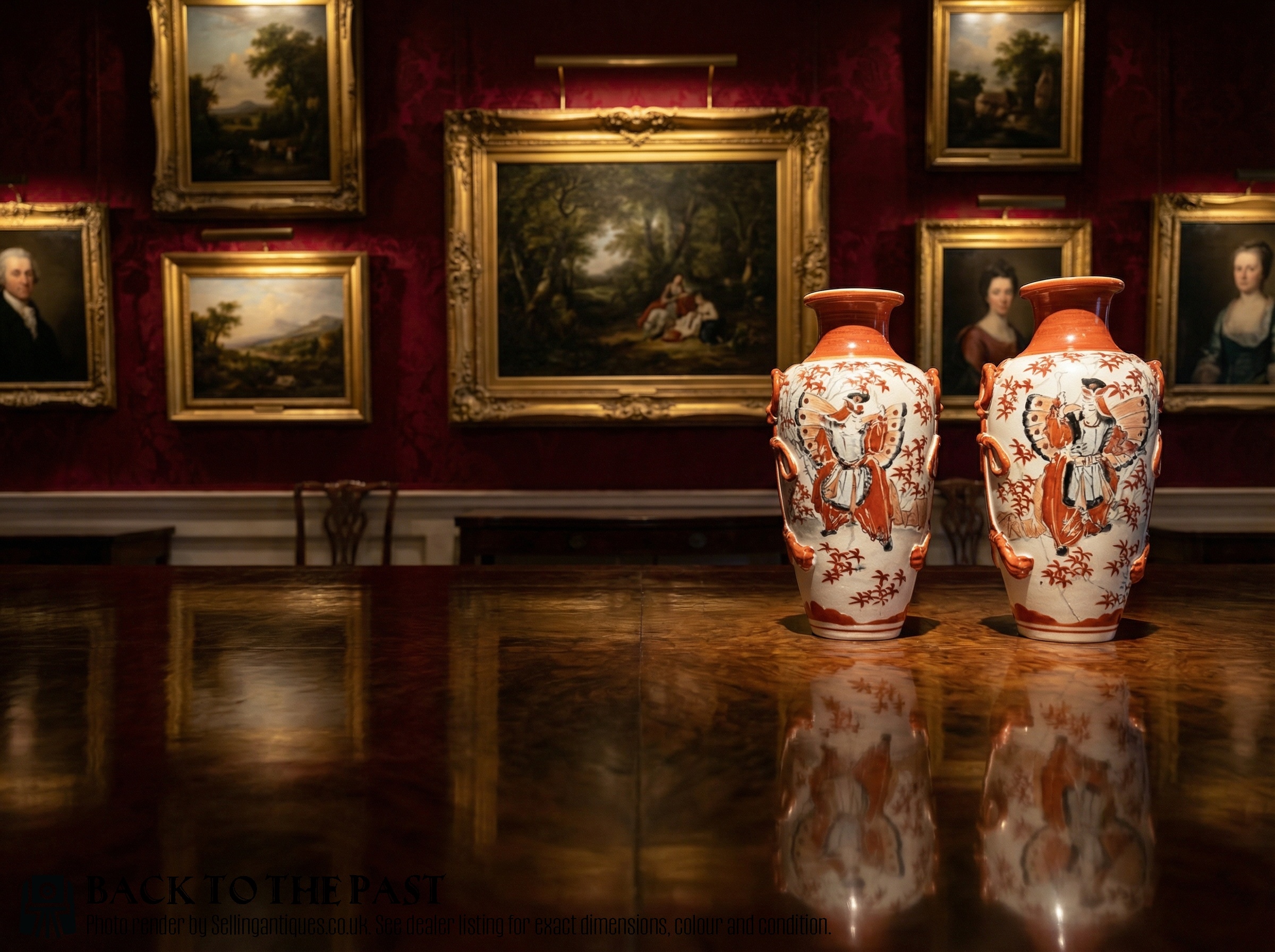
Quality Pair of Antique Satsuma Vases, 1900
Priced at £445 from Unique Antiques by Emma Jade
Early pieces come from Kyushu island. The Shimazu clan established kilns there using captive Korean potters in the seventeenth century, starting a regional tradition.
Look at the explosion of trade after 1858. Western merchants wanted novel display items.
The Meiji government heavily promoted Satsuma vases at international exhibitions to boost exports. Paris and Vienna expositions drove overseas demand for this specific aesthetic.
Kyoto quickly became the main production centre. Workshops there bought blank vessels from regional kilns to decorate.
Quality dropped sharply towards the 1920s. Factories churned out slip-cast copies with rushed painting to satisfy bulk department store orders from abroad.
Yabu Meizan ran a highly successful Osaka workshop. His painters focused on microscopic detail, using tiny dots of enamel for borders.
Kinkozan was a major Kyoto operation. They produced both high-end exhibition masterpieces and standard commercial wares for export.
Look for the Ryozan mark on finely painted examples. This studio frequently supplied pieces to the influential Ota trading company.

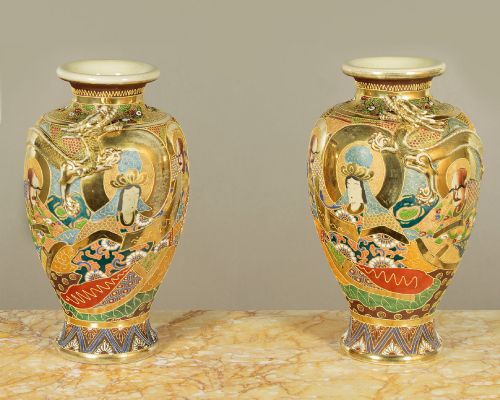
Pair of Antique Japanese Meiji Period Satsuma Vases, 19th Century
Priced at £465 from Applecross Antiques
The 2026 retail price guide for Antique Satsuma Vases is drawn from a proprietary archive of over 1.1 million retail prices indexed by Sellingantiques since 2003. This guide relies exclusively on their own internal data; no external sources or auction records are used.
Analysing nearly 25 years of UK antique market history alongside current retail values, the data indicates that typical UK retail prices for Antique Satsuma Vases range between £400 and £3,900. Entry-level prices generally fall under £400 and premium examples upwards of £3,900.
Raised enamelling is the signature of a Satsuma vase. Run a finger over the surface to feel the textured decoration.
Panels usually divide the main body. One side often shows samurai or scholars, while the reverse displays birds and flowers.
A crest consisting of a cross within a circle frequently sits on the neck. This represents the Shimazu family mon.
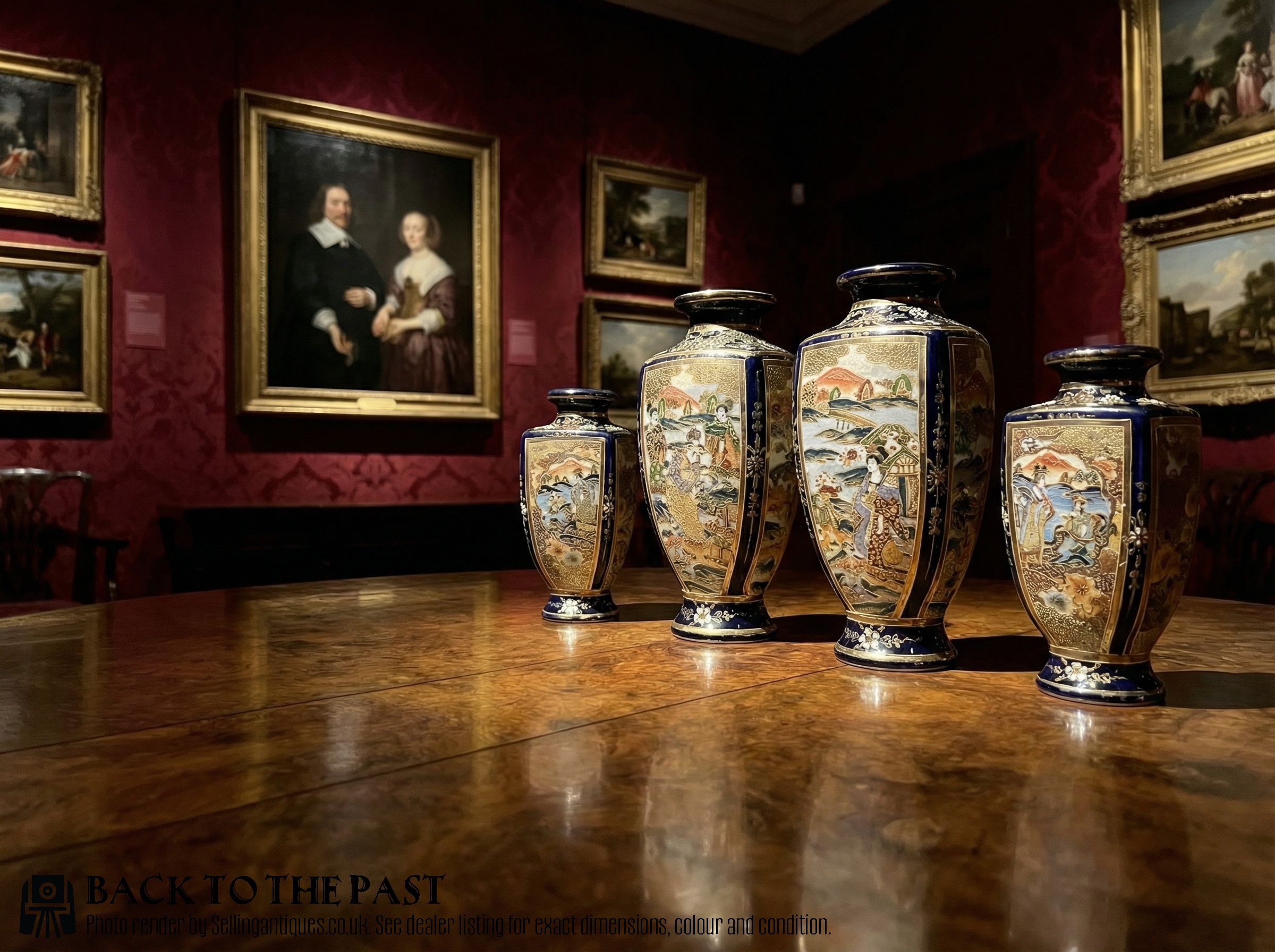
Outstanding Quality Antique Japanese Satsuma Garniture of Four Vases, 1900
Priced at £1,025 from Unique Antiques by Emma Jade
Wheel-thrown forms dominate the early period. Later mass-produced wares rely on moulds to speed up the process.
Decorators worked in specialised assembly lines. One artisan painted the faces, another handled the gold borders.
The firing process required multiple stages. The blank went in first, followed by successive lower-temperature firings for different enamel colours.
"Many blanks were shipped hundreds of miles before seeing a paintbrush. Kyoto painters regularly ordered undecorated pots from kilns in Kagoshima."
"The elaborate samurai scenes were designed specifically to match Western ideas of Japan. Domestic taste preferred simpler designs."
"Sometimes the artist who signed the base was just the head of the workshop, representing the combined work of five different painters."
Based on almost 25 years of Sellingantiques UK antique market data, Antique Satsuma Vases appeared 958 times (out of 1,100,000 antiques) which gives it a rarity score of 83/100.
This score measures scarcity within the Sellingantiques archive only and is not a survey of the entire antiques market, so these statistics may not be indicative of the general availability of Antique Satsuma Vases elsewhere.
That circle with a cross inside is the Shimazu family mon. They were the ruling clan of the Satsuma domain where these wares originated.
Many Meiji period decorators added it to the base or neck. It became a generic marker for the style rather than proof of origin.
The body is porous earthenware. Once moisture or grease gets under the clear glaze and into the crackle, it stays there.
Immersing them in water is a bad idea. The moisture can cause the glaze to flake or the enamels to lift off the surface. You just have to live with the discolouration.
Decorators used a thick white enamel to build up the faces of figures. It provides a smooth surface for painting tiny facial features with a single-hair brush.
You often see this technique on Kannon figures or courtiers.
Never polish the gilding on a Satsuma vase. The gold is fired on at a low temperature and sits right on top of the glaze. Any abrasive cleaner will strip it off the surface.
The reddish tint is normal. Decorators often used an iron-red enamel base underneath the gold to make it look warmer and thicker. Leave the surface exactly as it is.
Please note: This Antique Satsuma Vases guide and its associated pricing data are provided for general informational purposes only. It does not constitute formal financial, investment, or appraisal advice and should not be relied upon as the sole basis for any commercial activity, purchasing, or sales decisions. Sellingantiques.co.uk accepts no liability for any actions taken in reliance on this information. Always consult with a qualified professional or independent appraiser.
