
There are no results to show on this page for that combination of filters:
Art Nouveau Japanese Vases
A 2026 Guide by Sellingantiques
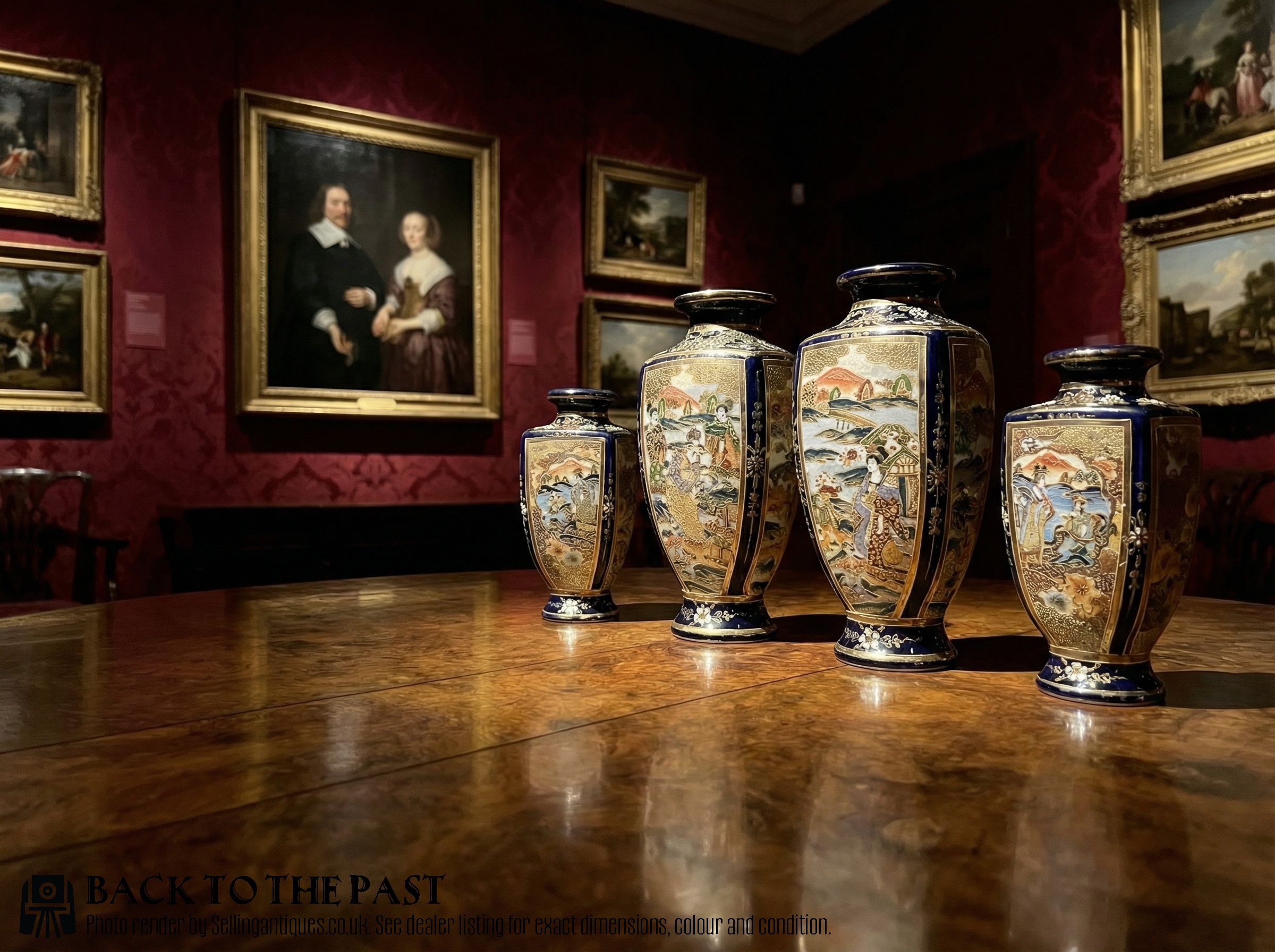
Outstanding Quality Antique Japanese Satsuma Garniture of Four Vases, 1900
Priced at £1,025 from Unique Antiques by Emma Jade
Production scaled up heavily during the Meiji period. Kilns shifted focus from domestic wares to supplying European and American markets.
Shipments left from ports like Yokohama and Nagasaki. Western buyers wanted exotic decor for their drawing rooms.
Look for the shift in scale. Vases grew taller and wider to suit the grand proportions of Victorian homes.
Domestic pieces remained smaller. They sat quietly in the tokonoma alcove rather than shouting across a crowded parlour.
Kinkozan operated in Kyoto during the late nineteenth and early twentieth centuries. They produced large quantities of gilded Satsuma-style vases.
Makuzu Kozan ran a major studio in Yokohama. His early work features high-relief applied figures of birds and crabs.
Regional names usually describe the style rather than a specific factory. Imari refers to the port, not the individual potter.

A Pair of Polygon Japanese Vases Circa 1880. Meiji Period. Vase., Victorian
Priced at £390 from Frank Craig Antiques
The 2026 retail price guide for Antique Japanese Vases is drawn from a proprietary archive of over 1.1 million retail prices indexed by Sellingantiques since 2003. This guide relies exclusively on their own internal data; no external sources or auction records are used.
Analysing nearly 25 years of UK antique market history alongside current retail values, the data indicates that typical UK retail prices for Antique Japanese Vases range between £400 and £5,900. Entry-level prices generally fall under £400 and premium examples upwards of £5,900.
Enamel work often sits thickly on the surface. Run a finger over Kutani wares to feel the raised decoration.
Motifs draw heavily on nature and folklore. Dragons, peonies and figures in landscapes appear constantly on these vessels.
Applied handles sometimes flank the neck. Elephant heads and stylised dragons are common shapes for these side mounts.
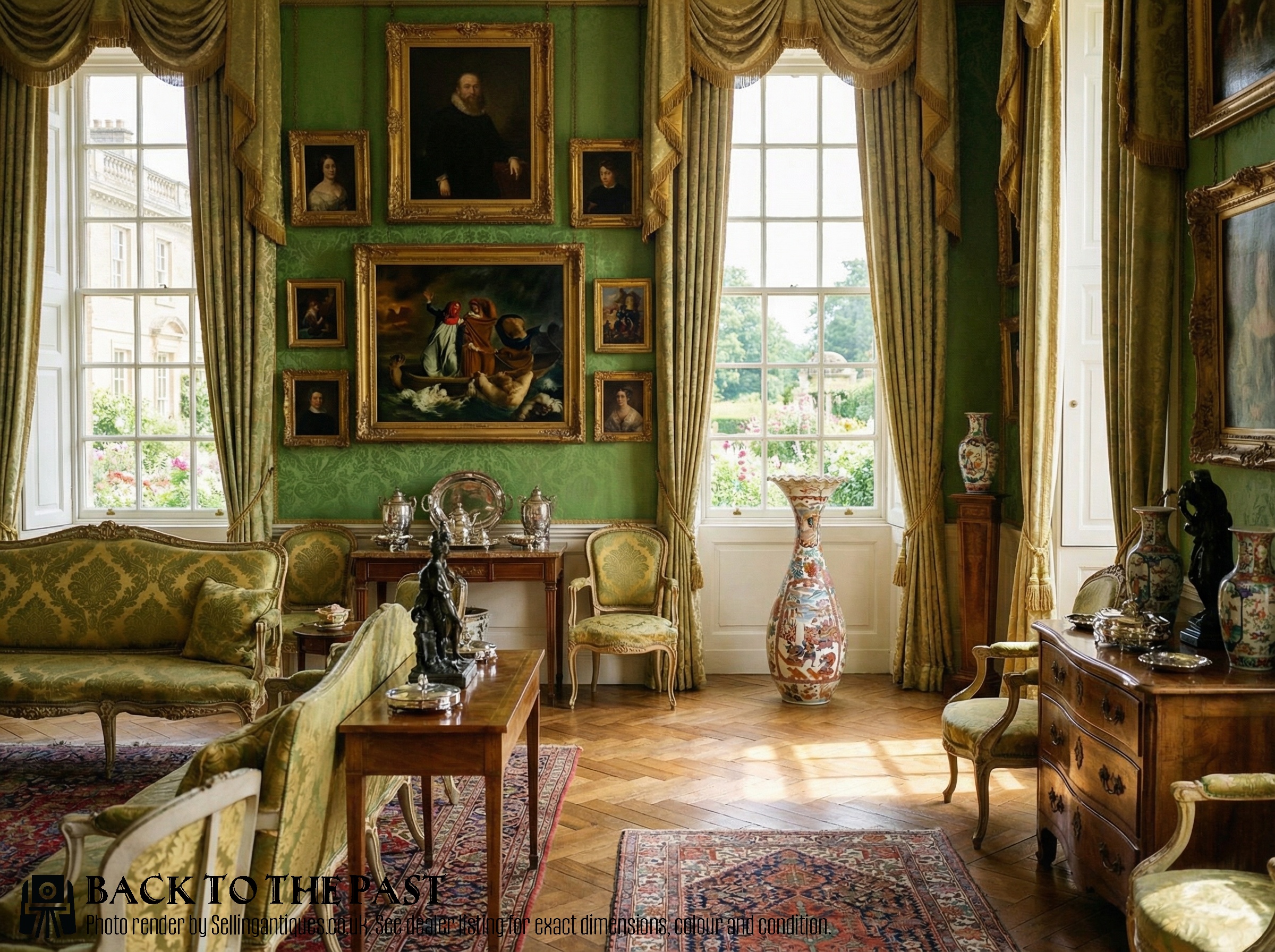
Large Antique 19th Century Quality Japanese Imari Floor Standing Vase, 1880
Priced at £2,950 from London City Antiques
Throwing large porcelain sections requires serious physical strength. Heavy pieces were often turned in segments and luted together before firing.
Cloisonné involves soldering fine metal wires to a copper body. Enamel pastes fill the resulting cells before repeated firings.
Wood-fired kilns produced variations in the glaze. Ash falling on the vessels created unpredictable textures on the finished surface.
"Many purely decorative export pieces actually hold water well. The interiors are often glazed and watertight."
"Packing methods worked well. Vessels travelled halfway across the world wrapped safely in rice straw and wooden crates."
"Bronze examples double as resonant bells. Striking an empty cast metal vase produces a sustained, clear tone."
Based on almost 25 years of Sellingantiques UK antique market data, Antique Japanese Vases appeared 3054 times (out of 1,100,000 antiques) which gives it a rarity score of 54/100.
This score measures scarcity within the Sellingantiques archive only and is not a survey of the entire antiques market, so these statistics may not be indicative of the general availability of Antique Japanese Vases elsewhere.
Wash the interior with lukewarm water and a mild detergent. Avoid bleach or harsh chemicals that might seep into fine cracks in the glaze. Use a soft bottle brush to reach the bottom.
Leave the vase to dry upside down on a towel. For stubborn residue, let the soapy water sit overnight rather than scrubbing aggressively.
Keep them together. Pairs were usually made and decorated to mirror each other, with scenes that flow from the left vessel to the right. Separating them breaks that visual dialogue.
Position the damaged one so the crack faces the wall. A pair with one damaged half always holds more interest than a single orphaned vase.
That usually indicates a painted seal mark. It acts as a signature for the studio or the painter who decorated the piece.
Most motifs carry specific symbolic weight in Japanese culture. Cranes and pine trees represent longevity, while plum blossoms signal the arrival of spring. The decorators relied on a deep vocabulary of traditional imagery.
Export markets did influence the designs over time. Studios began crowding the surfaces with more birds and larger flowers, adapting the traditional symbols to suit Victorian tastes for dense decoration.
Please note: This Antique Japanese Vases guide and its associated pricing data are provided for general informational purposes only. It does not constitute formal financial, investment, or appraisal advice and should not be relied upon as the sole basis for any commercial activity, purchasing, or sales decisions. Sellingantiques.co.uk accepts no liability for any actions taken in reliance on this information. Always consult with a qualified professional or independent appraiser.
