


A 2026 Guide by Sellingantiques

Antique Shaped Imari Vase with Lid
, 1900
Priced at £325 from London City Antiques
Export trade drove production. The Dutch East India Company shipped huge quantities of these Antique Imari Vases from Japan to Europe during the seventeenth and eighteenth centuries.
Production centred around Arita. Imari was simply the port they shipped from, rather than the place where the kilns were actually located.
Chinese potters didn't ignore the lucrative European market. They soon started producing their own versions, known as Chinese Imari, to compete alongside the Japanese originals.
Look for shifting trade patterns. When Japanese borders briefly closed or exports slowed, European factories stepped in to mimic the classic palette on domestic wares.
Most early pieces are entirely anonymous. The Arita kilns operated as large workshops where individual potters and painters rarely signed their output.
Fukagawa Chuji founded his own company in 1894. His workshops produced highly refined Antique Imari Vases for export, marked with a distinctive mountain and stream logo.
Look out for Koransha. This company was established by the Fukagawa family in 1875 to consolidate local Arita production and supply export wares to the West.
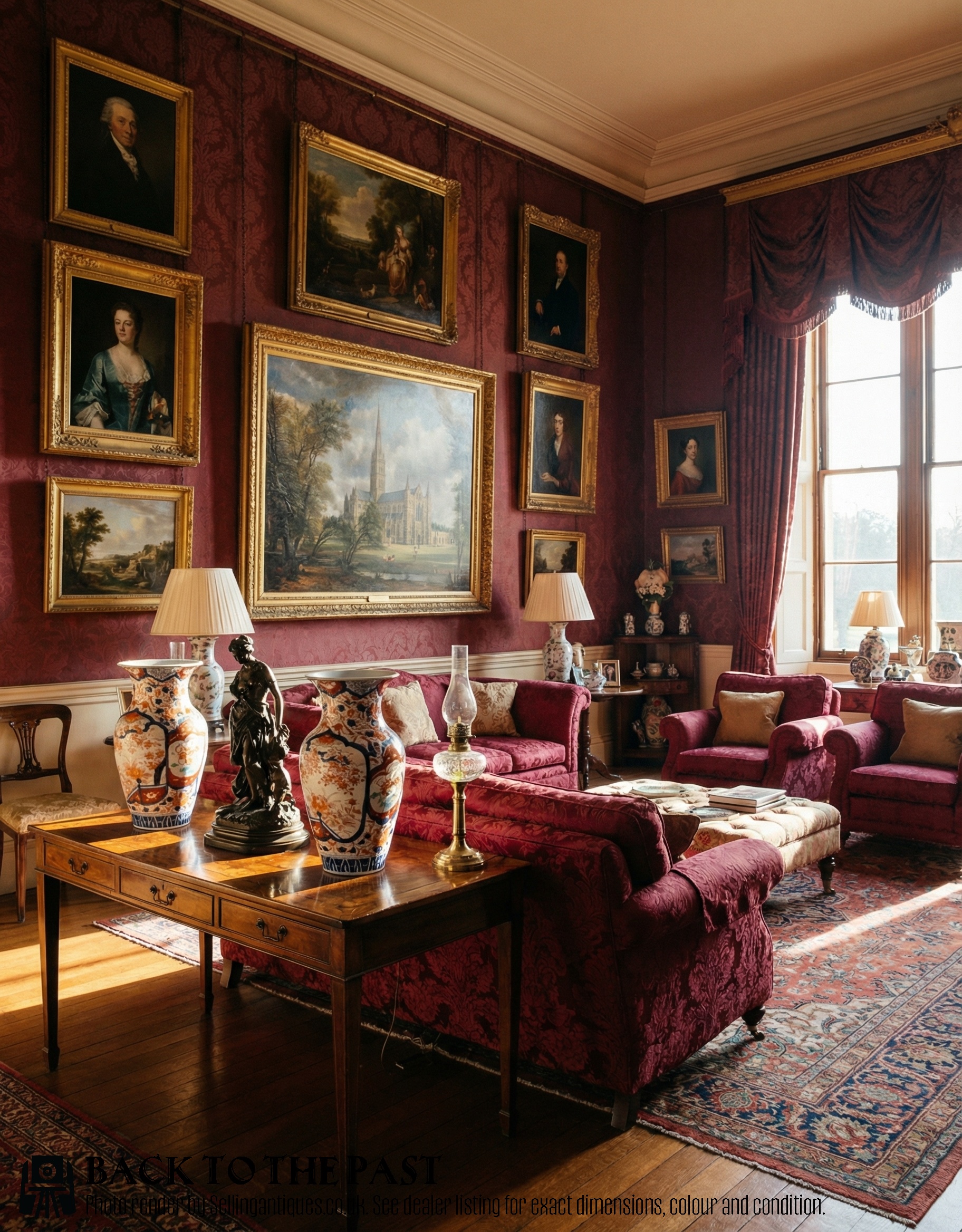
Fantastic Large Pair of Antique Japanese Imari Vases, 1900
Priced at £895 from Unique Antiques by Emma Jade
The 2026 retail price guide for Antique Imari Vases is drawn from a proprietary archive of over 1.1 million retail prices indexed by Sellingantiques since 2003. This guide relies exclusively on their own internal data; no external sources or auction records are used.
Analysing nearly 25 years of UK antique market history alongside current retail values, the data indicates that typical UK retail prices for Antique Imari Vases range between £400 and £3,600. Entry-level prices generally fall under £400 and premium examples upwards of £3,600.
Dense, overlapping patterns cover almost every surface. You'll often see asymmetrical floral designs grouped inside cartouches or large painted panels.
Check the classic colour palette. The combination of dark cobalt blue, rusty iron red and gold detailing defines traditional Antique Imari Vases.
Lids sometimes survive. Many of the larger baluster forms originally sold with matching domed covers topped by a finial, often shaped like a mythical beast.
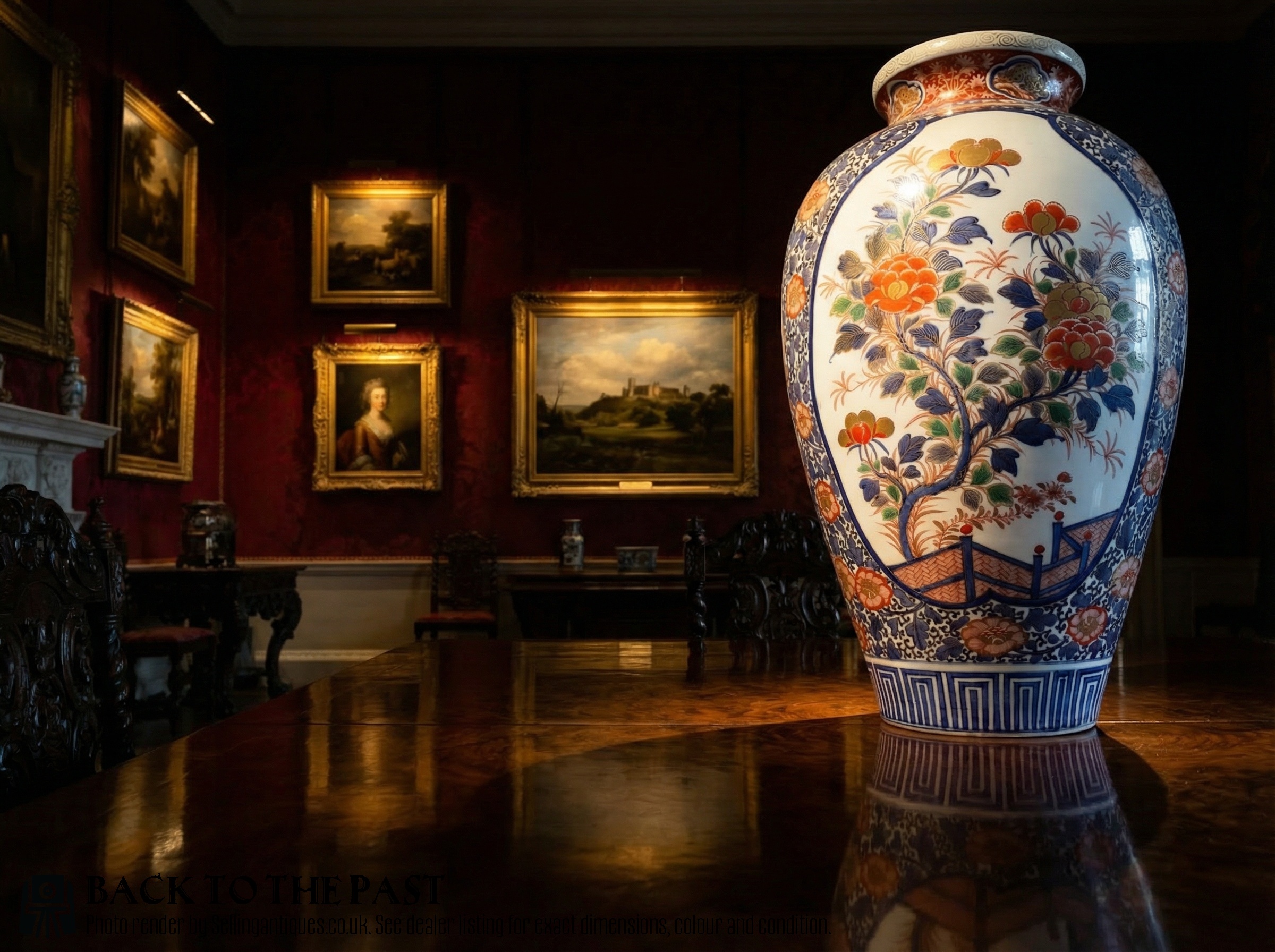
Large Late C19th Japanese Meiji Period Porcelain Vase Decorated in the Imari Palette., 1890
Priced at £1,750 from M Lees and Sons
Early potters threw these sections on a wheel. Large Antique Imari Vases were often made in two halves and luted together with slip before firing.
Moulding became more prevalent in the nineteenth century. Kilns used plaster moulds to achieve uniform shapes and speed up the production of complex fluted bodies.
Notice the painting styles. Seventeenth-century brushwork tends to be looser and darker, while late Meiji examples feature tightly controlled precision in the enamel work.
"Royal collections across Europe prized them highly. Augustus the Strong amassed massive quantities to furnish his Japanese Palace in Dresden."
"The palette works perfectly in dark rooms. Those deep blues and reflective golds were designed to catch the flickering candlelight of early interiors."
"Garden designs heavily influenced the motifs. The painted panels often function as miniature botanical studies of chrysanthemums and plum blossoms."
Based on almost 25 years of Sellingantiques UK antique market data, Antique Imari Vases appeared 934 times (out of 1,100,000 antiques) which gives it a rarity score of 83/100.
This score measures scarcity within the Sellingantiques archive only and is not a survey of the entire antiques market, so these statistics may not be indicative of the general availability of Antique Imari Vases elsewhere.
Potters often shaped the top edge of a vase into a wavy or scalloped pattern. They created this fluted effect by gently manipulating the wet clay after throwing the main body on the wheel.
This shape mimics the petals of a flower opening outwards. It provided painters with a complex surface to decorate and helped scatter the light across the rim, making the piece look far more dynamic.
Many large antique vases were converted into lamps during the early twentieth century. Electricians drilled straight through the porcelain bases to thread the necessary wiring up to the bulb fittings.
Dealers often find the metal lamp mounts removed by later owners wanting to display them as vases again. The hole remains as a permanent modification to the original form, meaning it won't hold water.
A standard garniture typically consists of three or five matching vessels. You line them up symmetrically.
A covered jar usually takes the centre. Flanking vases sit on either side.
You're likely looking at a painted reign mark. Japanese potters frequently copied Chinese Ming dynasty marks on their export wares to capitalise on the high reputation of Chinese porcelain.
These marks do not indicate the actual age or origin of your piece. They were simply another decorative element added to satisfy European buyers who expected to see characters on the base.
Later pieces might carry genuine Japanese company marks. Factories like Koransha used specific painted logos rather than traditional square reign marks.
Please note: This Antique Imari Vases guide and its associated pricing data are provided for general informational purposes only. It does not constitute formal financial, investment, or appraisal advice and should not be relied upon as the sole basis for any commercial activity, purchasing, or sales decisions. Sellingantiques.co.uk accepts no liability for any actions taken in reliance on this information. Always consult with a qualified professional or independent appraiser.
