


A 2026 Guide by Sellingantiques
They first appeared in the late eighteenth century as domestic lighting gradually moved away from fixed wall sconces toward portable table setups that families could carry from room to room.
Eighteenth-century homes were draughty. Tall glass cylinders kept the flames burning steadily.
By the Victorian era, paraffin oil reservoirs replaced simple prickets.
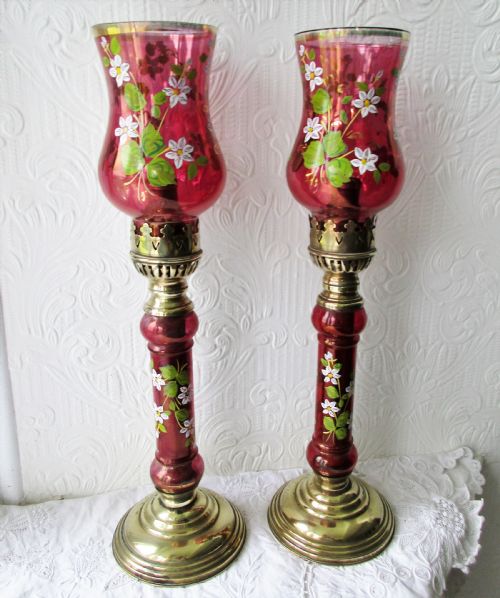
Look at the transition periods carefully. Early shades just drop loosely over a candlestick. Later lamps integrate the glass securely into a threaded brass gallery, making the whole assembly safer to carry.
Dietz produced domestic indoor hurricane styles during the late nineteenth century.
British production often centred around Birmingham. Firms like Messenger & Sons cast heavy brass bases for domestic lighting, exporting their wares across the empire.
F. & C. Osler supplied elaborate shades and mounts. They're documented supplying cut glass for wealthier households across London and India.
The 2026 retail price guide for Antique Hurricane Lamps is drawn from a proprietary archive of over 1.1 million retail prices indexed by Sellingantiques since 2003. This guide relies exclusively on their own internal data; no external sources or auction records are used.
Analysing nearly 25 years of UK antique market history alongside current retail values, the data indicates that typical UK retail prices for Antique Hurricane Lamps range between £300 and £1,200. Entry-level prices generally fall under £300 and premium examples upwards of £1,200.
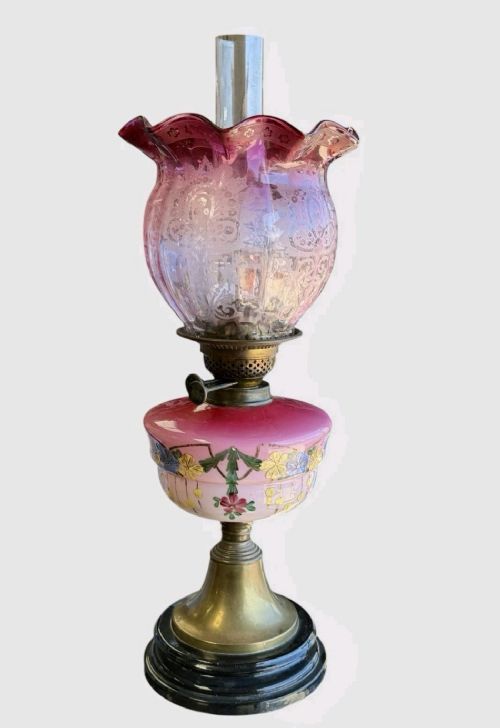
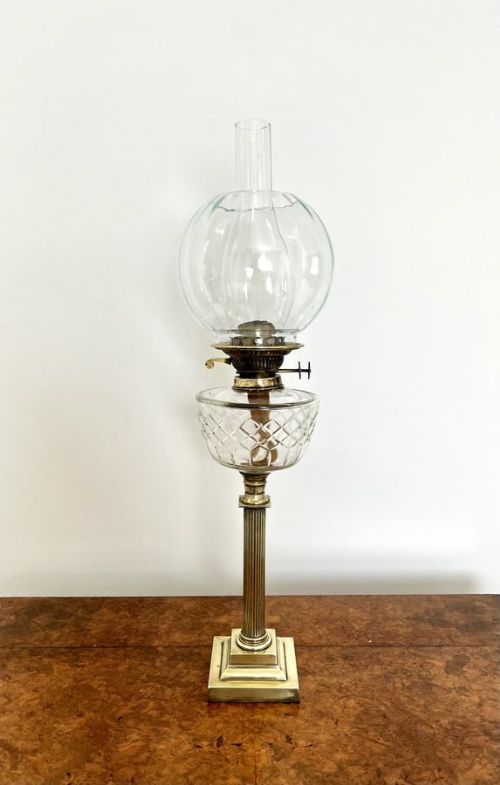
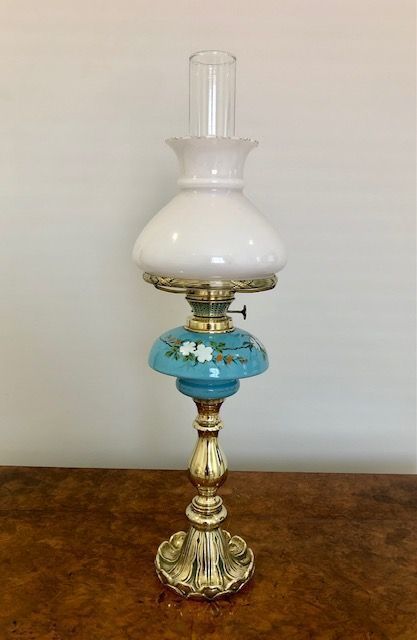
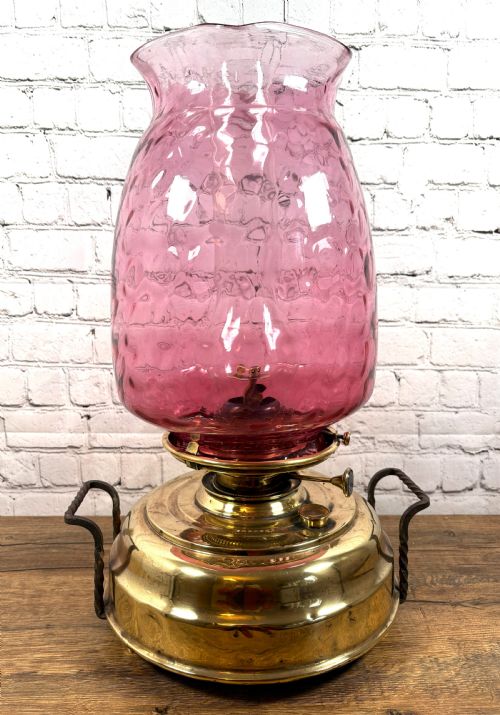
The tall, swelling glass shade defines an antique hurricane lamp. It flares out slightly at the top to release trapped heat safely while protecting the central flame from sudden gusts of air.
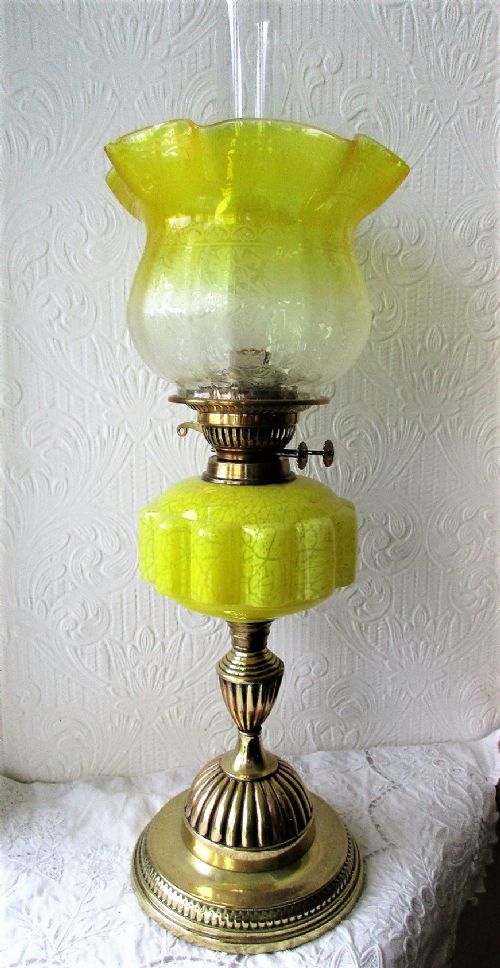
Check the burner gallery on oil models. It holds the glass chimney securely using small flexible brass prongs. Don't bend them as they snap easily.
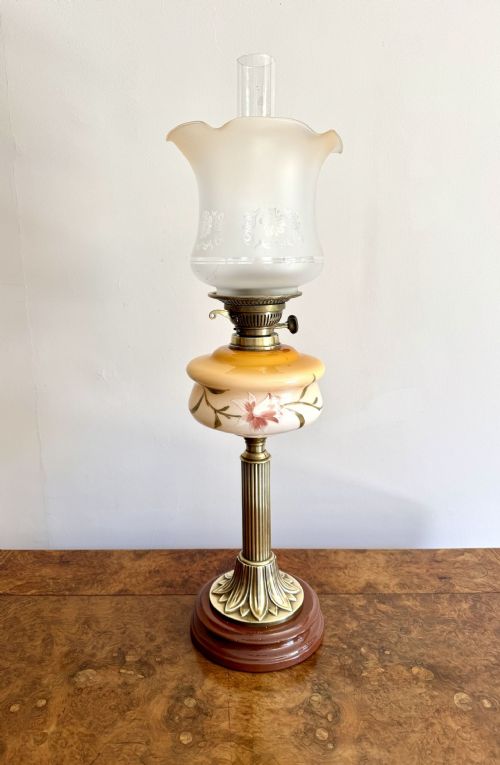
Some feature etched or frosted patterns. Grapevines and Greek key motifs were popular mid-nineteenth-century additions to the glass.
Glassblowing techniques dictated the early shapes. Makers spun hot glass to create seamless, bell-like curves that could withstand the thermal shock of a nearby flame.
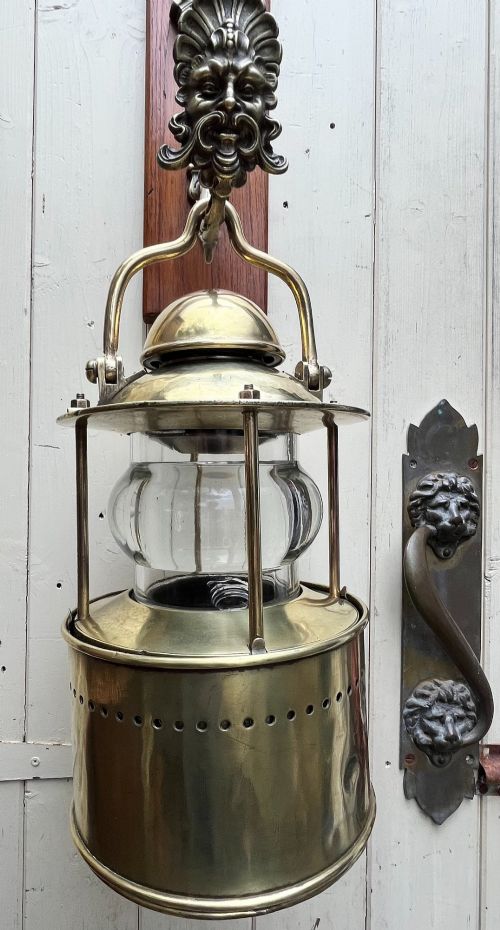
Brass bases were sand-cast in sections. Turn the lamp over. You'll often see the heavy threaded iron rod holding the cast components together under tension.
Burner mechanisms required precise machining. Tight threads stopped paraffin weeping.
"The tall shade actually improves combustion. It creates an updraught that pulls extra oxygen past the wick, resulting in a much brighter flame than a bare candle."
"Many started life in tropical colonial outposts. The constant breeze from ceiling fans made standard open candles useless."
"Frosted glass throws light downwards. This makes reading at a desk much easier on the eyes."
Based on almost 25 years of Sellingantiques UK antique market data, Antique Hurricane Lamps appeared 52 times (out of 1,100,000 antiques) which gives it a rarity score of 99/100.
This score measures scarcity within the Sellingantiques archive only and is not a survey of the entire antiques market, so these statistics may not be indicative of the general availability of Antique Hurricane Lamps elsewhere.
Wash them in a plastic bowl using warm soapy water. A metal sink can chip the delicate bottom rim if the glass slips from your hands.
Don't force a towel tightly into the narrow neck. Dry the shade with a soft cloth.
The wick mechanism has probably seized due to dried paraffin. Old fuel turns into a tough varnish over decades of storage.
A few drops of penetrating oil left overnight on the spindle often frees the metal. Never force the wheel with pliers as the soft brass gears strip easily.
Solid models take standard tapers. Oil-fired versions require lamp fuel.
Check the fitting before buying consumables.
Many blown shades have ground top rims rather than fire-polished ones. The maker snapped the glass from the blowpipe and ground it flat on a wheel.
Run your finger gently over the rim. If it feels uniform but unpolished, that is how it left the workshop. Sharp jagged spots suggest later damage.
Please note: This Antique Hurricane Lamps guide and its associated pricing data are provided for general informational purposes only. It does not constitute formal financial, investment, or appraisal advice and should not be relied upon as the sole basis for any commercial activity, purchasing, or sales decisions. Sellingantiques.co.uk accepts no liability for any actions taken in reliance on this information. Always consult with a qualified professional or independent appraiser.
