
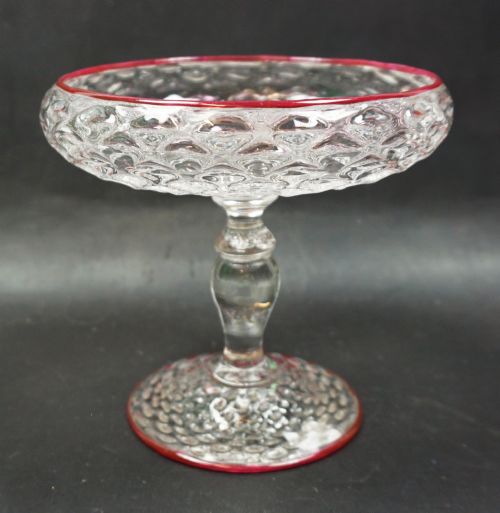
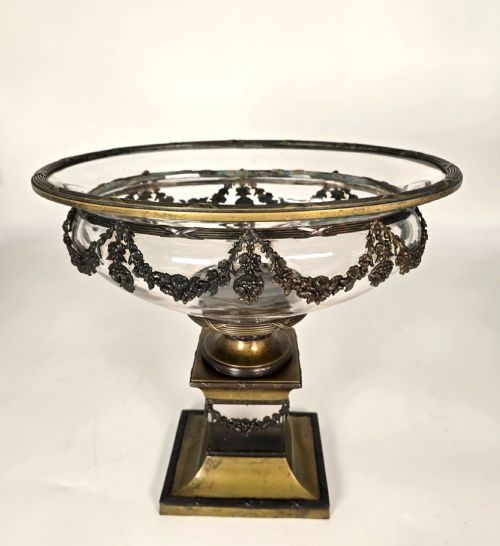
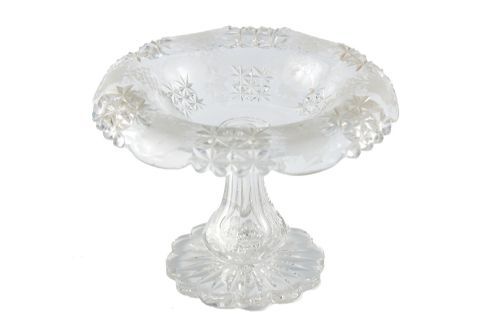


A 2026 Guide by Sellingantiques
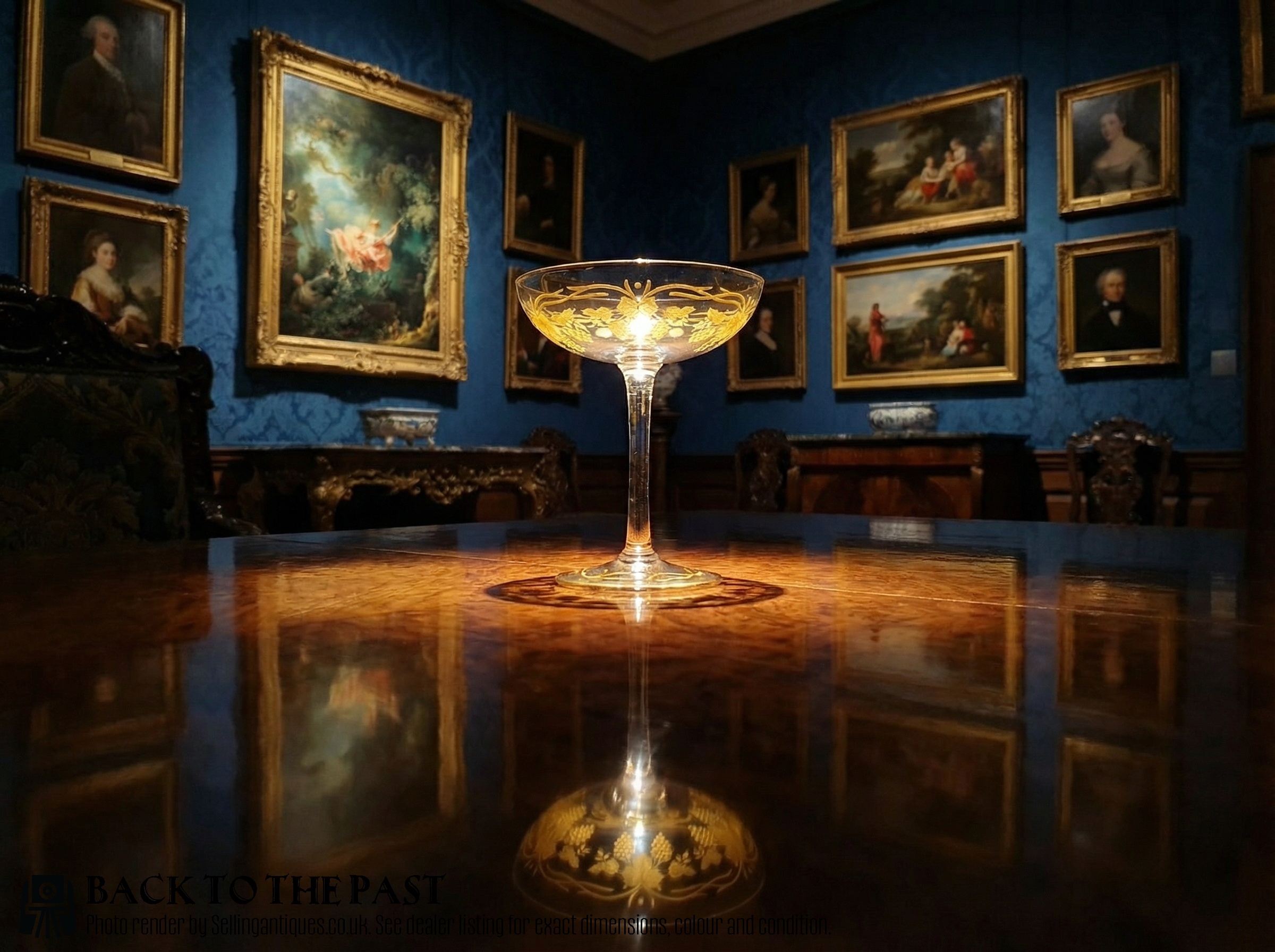
Gorgeous Antique Gilded Glass Tazza with Grapevine Decoration – Circa 1900, 1900
Priced at £165 from Kingsdown Antiques
Dining habits shifted in the late seventeenth century, pushing sweetmeats to the centre of the table.
Early antique glass tazzas usually held small, dry treats like sugared almonds.
You'll see stacked displays become popular by the Georgian period. Servants built pyramids using a large base tazza and smaller ones on top.
Look at eighteenth-century banquet diagrams to see these towering table arrangements.
Dessert services eventually moved away from pyramids, making individual tazzas more common for fruit service later on.
Identifying specific eighteenth-century craftsmen is rarely possible. The English glass trade operated through broad regional glasshouses rather than individual signed work.
Irish factories like Waterford produced heavy, cut-glass dessert wares from the 1780s into the nineteenth century.
Apsley Pellatt ran the Falcon Glass Works in the early 1800s, making detailed, high-quality tableware.
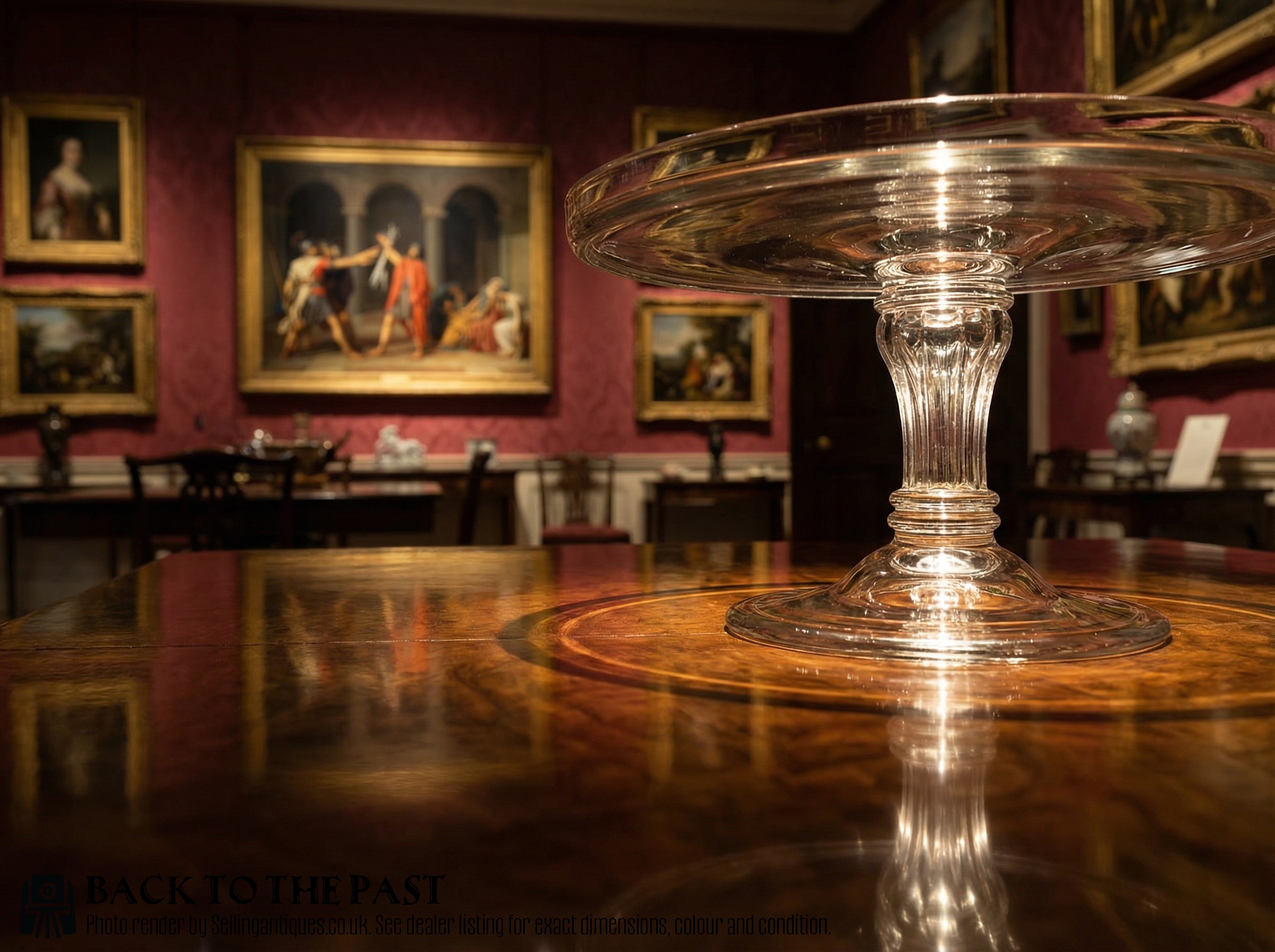
18thc English Glass Tazza, 18th Century
Priced at £495 from Helios and Co Antiques
The 2026 retail price guide for Antique Glass Tazzas is drawn from a proprietary archive of over 1.1 million retail prices indexed by Sellingantiques since 2003. This guide relies exclusively on their own internal data; no external sources or auction records are used.
Analysing nearly 25 years of UK antique market history alongside current retail values, the data indicates that typical UK retail prices for Antique Glass Tazzas range between £200 and £900. Entry-level prices generally fall under £200 and premium examples upwards of £900.
The broad, flat plate is the defining element of any glass tazza.
Check the rim style. Many feature a gallery or folded lip to stop fruit rolling off.
Stems vary widely, from plain cylinders to complex moulded pedestals and ribbed knops.
Early examples rely on applied glass trails or simple ribbed moulding for decoration.
Wheel-engraving became common as lead glass recipes improved. Craftsmen cut shallow geometric patterns into the underside of the plate.
By the Regency era, deep facet cutting dominated the trade.
"Waiters is the period term for these. They handed sweets to guests, doing the job of a servant."
"Stacked arrangements sometimes included small jelly glasses balanced right on the edge of the lower antique glass tazzas."
"Centrepieces used light reflection. The faceted glass caught candlelight to brighten the dessert course."
Based on almost 25 years of Sellingantiques UK antique market data, Antique Glass Tazzas appeared 250 times (out of 1,100,000 antiques) which gives it a rarity score of 95/100.
This score measures scarcity within the Sellingantiques archive only and is not a survey of the entire antiques market, so these statistics may not be indicative of the general availability of Antique Glass Tazzas elsewhere.
They're mostly for the dessert course. Sweetmeats, candied orange peels, and sugared nuts were standard.
Sometimes they acted as a base for other glasswares. Syllabub glasses or small jelly cups sat directly on the flat plate.
Cake stands are usually later. Most Victorian and Edwardian examples with flat tops were indeed used for cakes.
Earlier eighteenth-century tazzas weren't designed for large single cakes. The rims often feature a raised lip that makes slicing difficult. They were built for small, individual sweets.
Early glass recipes were imperfect. Sand used in the mix contained iron oxide, leaving a grey or green tint in the finished metal.
Glassmakers introduced manganese to counteract this tint. Getting the balance right was difficult, and slightly off-colour batches were common in early regional glasshouses.
That's the pontil mark. The glassblower used a long solid rod to hold the hot base while shaping the top of the tazza.
When the piece was finished, they'd crack the rod off. Earlier pieces usually have a rough, sharp scar left behind.
Later on, makers started grinding and polishing this mark smooth. Leaving it rough was standard practice for a long time.
Please note: This Antique Glass Tazzas guide and its associated pricing data are provided for general informational purposes only. It does not constitute formal financial, investment, or appraisal advice and should not be relied upon as the sole basis for any commercial activity, purchasing, or sales decisions. Sellingantiques.co.uk accepts no liability for any actions taken in reliance on this information. Always consult with a qualified professional or independent appraiser.
