



A 2026 Guide by Sellingantiques
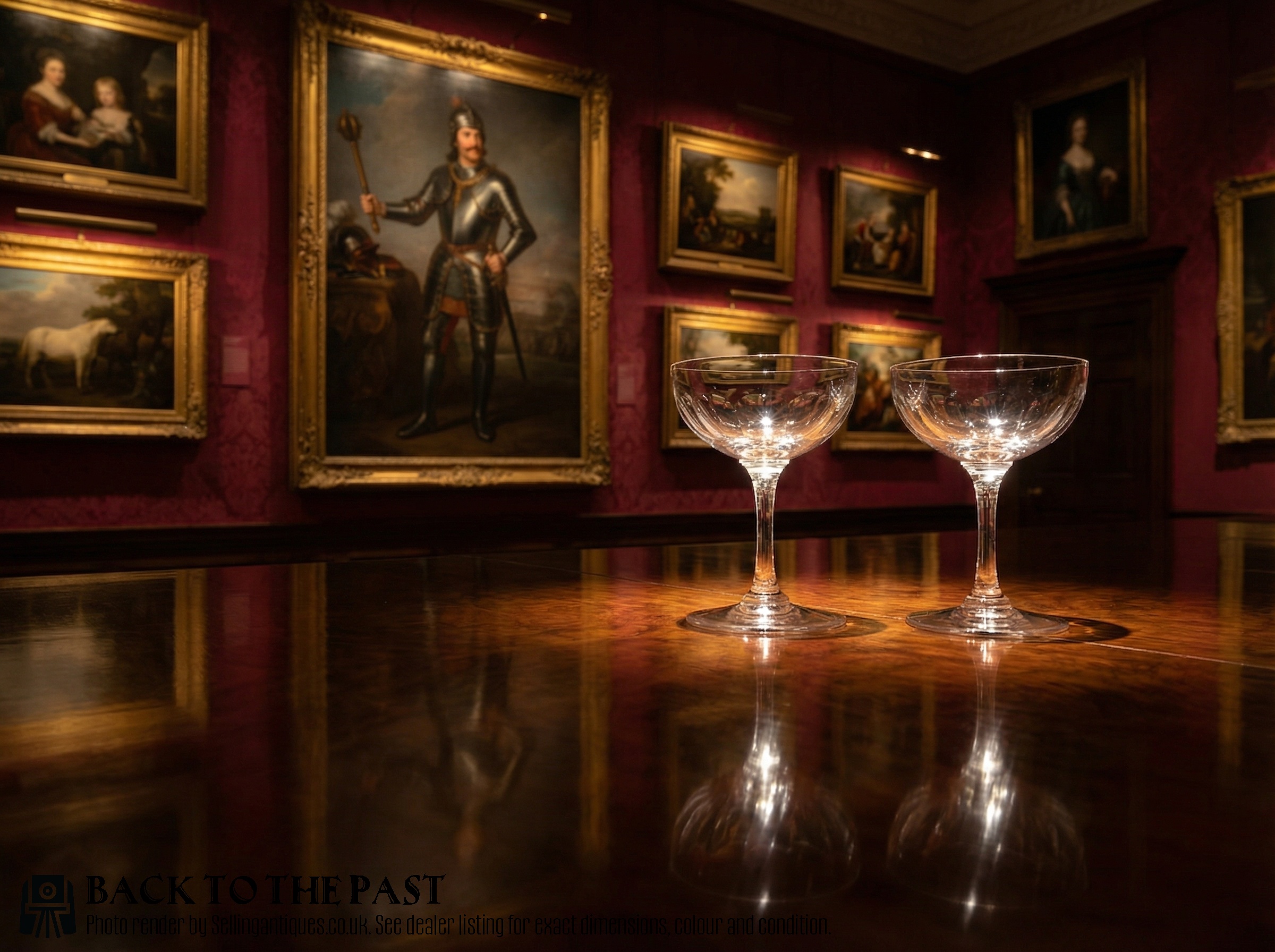
A Fine Pair of Victorian Cut Glass Champagne Bowls, 1880
Priced at £135 from Jeff Sims Antiques
Early English sparkling wine required robust drinking vessels. Glassmakers developed strong lead crystal in the seventeenth century to contain the lively liquid.
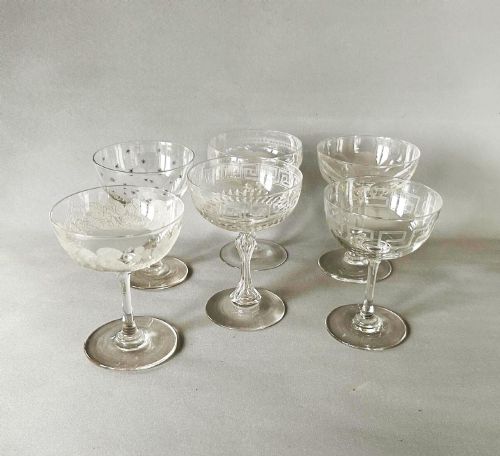
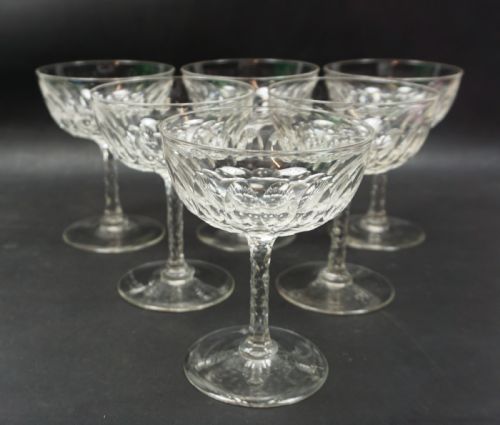
The wide coupe shape dominated the nineteenth century. Often associated with Victorian entertaining, they were stacked into pyramids for grand banquets.
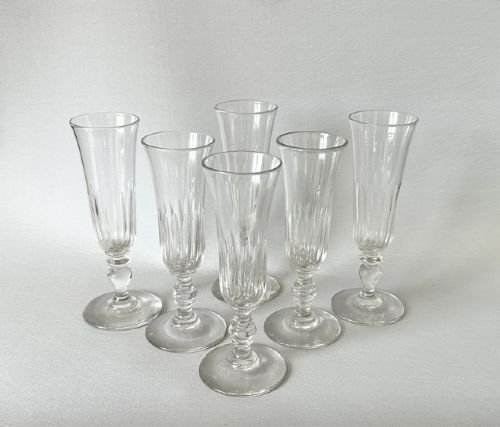
Flutes gained popularity much later. Tall narrow profiles gradually replaced the coupe as drinkers realised a smaller surface area preserved the fizz.
Look for subtle shifts in proportion over time. Edwardian antique champagne glasses often sit on slightly taller stems than early Victorian equivalents.
Thomas Webb & Sons operated heavily in the late nineteenth century. They produced heavy cut crystal coupes in the Stourbridge tradition.
Baccarat turned out heavy lead crystal flutes in France. Their late nineteenth-century output often features precise geometric cutting and thick robust stems.
Identify makers through acid-etched stamps. Many pre-twentieth century pieces carry no mark at all, relying instead on pattern books for attribution.
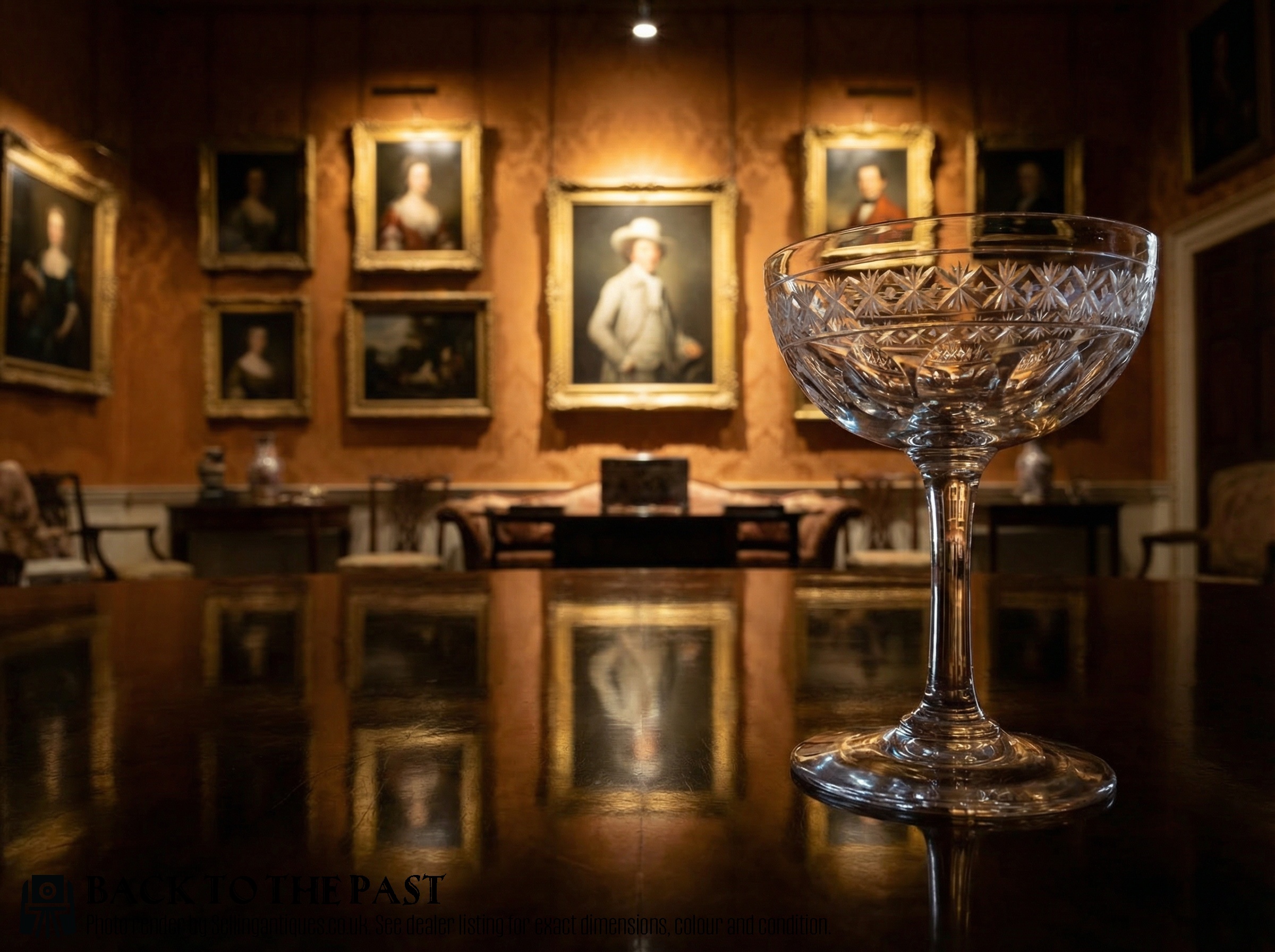
Fine Quality Set of 16 Etched Crystal Champagne Glasses / Coupes, Edwardian
Priced at £1,550 from A Brookes
The 2026 retail price guide for Antique Champagne Glasses is drawn from a proprietary archive of over 1.1 million retail prices indexed by Sellingantiques since 2003. This guide relies exclusively on their own internal data; no external sources or auction records are used.
Analysing nearly 25 years of UK antique market history alongside current retail values, the data indicates that typical UK retail prices for Antique Champagne Glasses range between £200 and £1,000. Entry-level prices generally fall under £200 and premium examples upwards of £1,000.
Hollow stems turn up regularly. Liquid fills the entire stem down to the foot, which creates a column of rising bubbles.
Check the bowl profile. Coupes have broad shallow saucers, whereas flutes present a tall narrow cone.
A pontil mark sits underneath the base. The base of the bowl itself often carries intricate facets or slice cuts designed to catch candlelight.
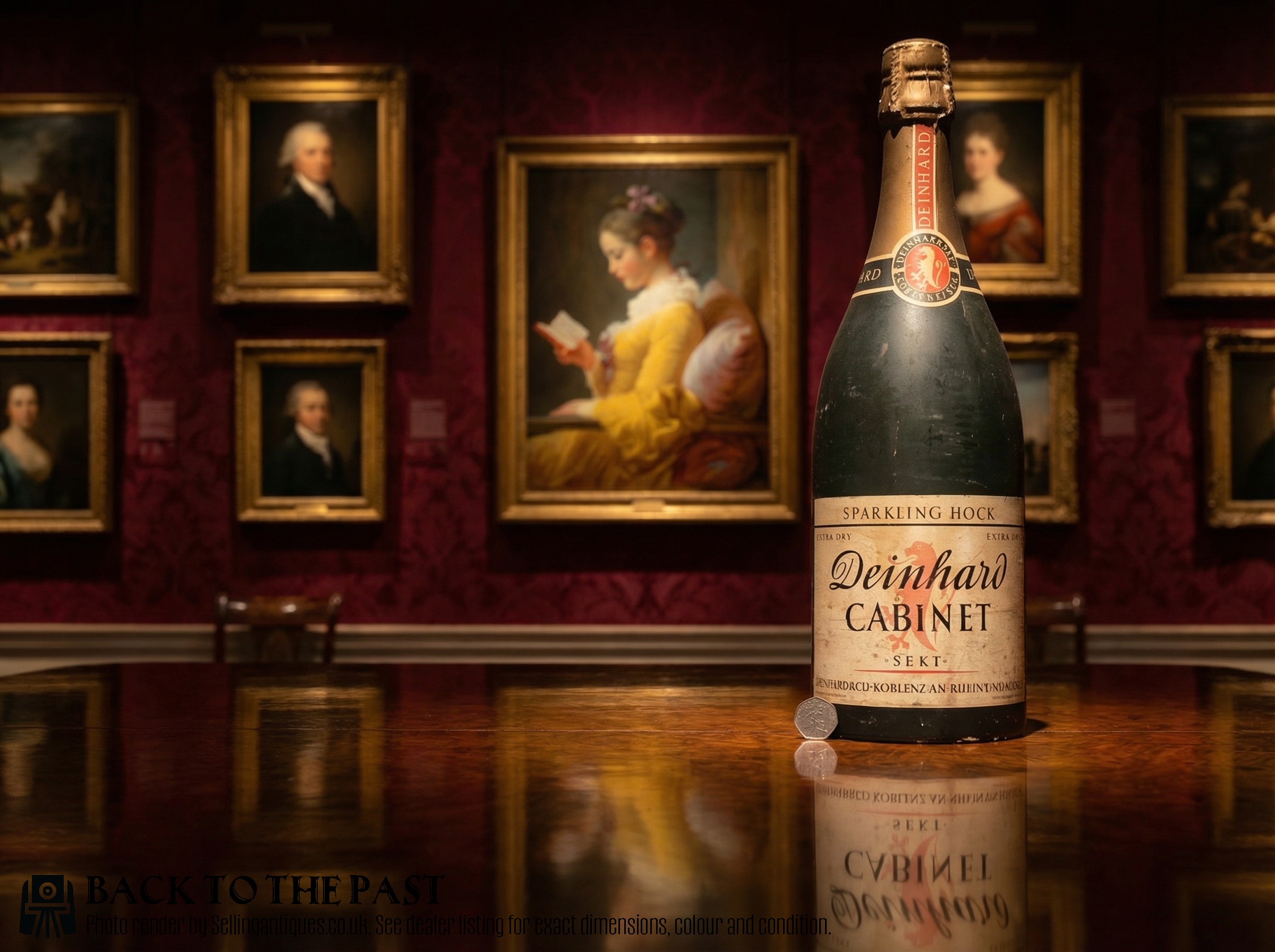
Giant Advertising Sparkling Wine Bottle + 3 More, 1930
Priced at £155 from Waterfall Antiques
Molten glass gets blown into a mould to standardise the bowl shape. Hand-formed examples show slight variations in thickness and diameter.
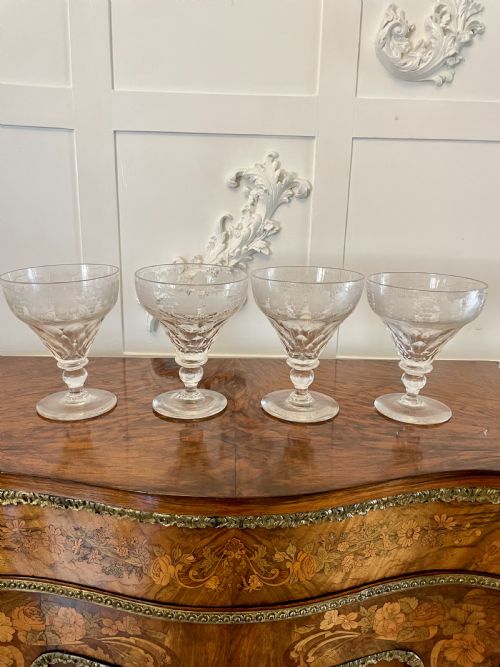
Copper wheels engraved the delicate floral motifs found on Victorian antique champagne glasses. A skilled craftsman held the blank against the spinning wheel.
Polishers restored the glass surface after deep cutting. They used wooden wheels and acidic pastes to remove the dull grey finish left by grinding stones.
"Edwardian glassmakers occasionally cut a tiny star into the inside centre of a coupe bowl. This uneven surface gives the bubbles a focal point to launch from."
"Roemers originally held early sparkling wines in the German tradition. Their thick green glass and prunted stems provided a secure grip during boisterous toasts."
"Look at the bowl rim under a light. Many nineteenth-century glasses have a slight outward flare that delivers the liquid precisely to the front of the palate."
Based on almost 25 years of Sellingantiques UK antique market data, Antique Champagne Glasses appeared 2669 times (out of 1,100,000 antiques) which gives it a rarity score of 59/100.
This score measures scarcity within the Sellingantiques archive only and is not a survey of the entire antiques market, so these statistics may not be indicative of the general availability of Antique Champagne Glasses elsewhere.
Always wash antique glassware by hand in warm soapy water. Modern dishwashers run too hot and use abrasive detergents that cause irreversible surface clouding.
Hold the glass by the bowl rather than the stem while washing. Twisting the bowl while holding the base puts stress on the stem joint and causes fractures. Dry immediately with a soft lint-free cloth.
Hollow stem flutes work perfectly well for drinking. The design simply allows the champagne to fill the stem, creating an elongated display of rising bubbles that looks distinct on a table.
Cleaning them does require a little more care. A thin flexible brush easily reaches down into the stem to clear out any residue left after a party.
The coupe developed when champagne was served much sweeter. The wide bowl allowed the wine to breathe, exposing more surface area to the air to mellow the sweetness.
The bubbles do dissipate faster in a coupe. Many people now prefer them for serving cocktails.
Worn gilding is a standard sign of age on antique glasses. Once the fired-on gold wears away from use and washing, it cannot be easily restored without sending the piece to a specialist glass restorer.
To prevent further loss, avoid rubbing the rim when drying. Just dab the gilded edge gently with a soft cloth and store them upright rather than resting on their rims.
Please note: This Antique Champagne Glasses guide and its associated pricing data are provided for general informational purposes only. It does not constitute formal financial, investment, or appraisal advice and should not be relied upon as the sole basis for any commercial activity, purchasing, or sales decisions. Sellingantiques.co.uk accepts no liability for any actions taken in reliance on this information. Always consult with a qualified professional or independent appraiser.
