


A 2026 Guide by Sellingantiques
Found in English and European fireplaces from the fifteenth century onwards.
These heavy plates stopped the fierce heat from crumbling the soft lime mortar holding the chimney together.
Cast in open sand moulds right on the dirt floor of the foundry.
Royal marriages and military victories provided popular subjects for the increasingly elaborate designs of the seventeenth century.
Most surviving early British firebacks originated in the Weald of Sussex and Kent.
Individual makers aren't often known because rural foundries frequently copied or shared their wooden patterns.
The famous Richard Lenard fireback from 1636 depicts the ironmaster himself standing surrounded by his casting tools.
Some seventeenth-century foundries in the Weald stamped their initials onto the plates, though positive attribution remains difficult today.
The 2026 retail price guide for Antique Firebacks is drawn from a proprietary archive of over 1.1 million retail prices indexed by Sellingantiques since 2003. This guide relies exclusively on their own internal data; no external sources or auction records are used.
Analysing nearly 25 years of UK antique market history alongside current retail values, the data indicates that typical UK retail prices for Antique Firebacks range between £300 and £1,400. Entry-level prices generally fall under £300 and premium examples upwards of £1,400.
Look for a thick, solid casting with a rough, uneven texture on the rear side.
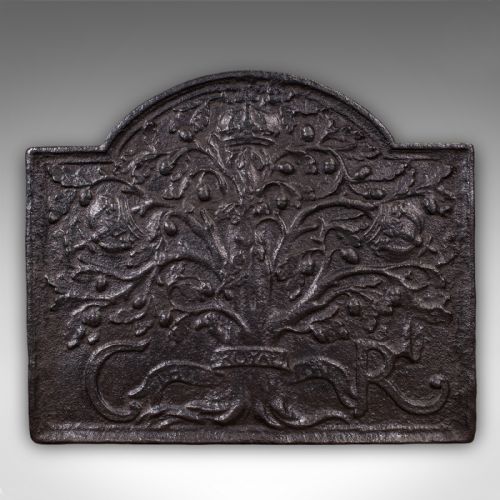
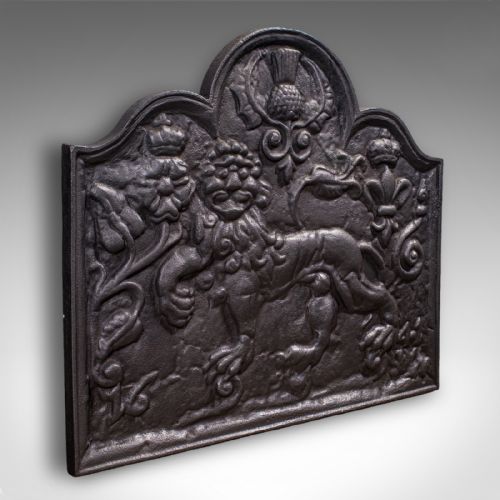
Front faces carry raised motifs ranging from simple rope marks to complex heraldic coats of arms.
Outlines change depending on the period, though they don't always follow strict timelines, with plain rectangles giving way to arched tops.
Wooden pattern boards were pressed firmly into wet sand to create the negative space for the molten metal.
Foundry workers sometimes used loose stamps pressed individually into the sand to build up early decorative designs.
Later casting methods allowed finer details, leading to the crisper neoclassical styles favoured during the eighteenth century.
"Dutch examples often focus on biblical scenes rather than the heraldry common on English plates."
"The heavy iron holds onto heat long after the fire dies down, helping keep a room warm overnight."
"Some early patterns were created by pressing actual pieces of carved domestic furniture directly into the sand mould."
Based on almost 25 years of Sellingantiques UK antique market data, Antique Firebacks appeared 85 times (out of 1,100,000 antiques) which gives it a rarity score of 98/100.
This score measures scarcity within the Sellingantiques archive only and is not a survey of the entire antiques market, so these statistics may not be indicative of the general availability of Antique Firebacks elsewhere.
They take considerable effort to move. Most require two strong adults to lift safely.
Moving them across a tiled hearth requires care. Never slide them directly on the stone.
The plate needs to sit comfortably within the brickwork. You want a gap around the edges. Expanding metal can push against the masonry when hot if it fits too tightly.
Width matters more than height. Ensure the backplate covers the area directly behind the main heat source.
Cast iron is notoriously difficult to weld. Some specialists can stitch or braze a crack, but results vary.
Many cracked plates are simply propped firmly against the back wall. As long as the pieces hold together, they still protect the brickwork.
Standard paint will blister and give off fumes. People historically used black lead, though modern grate polishes work similarly without the hazards.
Polish is applied cold with a brush and buffed. It restores a uniform dark grey finish and stops rust forming during damp summer months.
Please note: This Antique Firebacks guide and its associated pricing data are provided for general informational purposes only. It does not constitute formal financial, investment, or appraisal advice and should not be relied upon as the sole basis for any commercial activity, purchasing, or sales decisions. Sellingantiques.co.uk accepts no liability for any actions taken in reliance on this information. Always consult with a qualified professional or independent appraiser.
