
A 2026 Guide by Sellingantiques
Early examples emerge in seventeenth-century Holland before spreading across Northern Europe and America.
Carriages lacked built-in heating until the late Victorian period. Passengers relied on thick rugs and portable heat sources for winter travel.
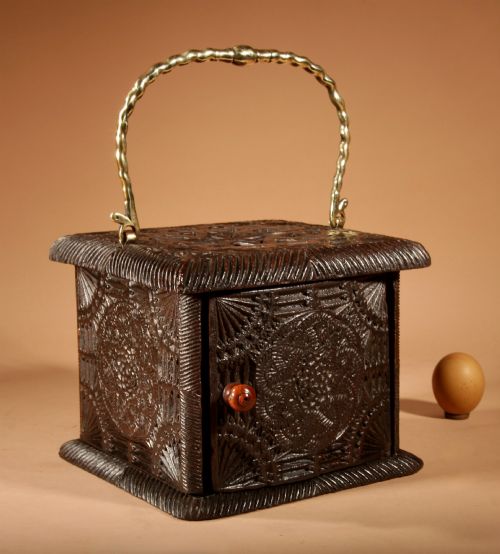
Taking a wooden antique foot warmer to church was standard Sunday practice.
Demand dropped sharply once trains installed steam heating pipes under the seating.
Most wooden carriage warmers lack makers' marks. Local carpenters built the boxes and bought the internal brass pans from nearby braziers.
Doulton of Lambeth produced heavy stoneware foot warmers through the late nineteenth century.
Pearson and Co of Chesterfield dominated the later market for printed ceramic hot water bottles.
The 2026 retail price guide for Antique Foot Warmers is drawn from a proprietary archive of over 1.1 million retail prices indexed by Sellingantiques since 2003. This guide relies exclusively on their own internal data; no external sources or auction records are used.
Analysing nearly 25 years of UK antique market history alongside current retail values, the data indicates that typical UK retail prices for Antique Foot Warmers range between £200 and £800. Entry-level prices generally fall under £200 and premium examples upwards of £800.
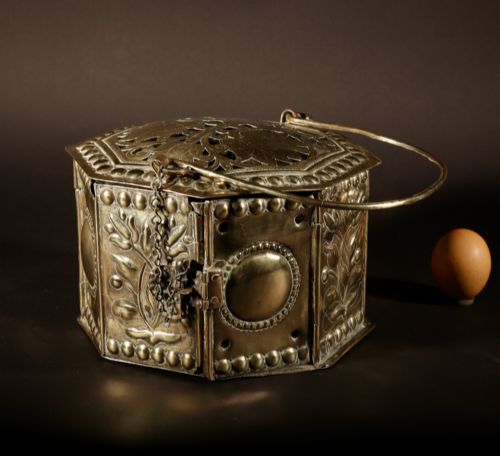
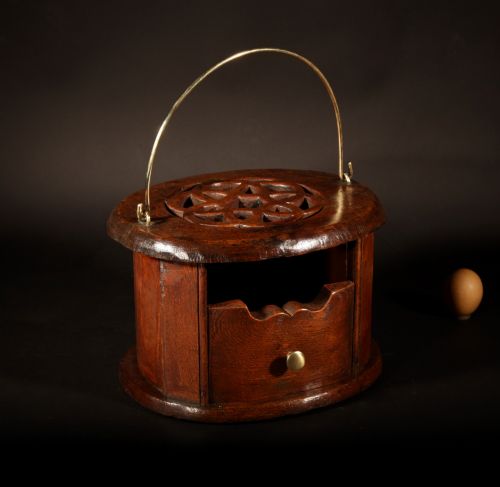
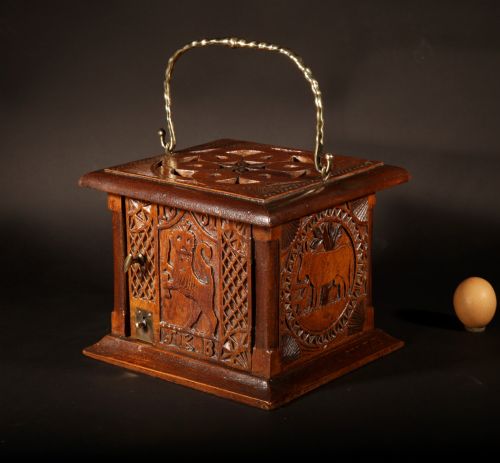
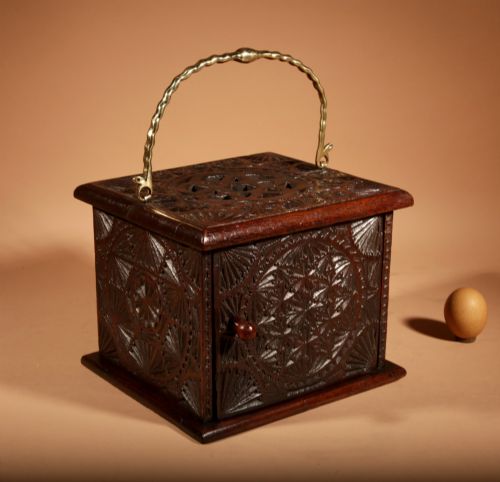
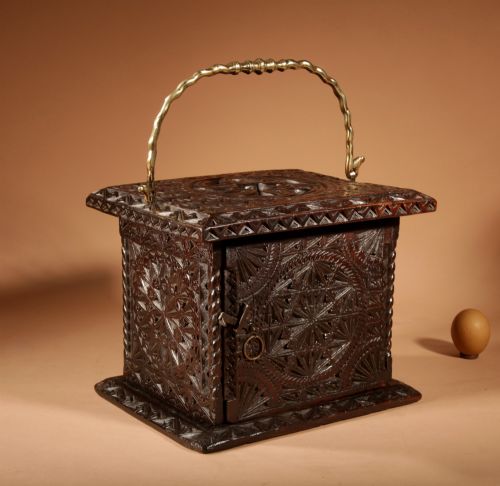
Pierced ventilation holes pattern the top and sides. These designs draw air in to keep the embers smouldering.
Look for the small internal metal tray. This catches the hot ashes and protects the outer wooden casing from catching fire.
Hinged doors or sliding panels allow quick access to the fuel compartment.
Early wooden boxes rely on simple nailed board construction. Dovetails appear on better nineteenth-century examples.
Tinsmiths cut geometric patterns into sheet metal using shaped punches and raw muscle power.
Later ceramic types required heavy industrial slip casting. Factories moulded them in two halves before firing and glazing the seams.
"Women rested their feet directly on the pierced wooden tops, letting the trapped heat rise under layers of heavy woollen skirts."
"Intricate punched tin patterns cast decorative shadows across floorboards when lit from within by glowing coals."
"Glazed ceramic versions double as bed warmers during the coldest winter months."
Based on almost 25 years of Sellingantiques UK antique market data, Antique Foot Warmers appeared 30 times (out of 1,100,000 antiques) which gives it a rarity score of 99/100.
This score measures scarcity within the Sellingantiques archive only and is not a survey of the entire antiques market, so these statistics may not be indicative of the general availability of Antique Foot Warmers elsewhere.
Most wooden boxes held a smaller metal pan filled with hot coals or wood embers wrapped in ash. The ash slowed the burning rate and stopped the embers catching the wooden sides on fire.
Some later nineteenth-century examples used heated soapstone blocks instead. You heat the stone by the hearth fire and slide it into the box.
Leave the stopper alone. Forcing it usually cracks the stoneware neck or strips the brass thread. The rubber washer inside degrades over time and seals the metal to the ceramic.
Drop a little penetrating oil around the edge of the brass thread and let it sit for a few days. Wrap a leather cloth around the stopper to grip it gently.
A seized stopper does not prevent them acting as decorative hearth objects.
Using a coal-fired antique foot warmer indoors carries carbon monoxide risks. They belong in draughty carriages, not sealed living rooms.
Stick to the later ceramic hot water types if you need to use one.
Start with a soft brush to remove the loose dust and cobwebs. Avoid harsh chemical rust removers. They strip the original patination and leave the tin looking bare and unnatural.
Rub a light coat of microcrystalline wax over the surface with a rag. The wax darkens the rust to a warm brown and stops the metal corroding any further.
Keep it in a dry room. Moisture will cause the rust to bloom again.
Please note: This Antique Foot Warmers guide and its associated pricing data are provided for general informational purposes only. It does not constitute formal financial, investment, or appraisal advice and should not be relied upon as the sole basis for any commercial activity, purchasing, or sales decisions. Sellingantiques.co.uk accepts no liability for any actions taken in reliance on this information. Always consult with a qualified professional or independent appraiser.
