


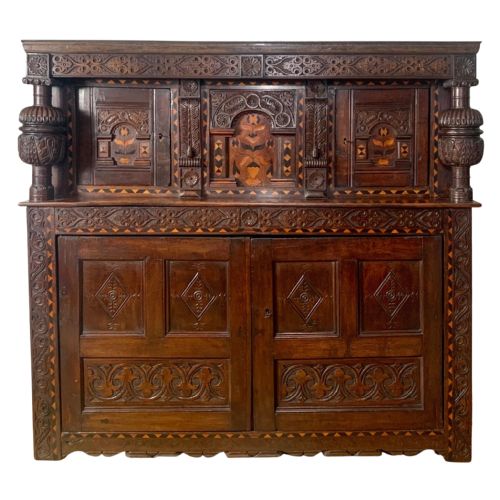

A 2026 Guide by Sellingantiques
18th Century Golden Oak Deuddarn Court Cupboard, 18th Century
Priced at £1,200 from Abersoch Antiques
Early forms date back to the Elizabethan era. They began as open, tiered shelving units rather than enclosed cabinets.
'Court' means short in French. The term refers to the low stature of these cupboards compared to the towering high dressoirs of the period.
Check regional variations. Northern English examples often retained their heavy proportions much longer than those from southern counties.
Status dictated placement in the home. The main hall held the largest antique court cupboards for guests to admire the family plate.
Enclosed upper sections became the standard format by the middle of the seventeenth century.
Individual makers of early antique court cupboards remain largely anonymous. The trade relied on guild networks rather than signed work.
Regional joiners built these based on local traditions. A piece from Yorkshire shares structural habits with a Welsh cupboard but carries different carving.
Don't expect maker stamps. Joiners worked collaboratively with turners and carvers to finish a single frame.

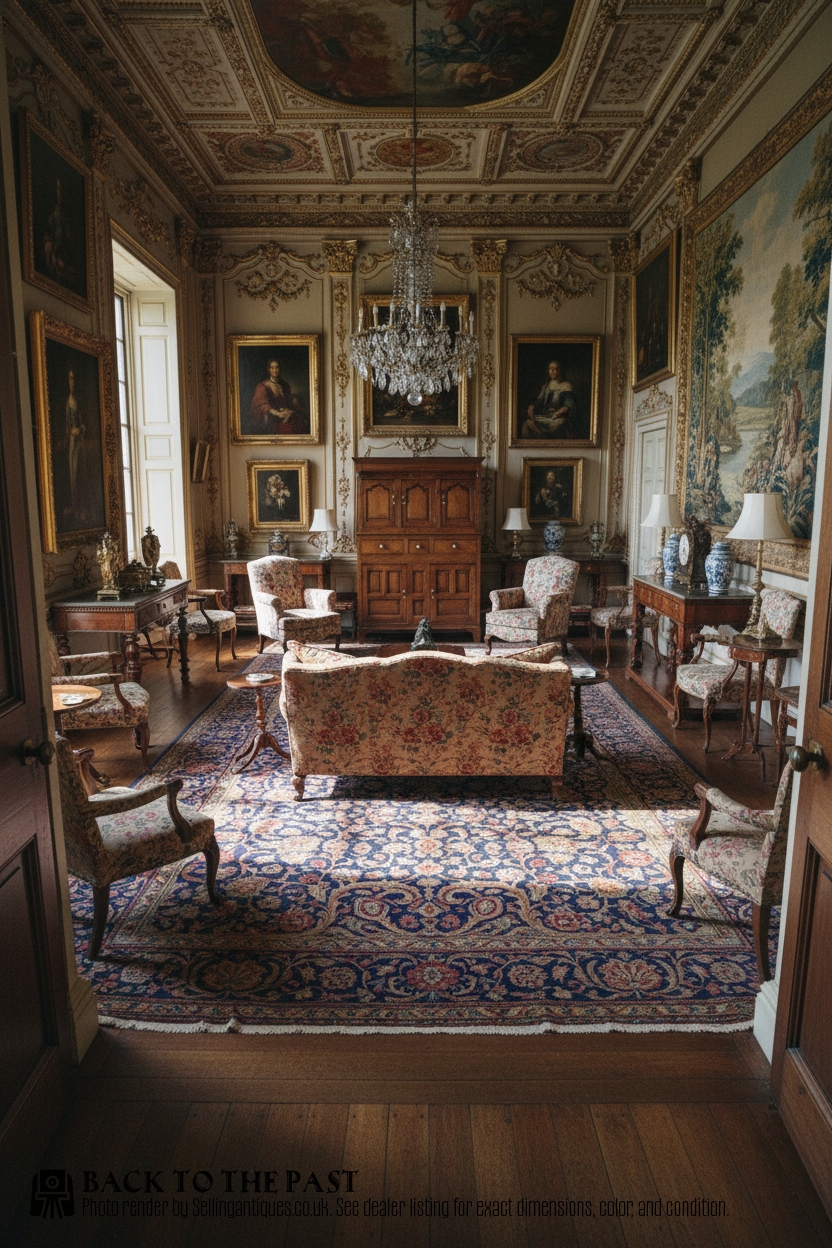
Welsh Oak Deuddarn (Court Cupboard), Circa 1680, 17th century
Priced at £1,150 from WelshAntiques
The 2026 retail price guide for Antique Court Cupboards is drawn from a proprietary archive of over 1.1 million retail prices indexed by Sellingantiques since 2003. This guide relies exclusively on their own internal data; no external sources or auction records are used.
Analysing nearly 25 years of UK antique market history alongside current retail values, the data indicates that typical UK retail prices for Antique Court Cupboards range between £600 and £4,300. Entry-level prices generally fall under £600 and premium examples upwards of £4,300.
Bulbous turned supports define the classic early profile. Thick front pillars sit firmly on a solid lower shelf.
Carved friezes run along the top edge. You'll often see lunettes, guilloche patterns or trailing vines deeply incised into the wood.
Splayed side panels mark the upper section. The central door sits flat while the flanking panels angle backward into the frame.
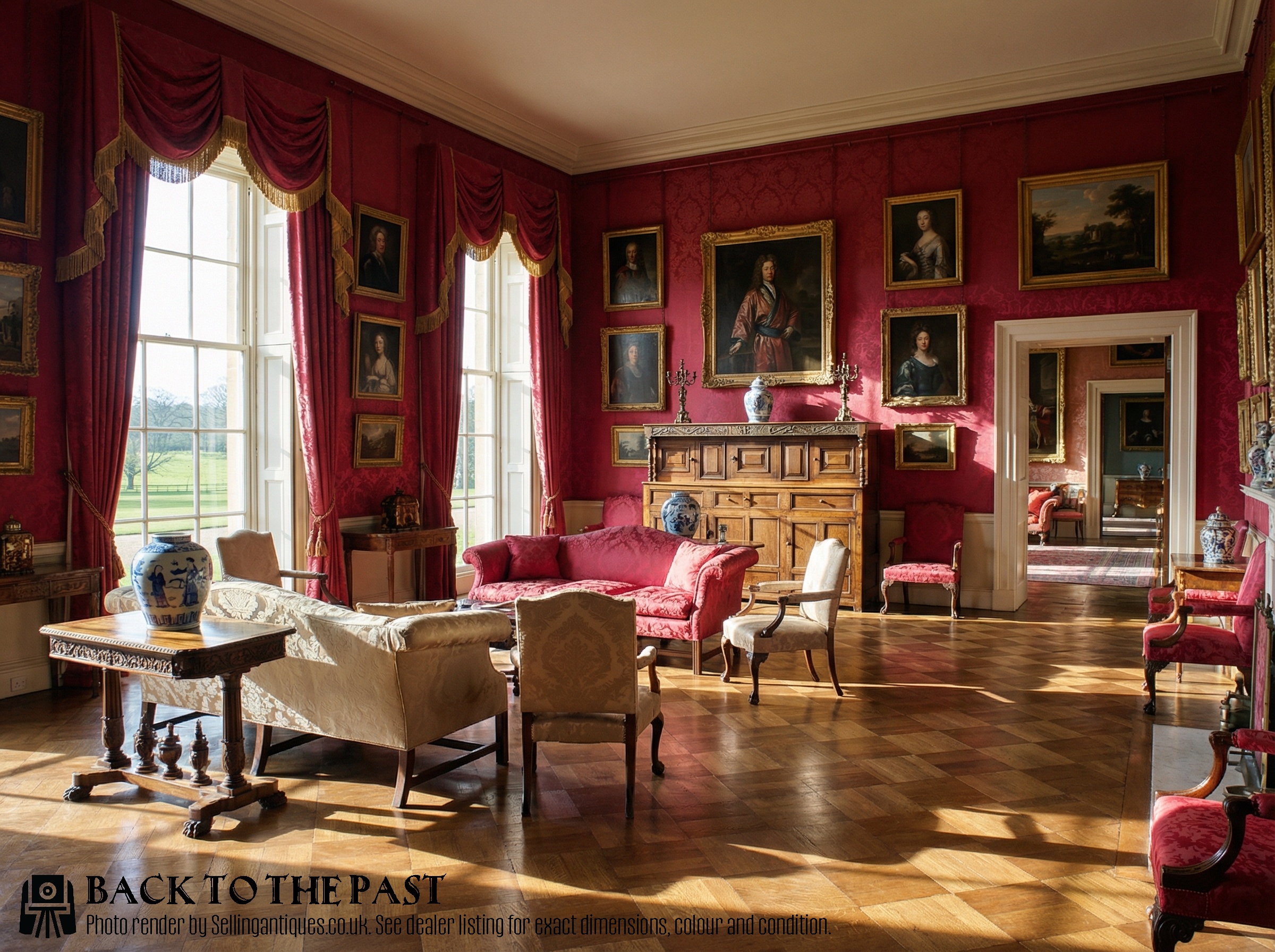
Large 18th Century Oak Court Cupboard., 18th Century
Priced at £1,200 from Dickinsons Antiques
Joinery methods dictated the blocky forms. Craftsmen framed flat panels within thick timbers to allow the oak to move without splitting.
Early carving was deep and vigorous. The cuts became shallower and more geometric as the seventeenth century wore on.
Turners gradually reduced the girth of the front pillars. The melon bulbs evolved into slimmer baluster shapes by the Jacobean period.
"Traces of original bright paint sometimes survive deep inside the carvings. You'll find they were once painted rather than plain dark wood."
"Spices and sweetmeats were kept in the small enclosed upper sections. They're usually heavily locked to protect those costly imports."
"Some examples feature secret compartments. Joiners occasionally built false bottoms or hidden drawers into the thick frieze rails."
Based on almost 25 years of Sellingantiques UK antique market data, Antique Court Cupboards appeared 1187 times (out of 1,100,000 antiques) which gives it a rarity score of 79/100.
This score measures scarcity within the Sellingantiques archive only and is not a survey of the entire antiques market, so these statistics may not be indicative of the general availability of Antique Court Cupboards elsewhere.
A press cupboard is closely related to the court cupboard. The main difference lies in the lower section.
While a court cupboard has an open lower tier, a press cupboard is fully enclosed with doors below. People often mix up the terms.
Dust it with a soft dry cloth first. If the surface is sticky, you can wipe it gently with a damp cloth and dry it immediately.
Apply a clear beeswax polish once or twice a year. Leave the wax to harden for twenty minutes, then buff it out with a clean duster.
Never use modern silicone sprays. They build up on the oak and ruin the old patina over time.
They're very heavy. Solid oak construction makes them difficult to move.
Always lift from the solid frame rather than the carved details. You'll need two strong people to shift one safely.
The furniture will settle onto uneven boards, which can cause the doors to stick. You should slip small wooden shims under the feet until the frame sits level.
Leaving it twisting on an uneven floor puts pressure on the pegged joints. A level base keeps the structure sound and ensures the heavy oak doors don't drop on their iron hinges.
Please note: This Antique Court Cupboards guide and its associated pricing data are provided for general informational purposes only. It does not constitute formal financial, investment, or appraisal advice and should not be relied upon as the sole basis for any commercial activity, purchasing, or sales decisions. Sellingantiques.co.uk accepts no liability for any actions taken in reliance on this information. Always consult with a qualified professional or independent appraiser.
