





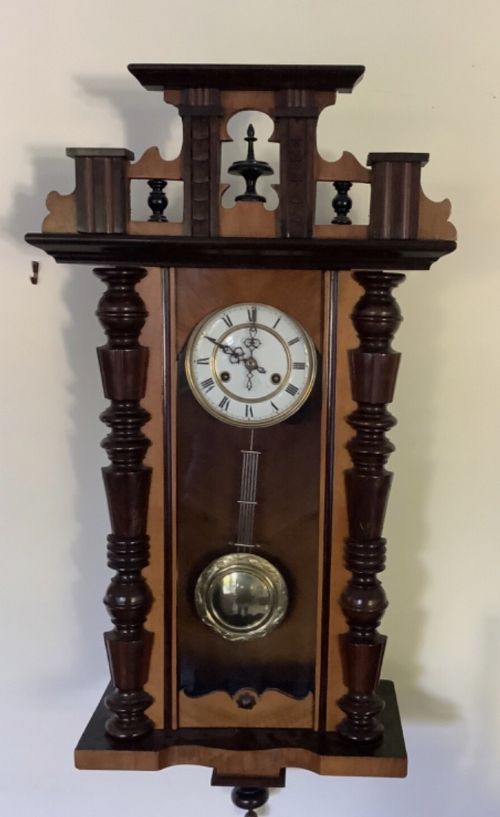


Vienna Wall Clocks
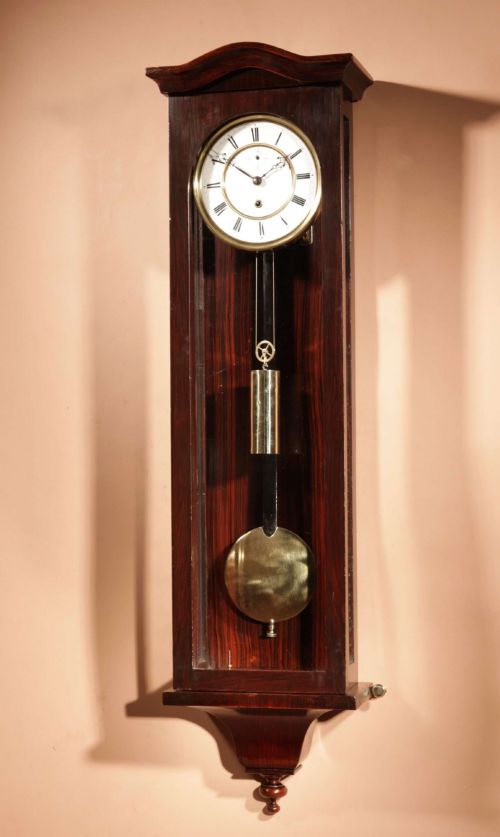
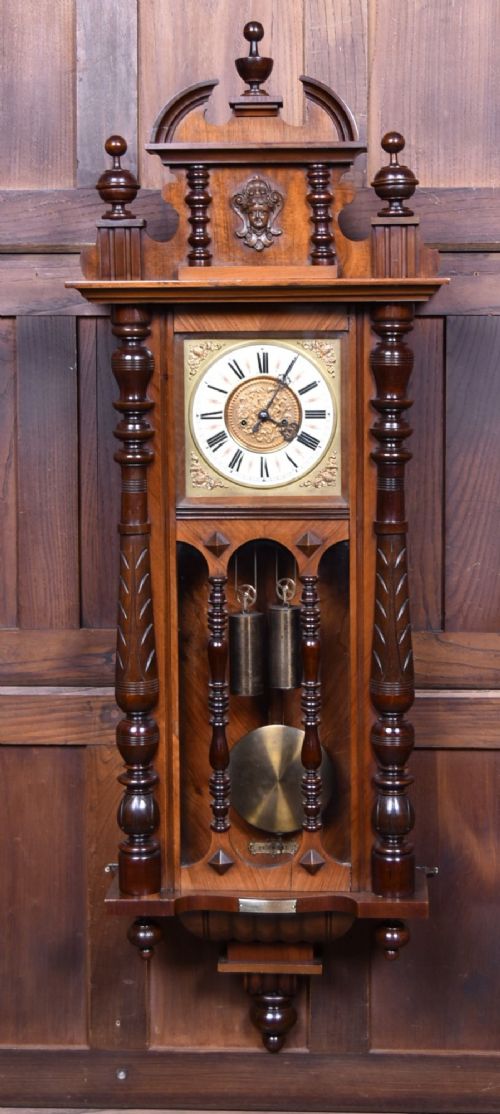
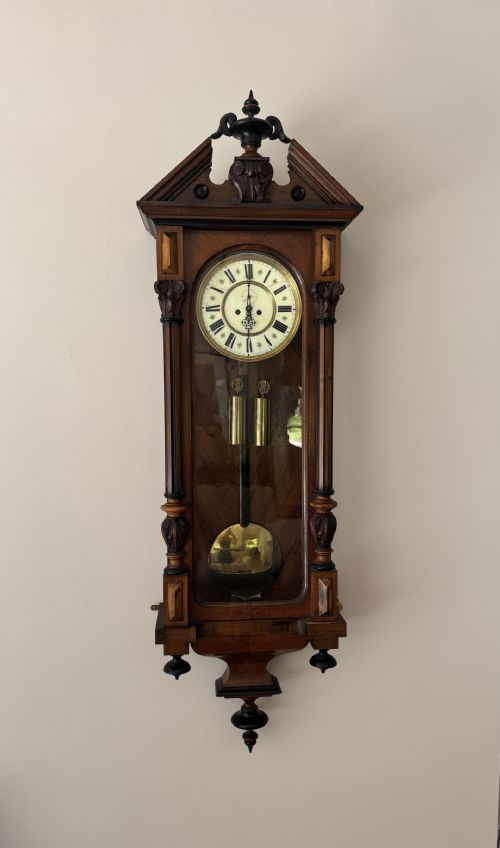
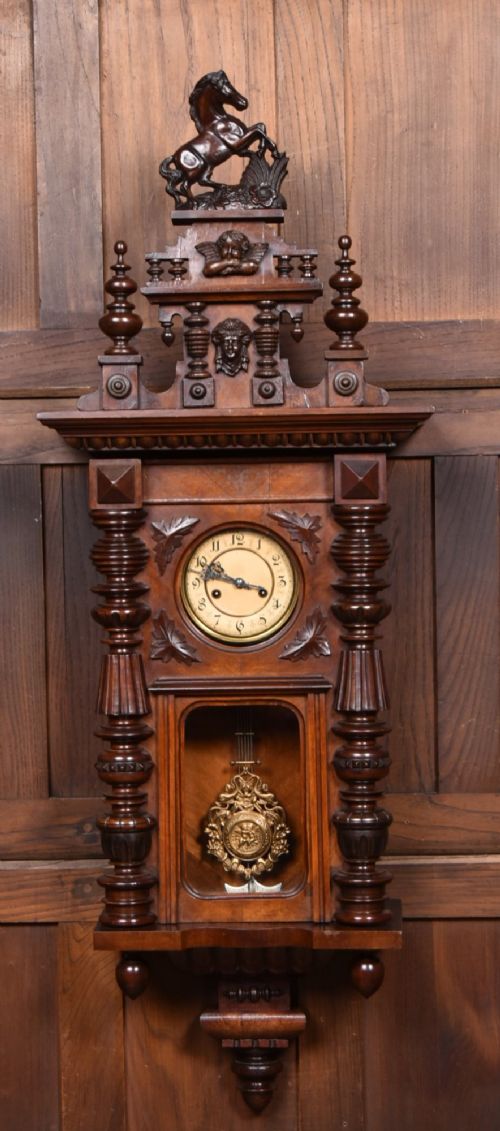
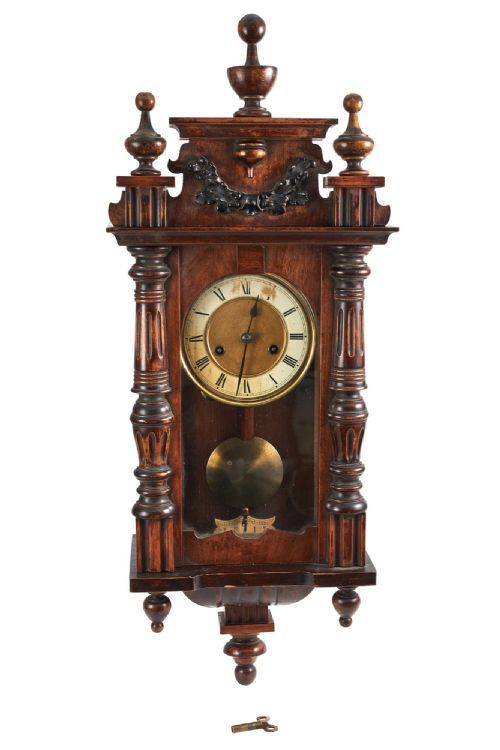
A long-pendulum wall clock in a glazed wooden case, driven by falling brass weights or a mainspring, made to hang on a wall and run for a week between windings.
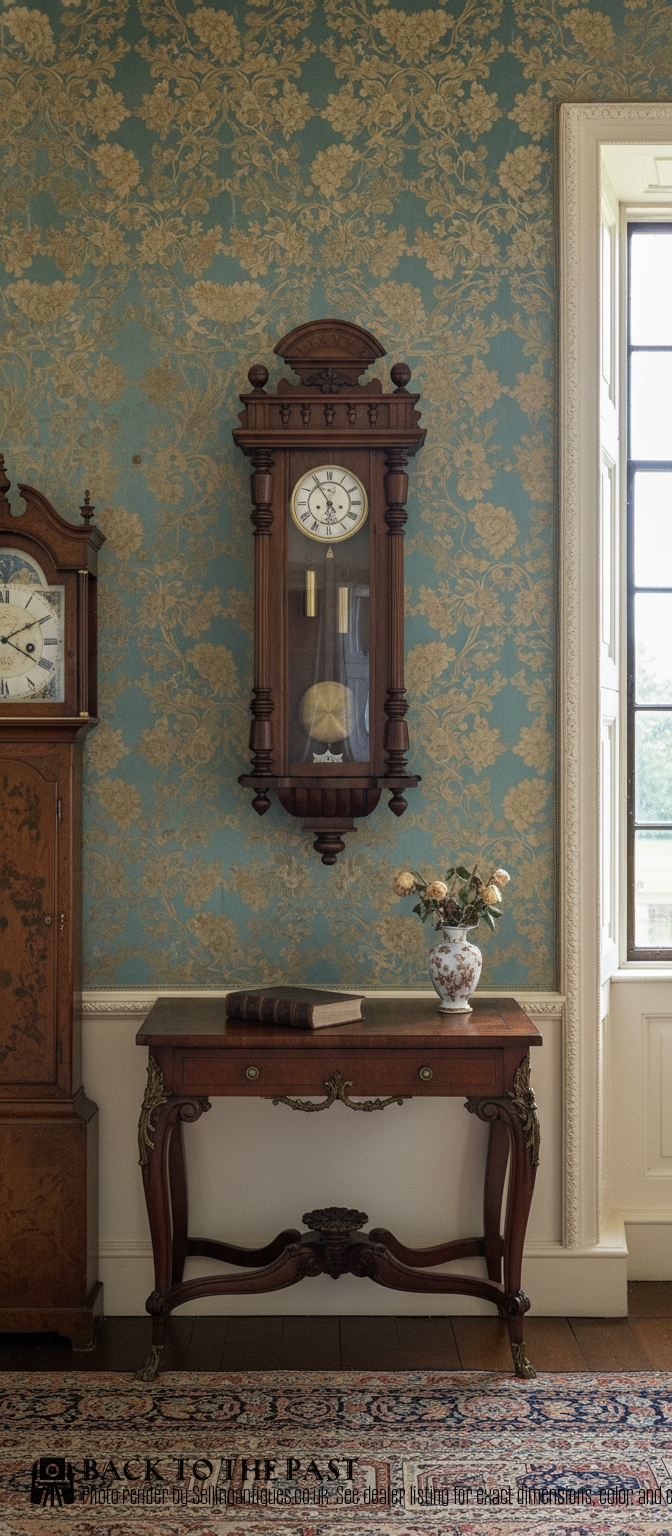
Vienna Wall Clocks
The type began in Austria in the early 19th century as a precision weight-driven wall clock with a long pendulum in a slim glazed case. By the later 19th century the style was being made in quantity in Germany, and "Vienna" had become a trade name for the form rather than a statement of where a clock was made. The maker names and the "German" and "Black Forest" titles in this archive point mostly to Germany.
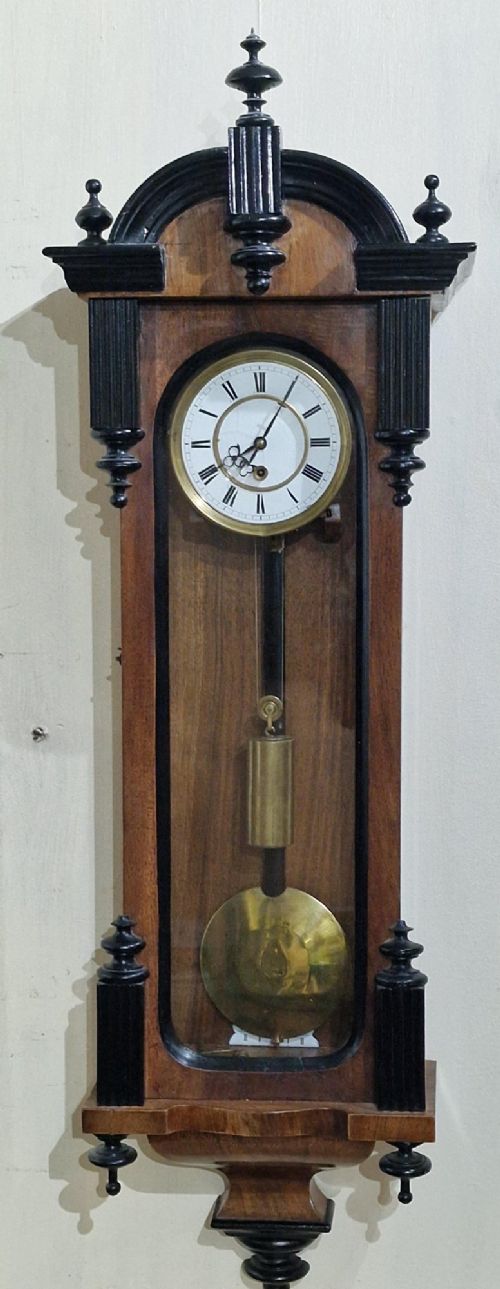
The clock you will meet first is a walnut-cased, weight-driven eight-day example from the 1880s or 1890s. Walnut is named in 58 titles, more than any other word after the category name, and it is regularly paired with black trim as "walnut & ebonised". Titles as plain as "Antique Vienna Wall Clock" recur dozens of times.
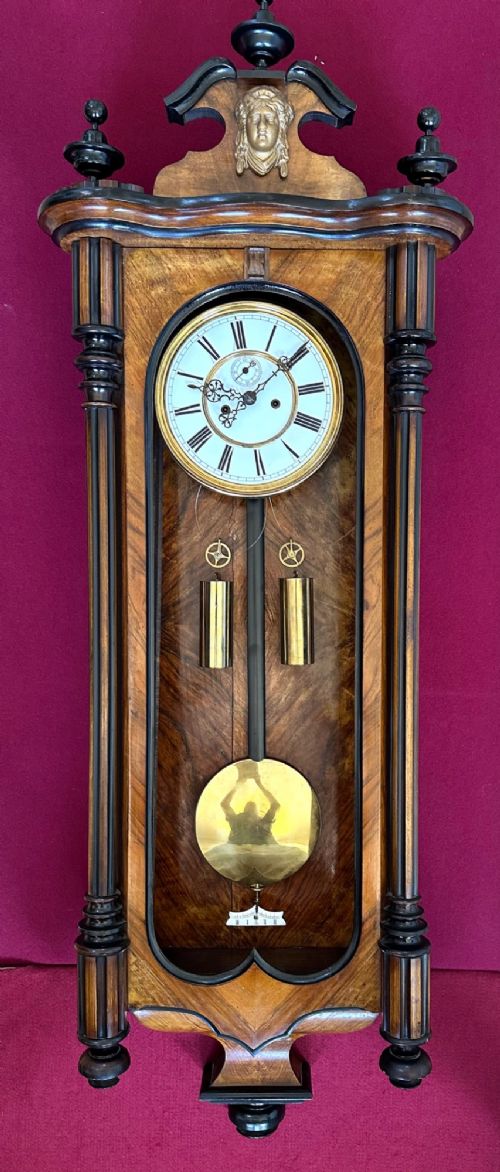
Twin- or double-weight cases are the largest single group, one weight for the going train and one for the strike. Single-weight and plain timepiece versions form a steady minority, and spring-driven examples in shorter cases turn up at around one in twenty. Small, slim-line, petite and miniature cases account for roughly one in ten.
Dates run from 1850 to 1920, with 152 of 208 listings carrying a clean year. The 1890s alone account for 72 of them, more than the 1860s, 1880s and 1900s combined. Another block is logged only as "19th Century" or "Victorian", so a fifth of the category carries no year.

What Sets Them Apart
Striking does most of the work. Grande sonnerie, which sounds the hour and the quarters and repeats the hour at each quarter, appears in just eight titles out of 208, and every one sits in the upper reaches of the range. Long duration does the same: month and thirty-day movements appear only twice, and a thirty-day Biedermeier example is the highest-asking piece in the whole archive.
Period pulls the same way. The earlier Biedermeier regulators, plain and architectural, including the peaked-top Dachluhr case and flame mahogany examples around 1850 to 1865, cluster at the top. Late-Victorian factory walnut fills the middle and the bottom. Weights count too, with single-weight timepieces low, double weight through the middle, and the two triple-weight examples near the top.
Below that tier, case work and a name on the movement separate one walnut clock from another. Carving is in 17 titles, carved walnut in 14, and those concentrate in the upper half, along with burr walnut and carved oak. A legible signature lifts a piece. Size cuts both ways: small cases run from the cheapest examples to a miniature two-train regulator near the very top.
Vienna Wall Clocks Retail Price Guide 2026
Typical UK retail prices for vienna wall clocks, calculated from the Sellingantiques database of over a million retail prices indexed since 2003. This retail price guide relies exclusively on Sellingantiques data; no external sources or auction records are used, so the figures do not describe the wider market.
The most expensive Vienna wall clock ever sold on Sellingantiques was a thirty-day Biedermeier grande sonnerie regulator, circa 1855, sold in December 2018.
Gustav Becker
The Vienna Wall Clocks Glossary
- Vienna regulator
- The trade name for the whole type of long-pendulum glazed wall clock. "Regulator" is in 44 titles and works as a style label rather than a promise of observatory accuracy.
- Weight driven
- Powered by falling brass weights instead of a mainspring. "Weight" appears in 44 titles.
- Double weight
- Two weights, one driving the going train and one the strike. Twenty-four titles say "double weight" and others say twin or two weight.
- Timepiece
- A clock that tells the time only and does not strike. Single-weight cases are often described this way.
- Grande sonnerie
- Strikes the hour and the quarters, and repeats the hour at each quarter. Eight titles carry it.
- Dachluhr
- Literally roof clock, the peaked-top Biedermeier regulator case. The word appears exactly once across every listing recorded.
Vienna Wall Clocks: Frequently Asked Questions
Are Vienna wall clocks actually made in Vienna?
Not usually. The form started in Austria early in the 19th century, but by the later 1800s it was being made in quantity in Germany and "Vienna" had become a trade name for the type.
The maker names in this archive, along with titles using "German" and "Black Forest", point mostly to Germany. Austrian origin is explicit in only a handful of entries.
What does double weight mean on a Vienna clock?
Two brass weights hang below the movement, one powering the going train and one the striking train. Twenty-four titles use the phrase, with others saying twin, two or 2 weight.
A single weight means one train only, so a timepiece or a simplified movement. Triple weight appears just twice in the sampled range.
Which period do most of these come from?
The dated field runs 1850 to 1920, and the 1890s dominate outright with 72 dated listings. The 1860s and 1880s follow well behind.
A sizeable block carries no year at all, logged only as "19th Century" or "Victorian". Entries reading "circa 1850" or "c.1880" show the date as the dealer's own estimate.
Why is walnut so common on these cases?
Walnut is named in 58 titles, more than any other single word after the category name. It is the default timber for the late 19th-century factory-made Vienna.
It often comes with black trim, described as "walnut & ebonised" or "black and walnut". Burr walnut, carved walnut and carved oak turn up higher in the range.
Do spring-driven Vienna clocks turn up?
Yes, in about one in twenty listings. Ten titles use "spring", usually on a shorter case that has no room for a weight drop.
The rest of the category runs on falling brass weights, with "weight" appearing in 44 titles.
What is a Biedermeier regulator?
The earlier Austrian style, plain and architectural, from the first half of the 19th century. Eight titles use the word, and they sit at the top of the range.
This group includes the peaked-top Dachluhr case, flame mahogany examples dated around 1850 to 1865, and the grande sonnerie and thirty-day movements.