

A 2026 Guide by Sellingantiques
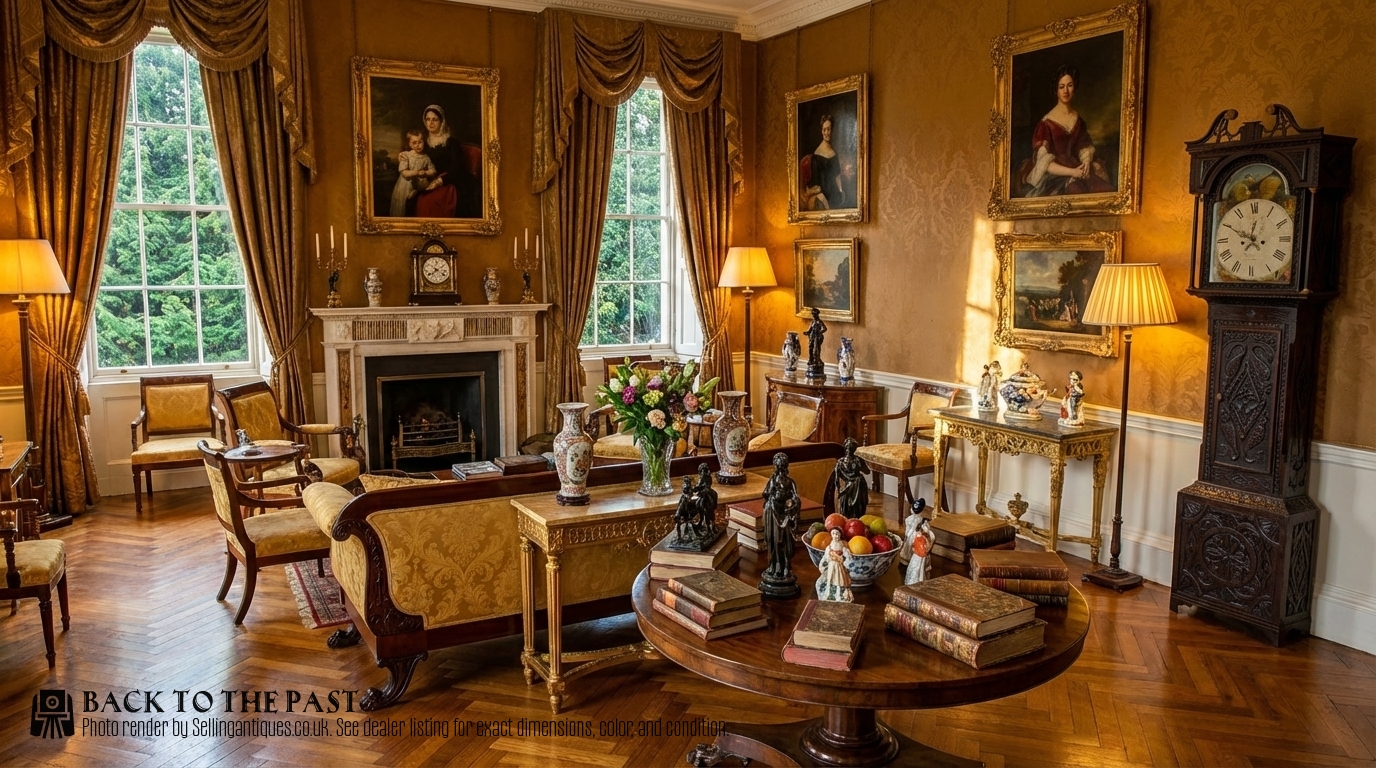
Antique George III Quality Carved Oak Moon Phase Longcase Clock, 1800
Priced at £3,450 from London City Antiques
They first appeared on English longcase dials around the late seventeenth century.
Provincial makers adopted them rapidly. Rural clients needed the information far more than town dwellers who enjoyed street lighting.
Watch out for the transition from brass dials to painted dials. White dial moon phase clocks dominated by the late Georgian period.
Maritime communities relied on them heavily. High tide indicators often sit right next to the moon disc on clocks from port towns.
Most early examples track a 29.5-day cycle. A specialized gear train drives the mechanism directly from the hour wheel.
Thomas Tompion incorporated intricate lunar work into his complex astronomical longcase clocks during the late seventeenth century.
Provincial makers produced the vast majority. Halifax makers like Thomas Ogden built regional reputations on highly accurate moon phase clocks.
Identify the dialmaker if possible. Firms like Osborne and Wilson supplied blank painted moon dials to clockmakers across the country.
The 2026 retail price guide for Moon Phase Clocks is drawn from a proprietary archive of over 1.1 million retail prices indexed by Sellingantiques since 2003. This guide relies exclusively on their own internal data; no external sources or auction records are used.
Analysing nearly 25 years of UK antique market history alongside current retail values, the data indicates that typical UK retail prices for Moon Phase Clocks range between £2,000 and £6,300. Entry-level prices generally fall under £2,000 and premium examples upwards of £6,300.
The rotating disc usually displays two painted moons opposite each other.
A semi-circular aperture cut into the arch of the dial conceals the unused portion of the disc.
Hemispheres painted at the bottom corners of the aperture help indicate the exact phase as the moon passes behind them.
Engraved brass gave way to japanning. Dial painters applied successive layers of varnish to protect the delicate landscape scenes.
The gearing evolved for simplicity. A single pin on the hour wheel often replaced complex earlier gear trains.
Check the painted scenes between the moons. Seascapes and rural cottages replaced simple star fields as the eighteenth century progressed.
"They functioned as early tide calculators. A rural household could plan safe estuary crossings using the moon disc."
"The painted scenes often offer a snapshot of period dress and local shipping vessels from the year of construction."
"The 29.5-day mechanical cycle remains surprisingly accurate. A well-adjusted eighteenth-century moon phase clock needs manual correction only rarely."
Based on almost 25 years of Sellingantiques UK antique market data, Moon Phase Clocks appeared 201 times (out of 1,100,000 antiques) which gives it a rarity score of 96/100.
This score measures scarcity within the Sellingantiques archive only and is not a survey of the entire antiques market, so these statistics may not be indicative of the general availability of Moon Phase Clocks elsewhere.
Find the current lunar phase in a modern almanac or online. Most clock mechanisms allow you to gently push the disc forward with a finger until the correct age displays in the aperture.
Never push the disc backwards. The jumper spring rests against the saw-tooth edge of the disc, and forcing it in reverse will bend or snap the spring.
Those numbers represent the age of the moon in days, running from one to twenty-nine and a half. A new moon starts at zero, concealed behind the hemispheres, and slowly tracks across the arch.
By day fifteen, the full moon sits dead centre at the top of the dial. Rural owners used these numbers to calculate tides or plan journeys on well-lit nights.
The drive pin on the hour wheel is likely failing to engage the teeth on the lunar disc.
Old grease and dirt build up behind the dial plate over decades. A basic clean of the motion work usually resolves the jamming without needing replacement parts.
Dial makers in large centres like Birmingham painted thousands of blank iron dials for the national trade. They offered standard patterns including warships, ruins, and country houses.
A provincial clockmaker would order a batch of these pre-painted dials and fit them to their own movements. The local cabinet maker then built a case to the client's budget.
This separation of trades explains why grand naval scenes often appear in modest rural oak longcases.
Please note: This Moon Phase Clocks guide and its associated pricing data are provided for general informational purposes only. It does not constitute formal financial, investment, or appraisal advice and should not be relied upon as the sole basis for any commercial activity, purchasing, or sales decisions. Sellingantiques.co.uk accepts no liability for any actions taken in reliance on this information. Always consult with a qualified professional or independent appraiser.
