
A 2026 Guide by Sellingantiques

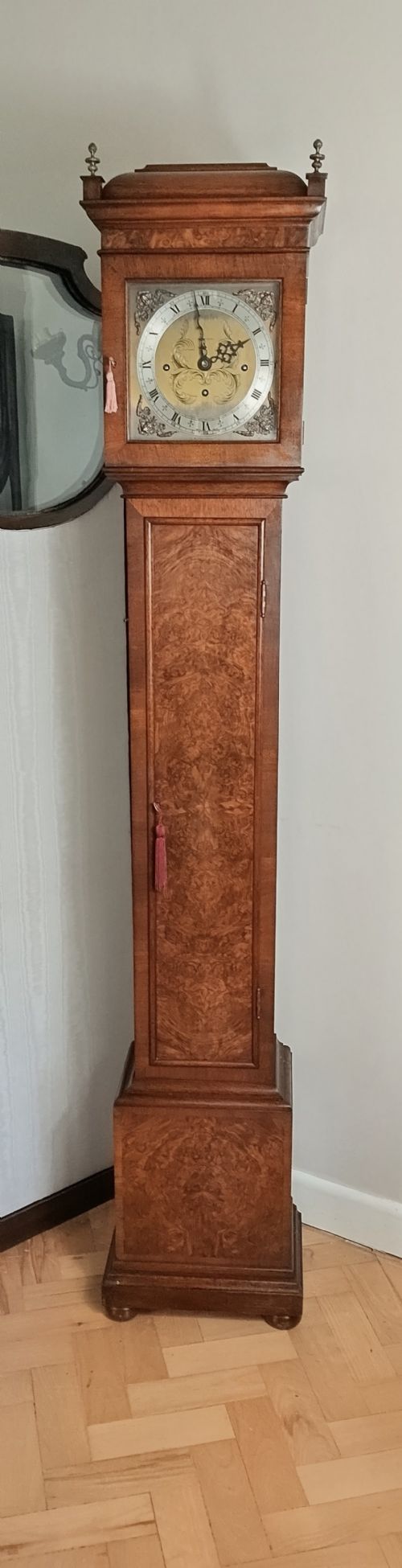
Grandfather Clock., 1930
Priced at £1,485 from A and B Antiques
Introduced in the late seventeenth century following the invention of the anchor escapement.
Early antique grandfather clocks needed long cases to hide heavy weights and a long pendulum.
Notice how the dials changed from square brass plates to painted arched iron faces by the Georgian era.
Provincial makers bought standard movements from industrial hubs like Birmingham and fitted them to locally made cases.
Thomas Tompion built sophisticated longcase clocks in London during the late seventeenth and early eighteenth centuries.
George Graham, working alongside Tompion, pioneered the deadbeat escapement for greater timekeeping accuracy.
Research regional clockmakers like the Whitehurst family in Derby if you spot painted dials from the Midlands.

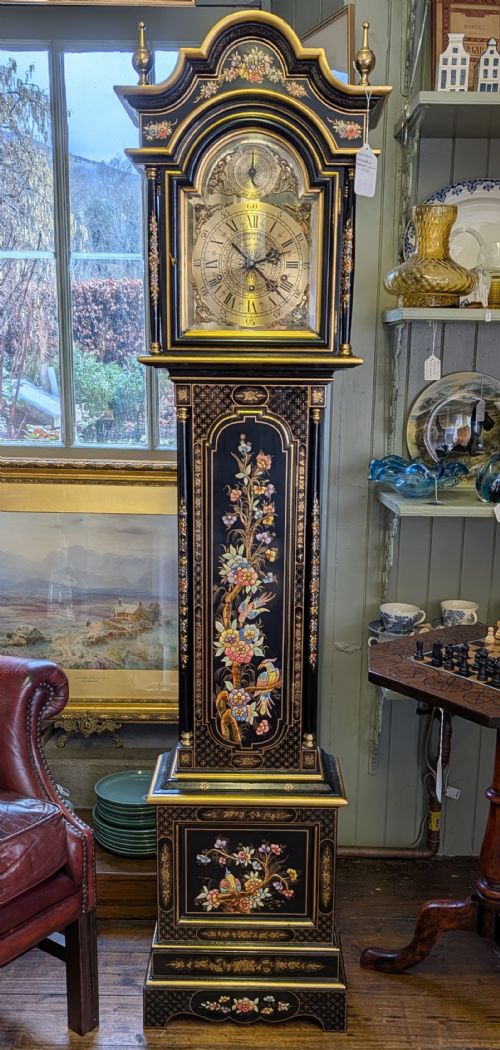
Antique Oak and Mahogany Grandfather Clock by W Prior, Skipton, 1860
Priced at £2,345 from London City Antiques
The 2026 retail price guide for Antique Grandfather Clocks is drawn from a proprietary archive of over 1.1 million retail prices indexed by Sellingantiques since 2003. This guide relies exclusively on their own internal data; no external sources or auction records are used.
Analysing nearly 25 years of UK antique market history alongside current retail values, the data indicates that typical UK retail prices for Antique Grandfather Clocks range between £1,300 and £7,300. Entry-level prices generally fall under £1,300 and premium examples upwards of £7,300.
Most eight-day movements have two winding holes for the separate going and striking trains.
Open the trunk door to find a heavy lead or brass-faced bob swinging at the base of a timber pendulum rod.
A hood that slides forward off the carcase to allow access to the movement and winding squares.
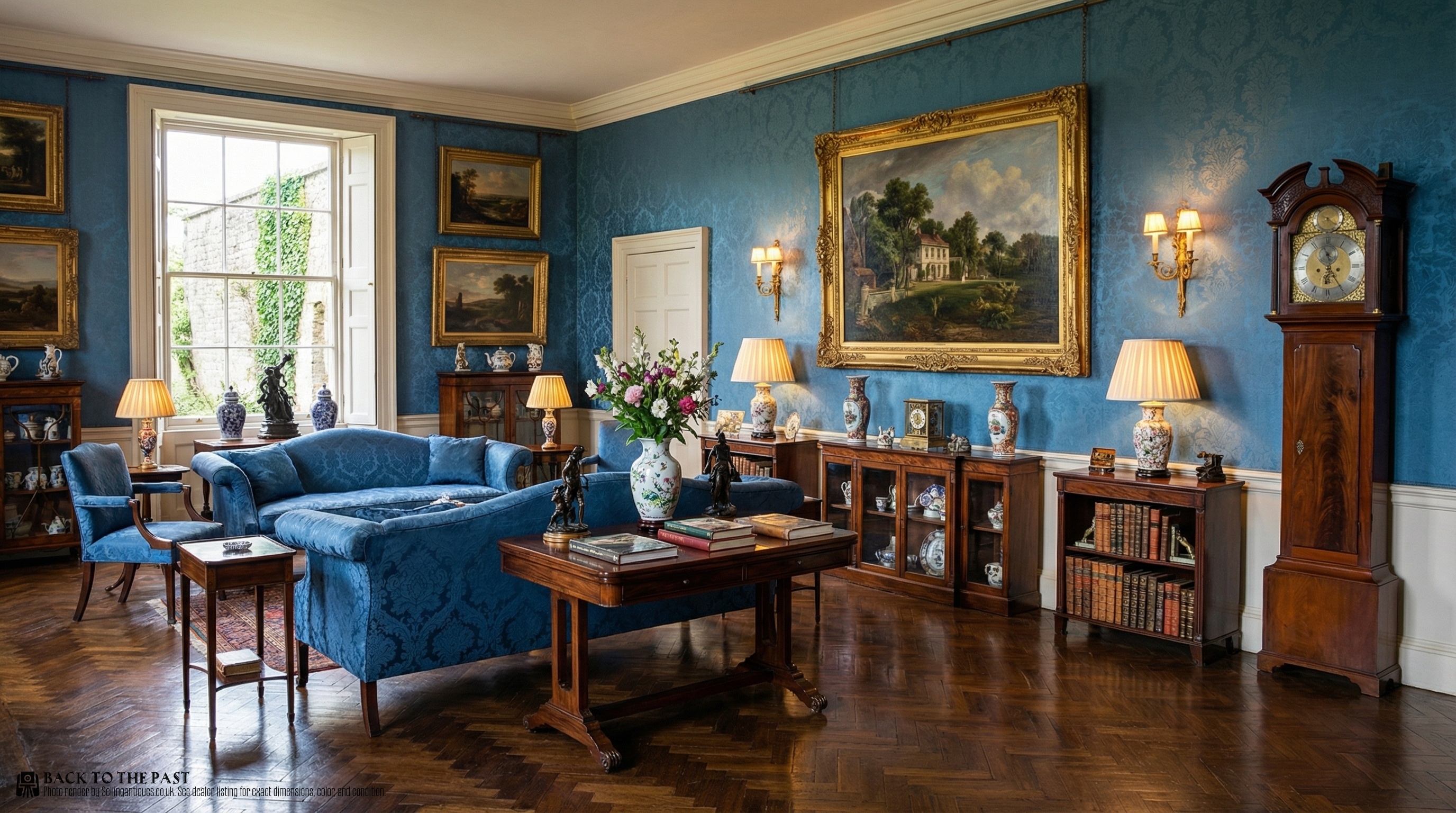
Georgian Mahogany Grandfather Clock, Georgian
Priced at £1,950 from Sinclairs Antiques and Interiors
Early cases rely on pegged mortise and tenon joints in solid timber, reflecting basic seventeenth-century joinery traditions before specialized cabinetmaking evolved.
Tap the side panels to feel how later Georgian examples use thin cabinet-made framing to support expensive veneers.
Hand-cut steel pinions and brass wheels filed by individual craftsmen.
"Thirty-hour versions function on a single weight driving both the time and strike trains through an endless rope system."
"Moon phase dials above the main face helped rural owners plan night travel by moonlight."
"Count the clicks when winding, as original ratchets have a distinct, heavy mechanical sound."
Based on almost 25 years of Sellingantiques UK antique market data, Antique Grandfather Clocks appeared 2201 times (out of 1,100,000 antiques) which gives it a rarity score of 64/100.
This score measures scarcity within the Sellingantiques archive only and is not a survey of the entire antiques market, so these statistics may not be indicative of the general availability of Antique Grandfather Clocks elsewhere.
Remove the pendulum and weights before moving the case. Transporting a clock with these heavy parts attached will rip the movement apart from the inside. Secure the suspension spring so it cannot bend.
Lay the case flat on its back if you cannot move it upright. Pack the hood separately in a padded box to protect the glass.
The case is probably not sitting level on the floor. An unlevel case throws the escapement out of beat, meaning the tick and tock are uneven. This causes the pendulum to lose momentum and stop.
Pack thin slips of wood under the base until the ticking sounds exactly even. If the floor is carpeted, the heavy case might settle unevenly over time and require adjustments.
Dust it gently with a soft dry brush. Do not apply liquid metal polish to an antique dial.
Polish gets trapped in the engraved numerals and reacts with the old silvering. It ruins the contrast and leaves a white crust that is difficult to remove.
Most eight-day striking movements have a simple warning system that can fall out of sequence. If you let the clock run down fully, the strike train might stop while the going train keeps ticking.
Wait until the clock strikes, count the chimes, and then carefully move the hour hand to match that number. The hour hand is usually held only by friction. Never force the minute hand backwards past twelve.
Please note: This Antique Grandfather Clocks guide and its associated pricing data are provided for general informational purposes only. It does not constitute formal financial, investment, or appraisal advice and should not be relied upon as the sole basis for any commercial activity, purchasing, or sales decisions. Sellingantiques.co.uk accepts no liability for any actions taken in reliance on this information. Always consult with a qualified professional or independent appraiser.
