
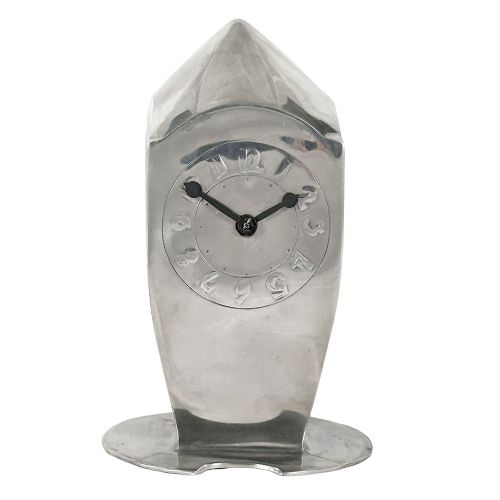
A 2026 Guide by Sellingantiques
Trace the origins of Antique English clocks to the mid-seventeenth century.
The pendulum changed domestic timekeeping from a rough estimate to an accurate science.
Spring-driven movements allowed cabinetmakers to design much smaller bracket cases, freeing these timepieces from needing long drops for heavy weights.
Provincial makers often bought rough cast brass parts from regional foundries, spending hours cutting teeth and filing plates to finish the movements locally.
By the Georgian period, owning an accurate timepiece became standard for wealthy households.
Thomas Tompion worked in London during the late seventeenth century producing complex bracket and longcase movements.
Study the striking mechanisms by Daniel Quare, a prominent London maker working in the late seventeenth and early eighteenth centuries.
John Harrison focused on maritime chronometers but also built precision wooden-geared clocks in the early eighteenth century.
The 2026 retail price guide for Antique English Clocks is drawn from a proprietary archive of over 1.1 million retail prices indexed by Sellingantiques since 2003. This guide relies exclusively on their own internal data; no external sources or auction records are used.
Analysing nearly 25 years of UK antique market history alongside current retail values, the data indicates that typical UK retail prices for Antique English Clocks range between £800 and £6,000. Entry-level prices generally fall under £800 and premium examples upwards of £6,000.
A prominent feature on many Antique English clocks is the pierced brass spandrel occupying the dial corners.
Glazed hoods that slide forward or open on brass hinges.
Check the chapter ring for engraved Roman numerals indicating hours and Arabic numerals marking minutes.
Wheel cutting required specific skill to divide a brass disc into mathematically precise teeth.
Examine the plates holding the movement of Antique English clocks together, secured by hand-turned brass pillars.
Forged steel pinions hardened and tempered over charcoal fires to withstand decades of continuous friction.
"Some provincial dials feature hidden painted scenes that only become visible when removed from the wooden hood."
"Complex date mechanisms that automatically adjust for the shorter months of the year."
"Look closely at early hands, as they were often individually pierced and filed by specialised craftsmen rather than the clockmaker."
Based on almost 25 years of Sellingantiques UK antique market data, Antique English Clocks appeared 2268 times (out of 1,100,000 antiques) which gives it a rarity score of 64/100.
This score measures scarcity within the Sellingantiques archive only and is not a survey of the entire antiques market, so these statistics may not be indicative of the general availability of Antique English Clocks elsewhere.
Most floor-standing examples run on an eight-day cycle. You'll wind them once a week, picking a specific day to build a routine.
Thirty-hour movements need daily winding. Pulling the ropes or chains takes only a few seconds.
The motion work behind the dial might be loose. The minute wheel relies on a friction spring to carry the hands around. If this slips, the movement runs without advancing the time.
A clockmaker can tighten this clutch. It takes standard workshop tools to resolve.
The striking train can fall out of sequence with the time train. This often happens if the hands are moved backwards past the hour.
Many antique English clocks have a trip wire behind the dial. Lift this wire to make it strike until the count catches up with the hands.
Remove the pendulum before you lift the case. Transporting the piece with a heavy bob swinging freely can bend the suspension spring or damage the crutch.
Keep the case upright. Once settled in the new room, ensure the clock sits level before reattaching the pendulum. Adjust the feet slightly to get an even tick.
Please note: This Antique English Clocks guide and its associated pricing data are provided for general informational purposes only. It does not constitute formal financial, investment, or appraisal advice and should not be relied upon as the sole basis for any commercial activity, purchasing, or sales decisions. Sellingantiques.co.uk accepts no liability for any actions taken in reliance on this information. Always consult with a qualified professional or independent appraiser.
