It was listed by N Wilson Antiques Clocks. Sold pieces stay on Sellingantiques as a record of what has passed through, and the next one is rarely far away.
N Wilson Antiques Clocks has dated this piece to the 19th Century.
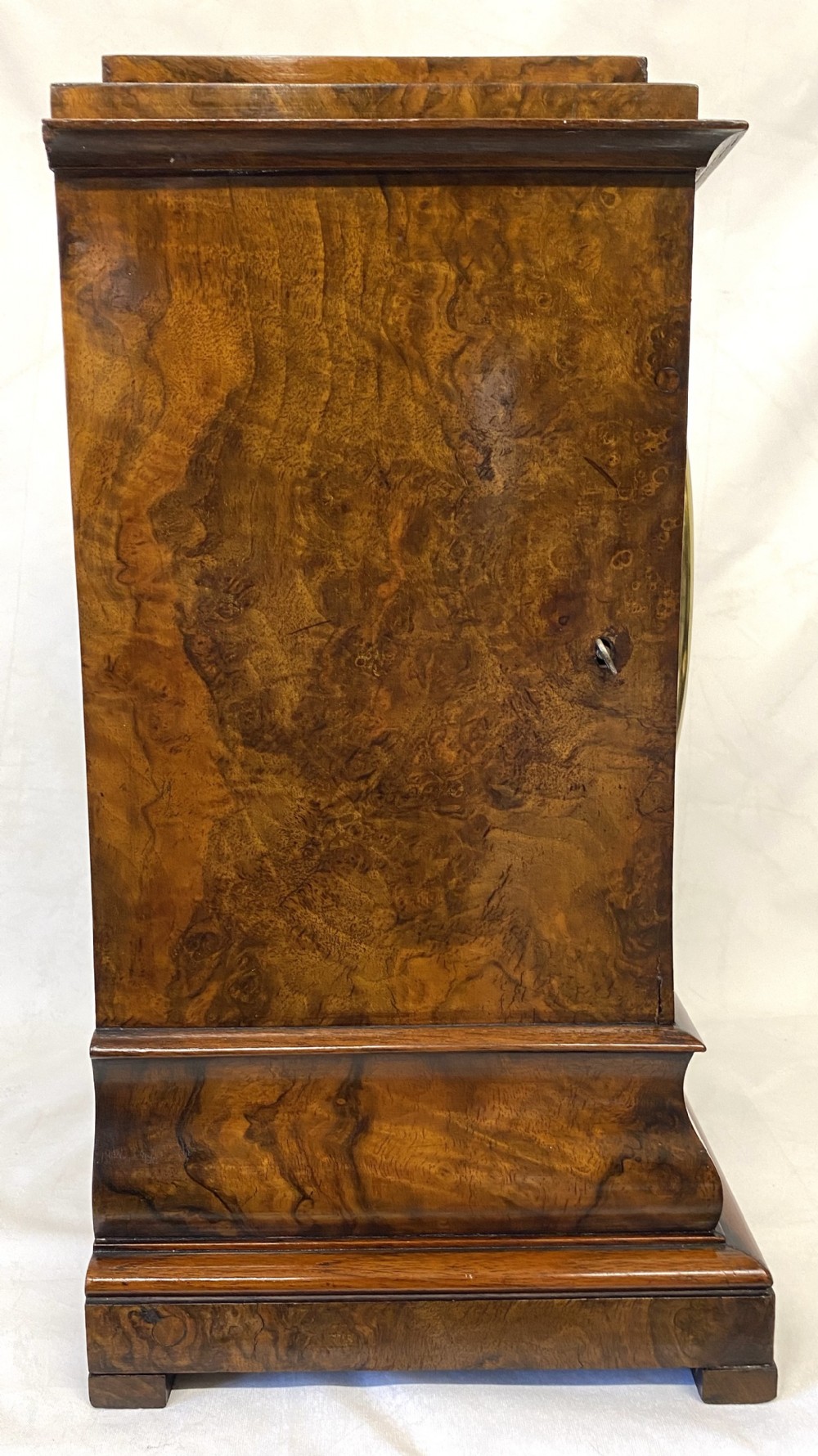
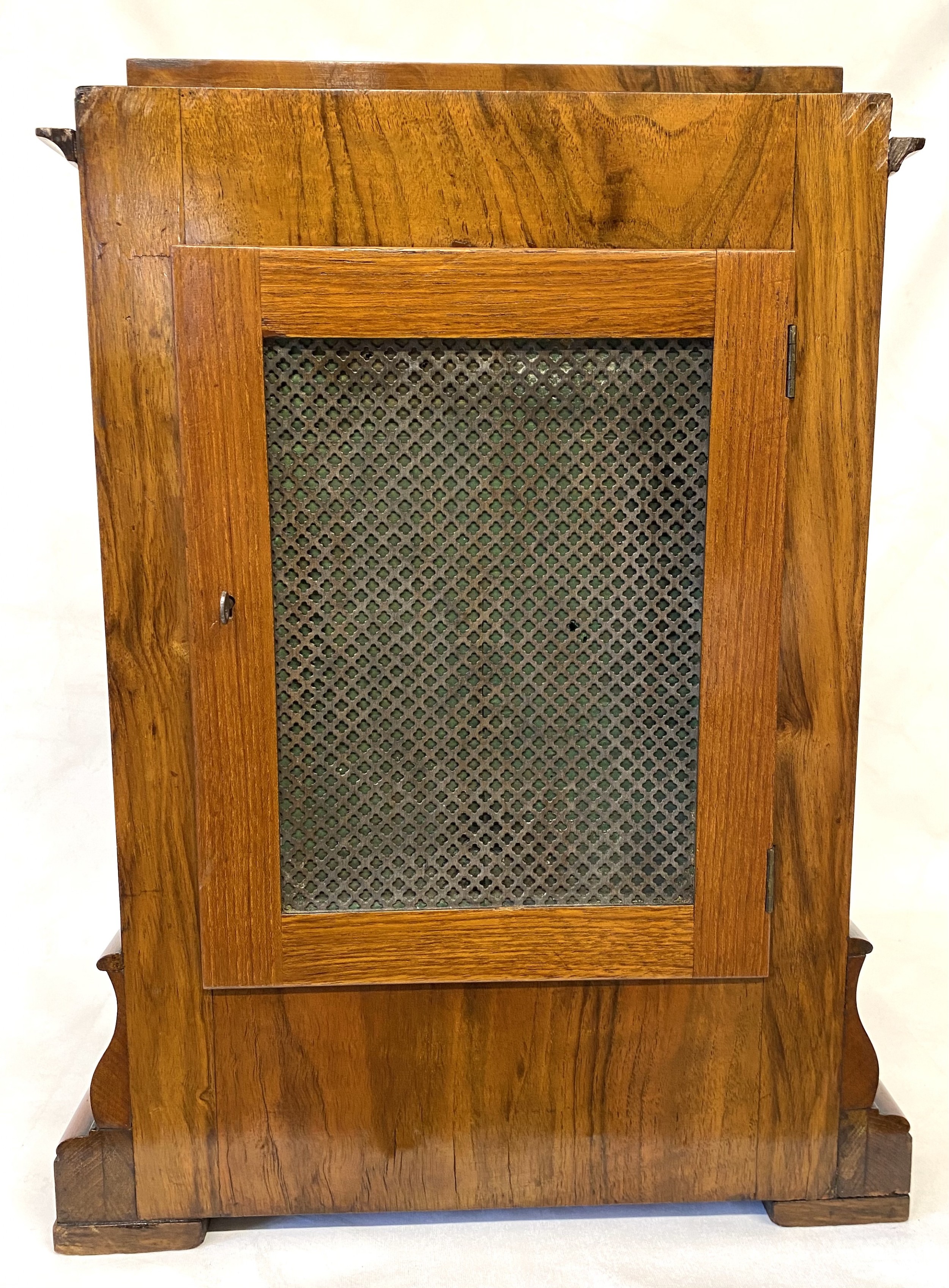
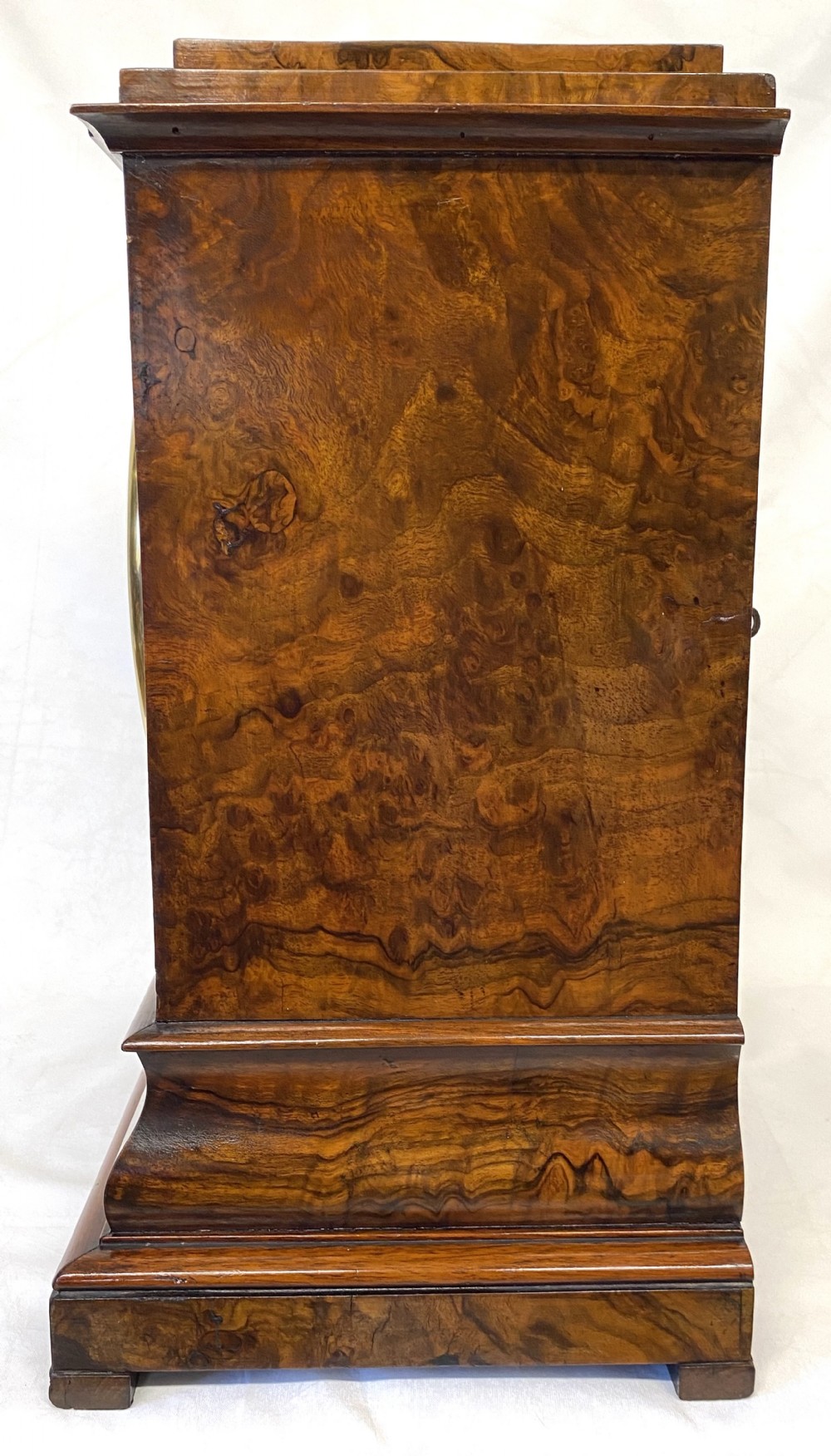
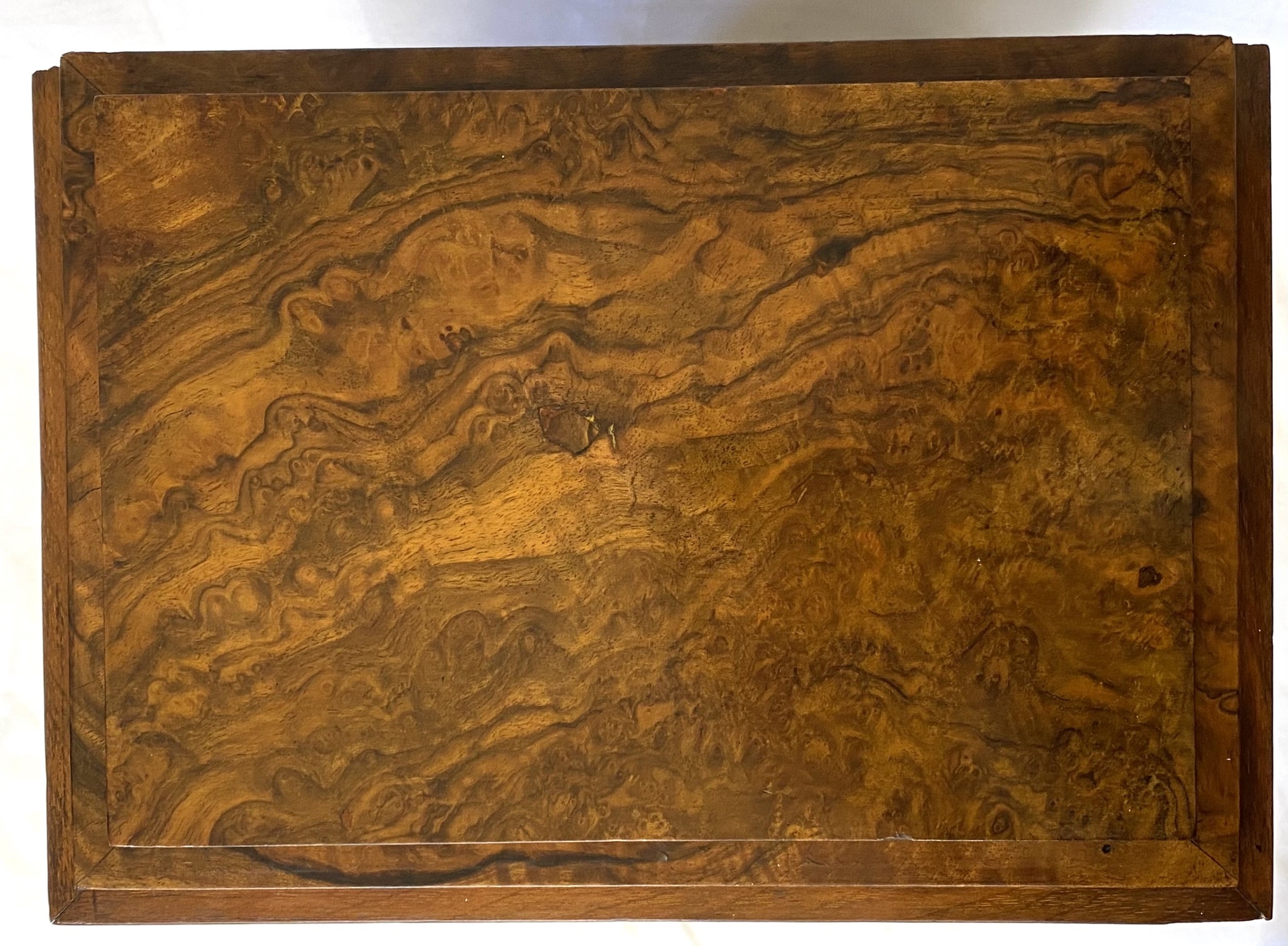
The top of the case then has two square, stepped sections leading to a shaped moulding to the top edge. The main body of the case is then square with the front having four inlet secitions to each corner. There is then a further moulding below this leading to the "belled out' section which gives the clock a lovely, impressive look. Finally there is a further moulding leading to the base which is finished by four, thin wooden feet.
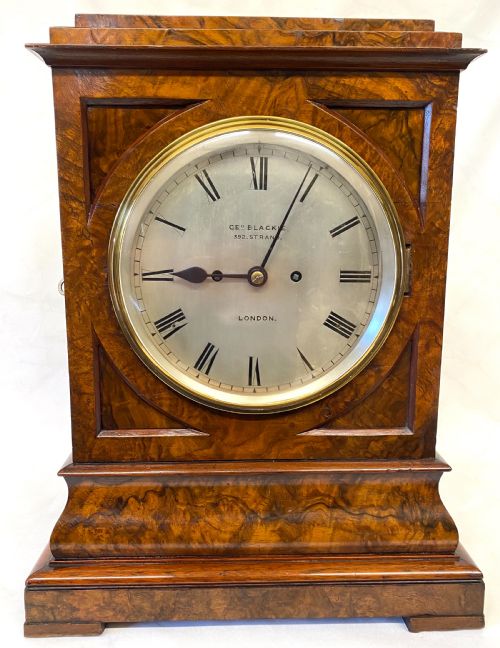
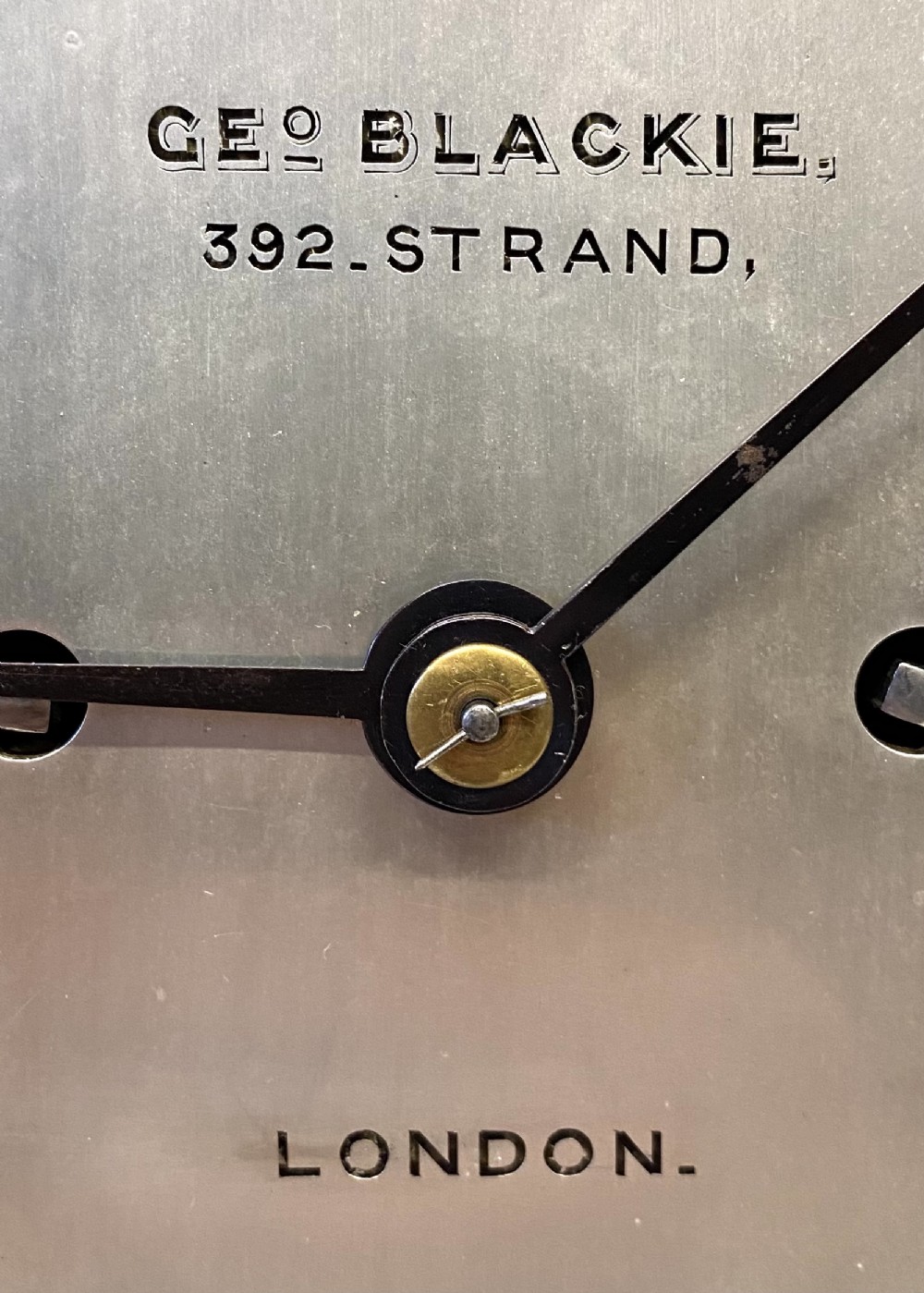
The dial is then silvered and set out in Black roman numerals with a thin ring to the outside marking the minutes. The dial is then signed to the centre "GEO BLACKIE 392 STRAND LONDON" to show that the clock was made by George Blackie of London. The dial then has a lovely bevelled and silvered frame surrounding the dial. Finally the dial is finished by two lovely shaped hands as well as a domed, protective glass set into a shaped brass bezel.
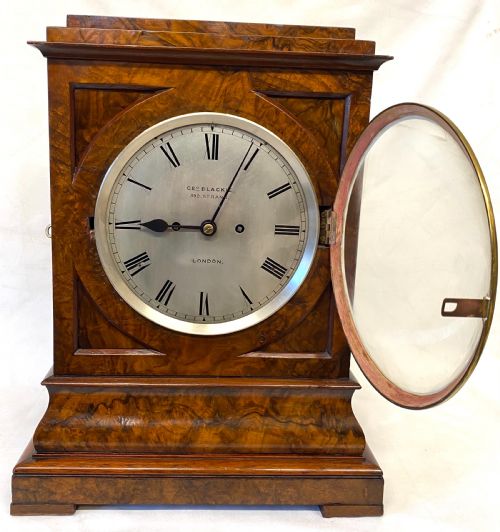
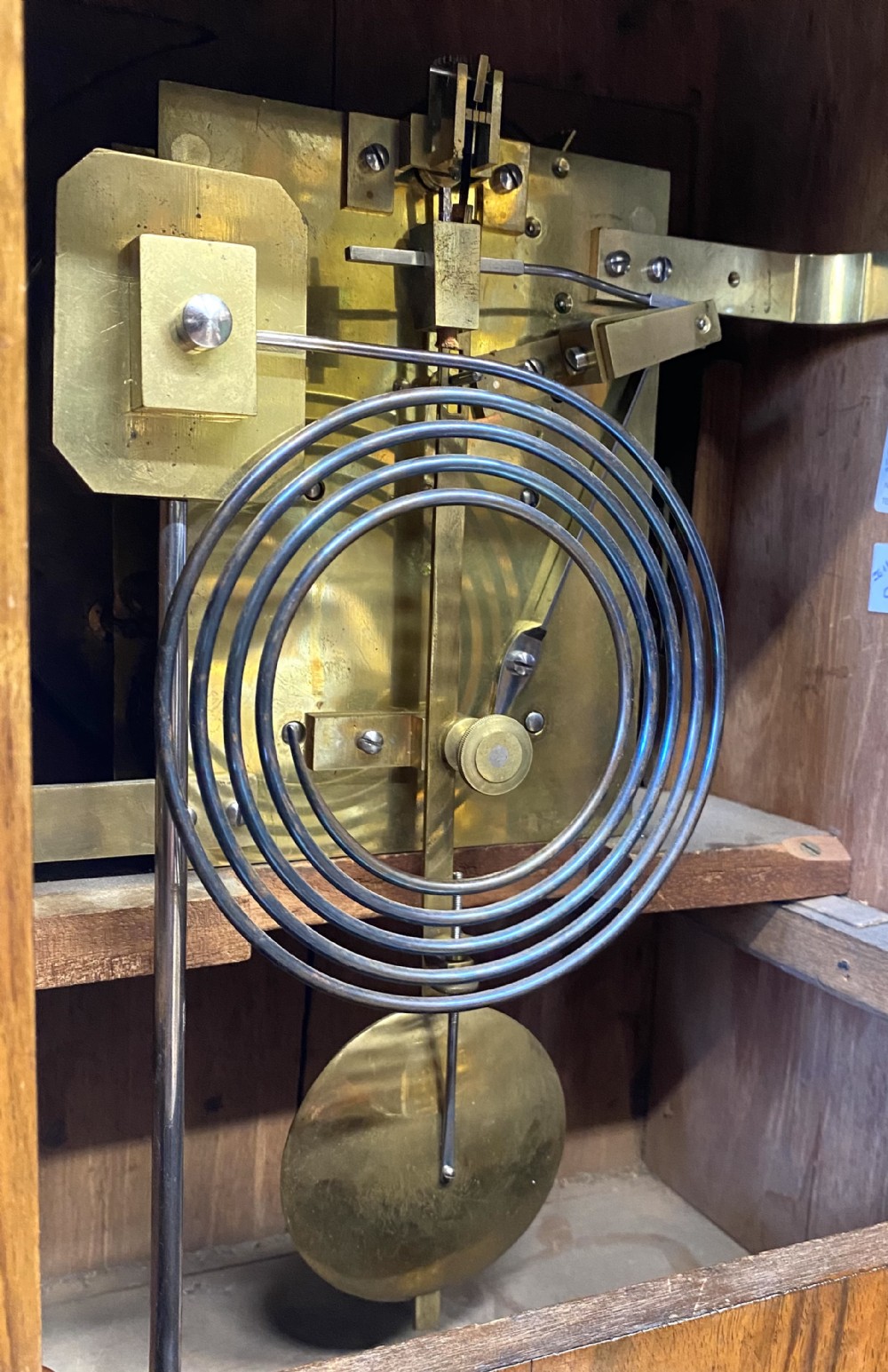
The movement is then wound from the front and accessed from the back. It is a double chain fusee example of the upmost quality and is ticking away and chiming as it should. The movement then comes complete with its regulating pendulum, winding key, and travel nut.
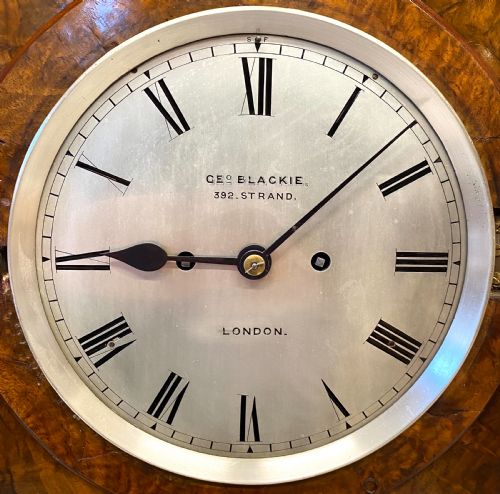
‘Watchmakes and clockmakers of the world’ by Brian Loomes lists George Blackie as working in The Strand, London from 1813 until his death in 1885.
It measures approximately:
18" / 45.75cm Tall.
14" / 35.5cm Wide.
9.5" / 24cm Deep.
N Wilson Antiques Clocks has dated this piece to the 19th Century.
You can view the stock and full dealer information on the N Wilson Antiques Clocks Profile Page
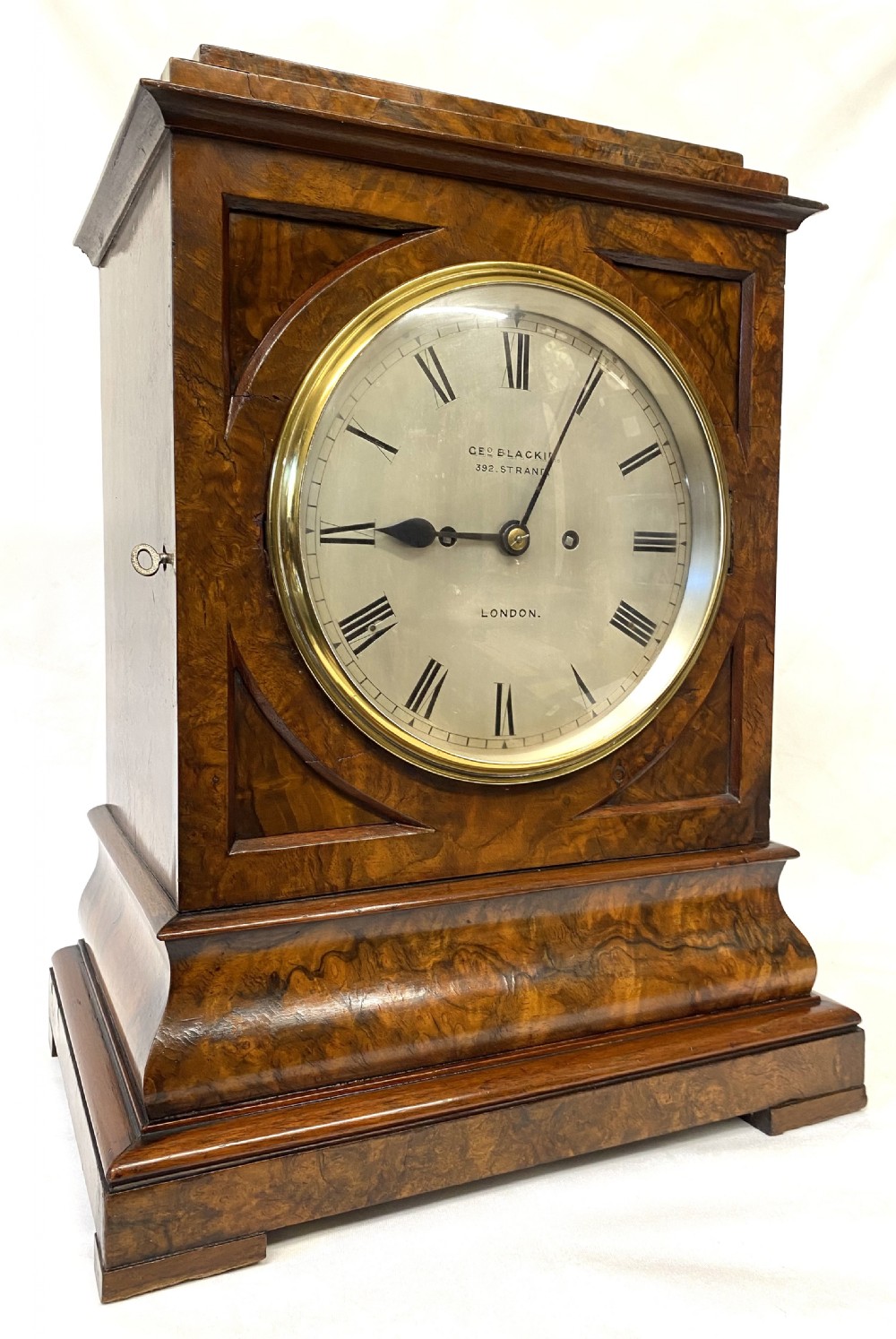

Large Antique Double Fusee Walnut Mantel / Table Clock by George Blackie London