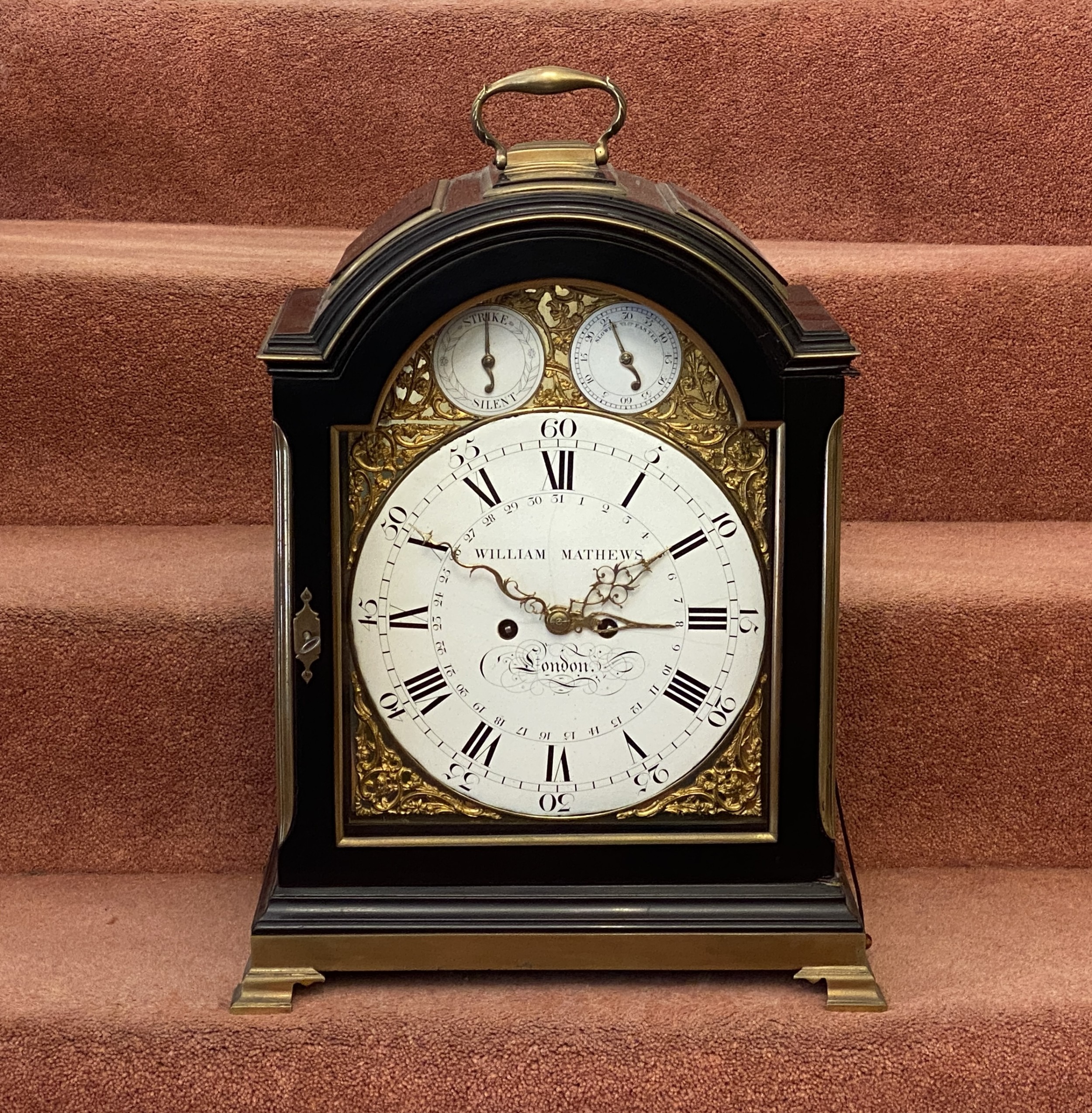
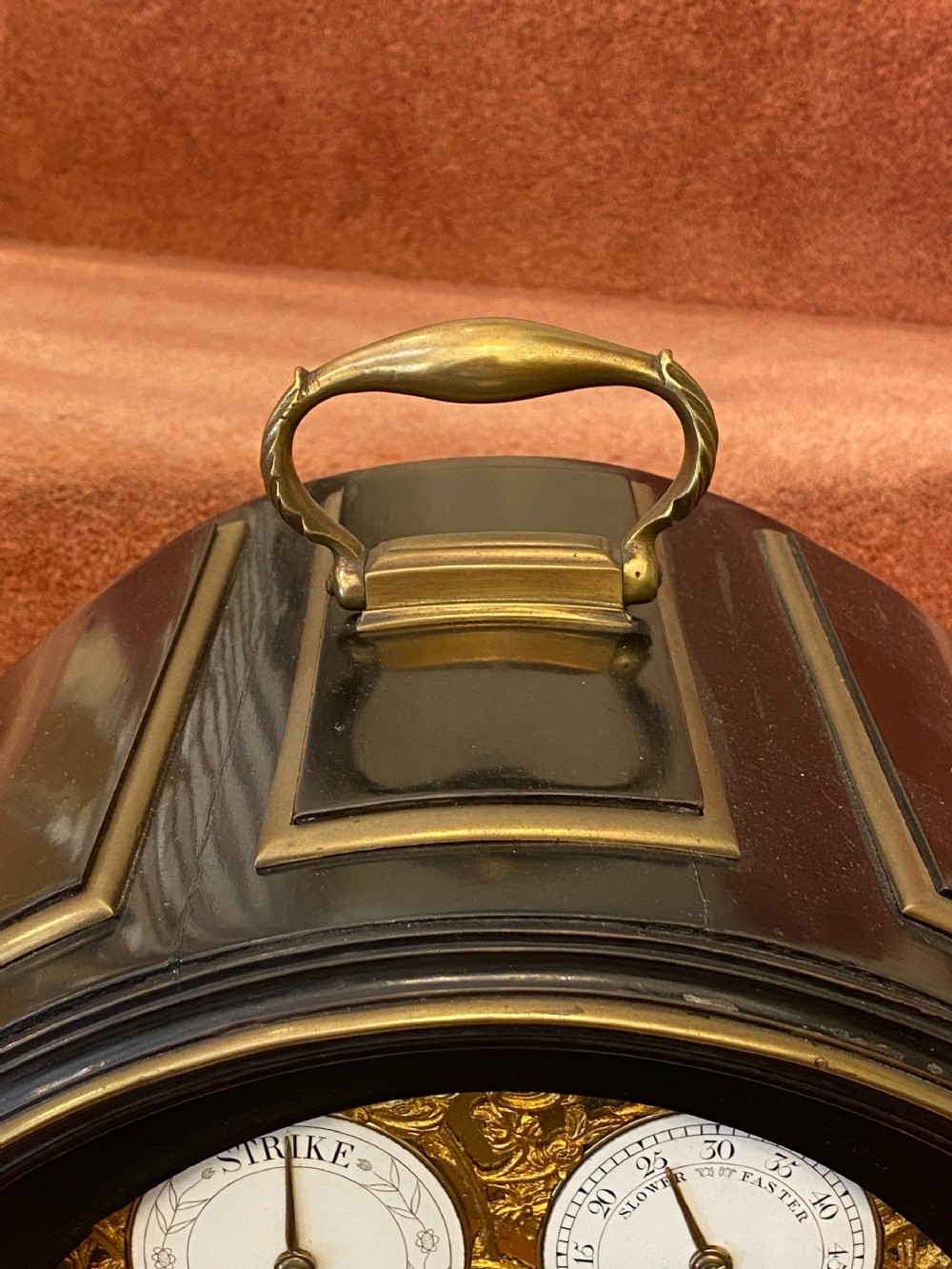
Quiet Street Antiques of Bath has dated this piece to the 18th Century.
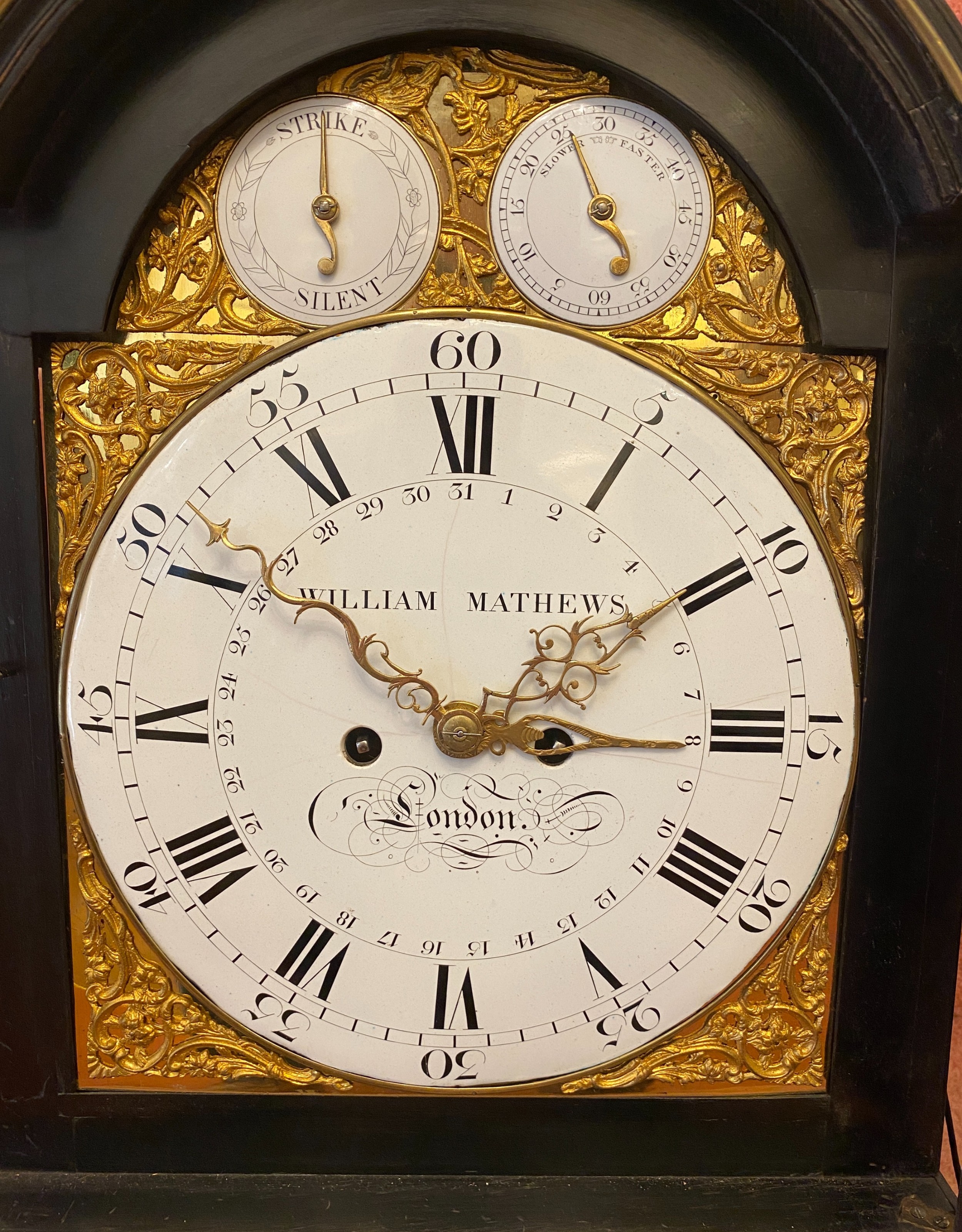
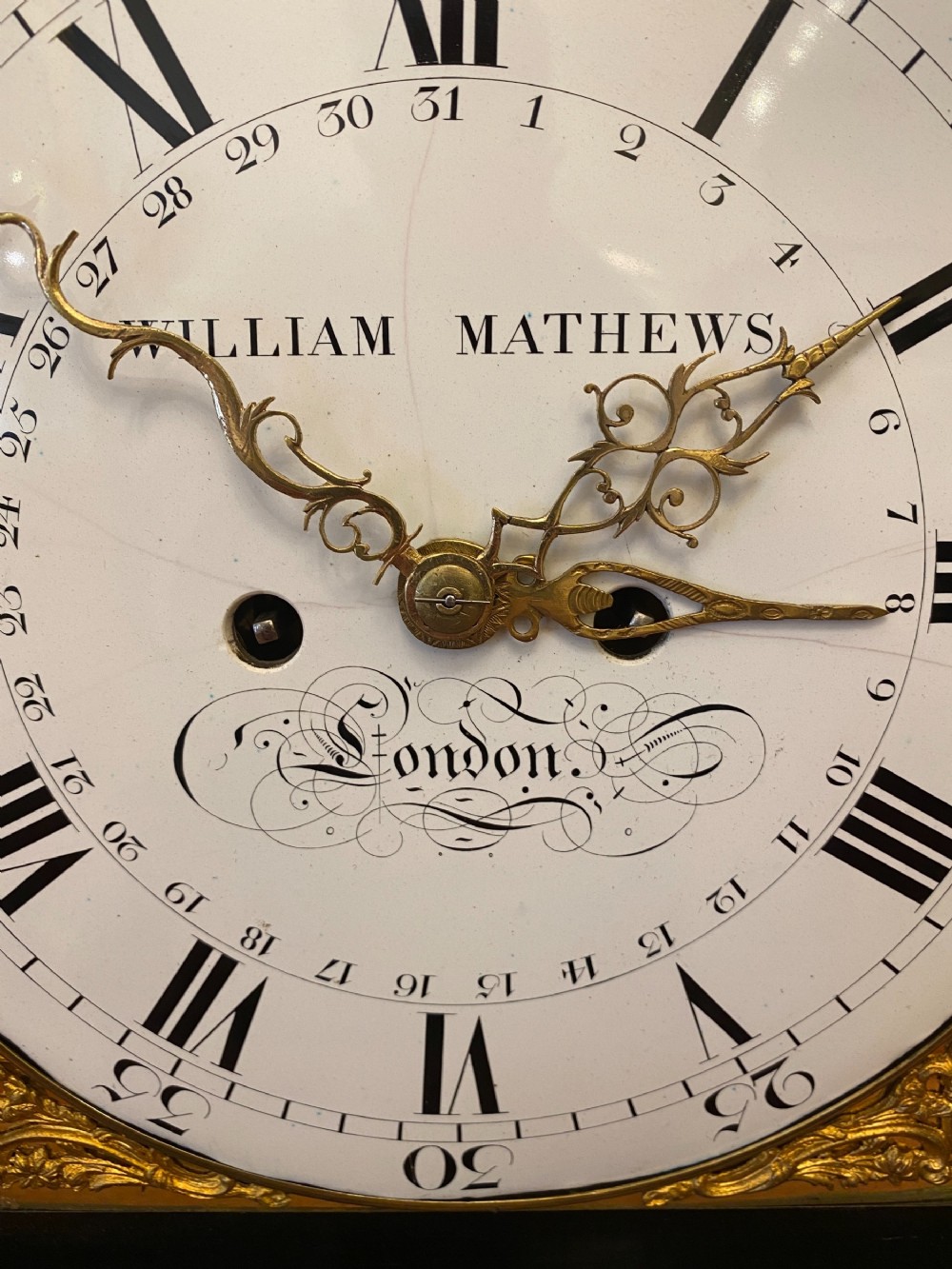
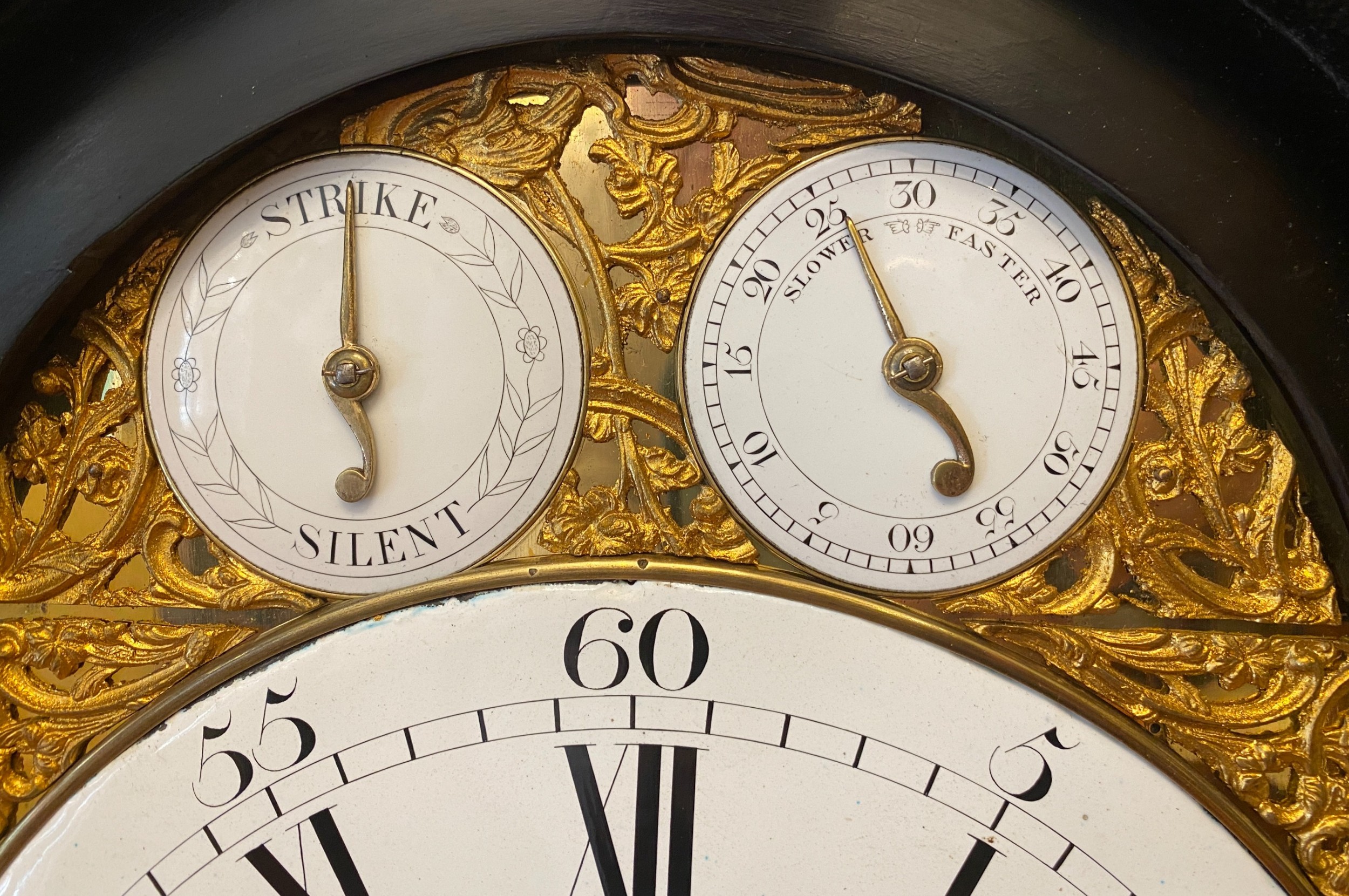
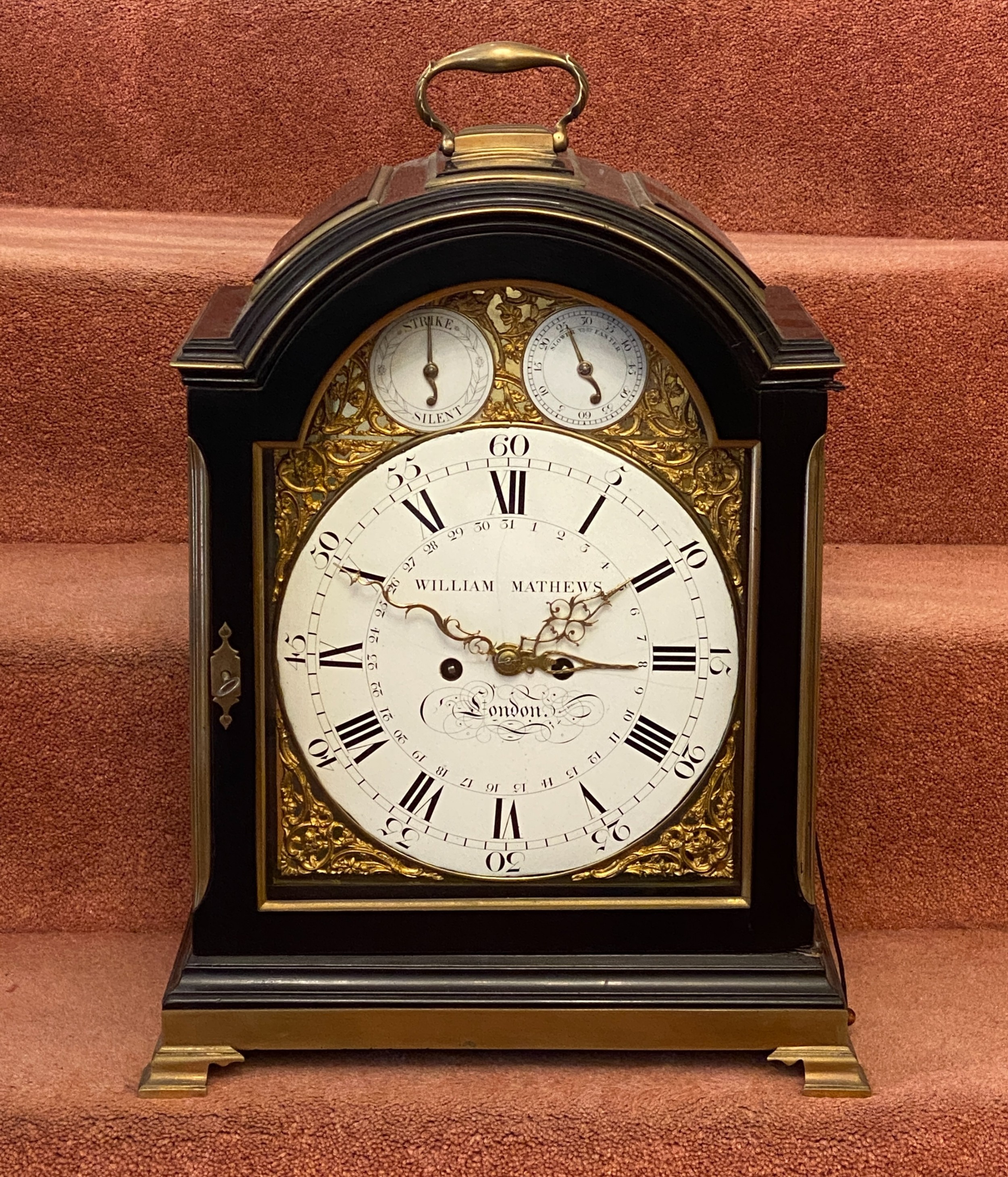
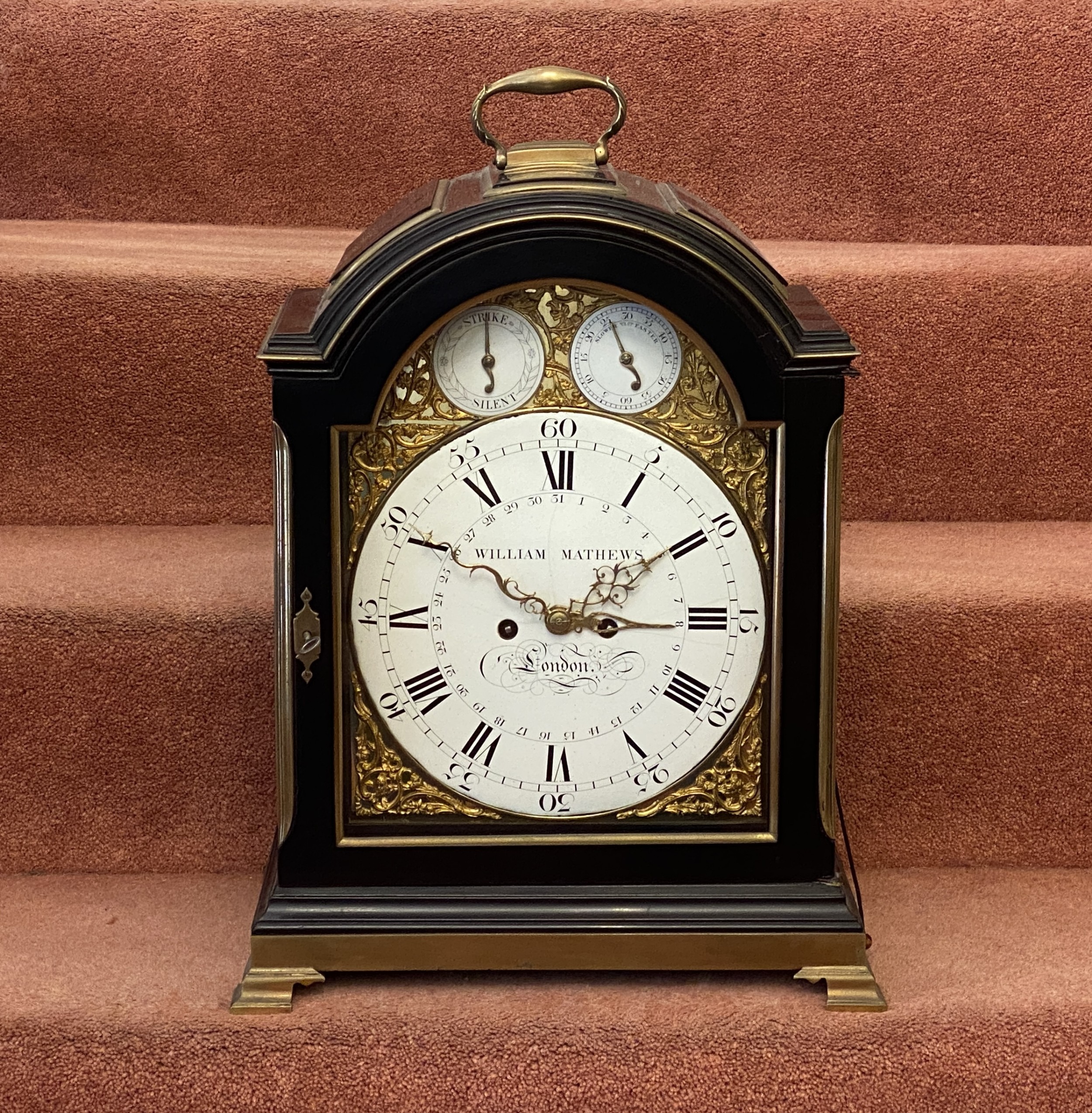
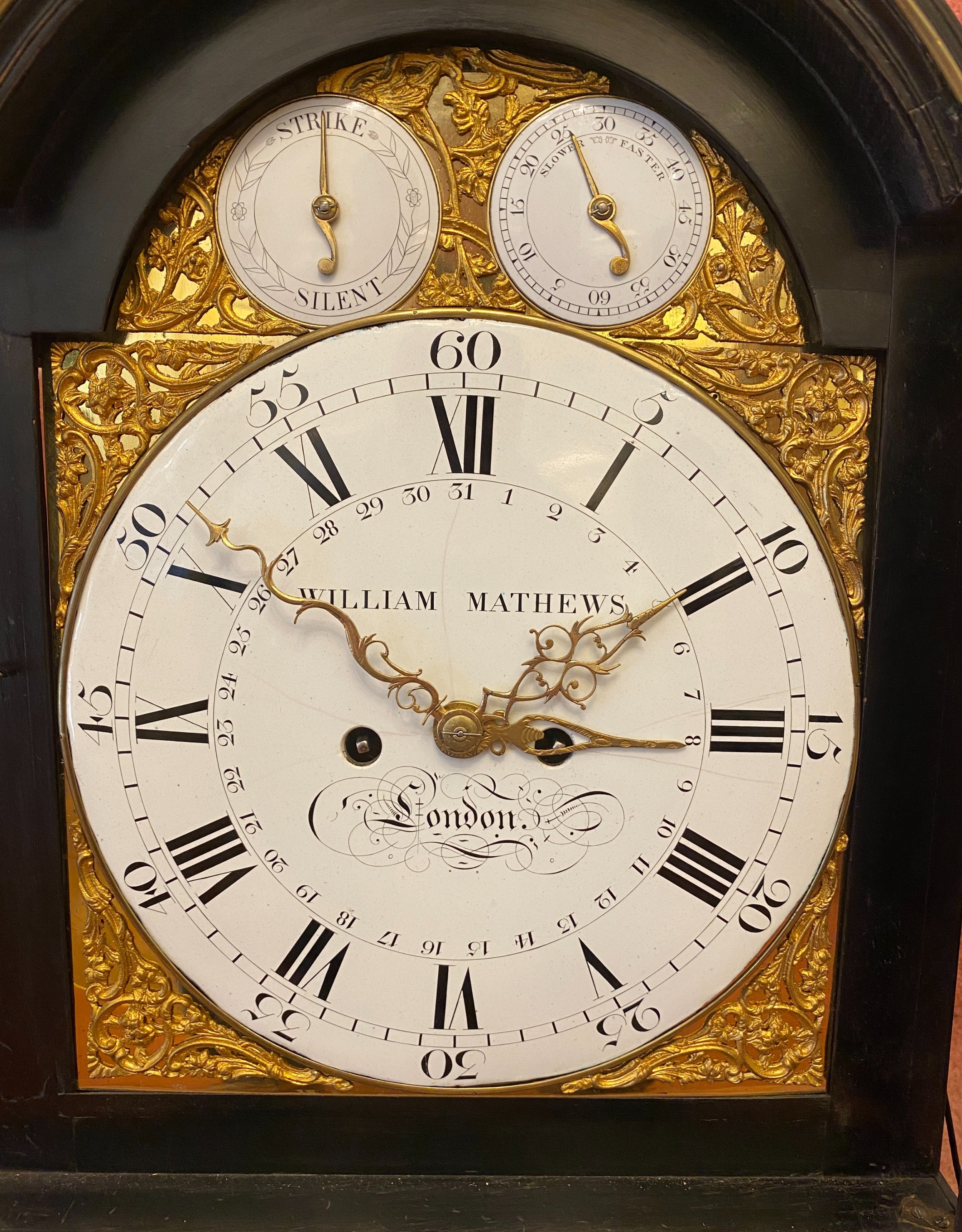
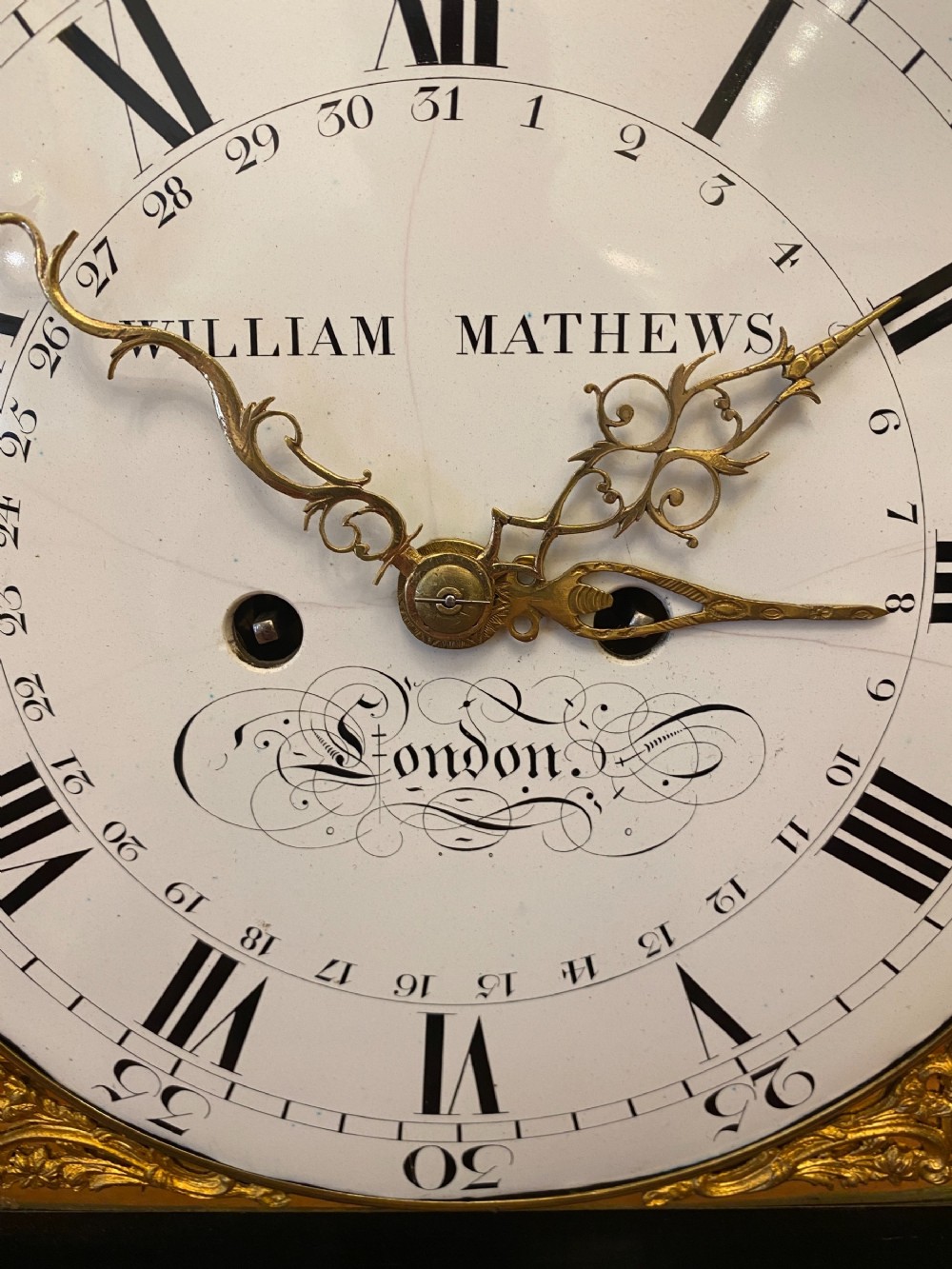
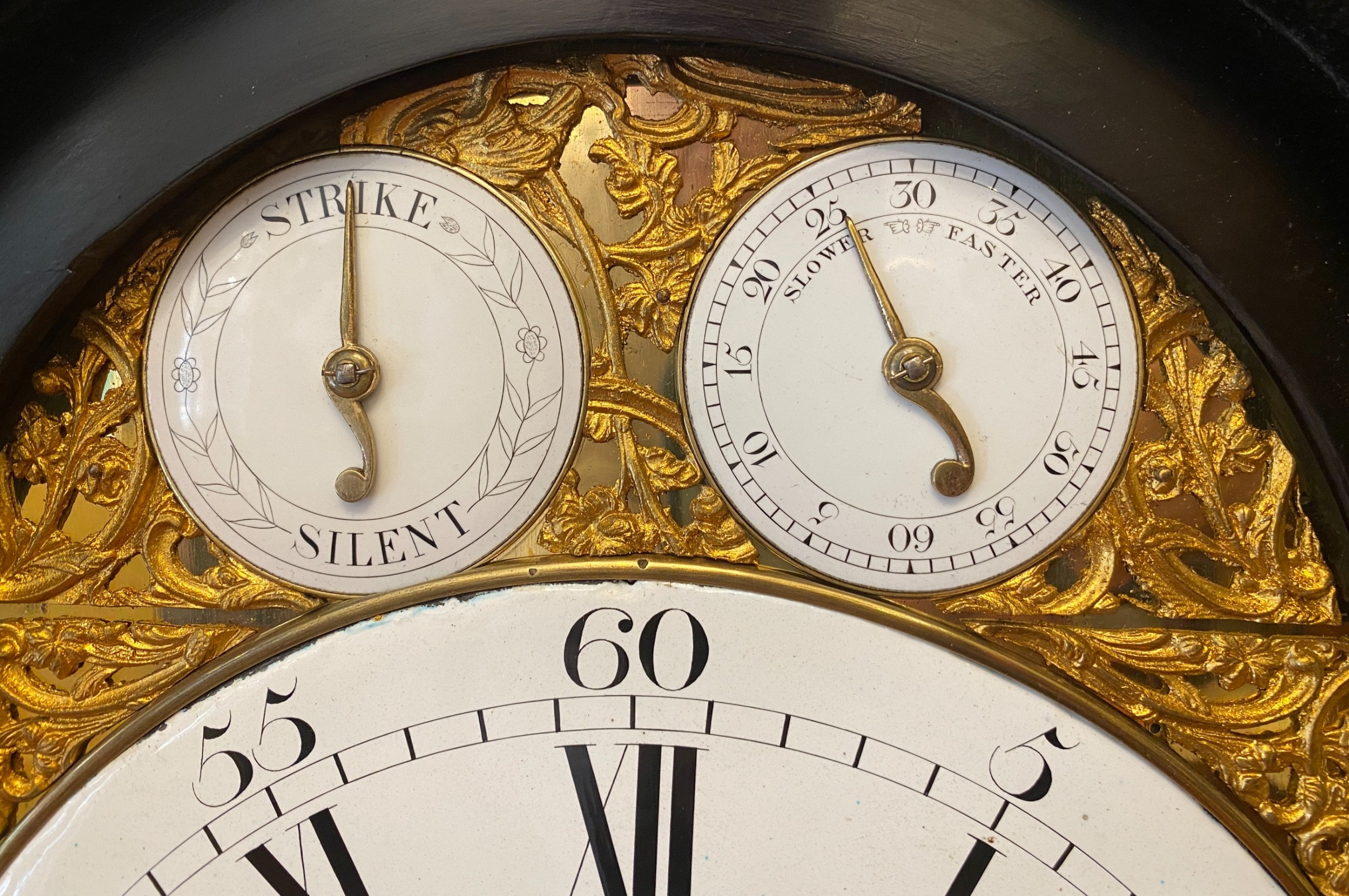
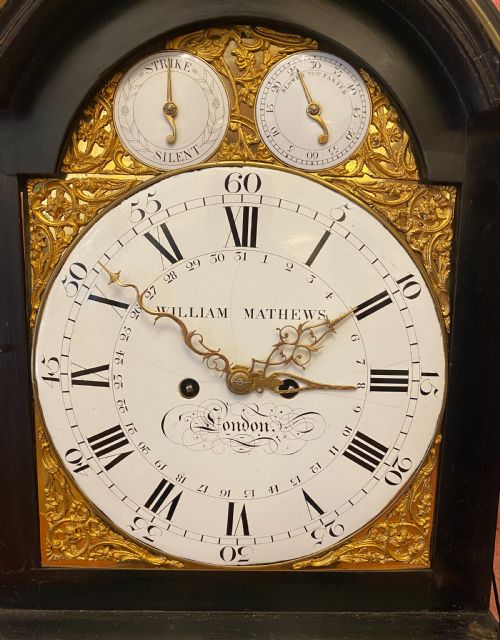
There are two subsidiary dials one for Strike/Silent, the other for front adjustable pendulum speed setting. Surrounding the dial is a gilded mask with gilt spandrels to the bottom corners. The elaborately decorative brass hands are typical of this age, as is the third brass hand for the day of the month.
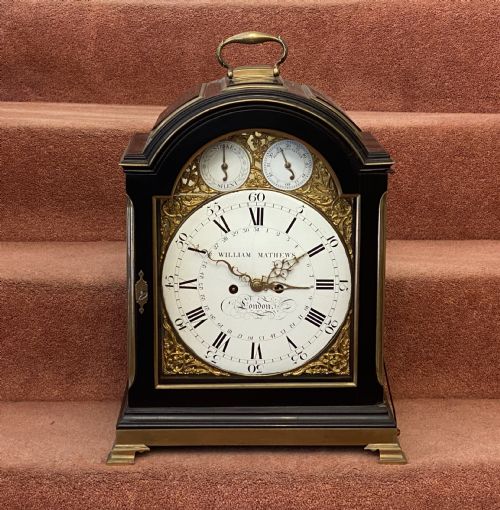
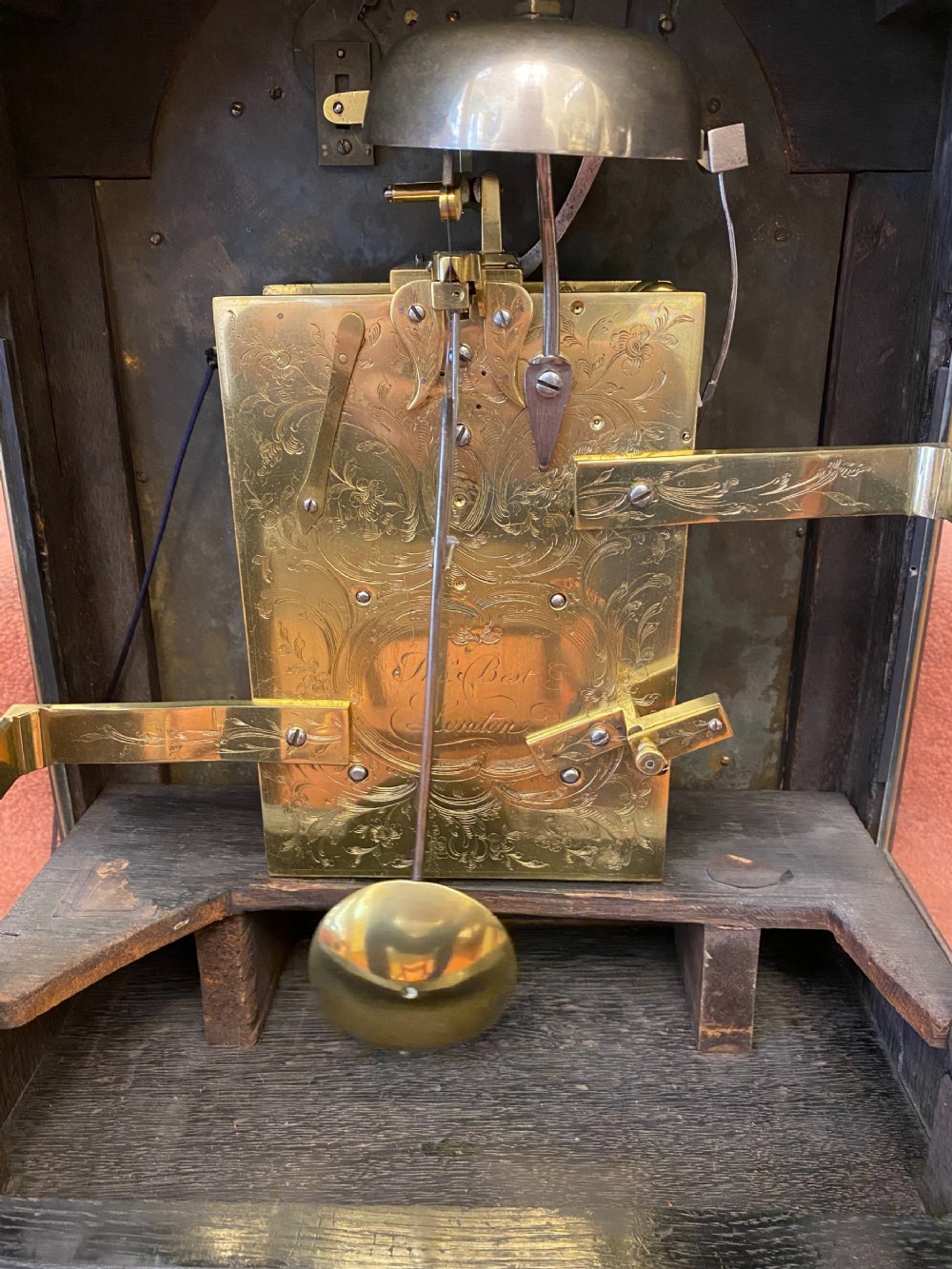
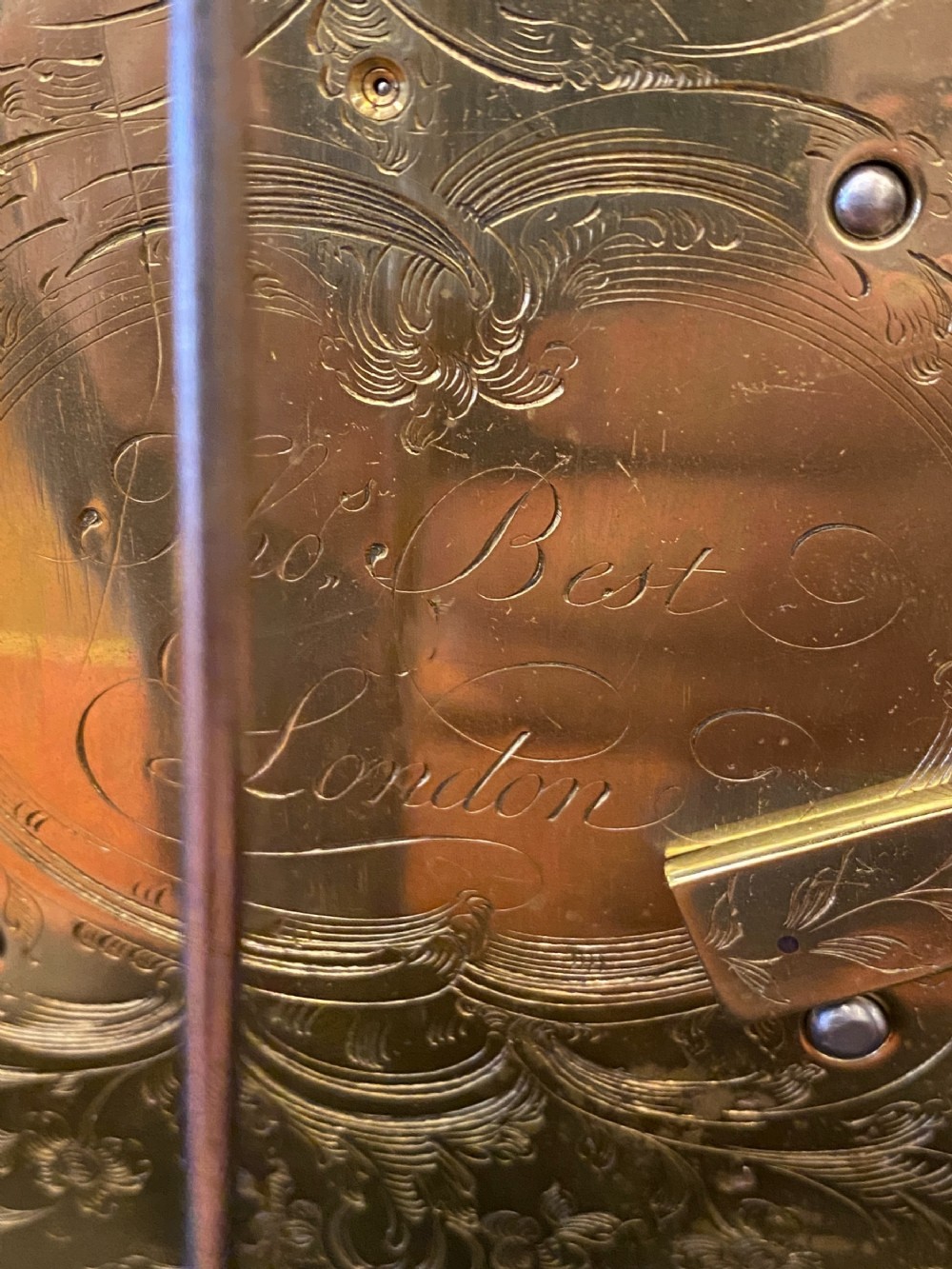
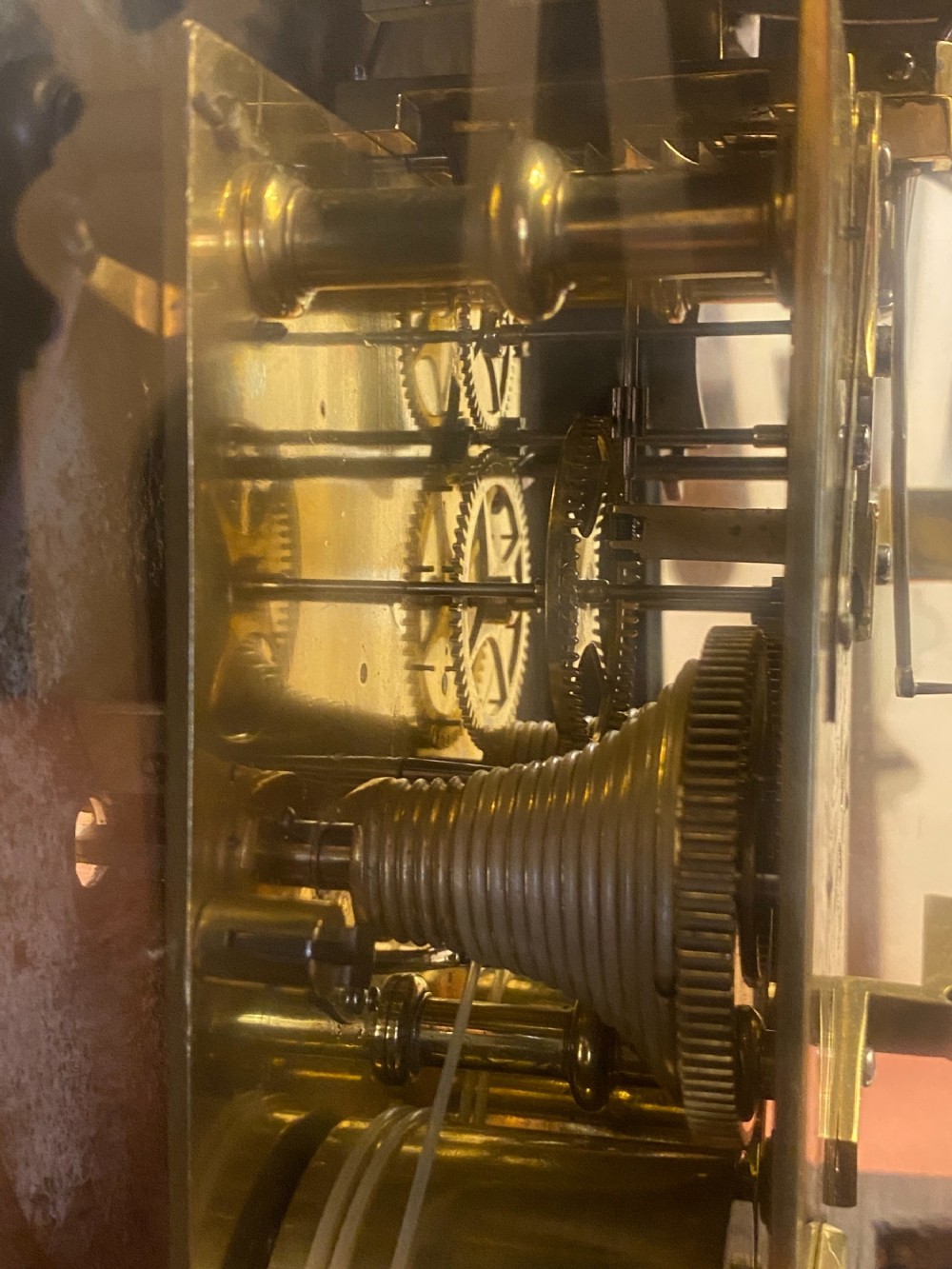
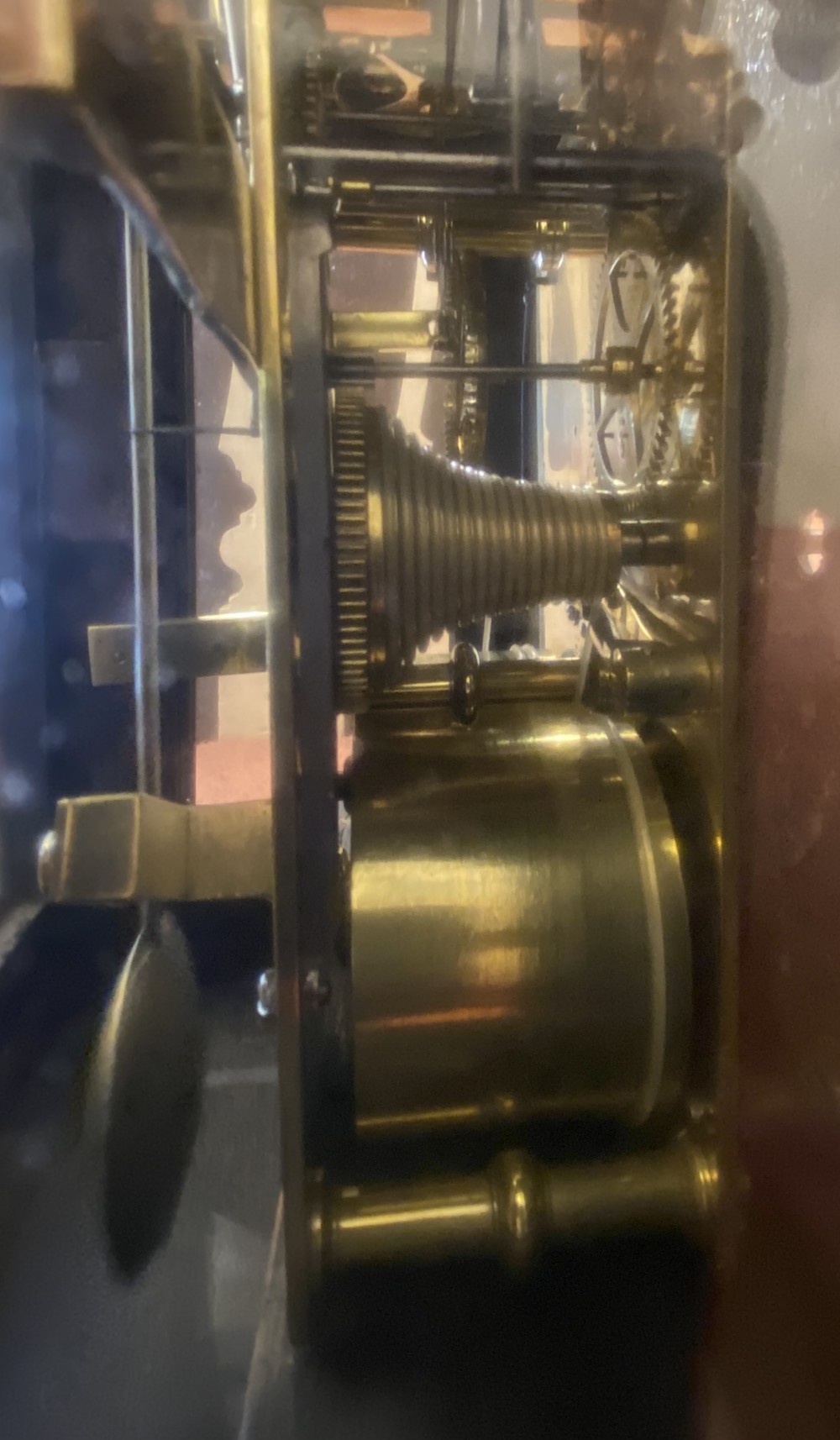
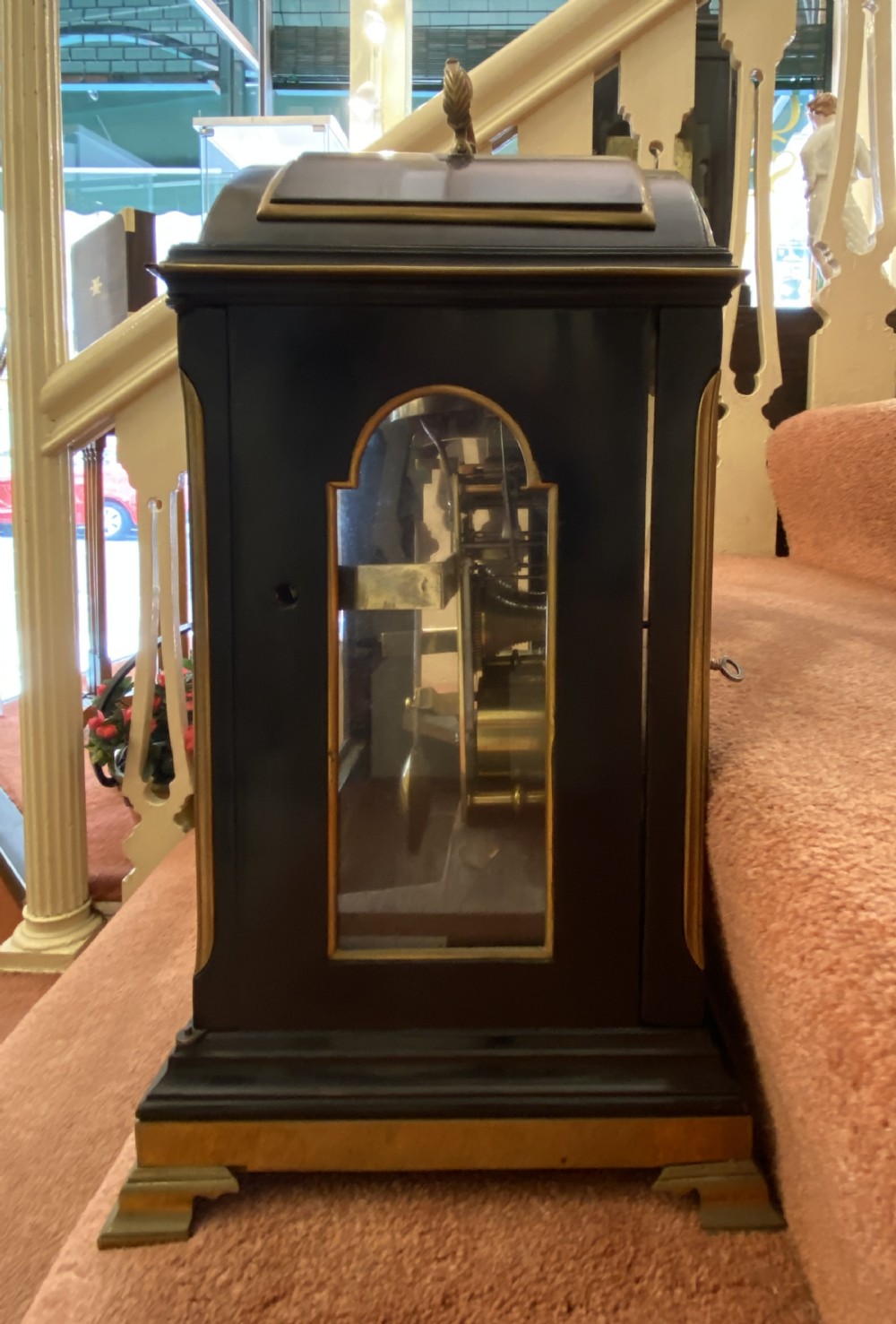
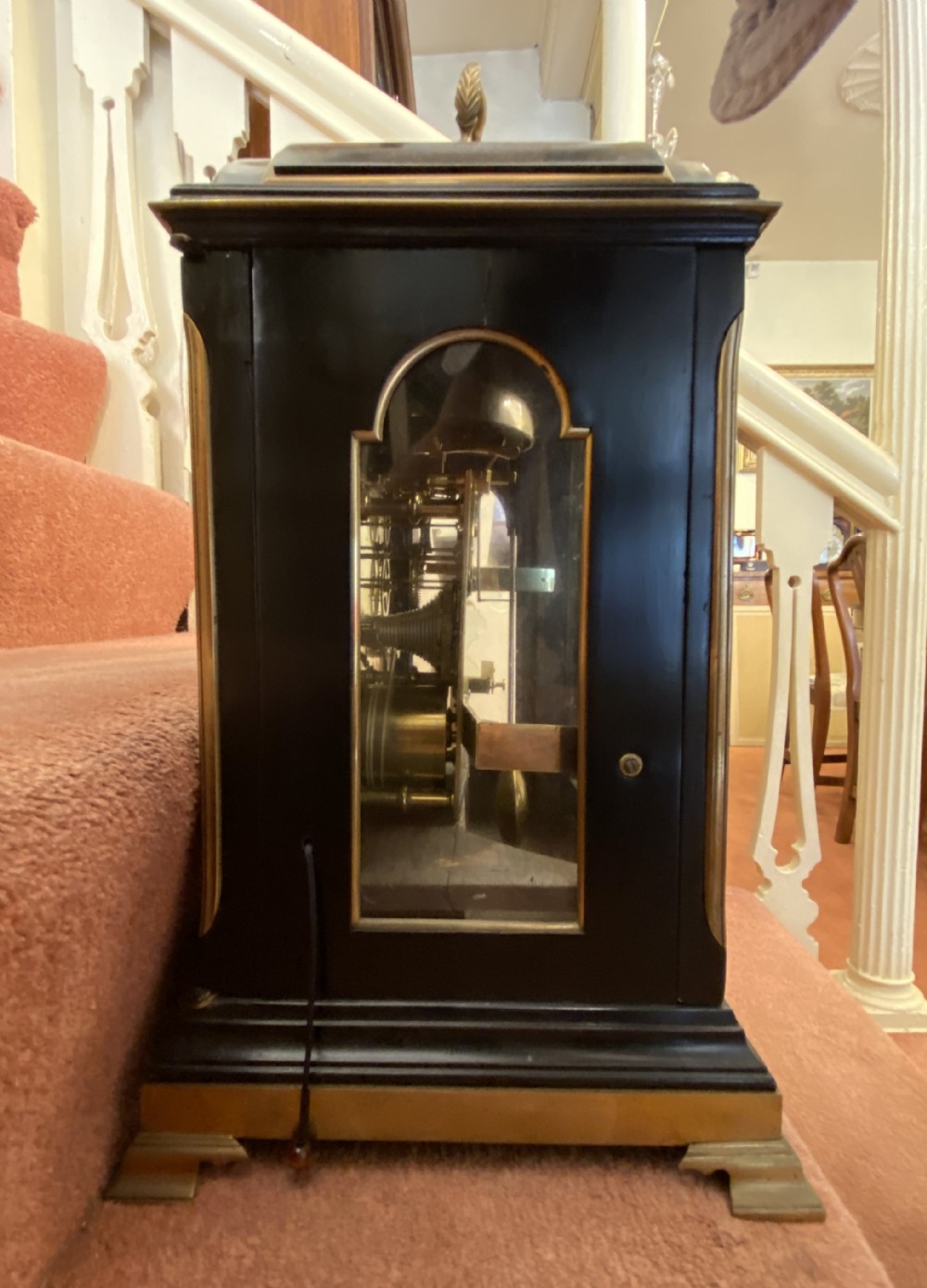
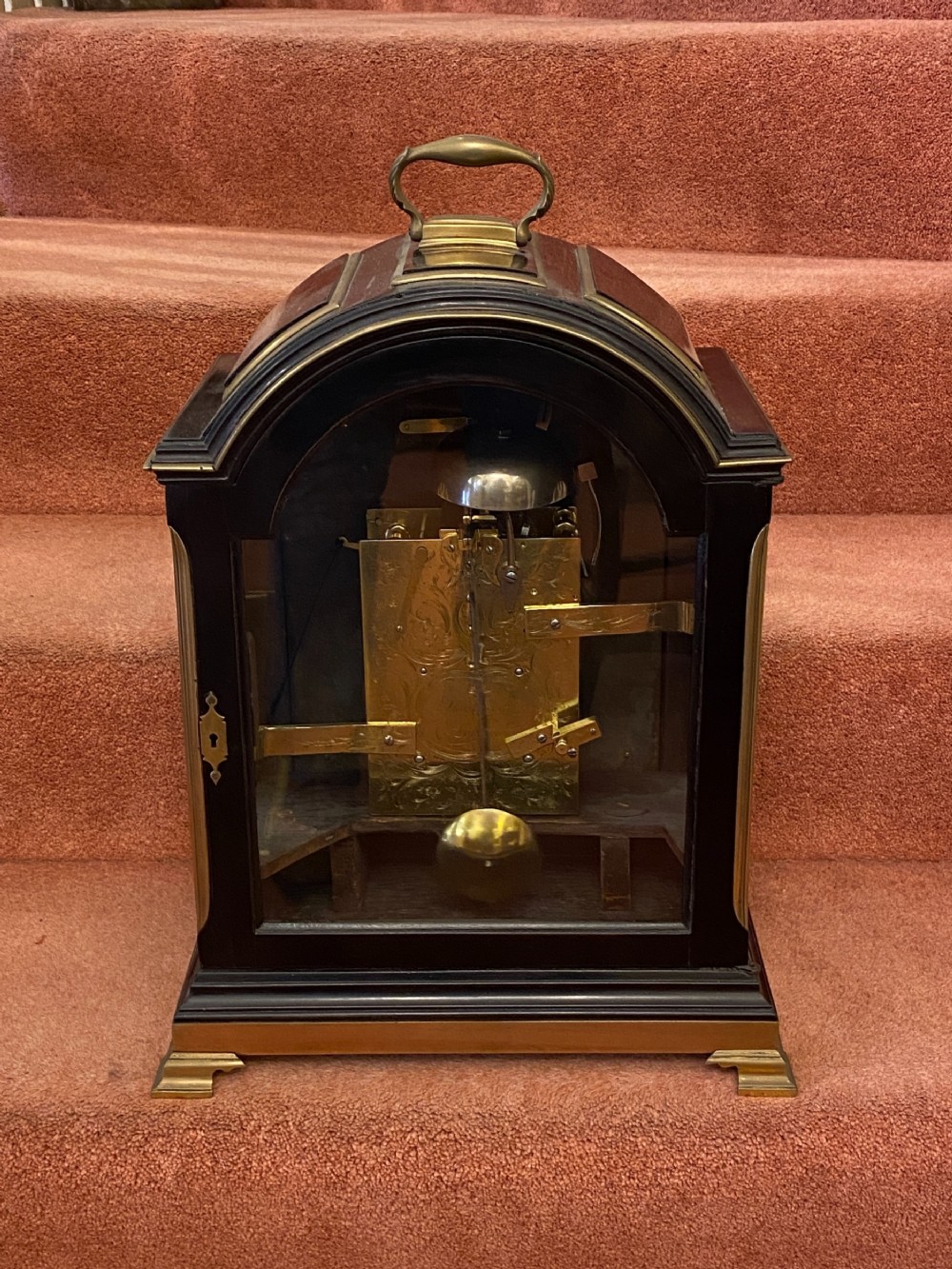
The twin fusee movement is inscribed by the maker Thomas Best who is believed to have collaborated with William and Mathews on this clock (see below). Thomas Best was known for making a large number of clocks and watches for both the Dutch and English markets. At one stage he went bankrupt (1789). He worked between 1770-1794 (Brittens clock and watch makers, p371. Although ballies quotes Best as working from 1761), this would coincide with William Mathews who finished working in 1776 an overlap of six (or 11) years depending who is correct. This was also interestingly the beginning of the period during which enamel dials were trialled and very occasionally used.
Dimensions: Height: 20 inches: Width: 14 inches, Depth 10.5 inches
Date: c.1785-90.
Our own view is that this clock was made by Thomas Best of London, around 1785-90 at the latest and that the enamel dial (difficult to make at this time and very expensive) was made to follow the new owners specific instructions. As such this may well be an example of a clock which shows the retailer on the dial - a common practice both before and after) whilst reataining the clockmakers name on the movement.
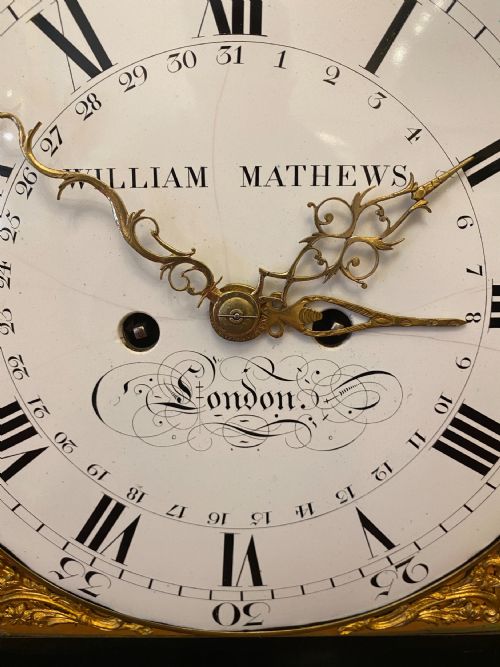
There is no evidence of a 'marriage' between case and movement. If the intention was to marry the two, there is no way anyone could ever find a dial to exactly fit such a complex movement, with its two subsidiary enamel dials. An absolute impossibility.
Quiet Street Antiques of Bath has dated this piece to the 18th Century.
Fine antiques at sensible prices
You can view the stock and full dealer information on the Quiet Street Antiques of Bath Profile Page
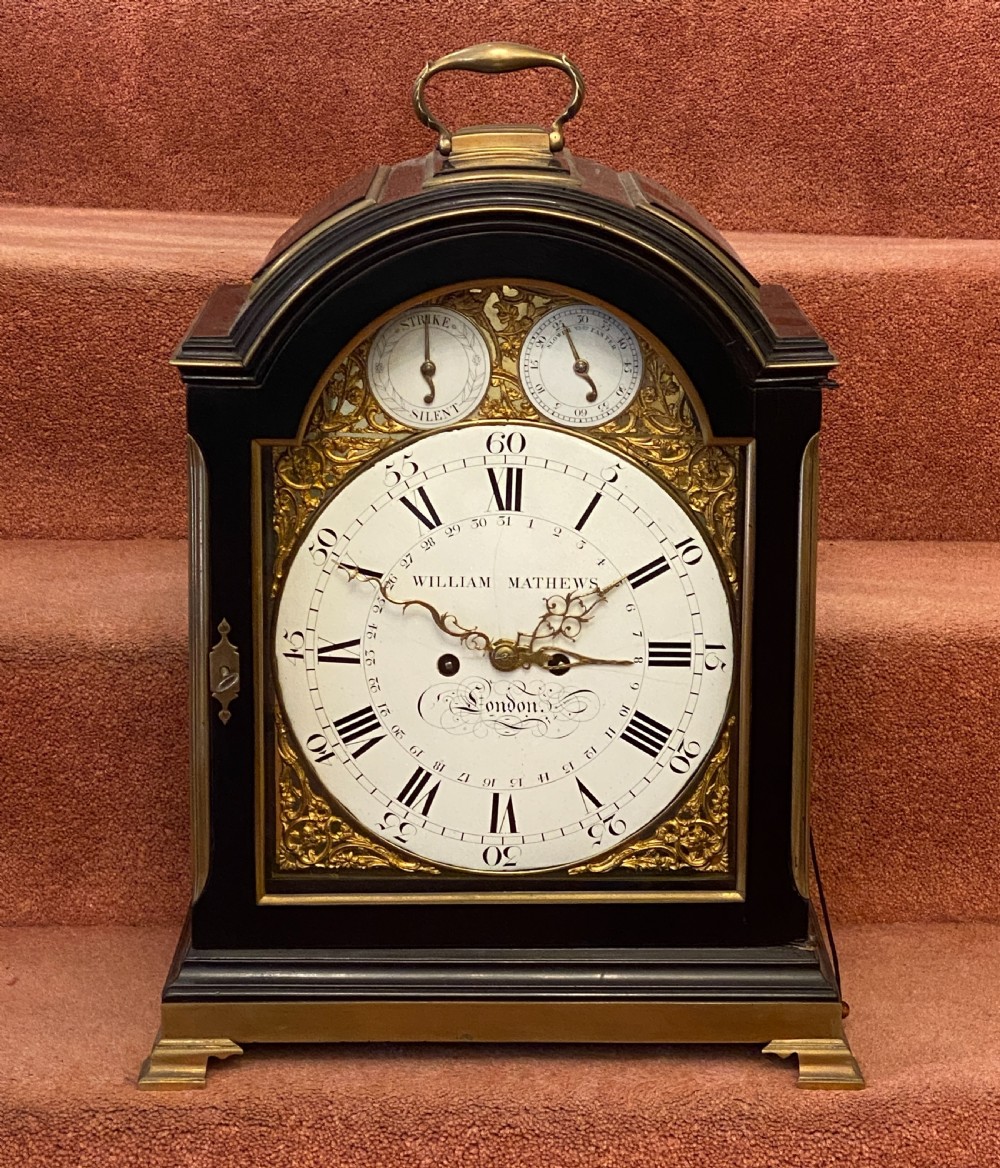

George III Enamel Dial Bracket Clock with Ebonised Case and Brass Fittings