Alexander George Antiques Ltd. has dated this piece to the 19th Century.
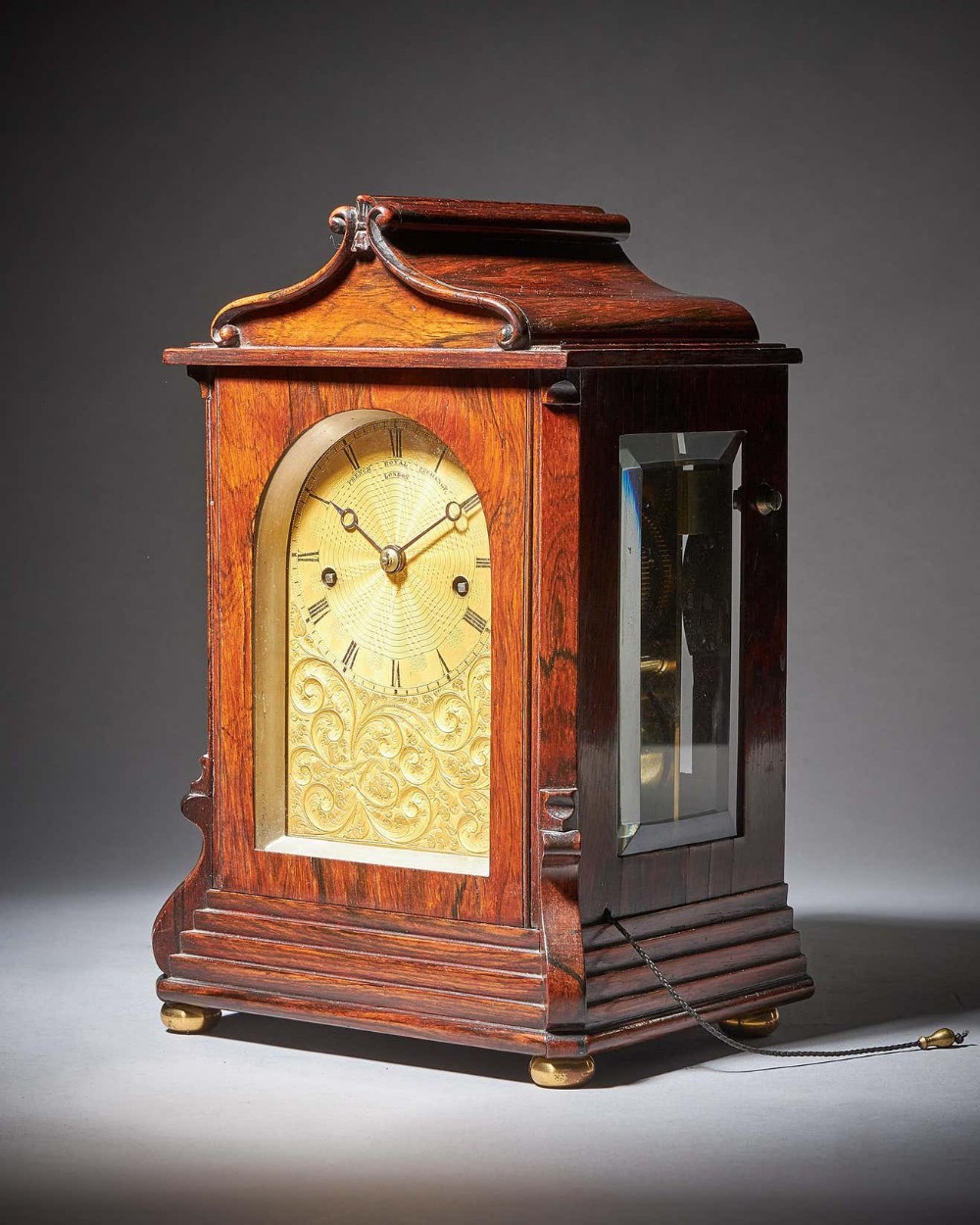
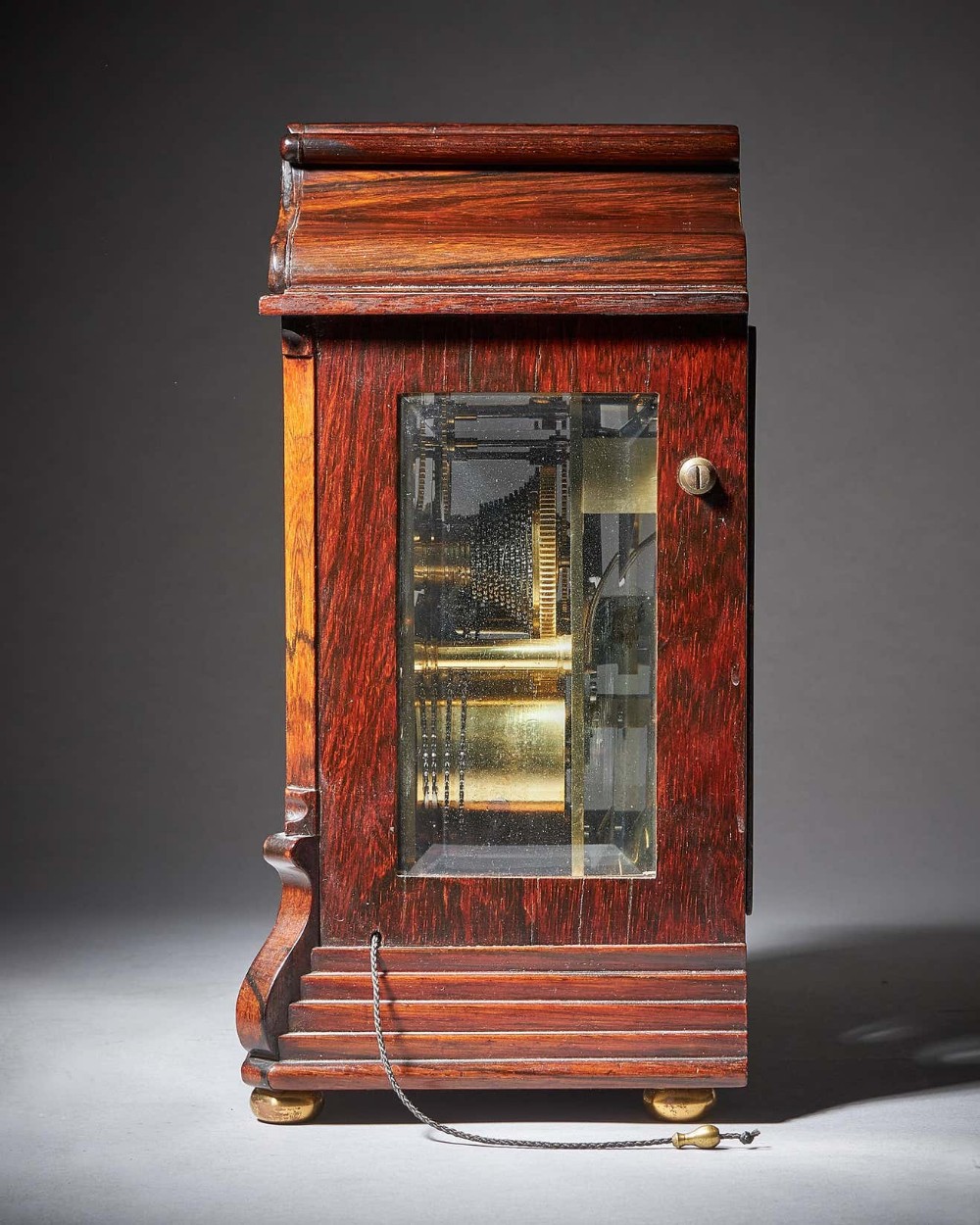
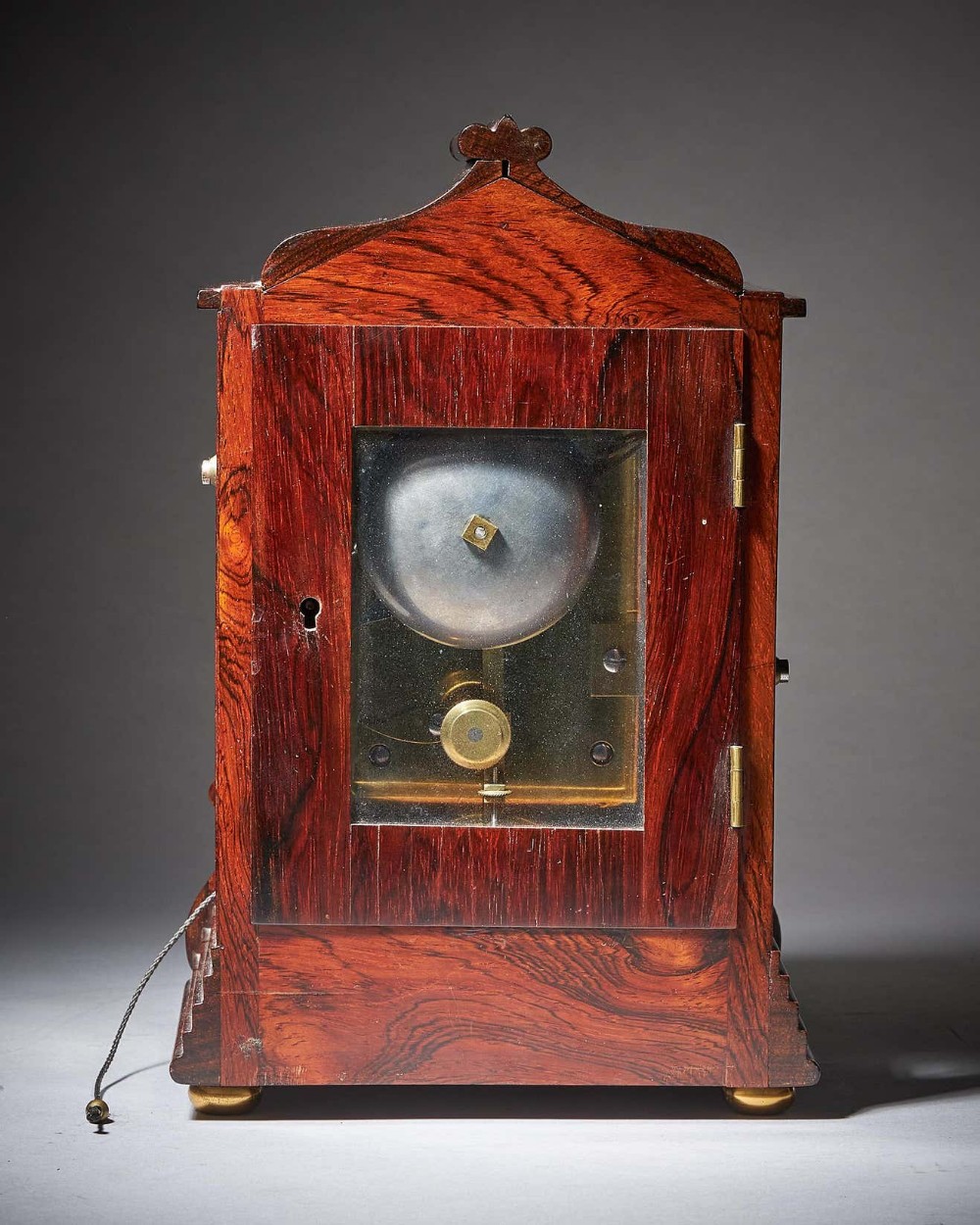
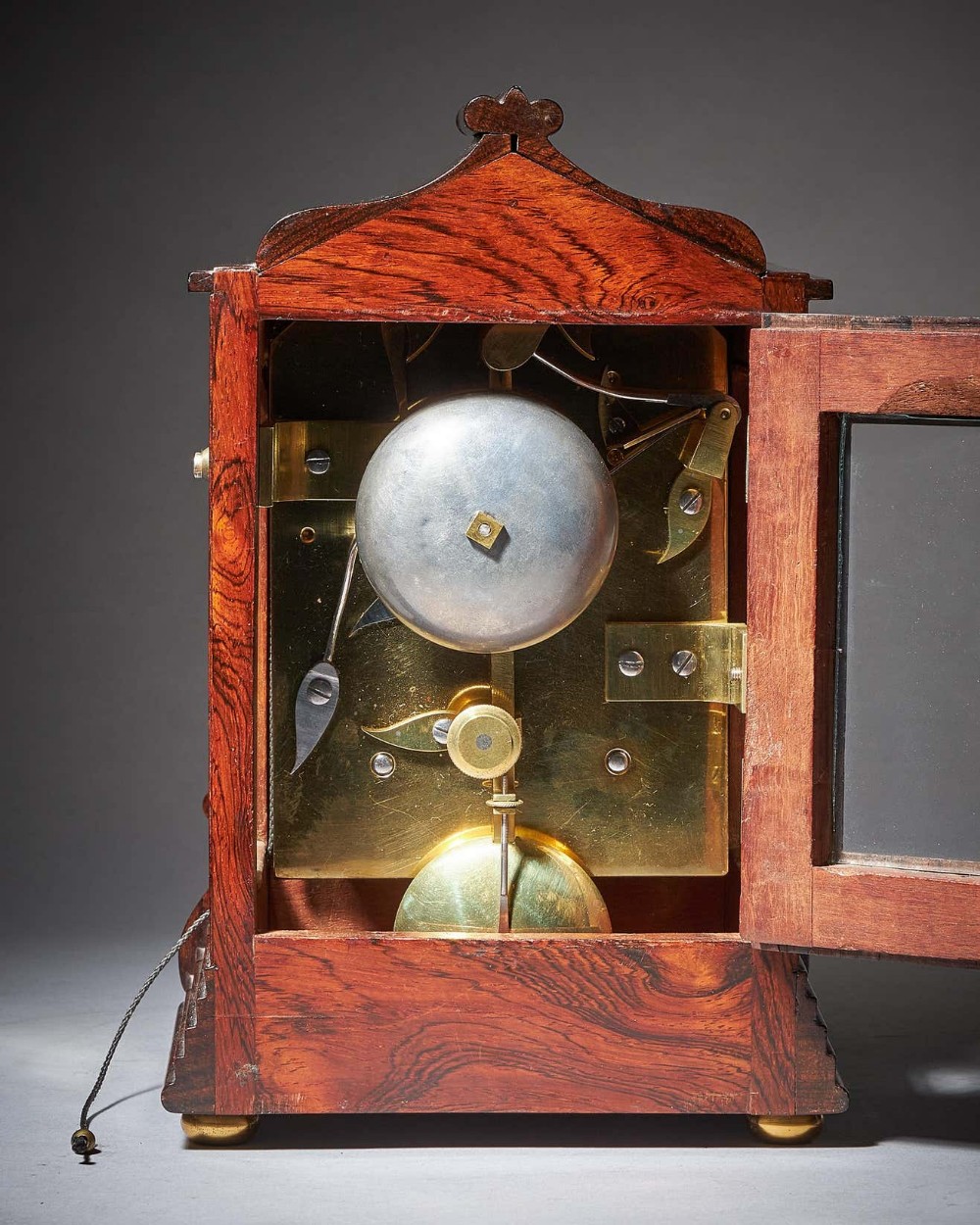
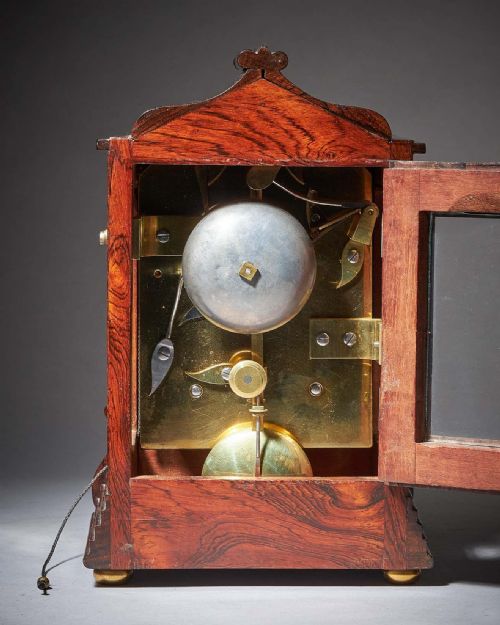
The rack striking indicates the hours of a gently sounding bell, which can be repeated at all times by pulling a cord to the side of the case.
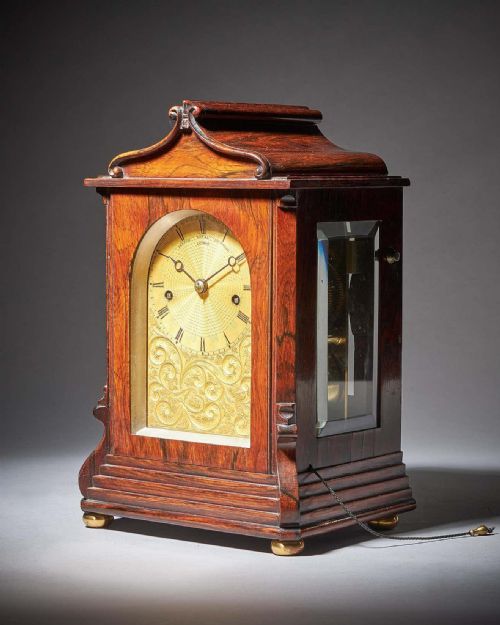
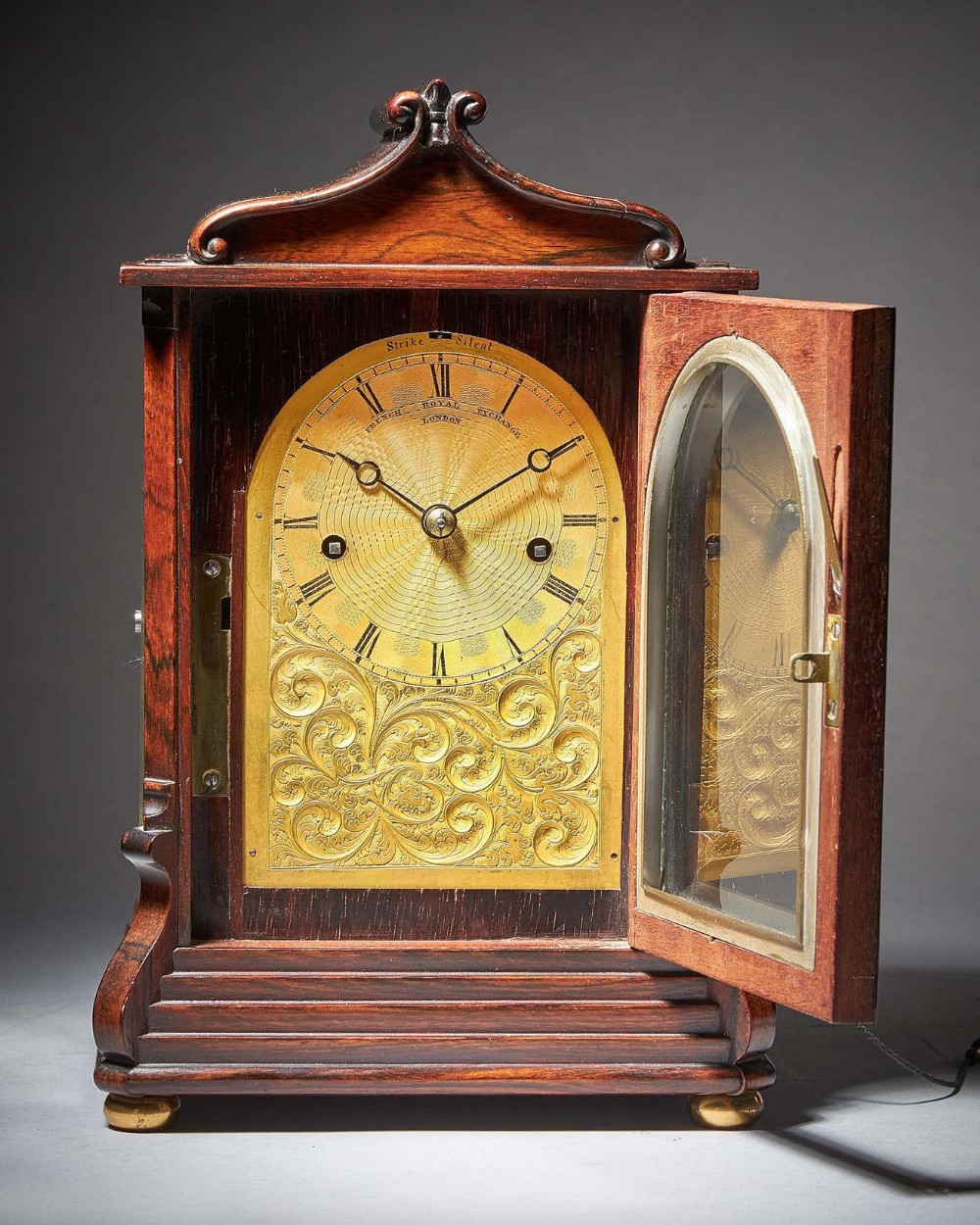
The elegant chased and engraved arched gilt brass dial has a Roman chapter ring with five-minute and minute divisions. The maker has signed the dial above the middle: FRENCH ROYAL EXCHANGE LONDON. The time is indicated by a fine pair of Breguet hands.
Signed on the dial: FRENCH ROYAL EXCHANGE LONDON
Circa 1820
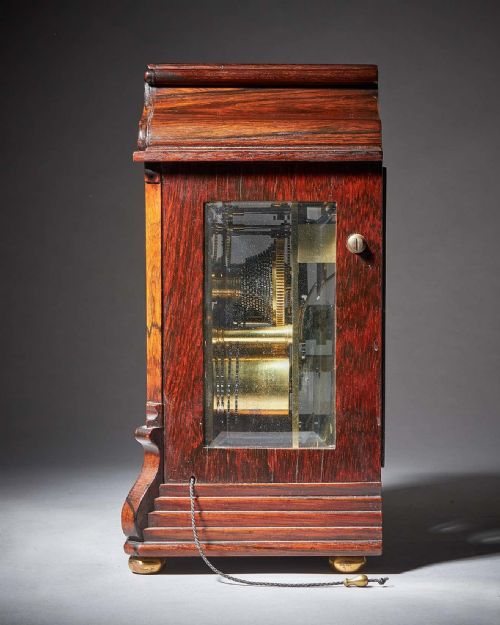
The finely carved pagoda top rosewood case has facetted glass to the sides so that the finely made movement is almost entirely visible. It has lovely mouldings all around, buttresses on the front corners and rests on four gilt brass bun feet.
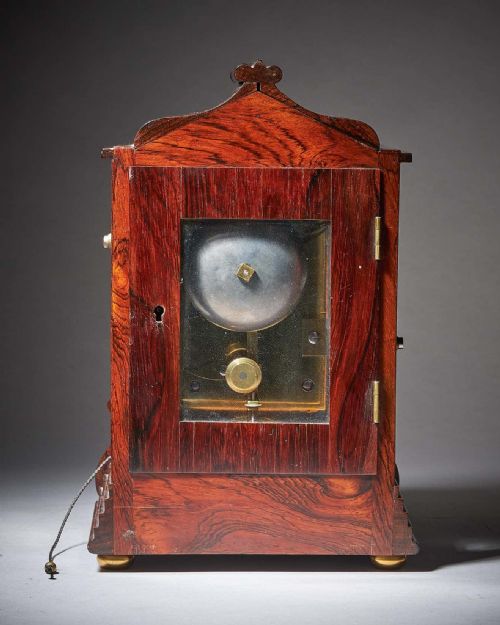
Height: 25 cm
Literature:
Jonathan Betts, Marine Chronometers at Greenwich, Oxford, 2017, pp 317-18
Brian Loomes, Watchmakers and Clockmakers of the World, London, 2006, p. 282.
Tony Mercer, Chronometer Makers of the World, pp. 143-44.
The maker
Santiago James Moore French is recorded as becoming a member of the Clockmakers’ Company in 1810. He was active as a clock, watch and chronometer maker at 15 Sweetings Alley, Royal Exchange London. He was awarded prizes for his chronometers from the Admiralty in 1825. In 1839 he moved to 80 Cornhill where he died in 1842
Alexander George Antiques Ltd. has dated this piece to the 19th Century.
Offering carefully selected antique masterpieces from the 17th & 18th centuries
You can view the stock and full dealer information on the Alexander George Antiques Ltd. Profile Page
Alexander George Antiques Ltd. is a registered member of LAPADA
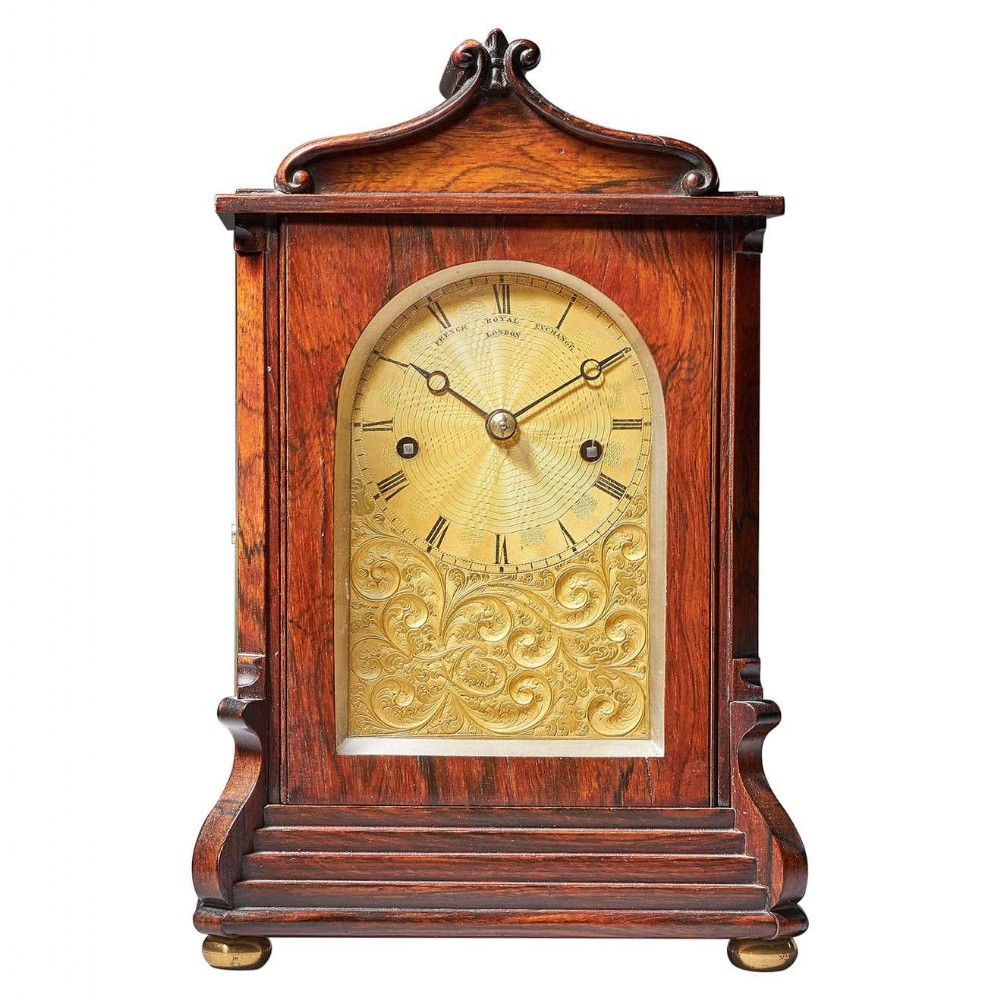
Striking George IV Eight-day Rosewood Pagoda Library Clock by French, London