It was listed by P A Oxley Antique Clocks & Barometers. Sold pieces stay on Sellingantiques as a record of what has passed through, and the next one is rarely far away.
P A Oxley Antique Clocks & Barometers has dated this piece to the 1700s.
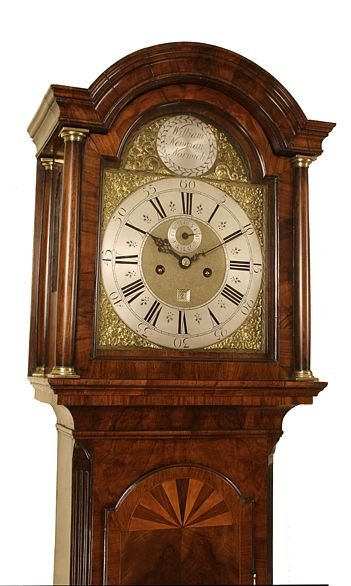
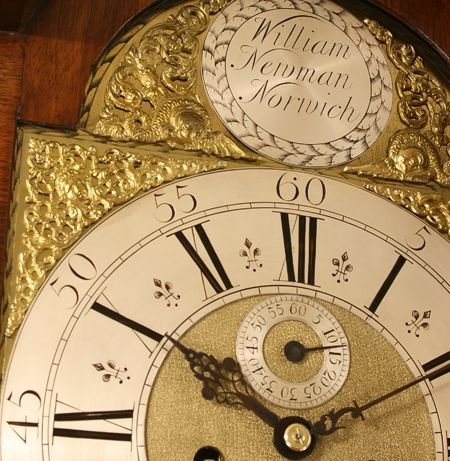
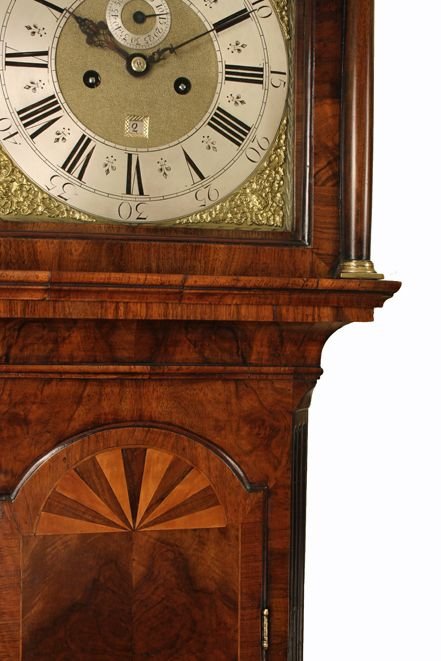
The arched brass dial with wheatear engraving, a separate silvered brass chapter ring and showing both seconds and date to the matted brass centre. The corners with elaborate brass spandrels. The arch with Dolphin Spandrels and makers name to a silvered brass roundel. The slim walnut case with an exceptionally well figured and book matched long trunk door with reeded and canted corners. The plain panelled base standing on a deep double plinth. The case also with boxwood stringing and cross grained mouldings throughout and a fan pattern design to the very top of the trunk door which is typical of the Norwich area. The hood with brass capped walnut angle pillars, a broken arch top and inspection windows to the side.
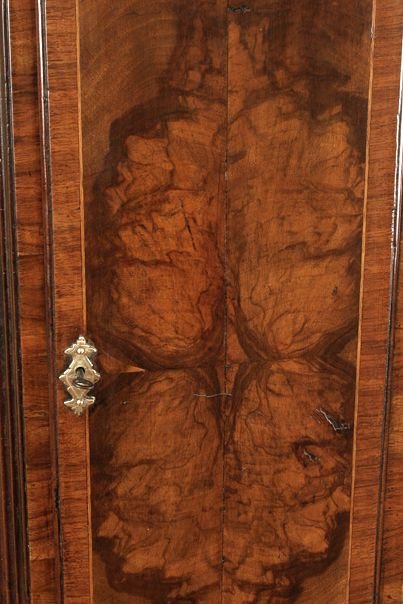
Height: 7'3½"
Note: William Newman was born in 1687 and was originally from London and most likely served his apprenticeship there. He moved to Norwich in 1728 as announced in the Norwich Gazette. His residence was at The Sign of the Dial at the bottom of St Laurence Steps. There is a Repeating Musical Clock recorded to have been made by this maker which is described as a ‘Masterpiece’. In 1739 William Newman unfortunately met an untimely death when he fell from Coslaney Bridge, Norwich and drowned. Norwich was a large Clockmaking centre and in 1607 was the birthplace of the famous Clockmaker Ahasuerus Fromanteel who is said to have introduced the pendulum.
P A Oxley Antique Clocks & Barometers has dated this piece to the 1700s.
You can view the stock and full dealer information on the P A Oxley Antique Clocks & Barometers Profile Page
P A Oxley Antique Clocks & Barometers is a registered member of LAPADA
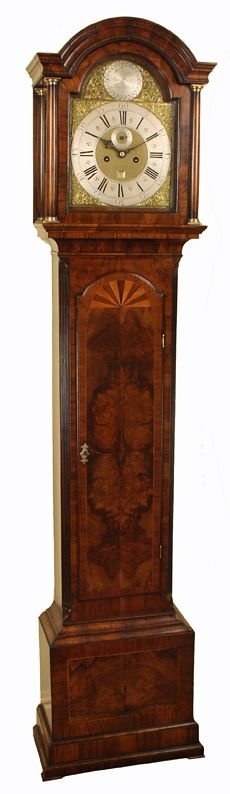
Walnut Longcase/grandfather Clock by Newman of Norwich