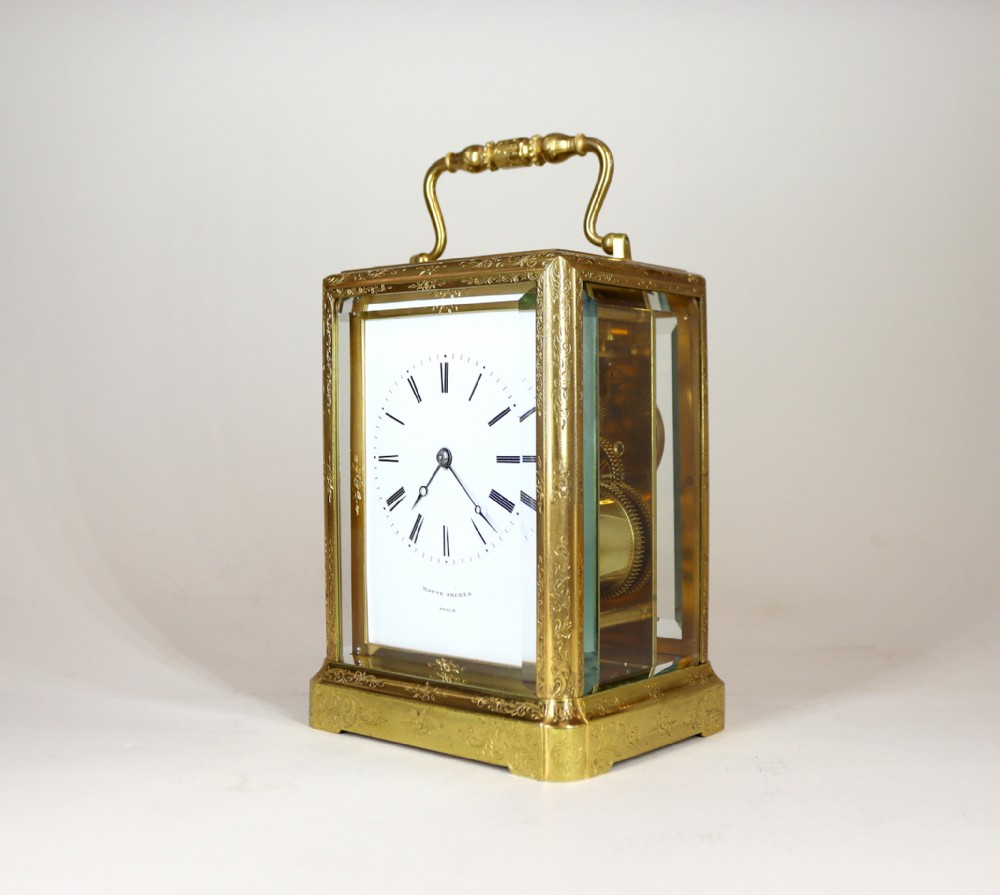
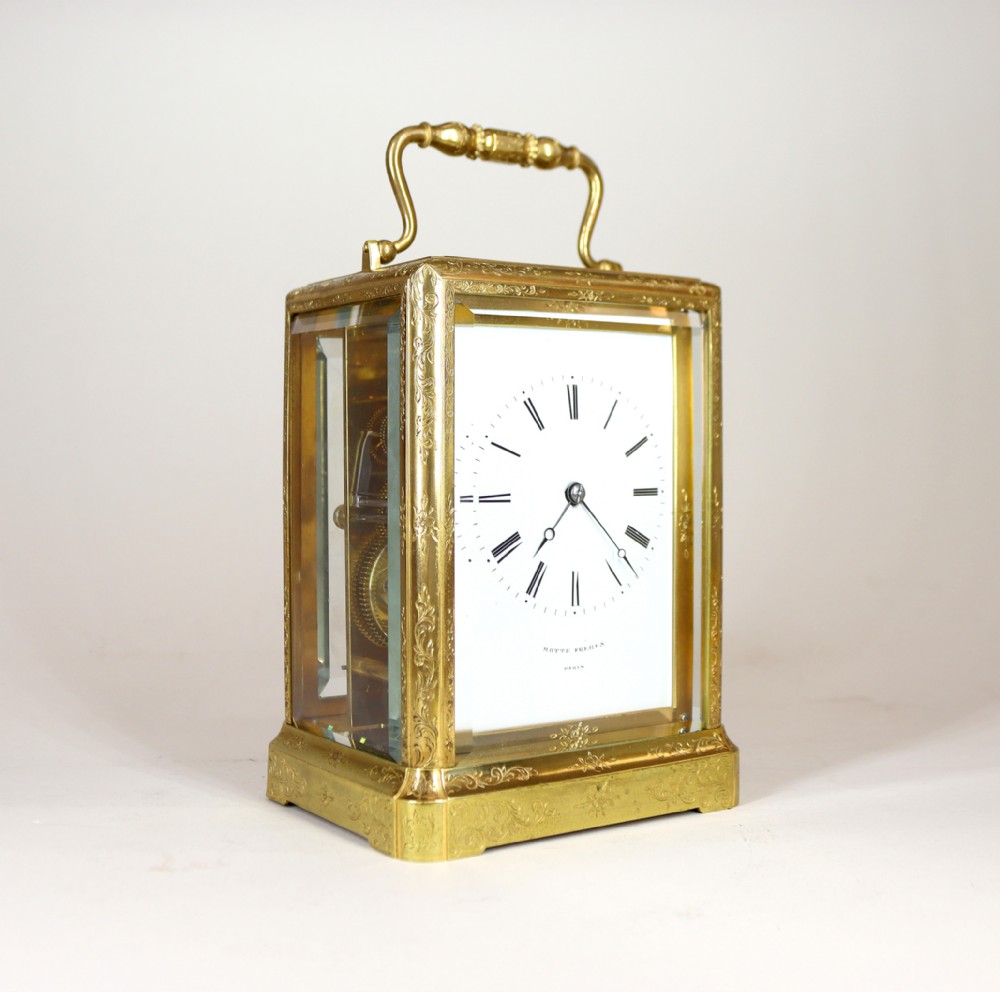
Chalfont Clocks has dated this Engraved Brass Carriage Clock to the 19th Century.
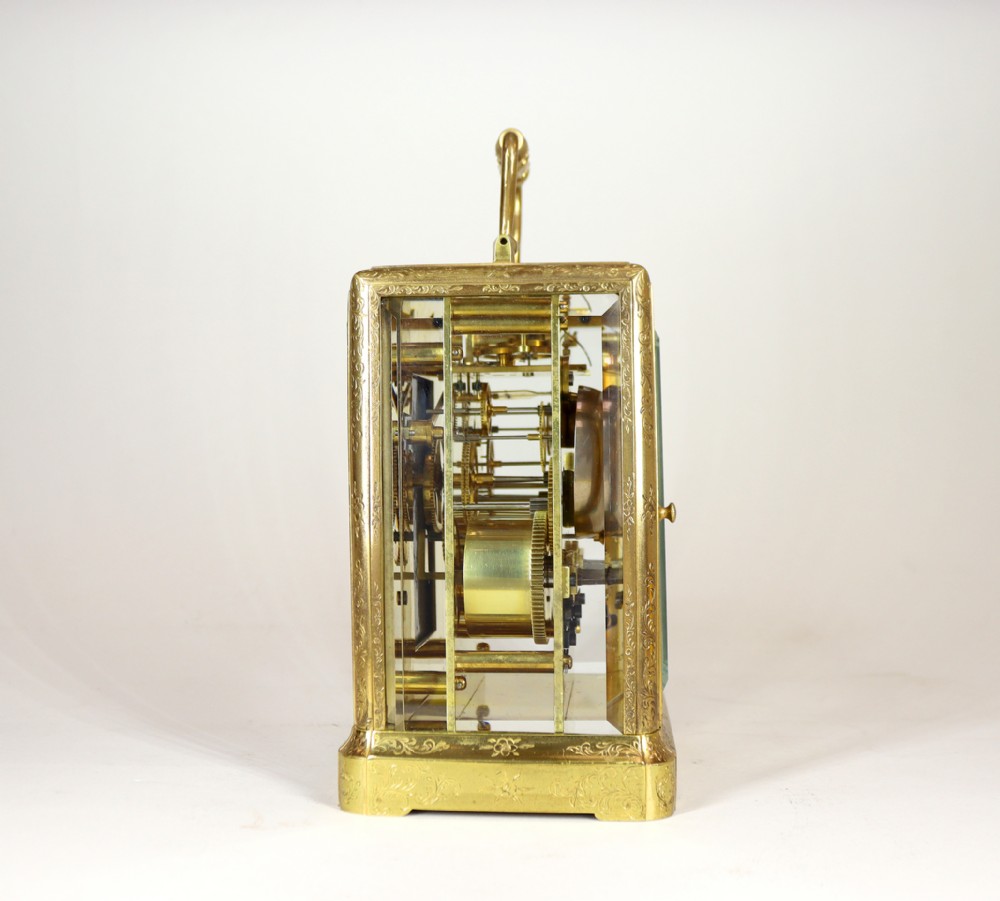
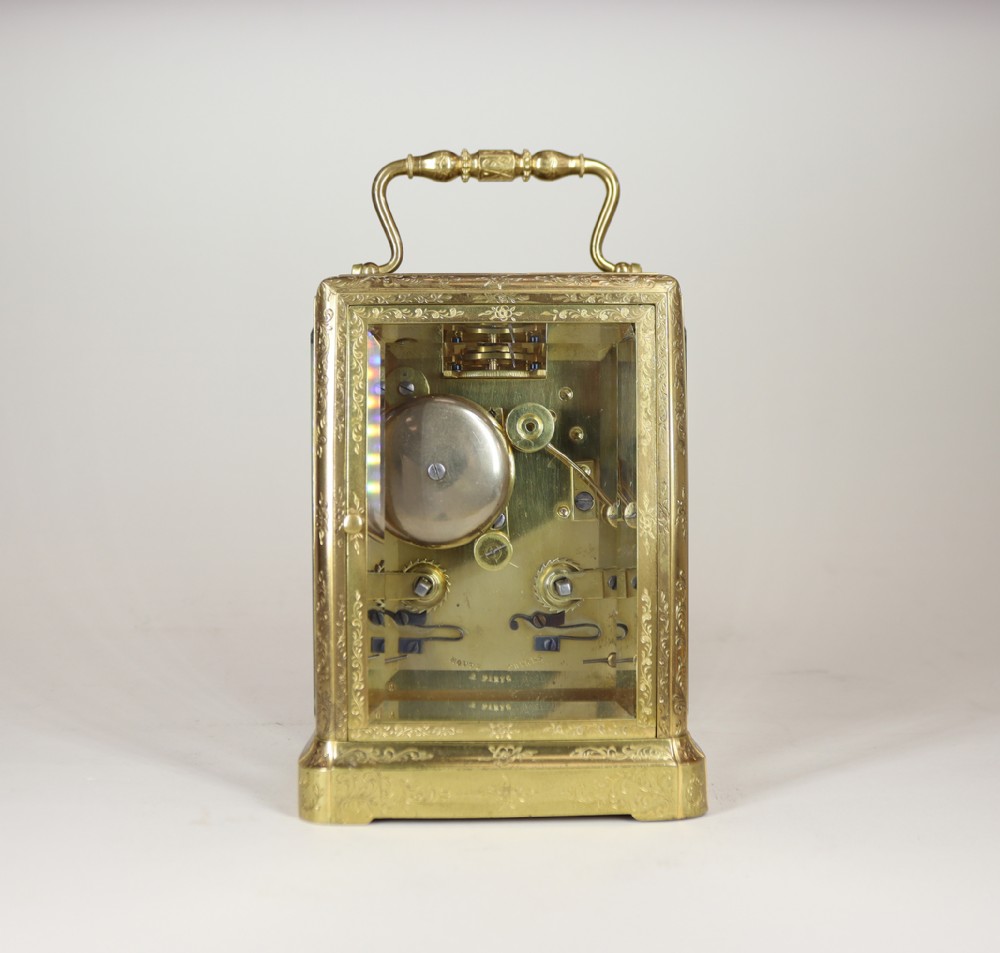
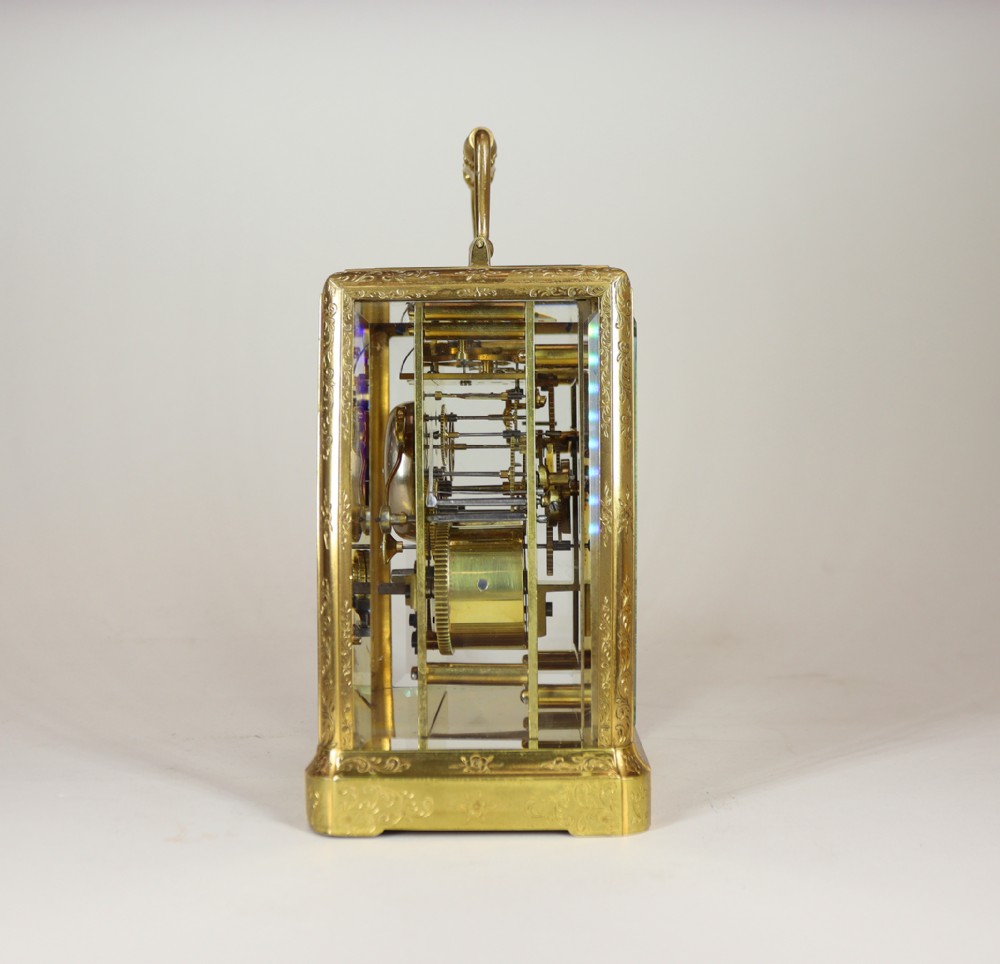
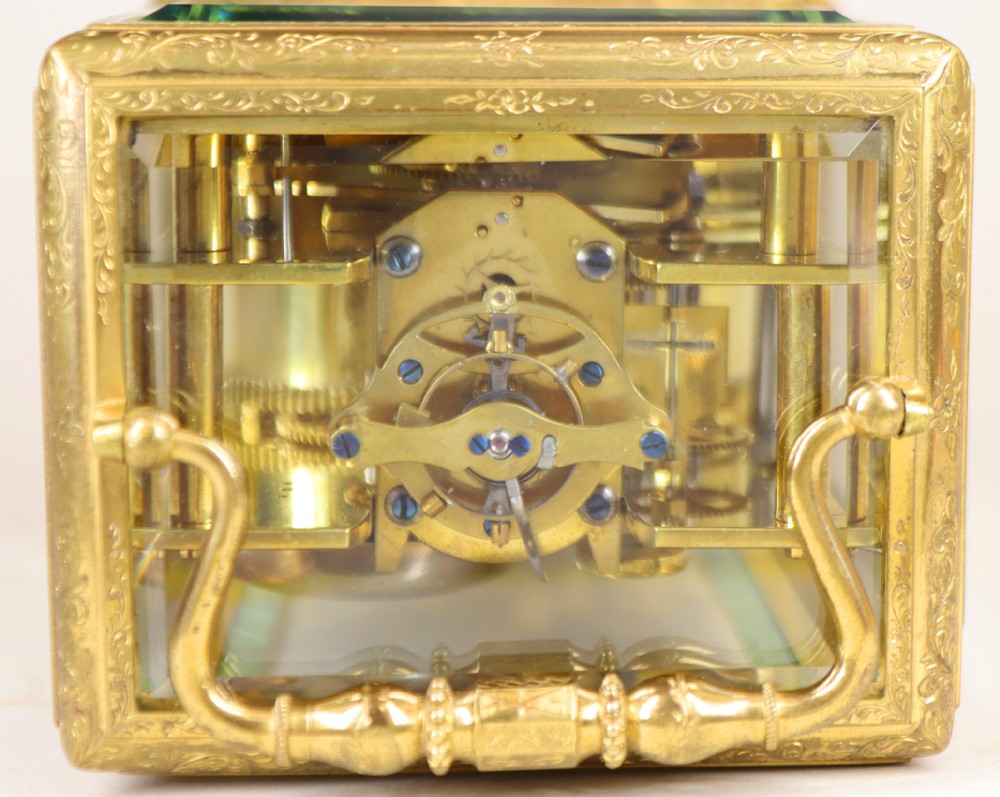
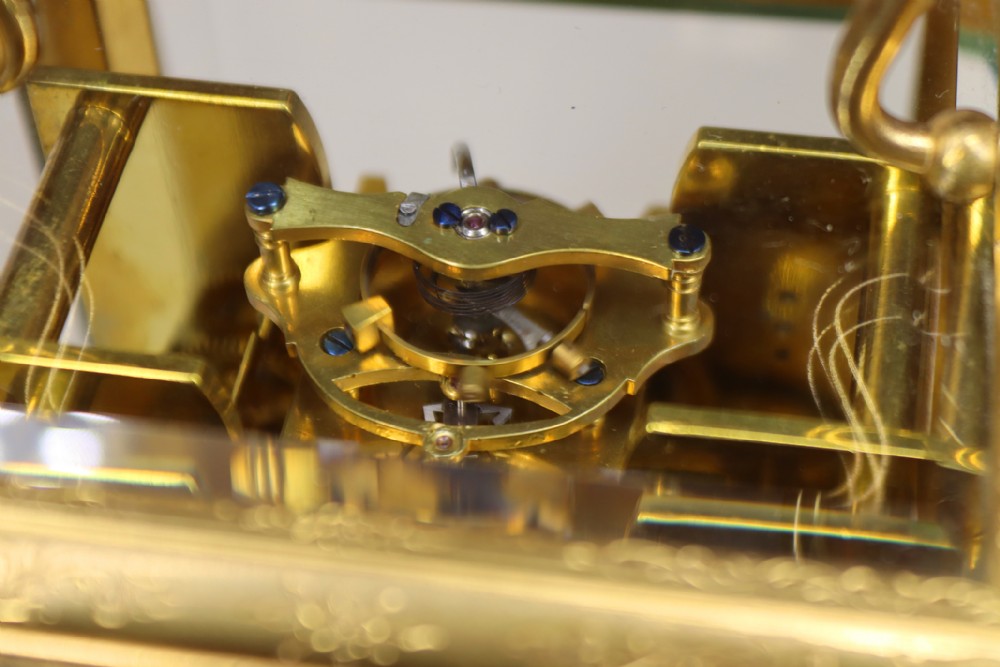
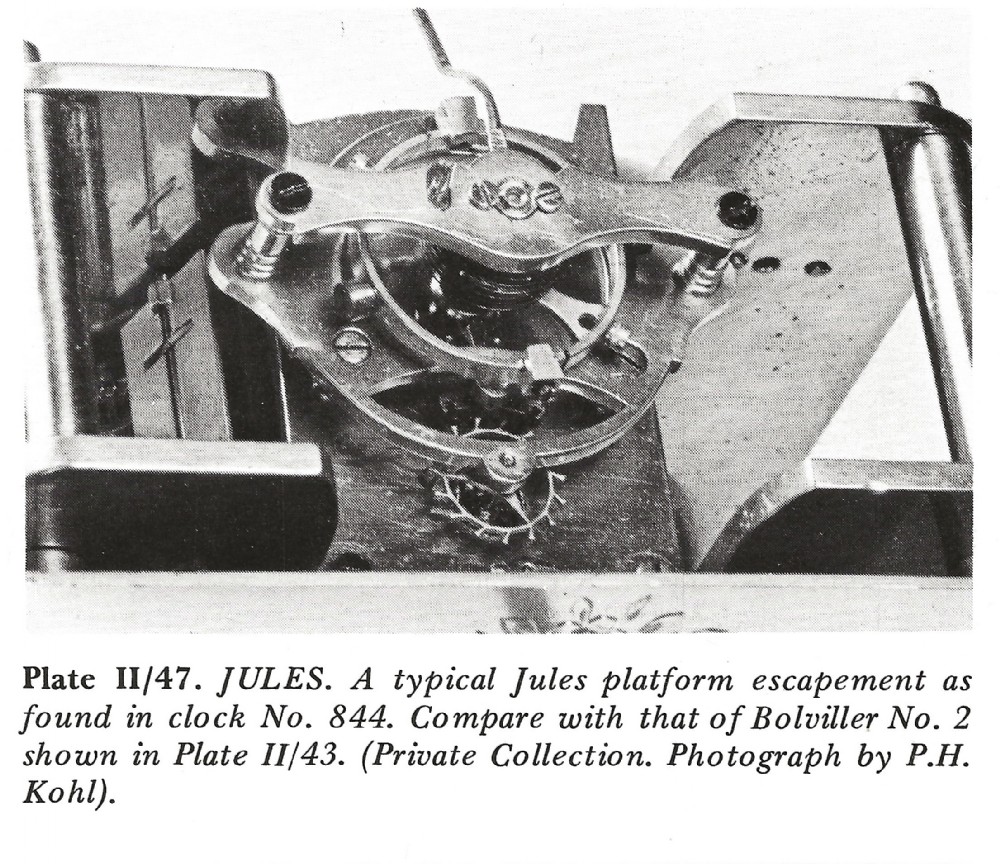
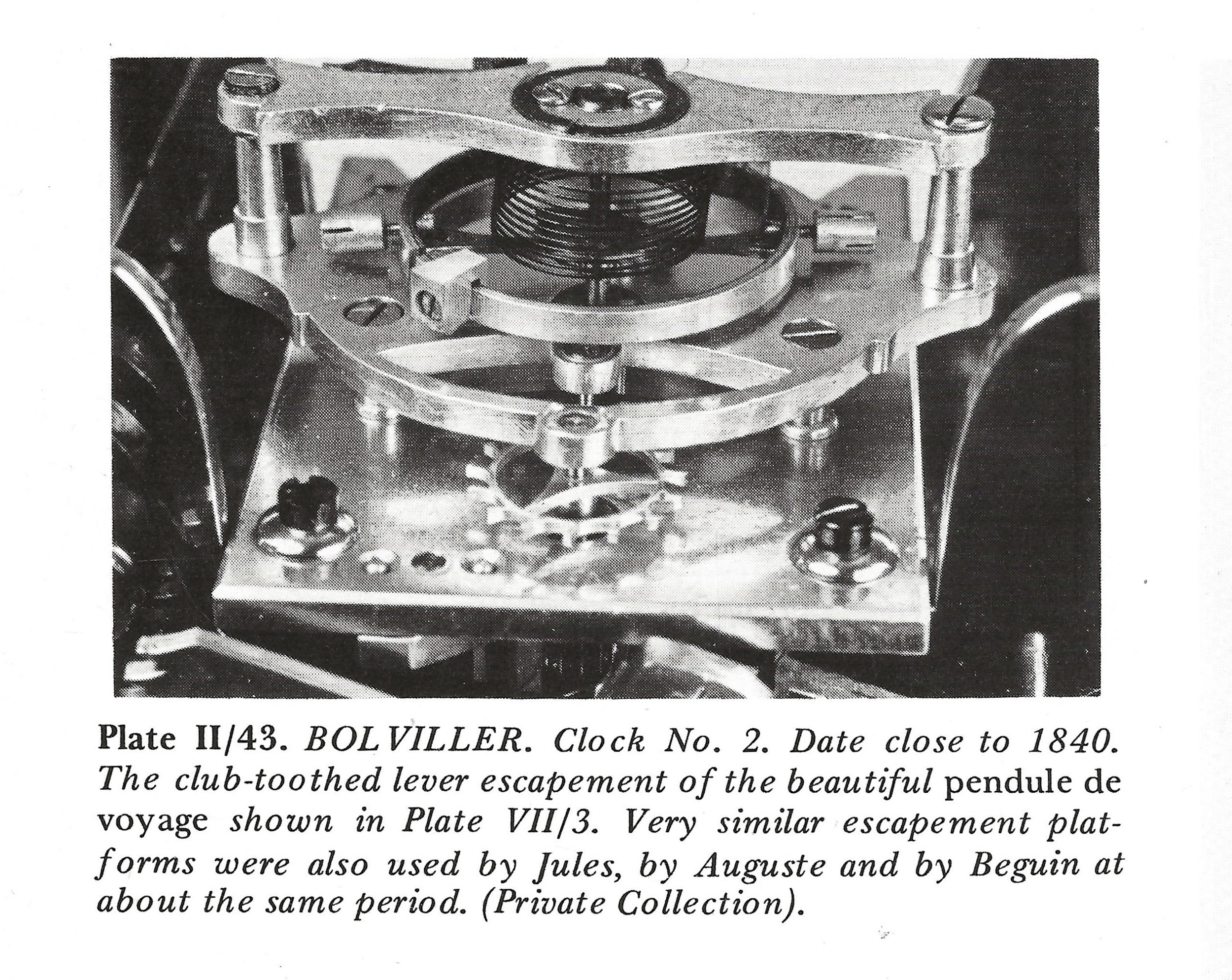
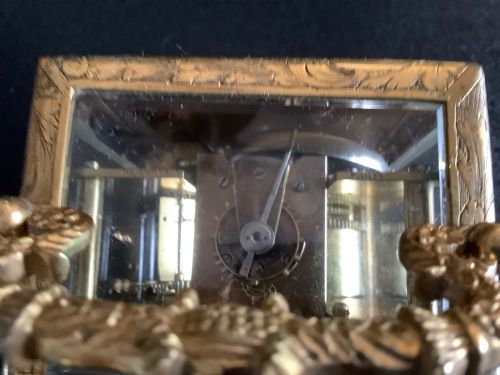
It is planted deeply into the movement of the clock in order to accomodate the height of the sub-frame and balance bridge. The brass and steal bimetallic balance is “cut’ in order to compensate for temperature variations the wedge shaped brass blocks and timing screws show the influence of Thomas Earnshaw’s chronometer escapements, indeed the balance has a helical spring. This type of escapement was developed in Paris in the 1840’s and fell out of favour for more cost effective platforms by the 1850’s. Similar examples by Bolviller, Jules and Auguste are illustrated in “Carriage Clocks, Their history and development “ by Charles Allix and Peter Bennert (p72). Other indications that this clock is an early example can been seen in the high position of the the spring barrel, the pin wheel striking system and the style of the case, suggesting a dat between 1840-1850.
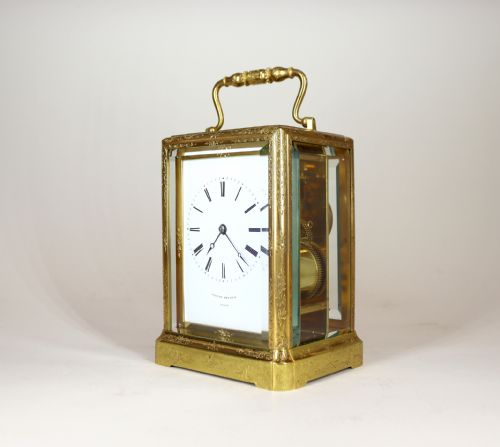
The Mottu family of clock makers originated in Geneva Switzerland before emigrating to London and then Paris in the 18th Century, active between 1780 and the mid nineteenth century they were reknowned for making high quality watches and clocks.
This clock will be overhauled before delivery and comes with our two year guarantee.
17cm H (with handle) x 10cm W x 8cm deep.
Chalfont Clocks has dated this Engraved Brass Carriage Clock to the 19th Century.
Specialists in antique clocks and their restoration.
You can view the stock and full dealer information on the Chalfont Clocks Profile Page
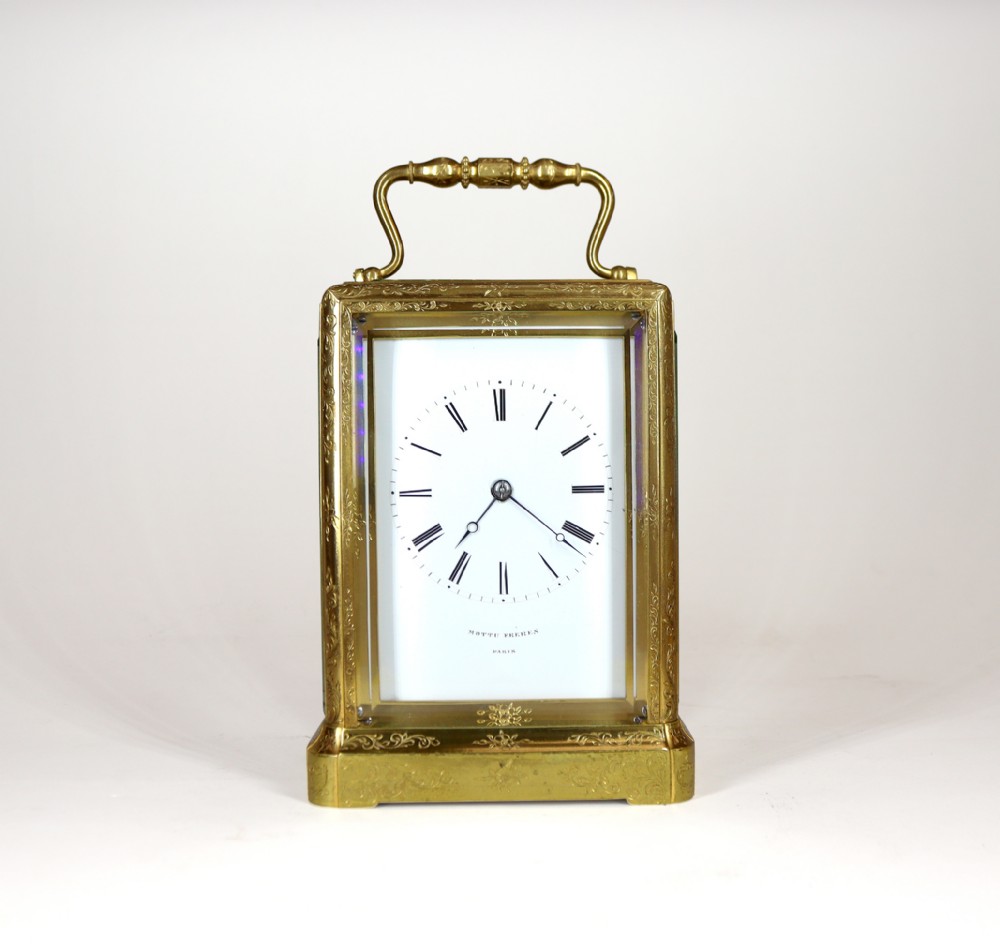
An Engraved One Piece Carriage Clock with a Rare Platform Escapement.