21,165  PAGES BROWSED TODAY PAGES TODAY • 49 ANTIQUES UPLOADED TODAYNEW ARRIVALS
GIFTS
49 ITEMS ADDED TODAY
Sort Order
Items Per Page
Antiques dealer?
Join as a Seller
Browse Categories
Sort order
Relevant Links
Items per page
sold SA1215447
Sorry, but this item has been sold.
Regent Antiques

Regent Antiques

Sellingantiques Verified Since Sep 2016
Browse dealers 639 items
  • About Us
    We specialise in english and continental furniture, silver, porcelain and decorative items.
  • Trade Associations
    Regent Antiques is a registered member of LAPADA  CINOA
Id #SA1215447
SHARE
SAVE

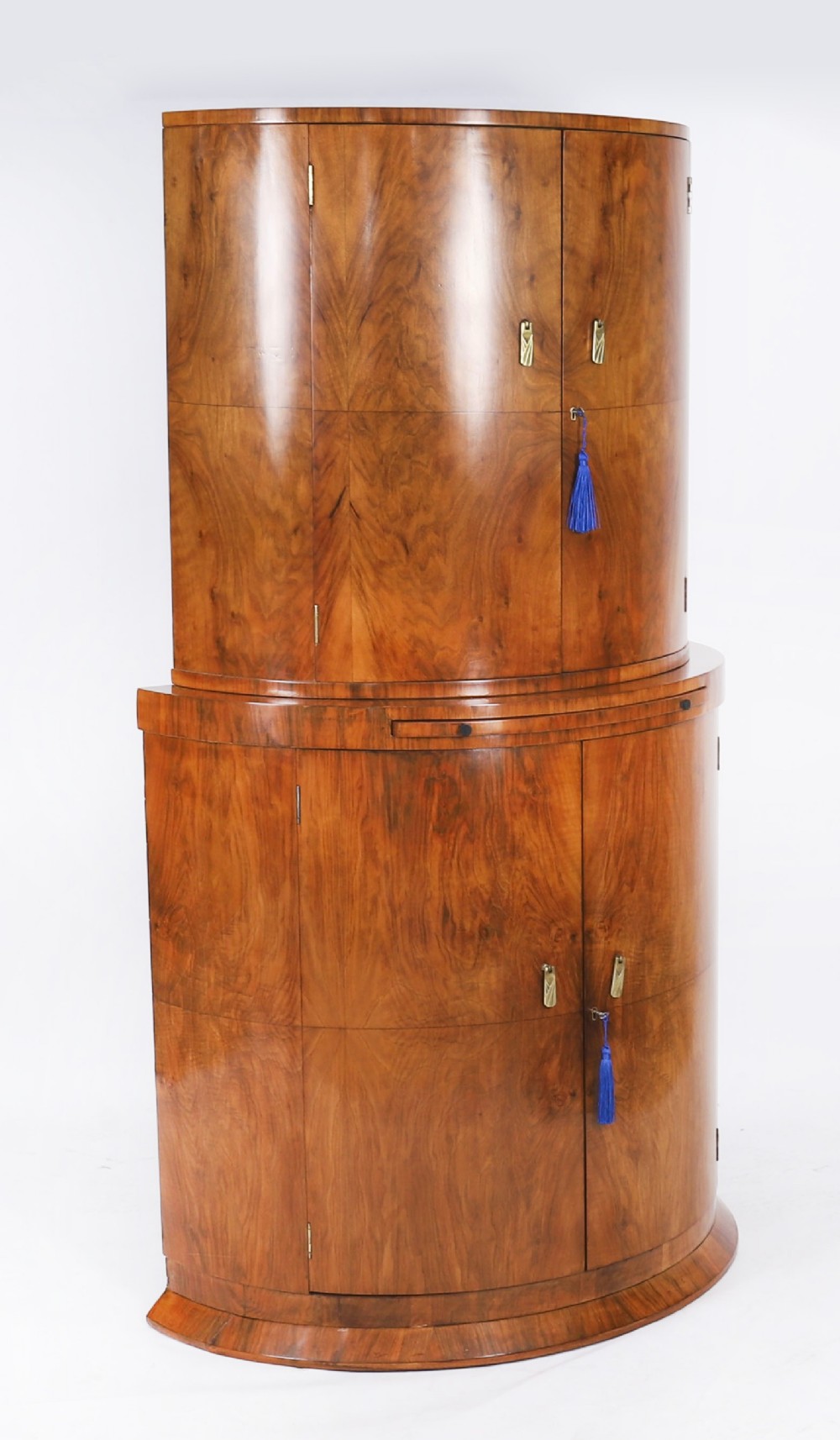
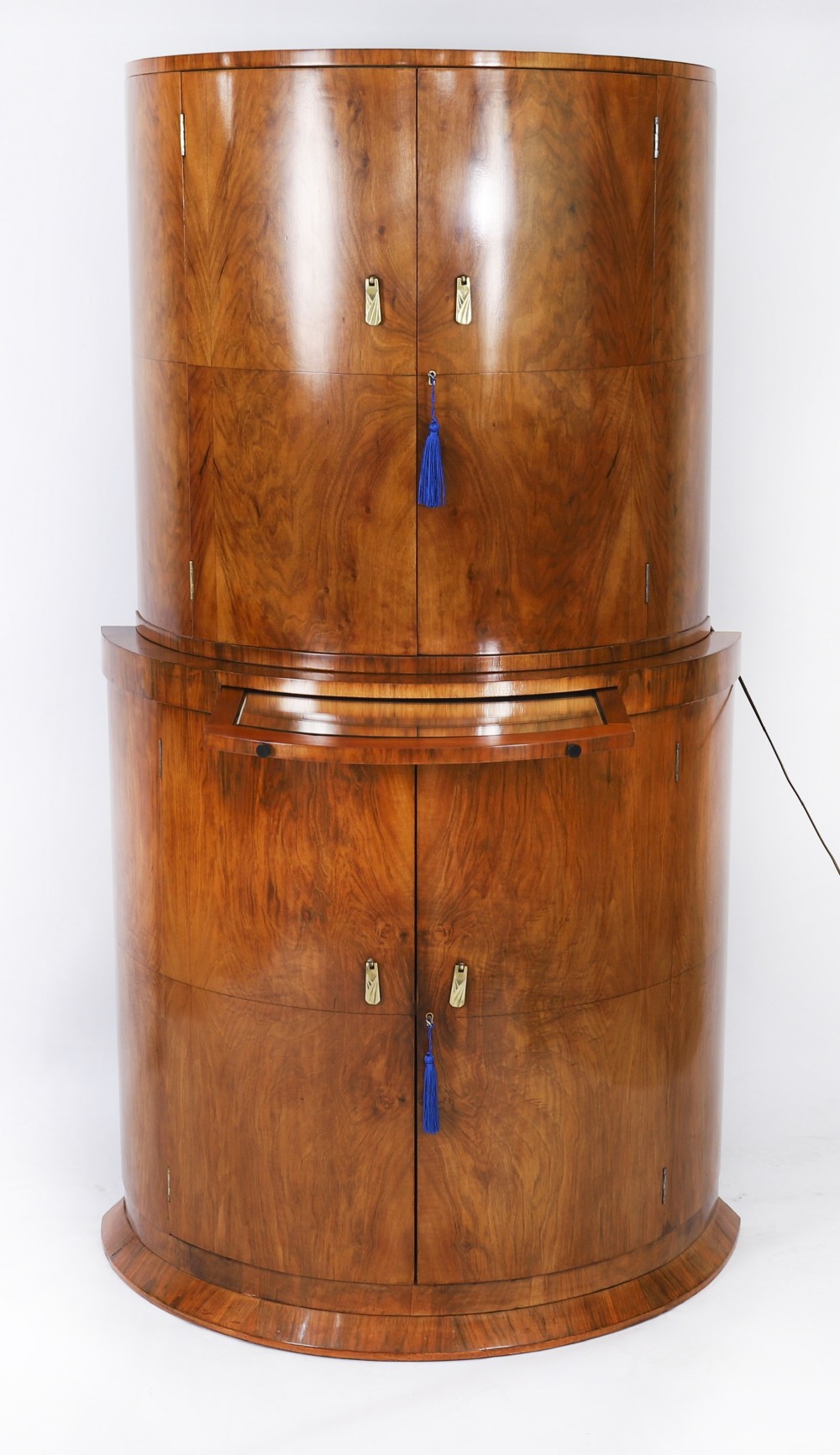
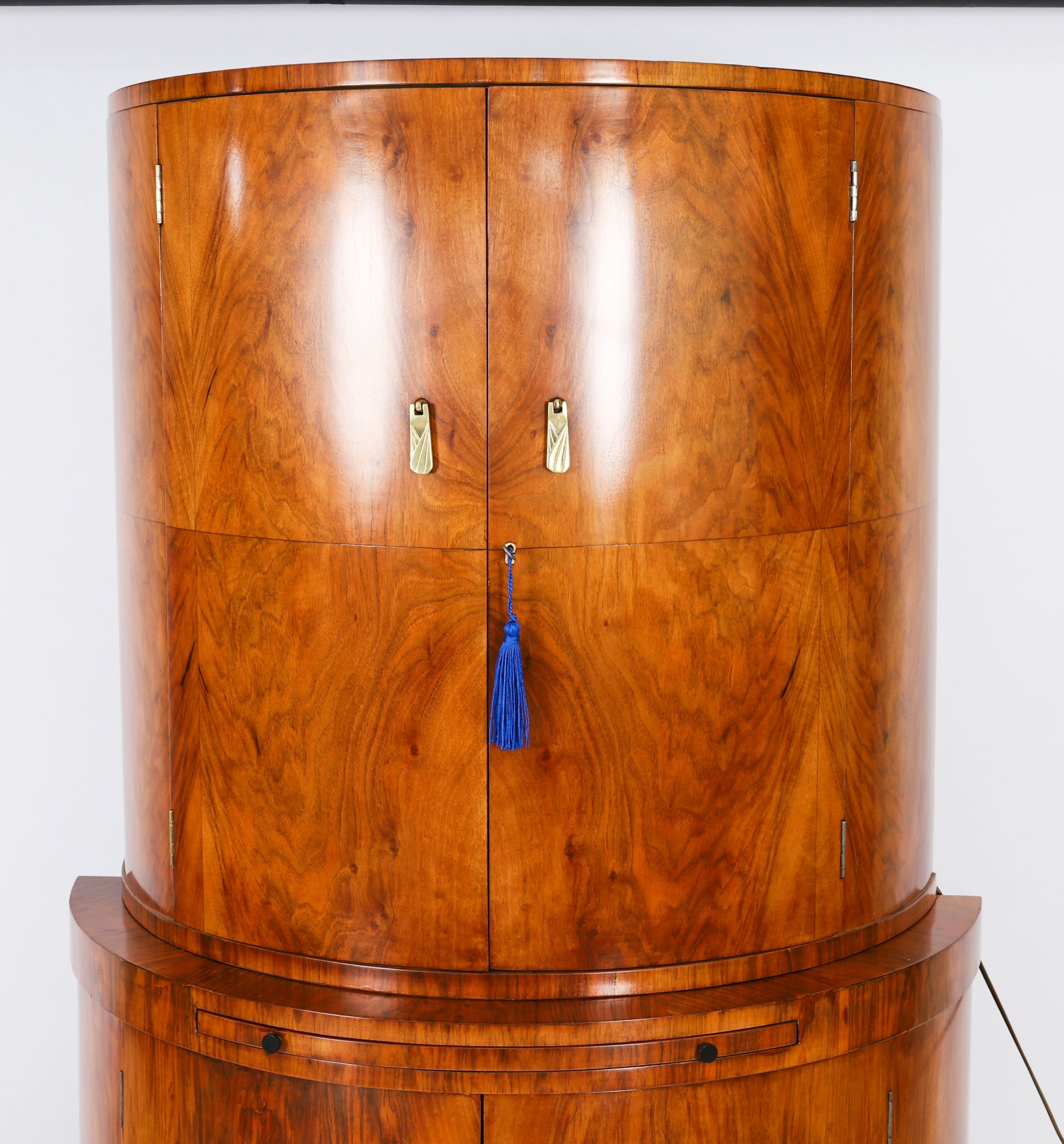
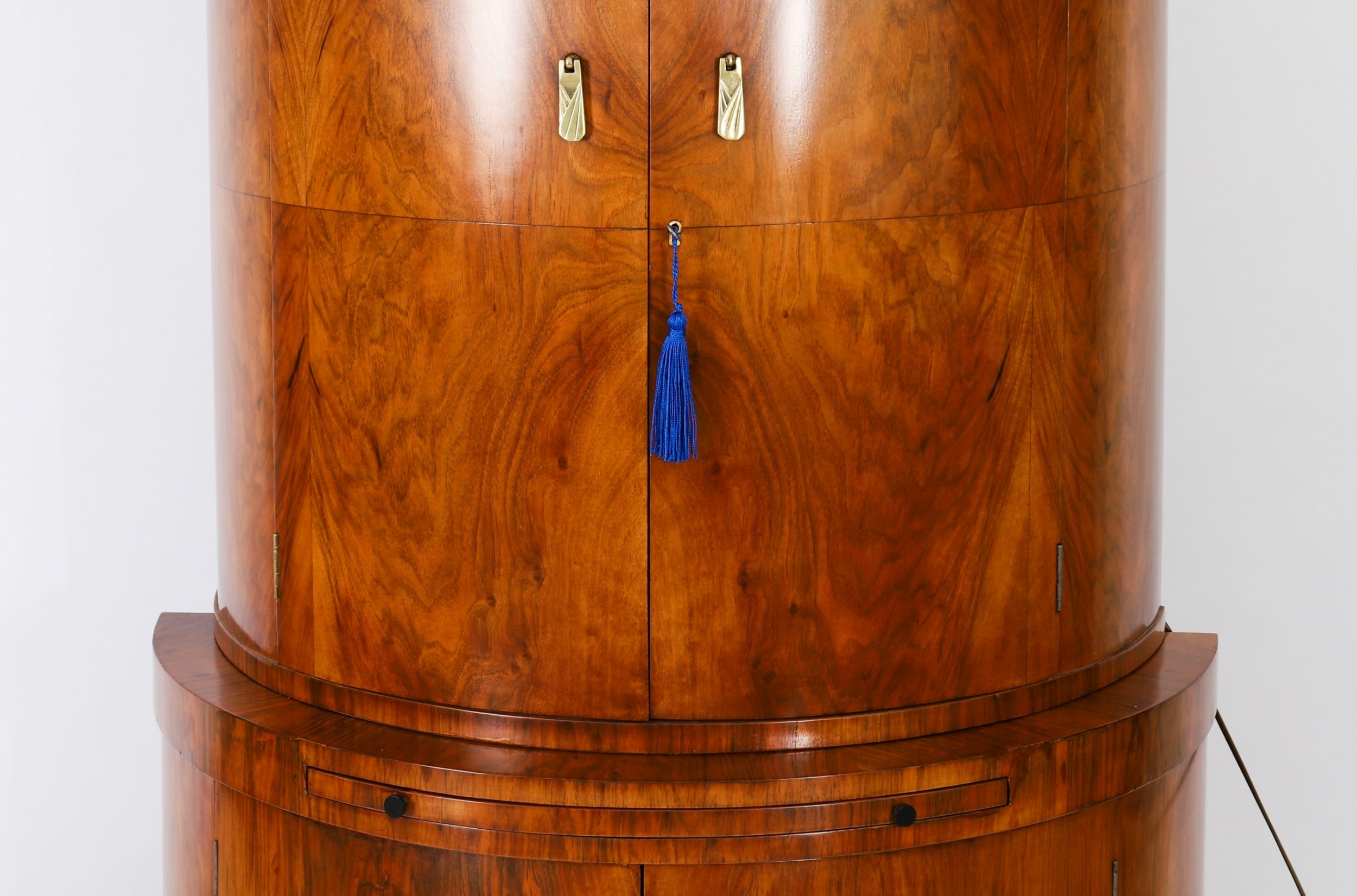
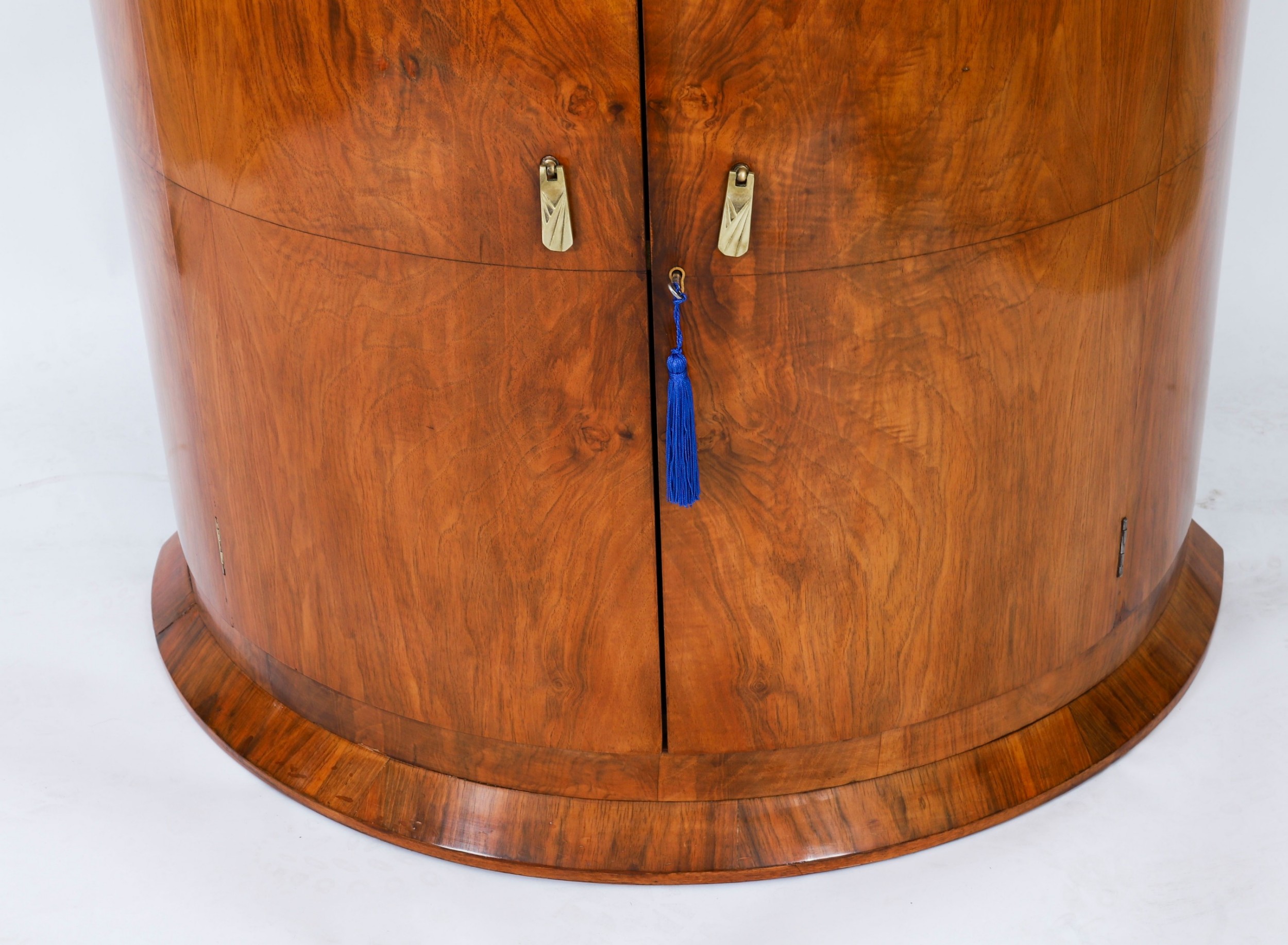
Antique Art Deco Burr Walnut Cocktail Cabinet by Hille C1920

1900 - 1920
Sold 12 June 2026 · Regent Antiques
This “Antique Art Deco Burr Walnut Cocktail Cabinet by Hille C1920” found a buyer.

It was listed by Regent Antiques. Sold pieces stay on Sellingantiques as a record of what has passed through, and the next one is rarely far away.

Description

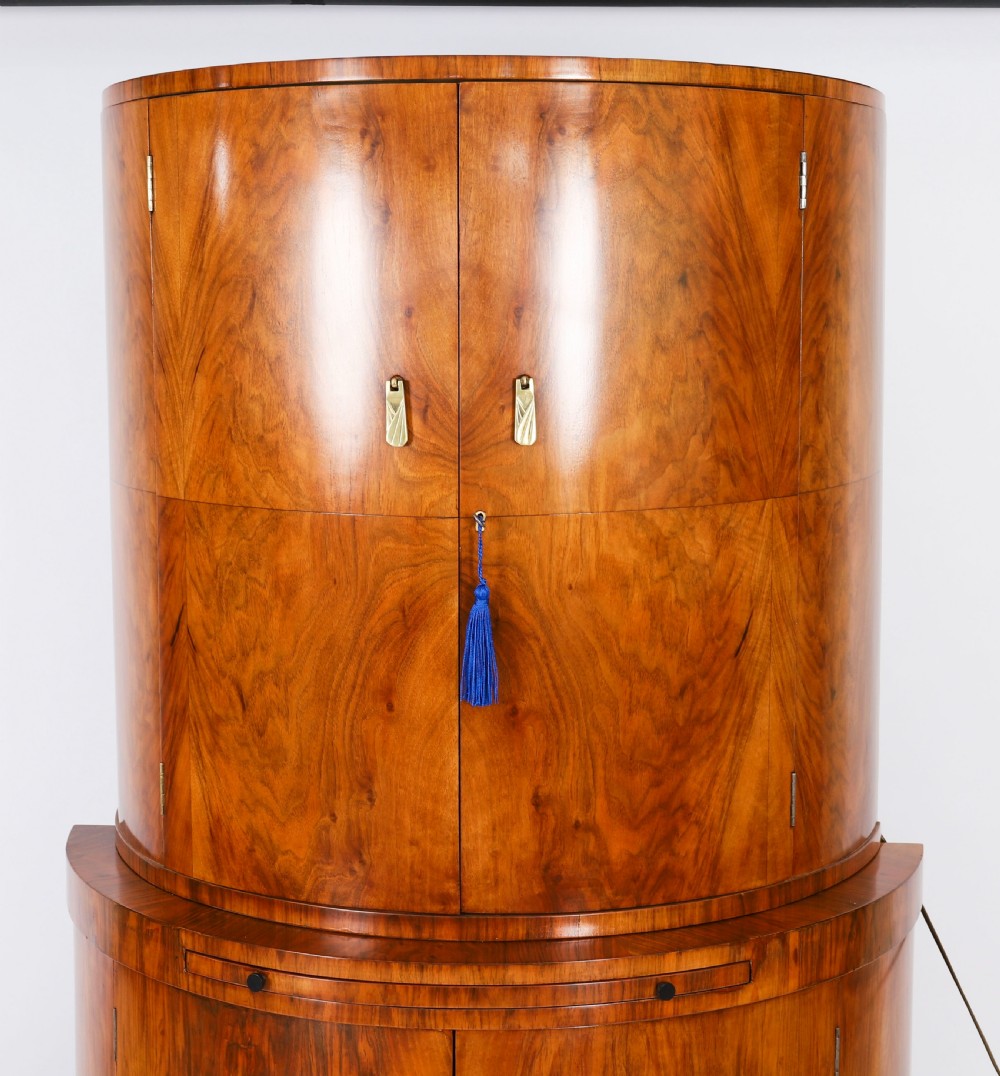
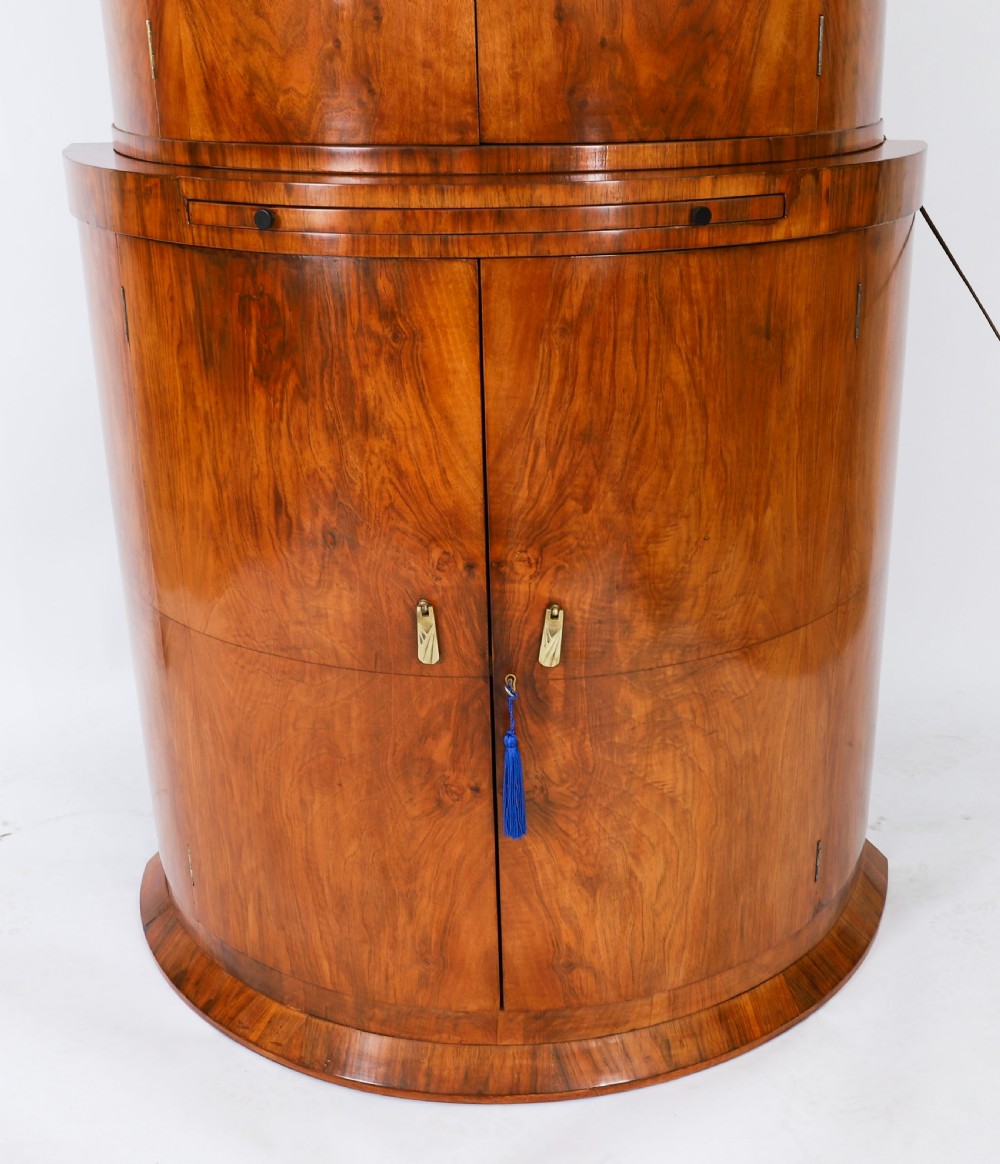
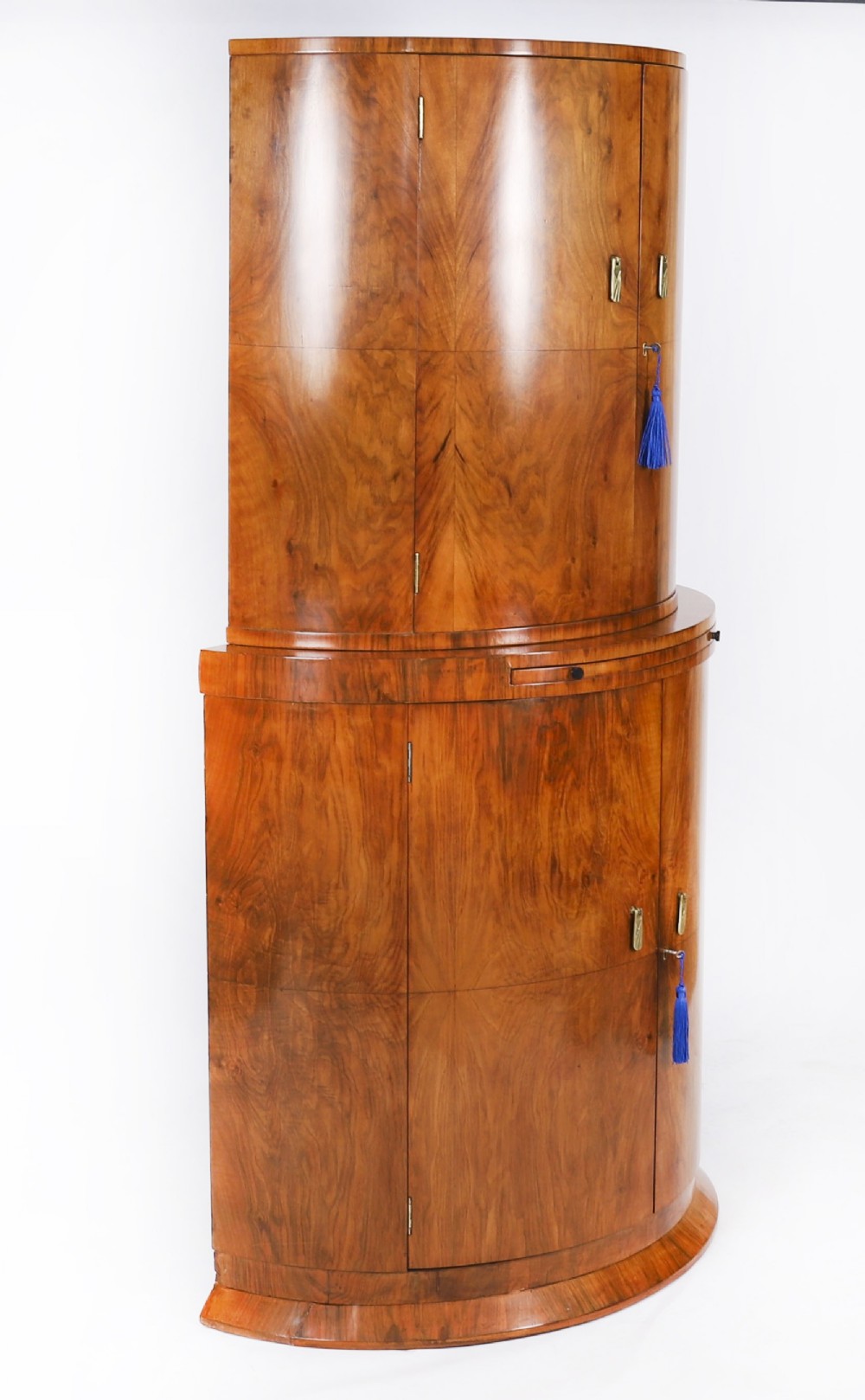
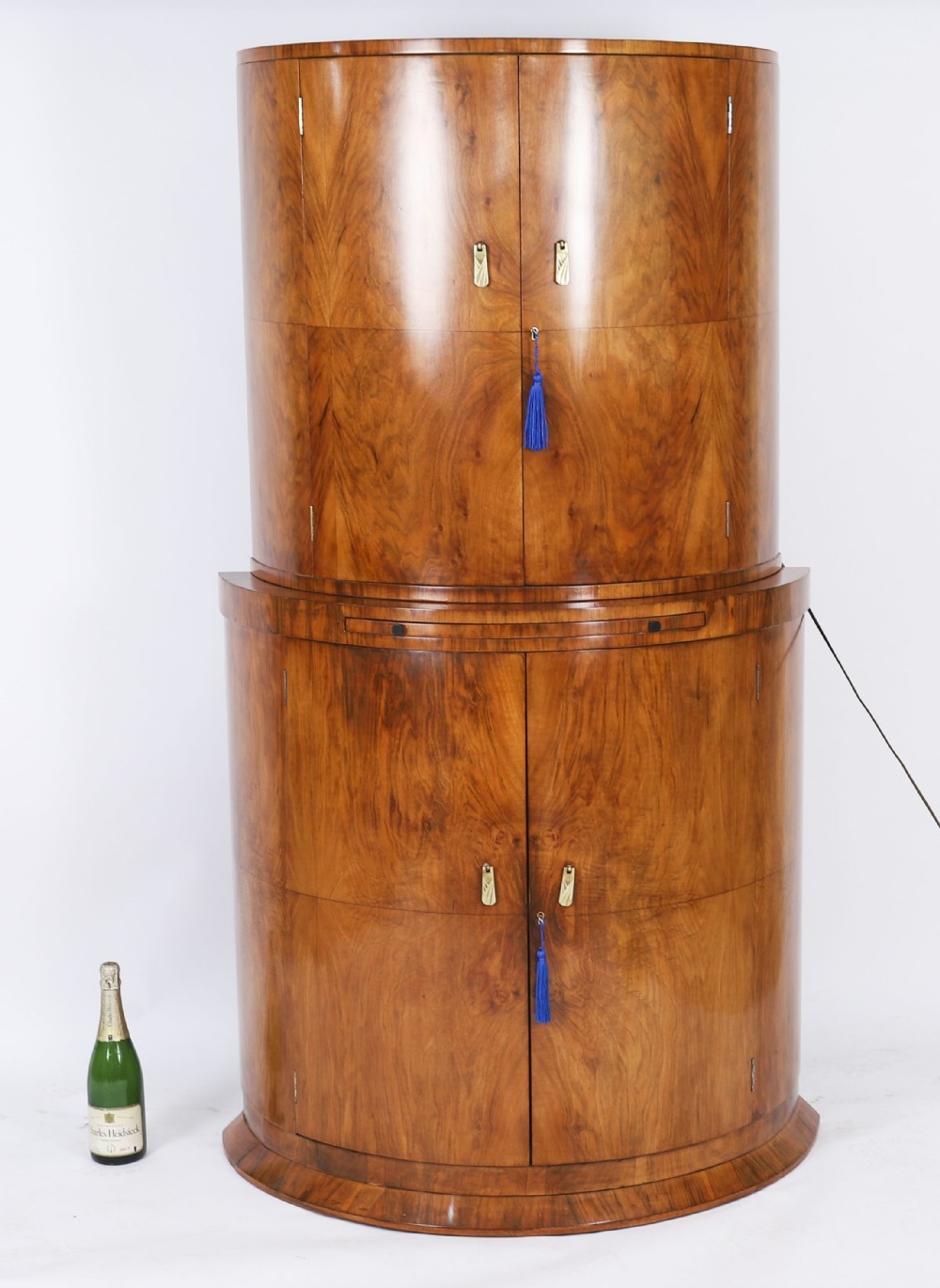
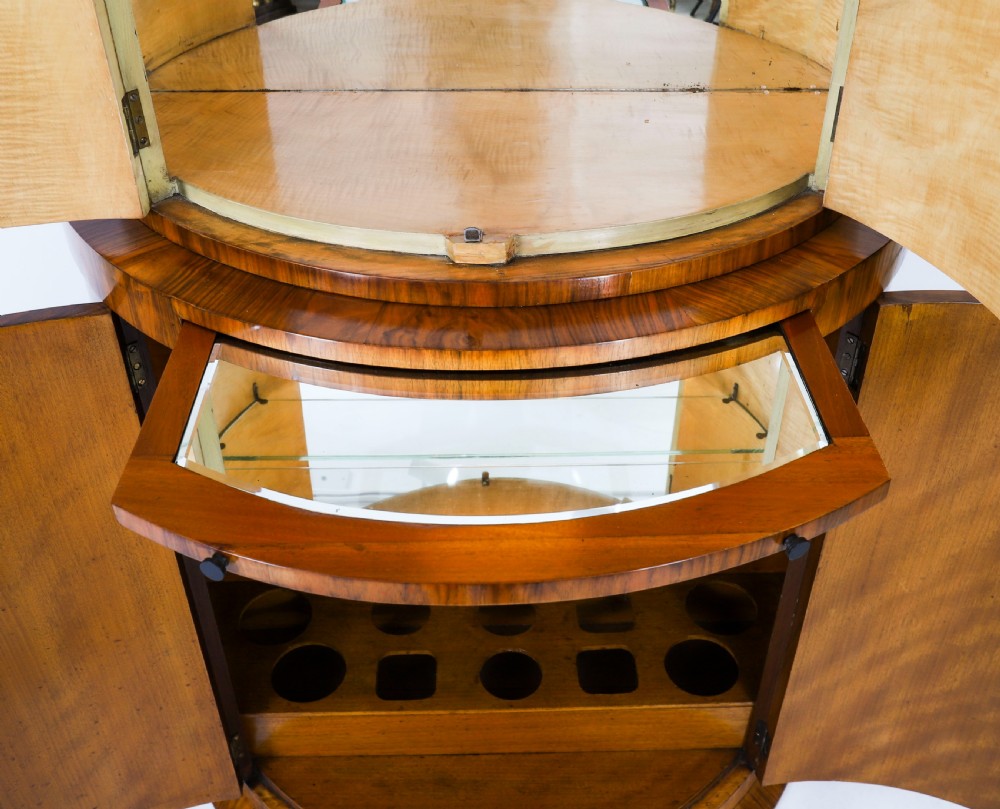
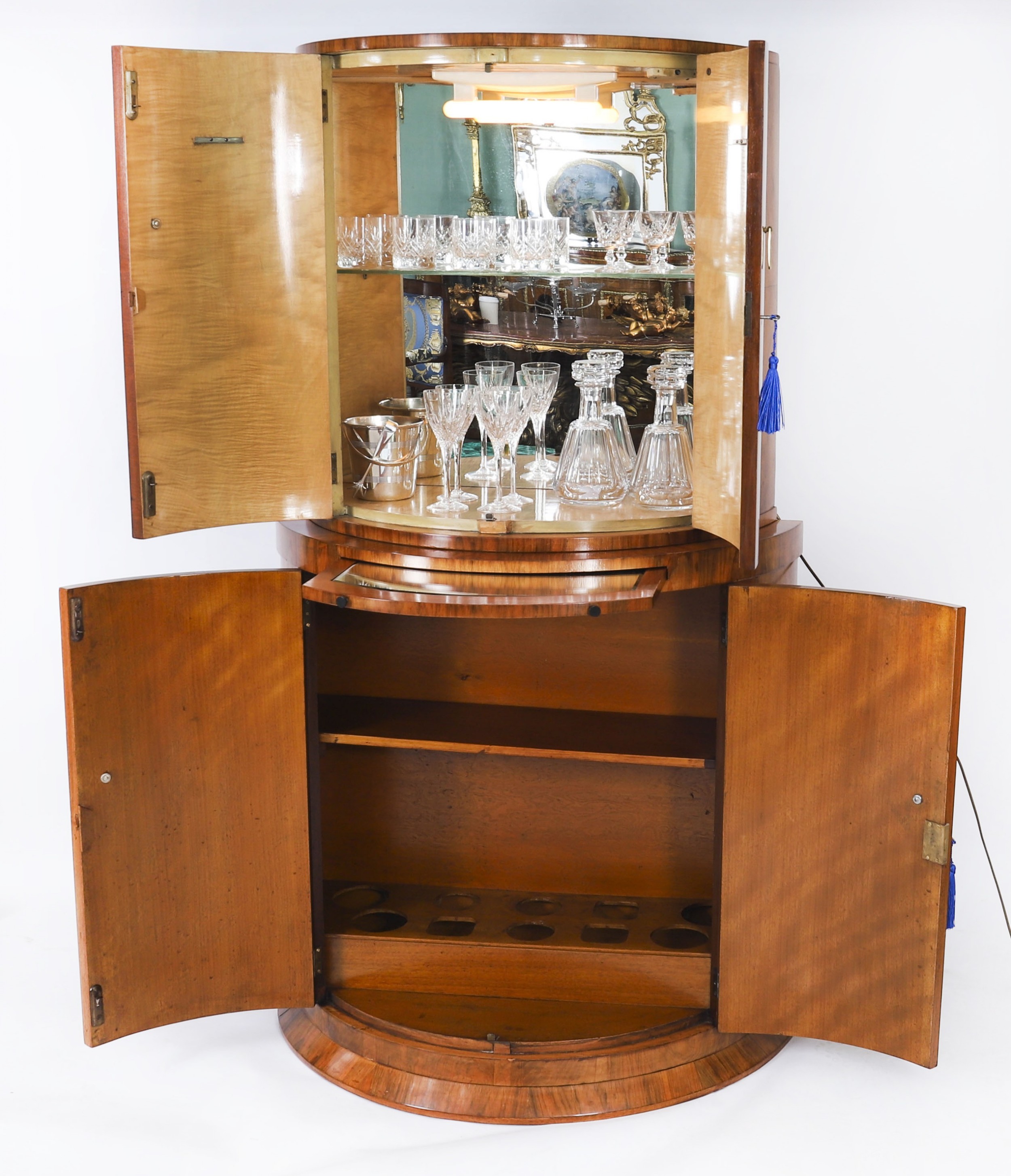
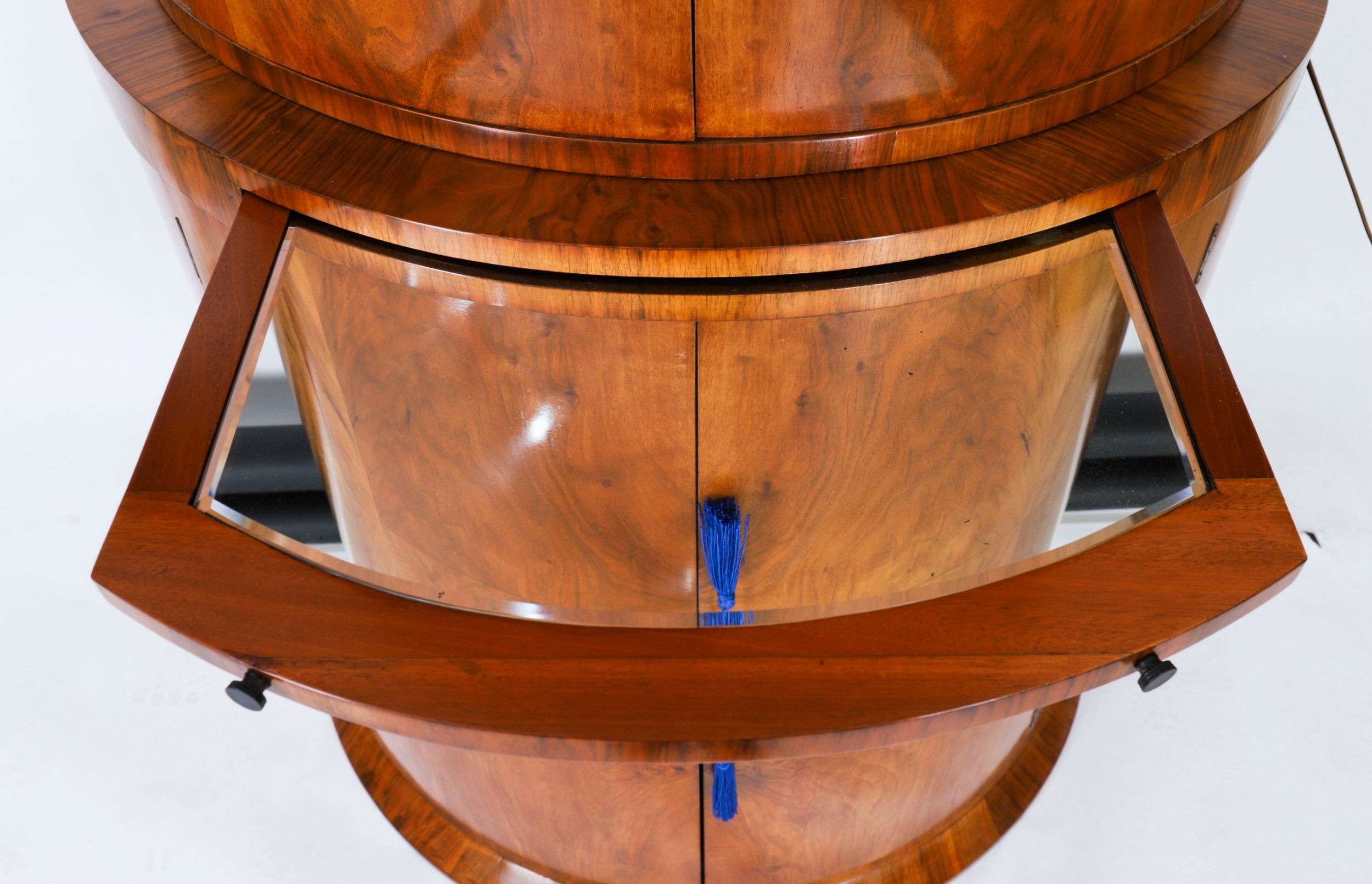
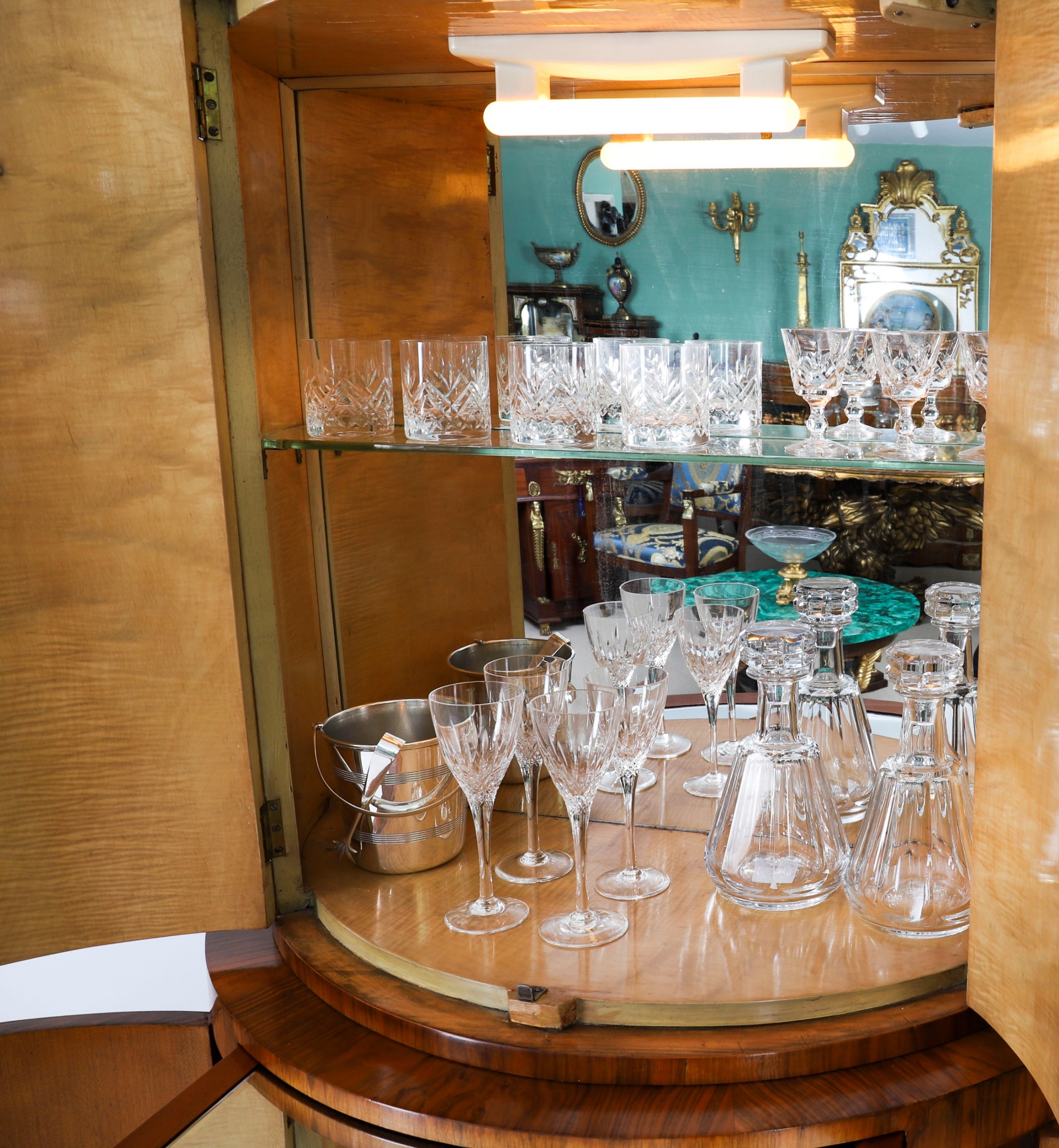
This is a fantastic antique Art Deco burr walnut demi lune cocktail cabinet by the cabinet makers Hille, renowned for high quality, circa 1920 in date.

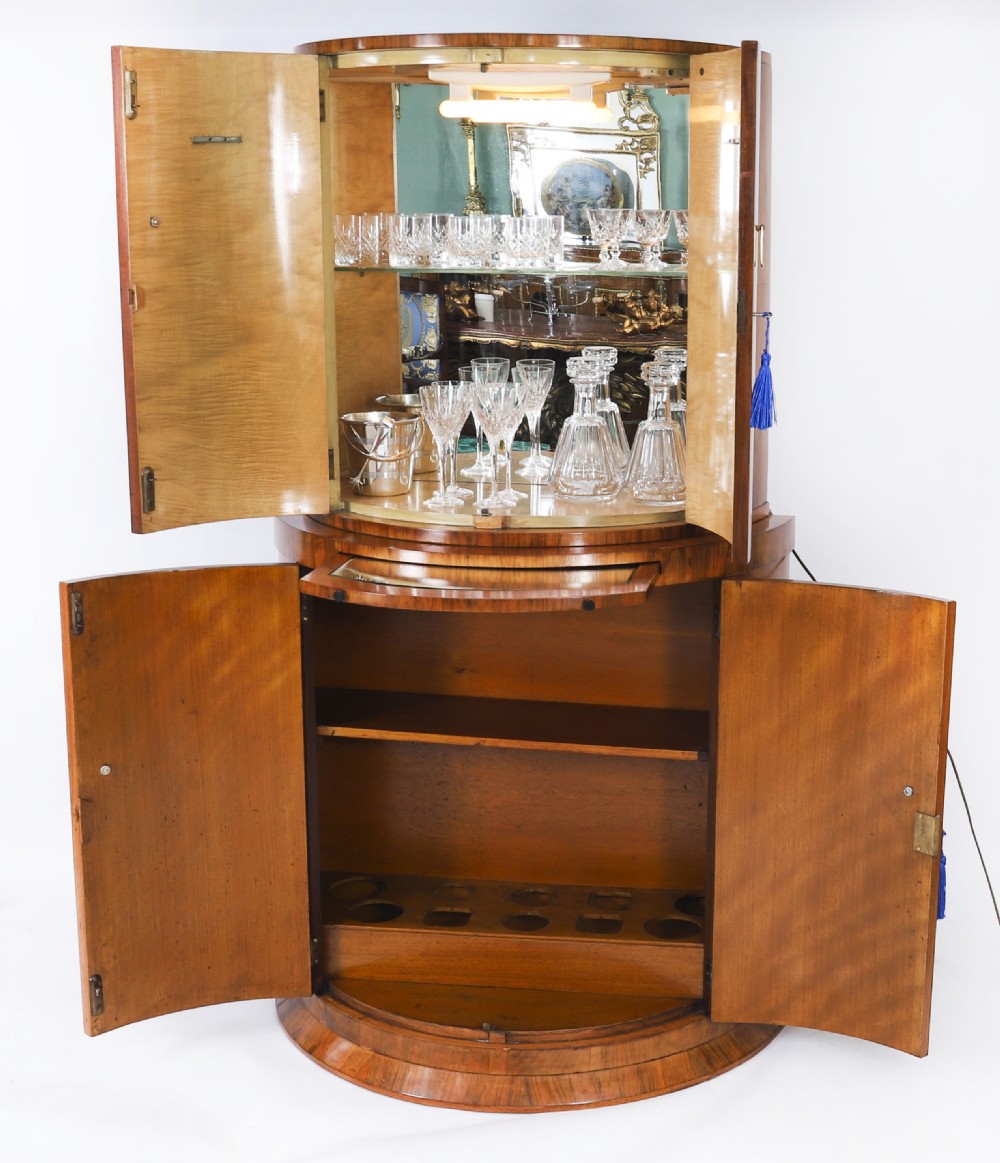
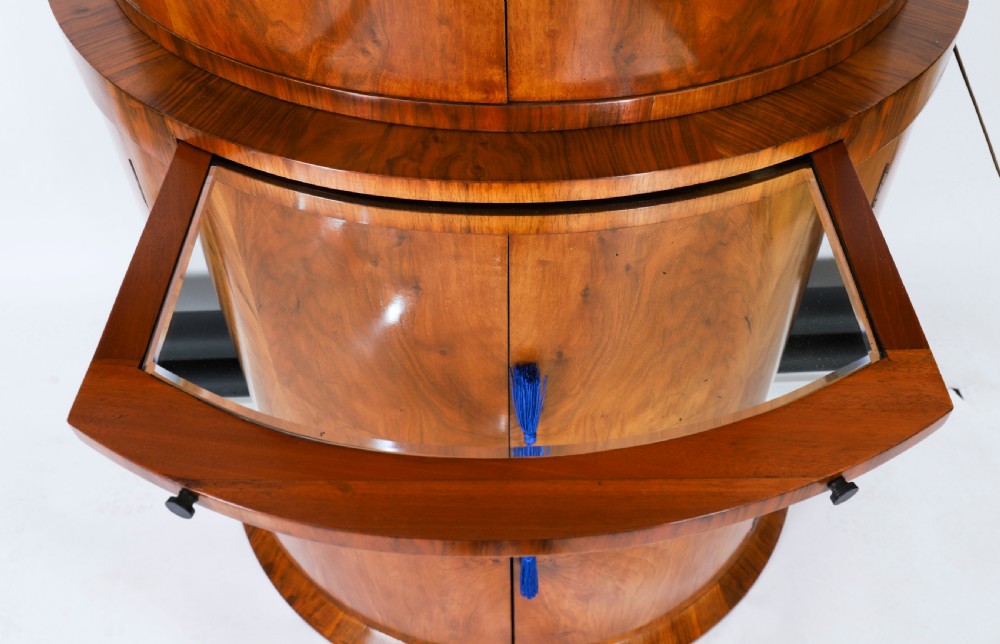
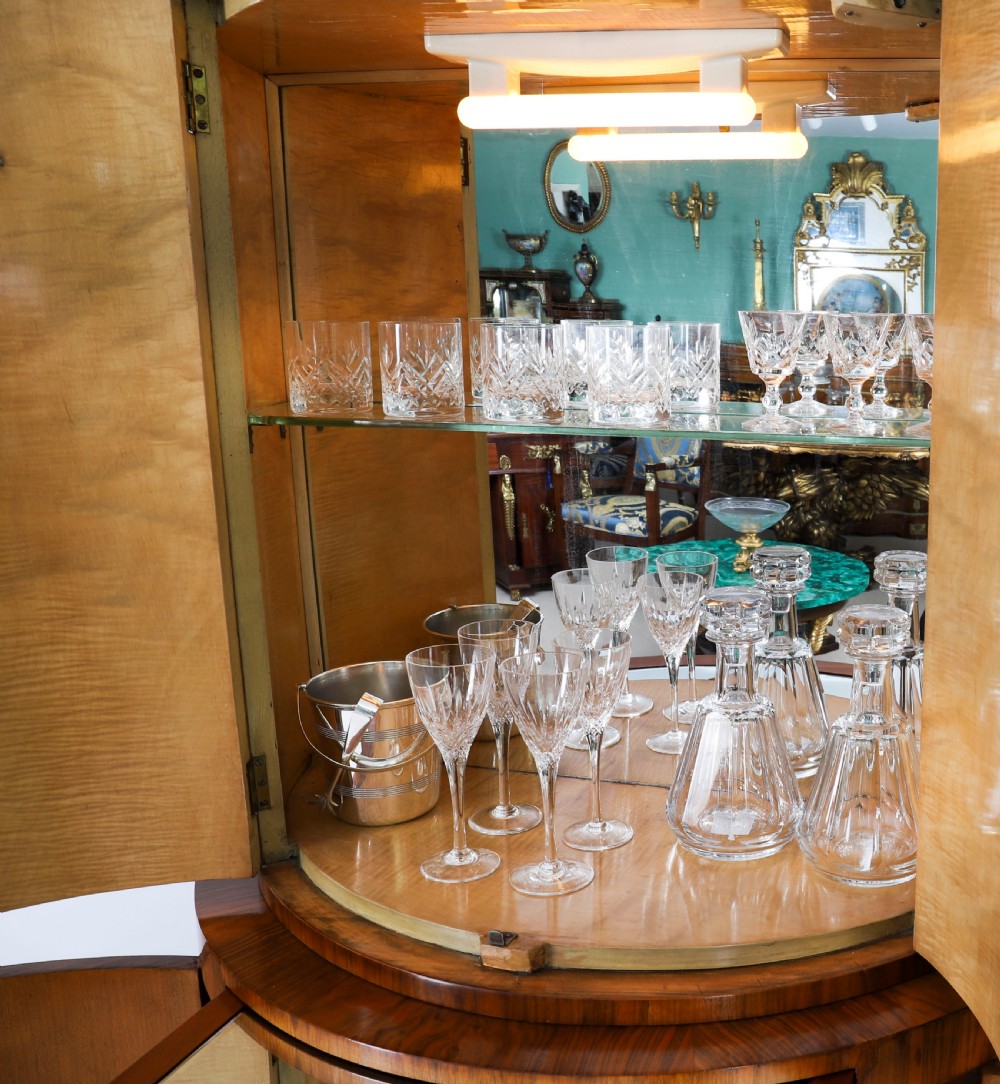
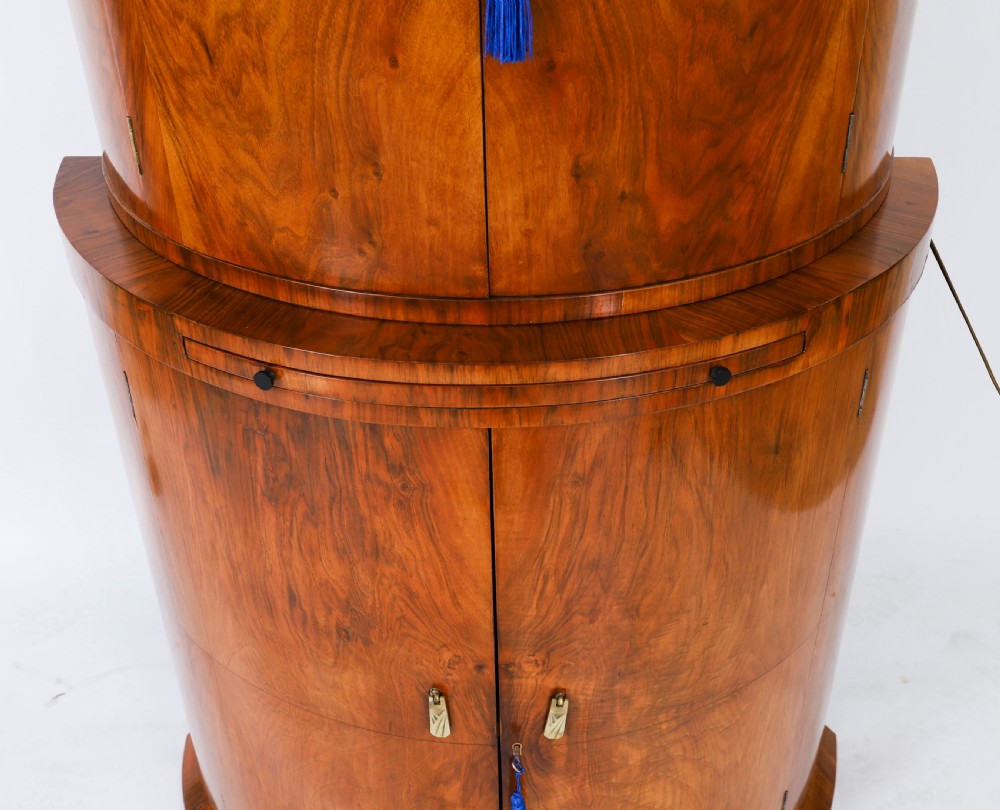
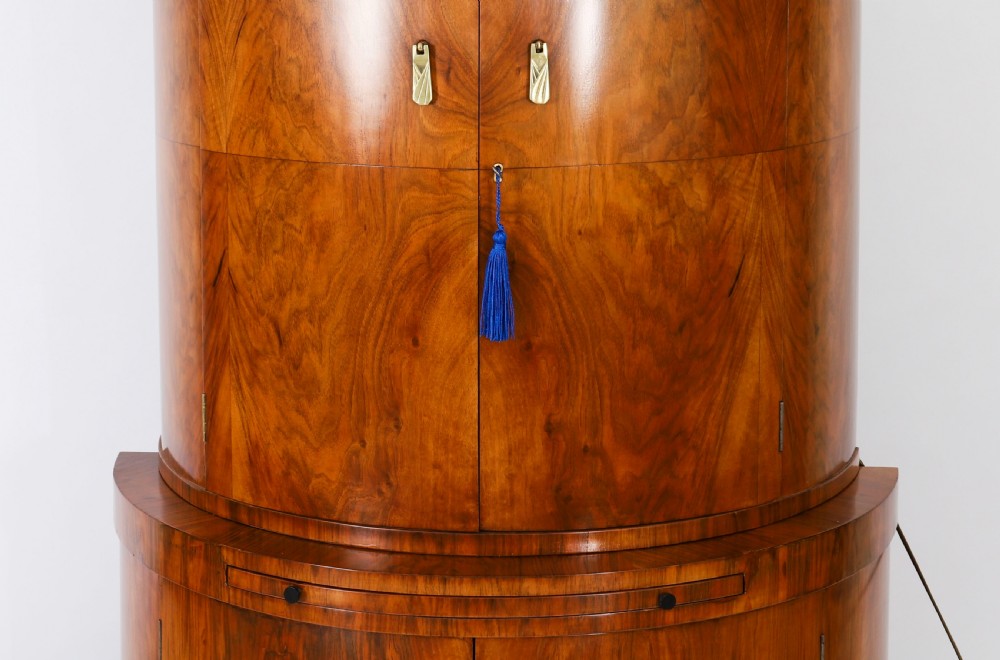
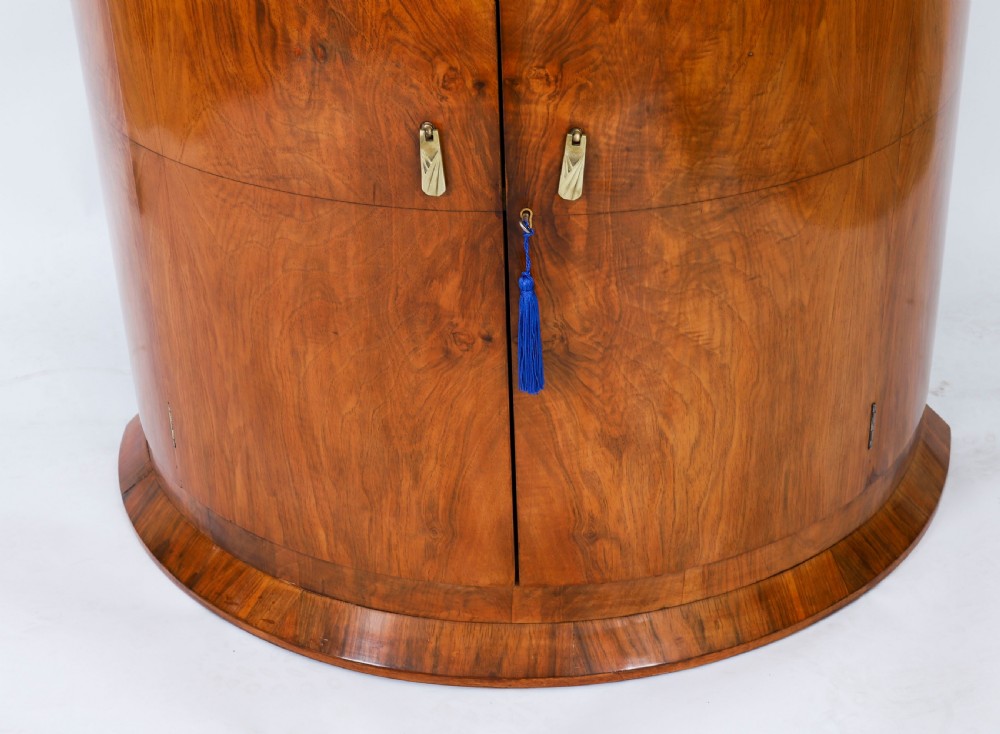
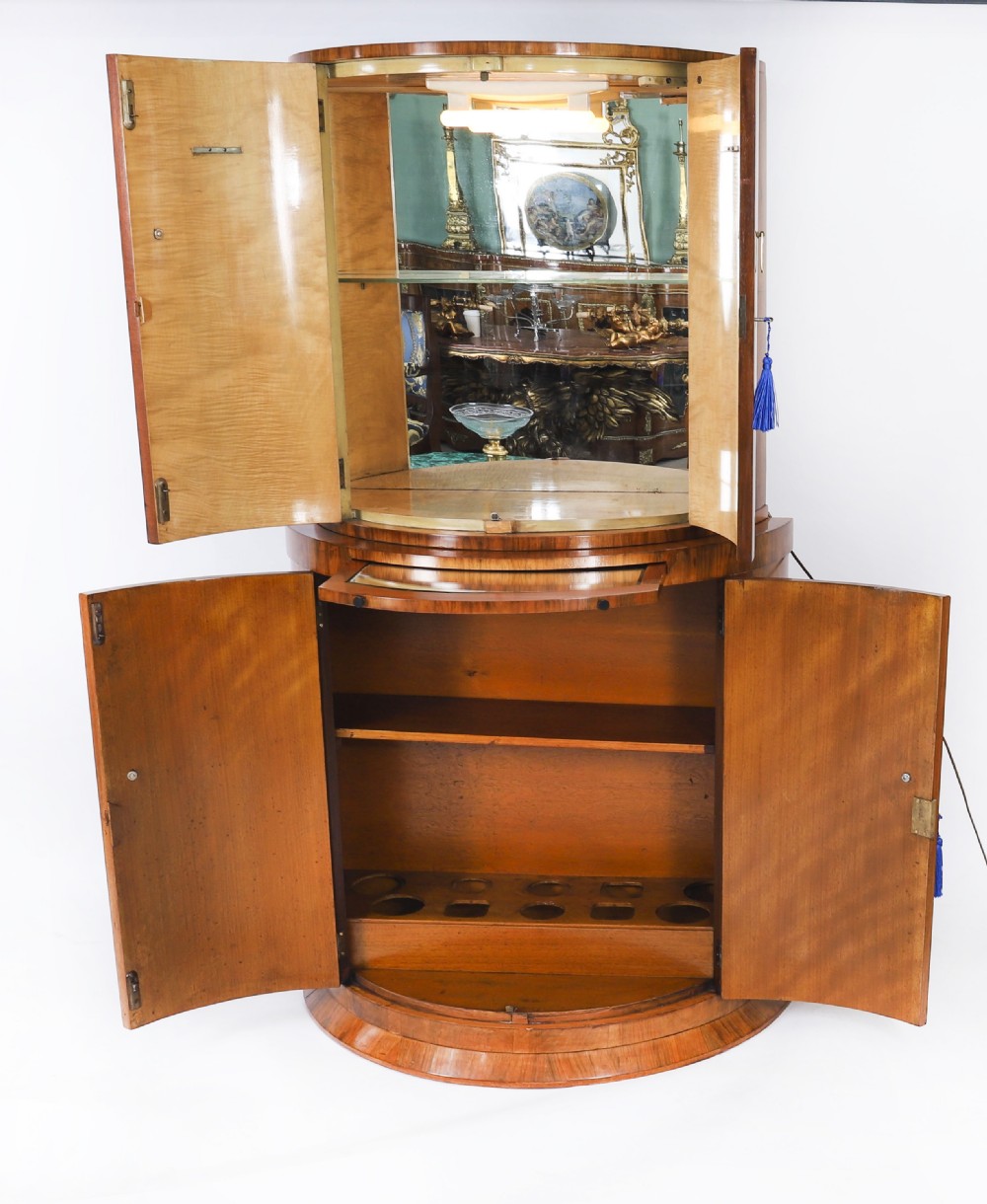
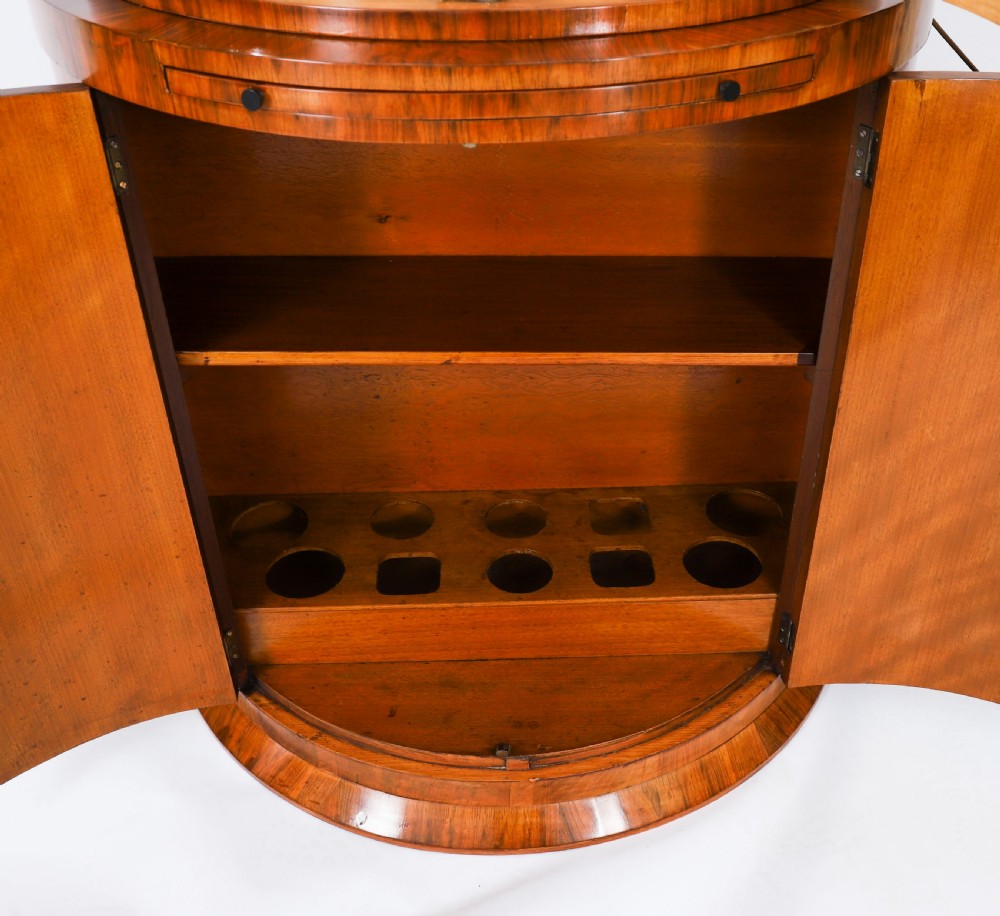
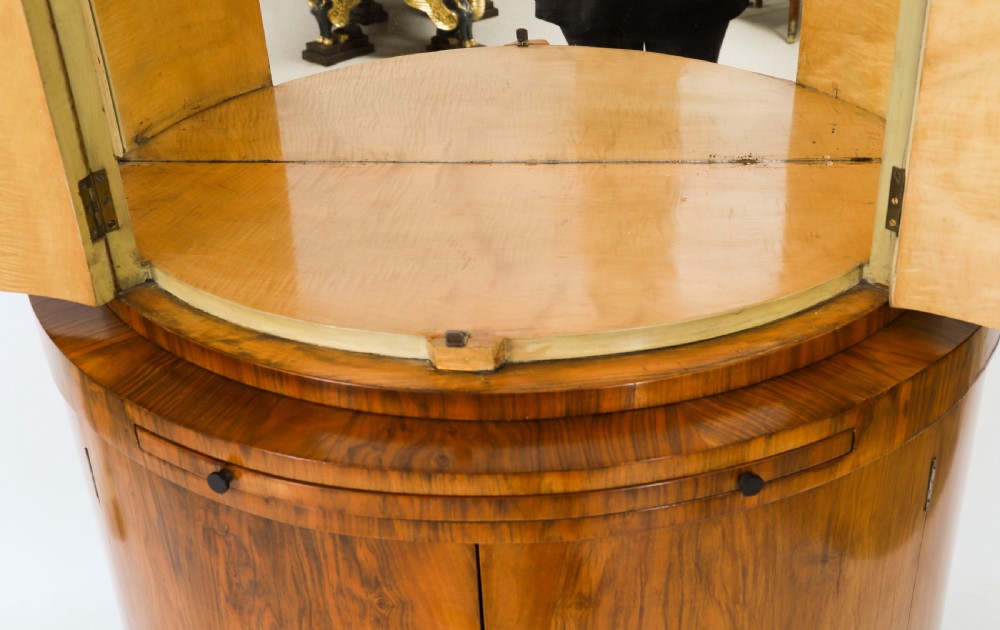
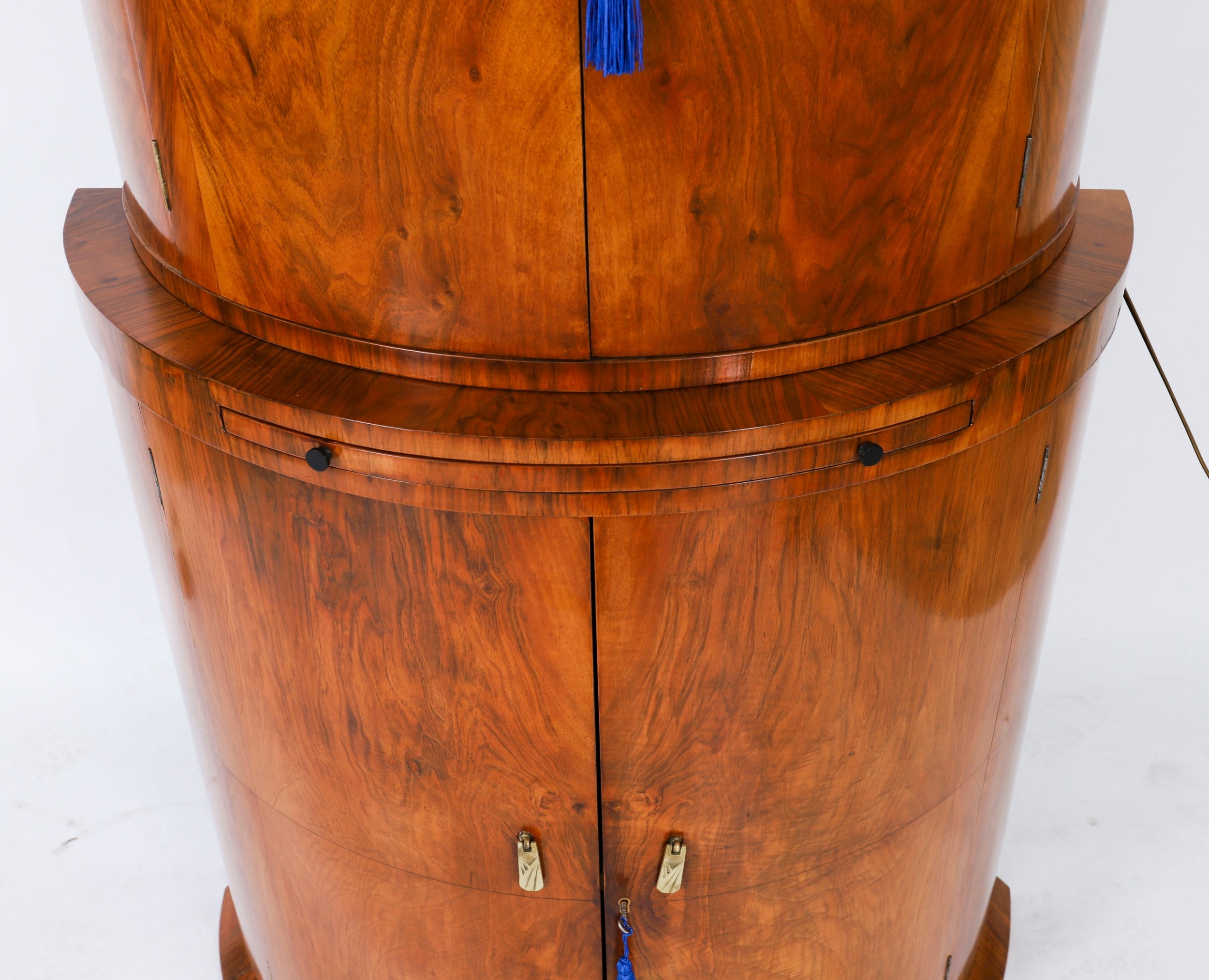
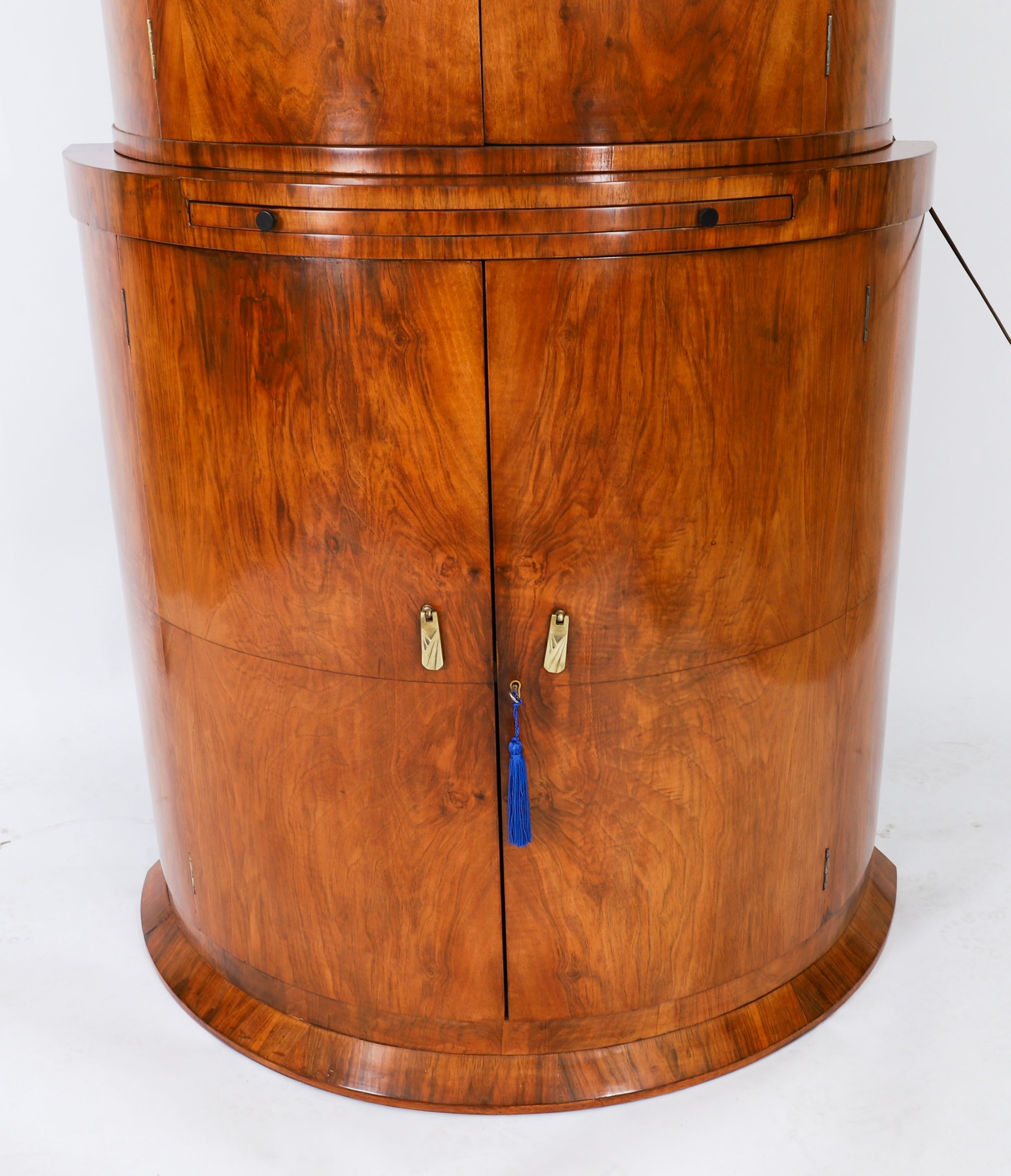
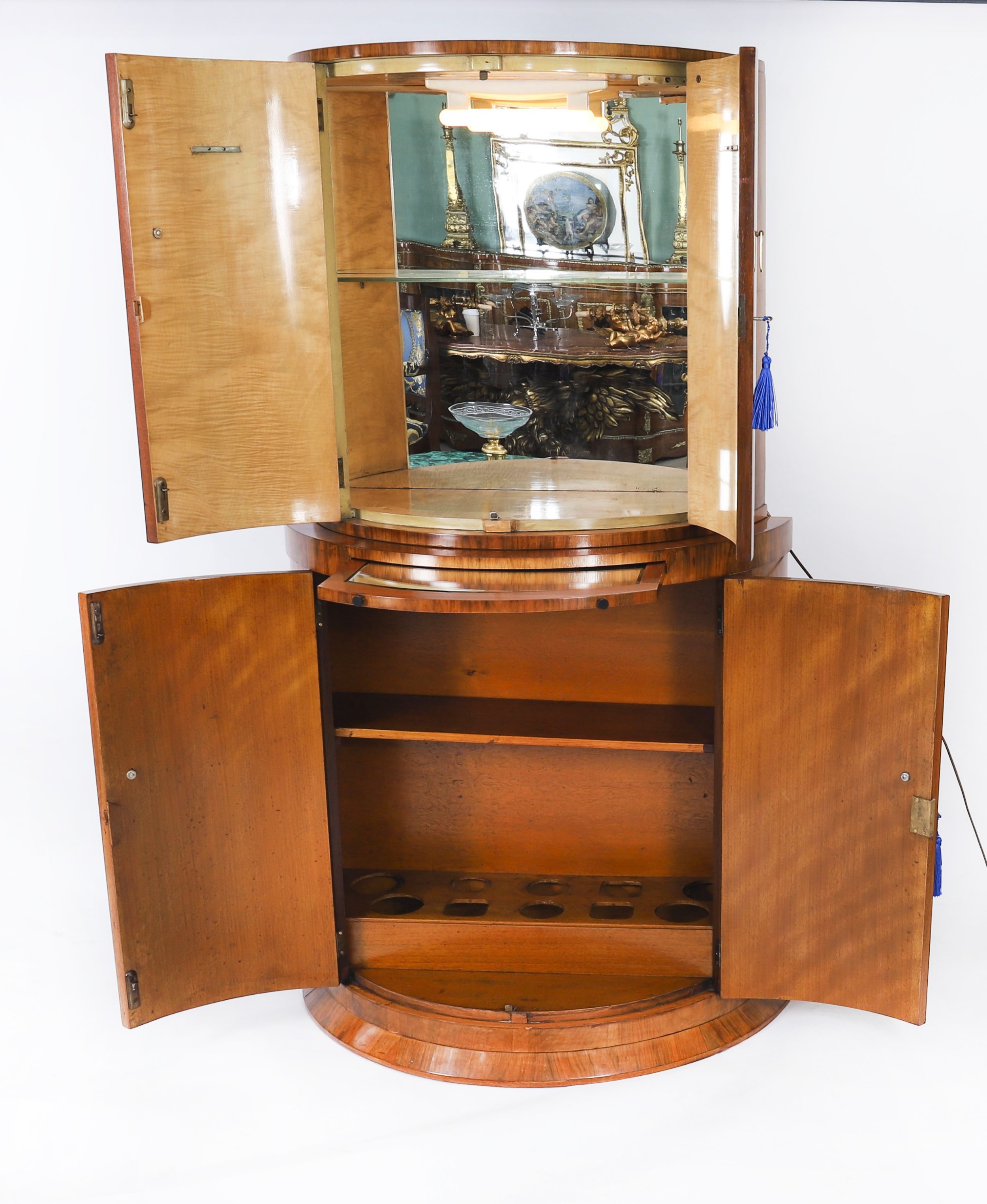
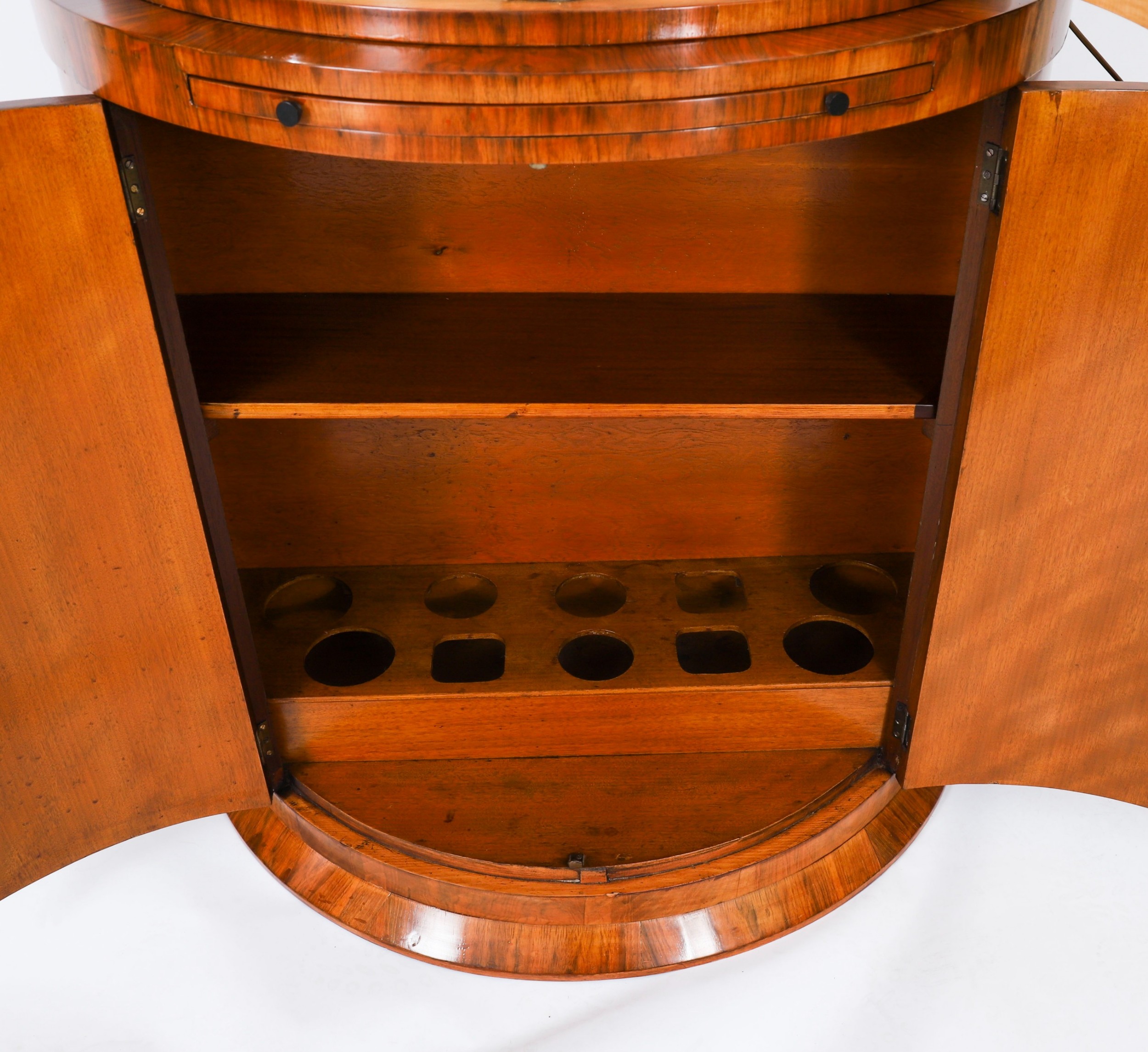
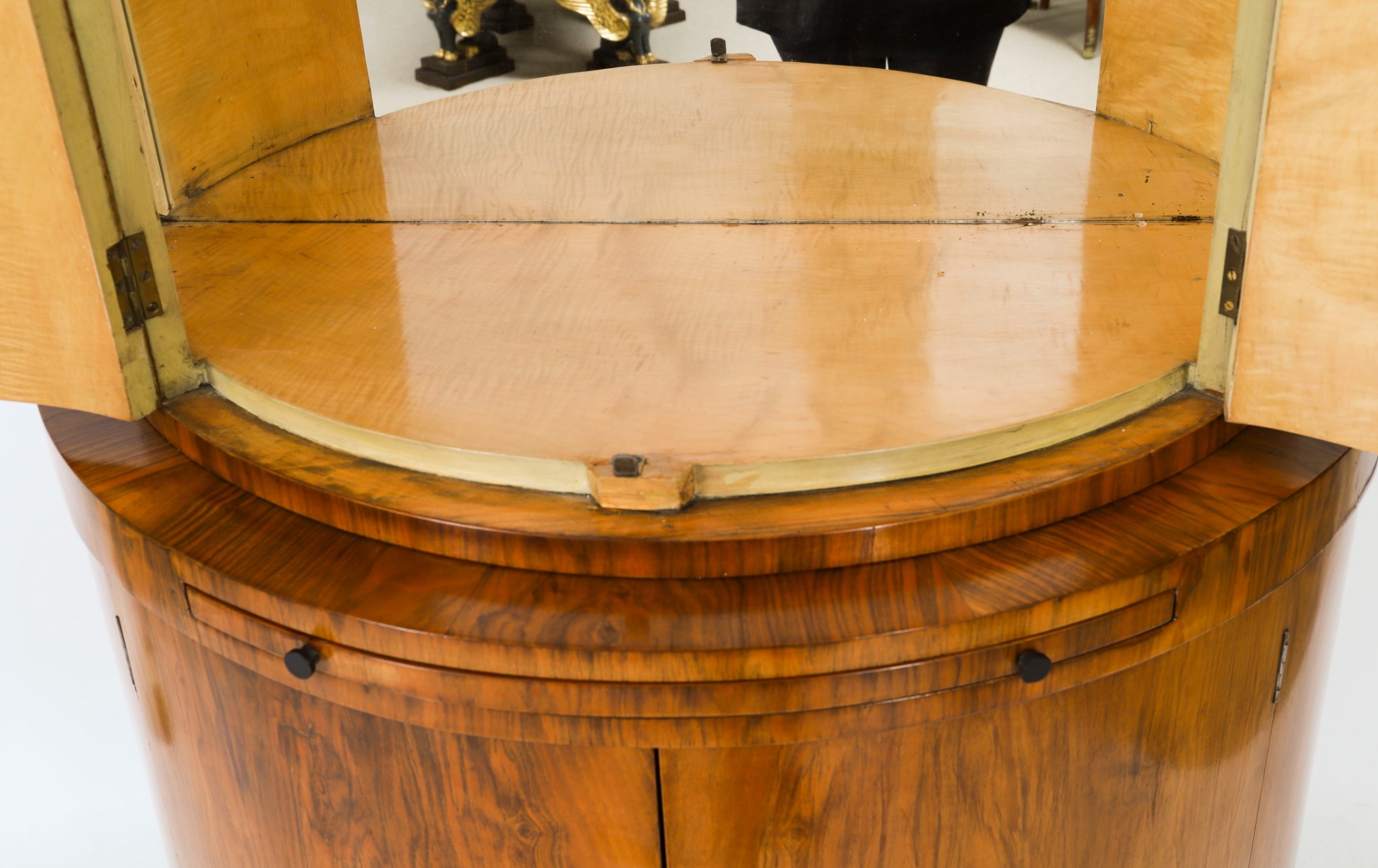
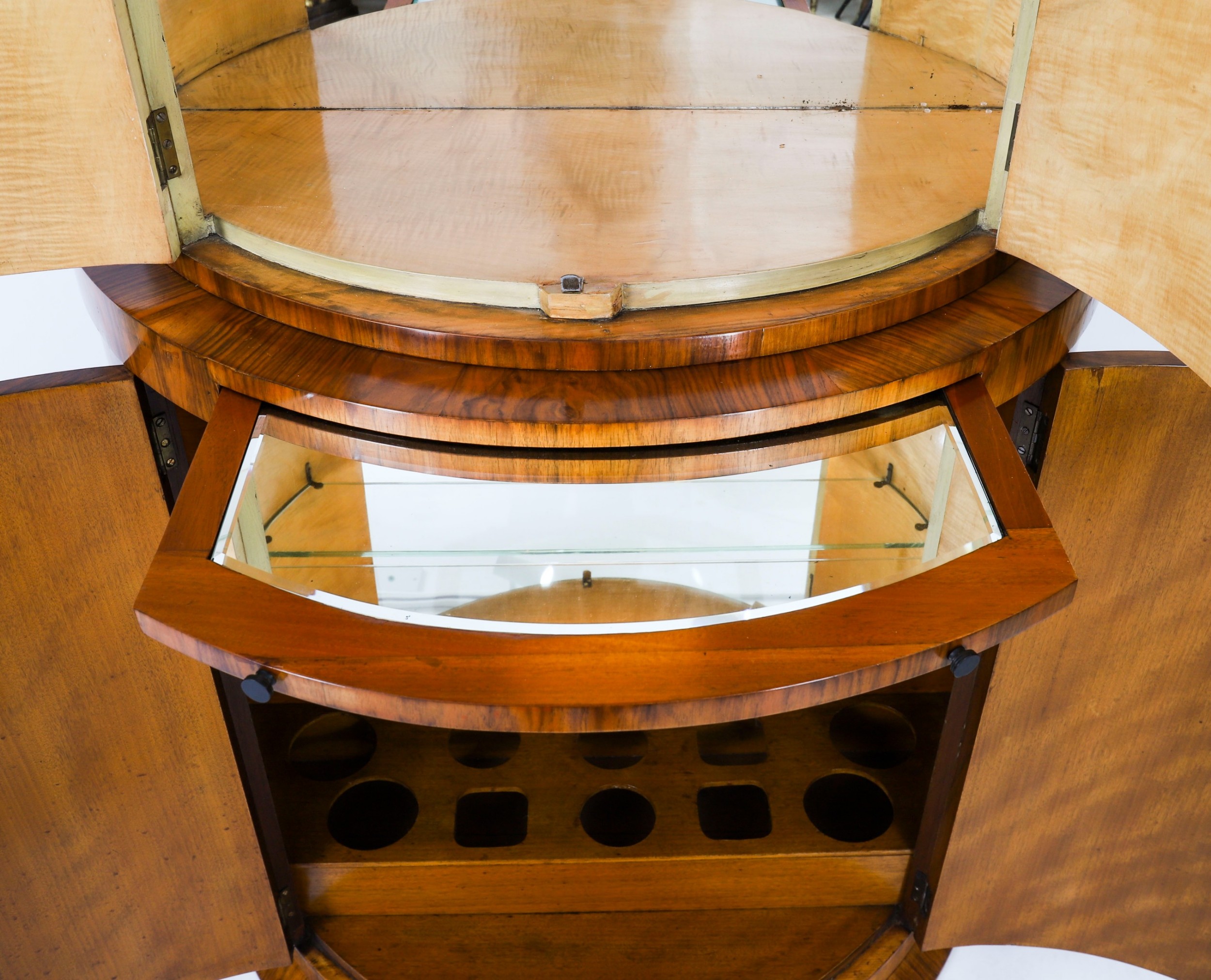
It is of architectural form, made in figured burr walnut, the upper part comprises a pair of doors enclosing a fitted maple and mirrored interior with a pull out slide, over a lower part with two doors that open to house the bottles. It is fitted with lights that have been rewired so as to be in working order.

There is no mistaking the timeless appeal of this highly collectable item. This cocktail bar would be a wonderful addition to your lounge or family room and is sure to get noticed wherever it is placed.

Condition:

In excellent condition, please see photos for confirmation.

Dimensions in cm:

Height 176 cm x Width 96 cm x Depth 48 cm

Dimensions in inches:

Height 5 foot, 9 inches x Width 3 foot, 2 inches x Depth 1 foot, 7 inches

The Hille furniture company was started in the East End of London in 1906 by Salamon Hille, a Russian emigrant, to renovate and reproduce eighteenth century furniture.

The focus of the business was very much quality rather than large volumes, employing skilled craftsmen and gaining customers such as Hamptons, a well known furniture store, amongst others.

By the 1930’s the company had established an international reputation supplying products all over the world. Salamon's daughter, Ray, subsequently joined and worked with the company to produce furniture to original designs. In 1932, Salamon retired and Ray took over the the business with Hille becoming a Limited company that year under her leadership.

In 1940 tragedy struck as Salamon Hille died, followed by the destruction of the North London home, factory and stores. The war had already been a challenge with reduced numbers of commissions and a restriction on timber to furniture makers. Under Ray Hille’s leadership Hille were recommended by the curator of the Victoria & Albert Museum to the City Guildhalls to repair bomb damaged furniture, collecting it in a hired van. With new timber being unobtainable, old furniture was sourced and the wood used and re-worked. Old employees came back from the war and in 1945 the business moved to Lea Bridge Road, Leytonstone, and Ray Hille was re-joined by husband Maurice, daughter Rosamind, son-in-law Leslie Julius and then later by Leslie’s army colleague John Collier.

Due to the restrictions in the UK, quality furniture could only be made for overseas customers so Hille’s only option was to focus on export markets. Following visits to the US Hille built up a suitable customer base. Export was to become a permanent feature for Hille from then on.

In 1950 Hille moved to premises in Hainault but almost immediately the 1951 financial crisis hit resulting in the factory having to move to an old brewery in Watford. The company recovered and in 1961 Hille opened its new offices designed by Hungarian-born modernist architect Ernö Goldfinger who was best known for designing the Elephant and Castle development.

1961 also saw Ray Hille’s second daughter Cherill Scheer joining Hille, adding a new generation to Hille’s management. Her work drove Hille’s marketing, most notably the promotion of the original Polyside chair in 1963, sending out a line drawing of a stork to major government buyers, architects and designers alerting them to the following first samples of the polyside chair with some 600 units then sent out – a marketing campaign which subsequently led to the sale of millions of units in the years that followed. The company is still in operation today.

Art Deco or Deco,

is an influential visual arts design style which first appeared in France during the 1920s, flourished internationally during the 30s and 40s.

It is an eclectic style that combines traditional craft motifs with Machine Ageimagery and materi

Date of Manufacture

Regent Antiques has dated this Art Deco Burr Walnut Cocktail Cabinet to the 1920s.

Physical Dimensions
Height
176cm (69.29")
Width
96cm (37.80")
Depth
48cm (18.90")
Reference Numbers
Sellingantiques Reference
SA1215447
Dealers Internal Reference
A5080
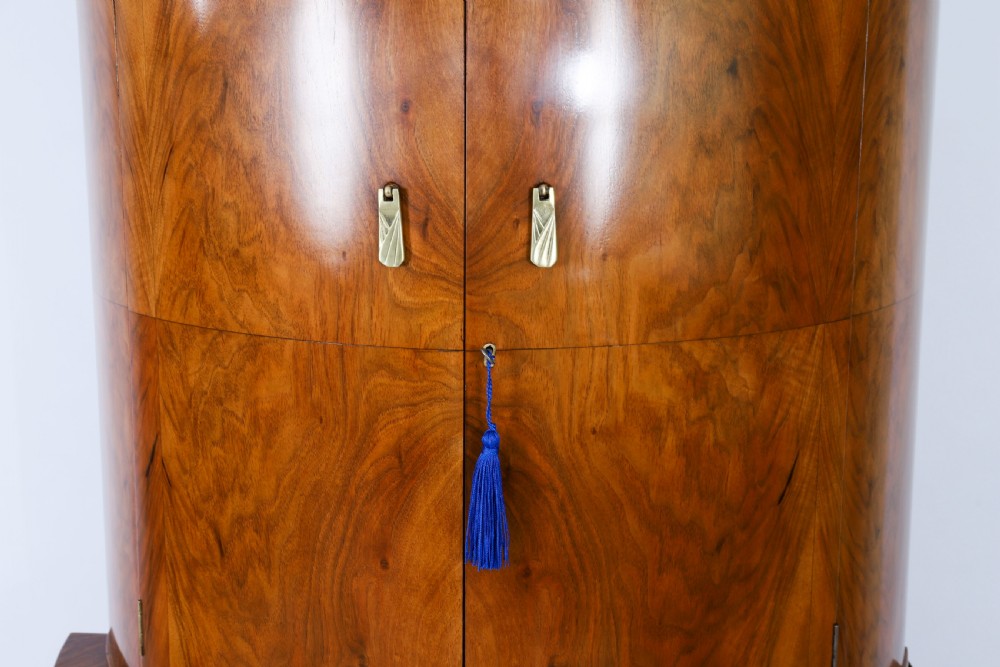
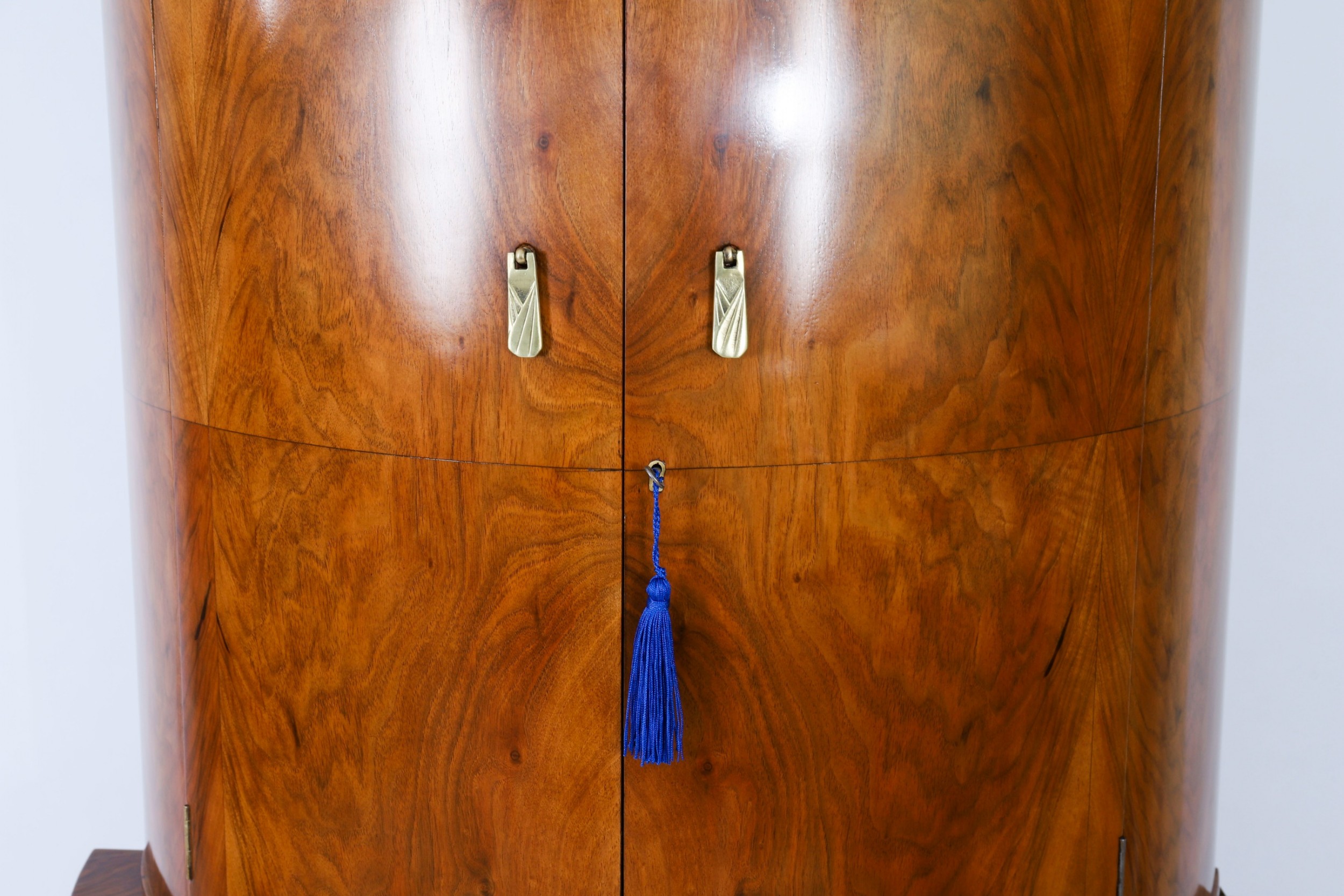
A curved Art Deco burr walnut cocktail cabinet featuring double doors on both upper and lower sections with brass hardware and blue tassel keys.Detail view 1Detail view 2Detail view 3Detail view 4Detail view 5Detail view 6Detail view 7Detail view 8Detail view 9Detail view 10Detail view 11Detail view 12Detail view 13Detail view 14Detail view 15Detail view 16
SOLD12 JUN 26
1 / 17
1920s · SA1215447
Antique Art Deco Burr Walnut Cocktail Cabinet by Hille C1920
Sorry, but this item has been sold.
Description
This is a fantastic antique Art Deco burr walnut demi lune cocktail cabinet by the cabinet makers Hille, renowned for high quality, circa 1920 in date.

It is of architectural form, made in figured burr walnut, the upper part comprises a pair of doors enclosing a fitted maple and mirrored interior with a pull out slide, over a lower part with two doors that open to house the bottles. It is fitted with lights that have been rewired so as to be in working order.

There is no mistaking the timeless appeal of this highly collectable item. This cocktail bar would be a wonderful addition to your lounge or family room and is sure to get noticed wherever it is placed.

Condition:

In excellent condition, please see photos for confirmation.

Dimensions in cm:

Height 176 cm x Width 96 cm x Depth 48 cm

Dimensions in inches:

Height 5 foot, 9 inches x Width 3 foot, 2 inches x Depth 1 foot, 7 inches

The Hille furniture company was started in the East End of London in 1906 by Salamon Hille, a Russian emigrant, to renovate and reproduce eighteenth century furniture.

The focus of the business was very much quality rather than large volumes, employing skilled craftsmen and gaining customers such as Hamptons, a well known furniture store, amongst others.

By the 1930’s the company had established an international reputation supplying products all over the world. Salamon's daughter, Ray, subsequently joined and worked with the company to produce furniture to original designs. In 1932, Salamon retired and Ray took over the the business with Hille becoming a Limited company that year under her leadership.

In 1940 tragedy struck as Salamon Hille died, followed by the destruction of the North London home, factory and stores. The war had already been a challenge with reduced numbers of commissions and a restriction on timber to furniture makers. Under Ray Hille’s leadership Hille were recommended by the curator of the Victoria & Albert Museum to the City Guildhalls to repair bomb damaged furniture, collecting it in a hired van. With new timber being unobtainable, old furniture was sourced and the wood used and re-worked. Old employees came back from the war and in 1945 the business moved to Lea Bridge Road, Leytonstone, and Ray Hille was re-joined by husband Maurice, daughter Rosamind, son-in-law Leslie Julius and then later by Leslie’s army colleague John Collier.

Due to the restrictions in the UK, quality furniture could only be made for overseas customers so Hille’s only option was to focus on export markets. Following visits to the US Hille built up a suitable customer base. Export was to become a permanent feature for Hille from then on.

In 1950 Hille moved to premises in Hainault but almost immediately the 1951 financial crisis hit resulting in the factory having to move to an old brewery in Watford. The company recovered and in 1961 Hille opened its new offices designed by Hungarian-born modernist architect Ernö Goldfinger who was best known for designing the Elephant and Castle development.

1961 also saw Ray Hille’s second daughter Cherill Scheer joining Hille, adding a new generation to Hille’s management. Her work drove Hille’s marketing, most notably the promotion of the original Polyside chair in 1963, sending out a line drawing of a stork to major government buyers, architects and designers alerting them to the following first samples of the polyside chair with some 600 units then sent out – a marketing campaign which subsequently led to the sale of millions of units in the years that followed. The company is still in operation today.

Art Deco or Deco,

is an influential visual arts design style which first appeared in France during the 1920s, flourished internationally during the 30s and 40s.

It is an eclectic style that combines traditional craft motifs with Machine Ageimagery and materi
Date1920s
Height176cm (69.29")
Width96cm (37.80")
Depth48cm (18.90")
ReferenceSA1215447
Dealer's referenceA5080
Regent Antiques
Regent AntiquesSellingantiques verified since Sep 2016

We specialise in english and continental furniture, silver, porcelain and decorative items.

Member of LAPADA CINOA

SHARE
SAVE
Archive I A curved Art Deco burr walnut cocktail cabinet featuring double doors on both upper and lower sections with brass hardware and blue tassel keys. SOLD12 JUN 26

Antique Art Deco Burr Walnut Cocktail Cabinet by Hille C1920

Archive II A curved Art Deco burr walnut cocktail cabinet featuring double doors on both upper and lower sections with brass hardware and blue tassel keys. View II
Archive III A curved Art Deco burr walnut cocktail cabinet featuring double doors on both upper and lower sections with brass hardware and blue tassel keys. View III
Archive IV A curved Art Deco burr walnut cocktail cabinet featuring double doors on both upper and lower sections with brass hardware and blue tassel keys. View IV
Archive V A curved Art Deco burr walnut cocktail cabinet featuring double doors on both upper and lower sections with brass hardware and blue tassel keys. View V
Archive VI A curved Art Deco burr walnut cocktail cabinet featuring double doors on both upper and lower sections with brass hardware and blue tassel keys. View VI
Archive VII A curved Art Deco burr walnut cocktail cabinet featuring double doors on both upper and lower sections with brass hardware and blue tassel keys. View VII
Archive VIII A curved Art Deco burr walnut cocktail cabinet featuring double doors on both upper and lower sections with brass hardware and blue tassel keys. View VIII
Archive IX A curved Art Deco burr walnut cocktail cabinet featuring double doors on both upper and lower sections with brass hardware and blue tassel keys. View IX
Archive X A curved Art Deco burr walnut cocktail cabinet featuring double doors on both upper and lower sections with brass hardware and blue tassel keys. View X
Archive XI A curved Art Deco burr walnut cocktail cabinet featuring double doors on both upper and lower sections with brass hardware and blue tassel keys. View XI
Archive XII A curved Art Deco burr walnut cocktail cabinet featuring double doors on both upper and lower sections with brass hardware and blue tassel keys. View XII
Archive XIII A curved Art Deco burr walnut cocktail cabinet featuring double doors on both upper and lower sections with brass hardware and blue tassel keys. View XIII
Archive XIV A curved Art Deco burr walnut cocktail cabinet featuring double doors on both upper and lower sections with brass hardware and blue tassel keys. View XIV
Archive XV A curved Art Deco burr walnut cocktail cabinet featuring double doors on both upper and lower sections with brass hardware and blue tassel keys. View XV
Archive XVI A curved Art Deco burr walnut cocktail cabinet featuring double doors on both upper and lower sections with brass hardware and blue tassel keys. View XVI
Archive XVII A curved Art Deco burr walnut cocktail cabinet featuring double doors on both upper and lower sections with brass hardware and blue tassel keys. View XVII
Enlarged Archival View
Location
Manor Warehouse
318 Green Lanes
London
N4 1BX
United Kingdom
Verified Since Sep 2016
Items For Sale 639
Items Sold 2,756
Regent Antiques
Regent Antiques
Verified Since Sep 2016
View Dealer Info
Location: Manor Warehouse, 318 Green Lanes, London, N4 1BX, United Kingdom
Verified
Sep 2016
For Sale
639
Sold
2,756
A curved Art Deco burr walnut cocktail cabinet featuring double doors on both upper and lower sections with brass hardware and blue tassel keys.
Antique Art Deco Burr Walnut Cocktail Cabinet by Hille C1920
Ref: SA1215447
A curved Art Deco burr walnut cocktail cabinet featuring double doors on both upper and lower sections with brass hardware and blue tassel keys.
Detail View 1
Detail View 2
Detail View 3
Detail View 4
Detail View 5
Detail View 6
Detail View 7
Detail View 8
Detail View 9
Detail View 10
Detail View 11
Detail View 12
Detail View 13
Detail View 14
Detail View 15
Detail View 16
Archival Detail
Every single antique dealer on our platform is individually approved by our internal team. We verify their professional trade history, ethical standards, and photographic quality to ensure a secure, high-standard buying environment. Upon joining, every dealer agrees to a strict 9-point code of conduct. While issues can occasionally arise, our dealers typically resolve them swiftly and directly with the buyer. In fact, since our founding in 2002, Sellingantiques has only had to step in to help resolve an issue on roughly five occasions—a true testament to the quality of our dealers and their dedication to your happiness.
Our dealers are highly experienced in packing and shipping fragile, high-value antiques. Because you are in direct contact with the dealer, you will be able to easily go through all available shipping and insurance options together to ensure your item arrives safely.
Antiques are the ultimate green purchase. By choosing historical pieces over newly manufactured goods, you completely eliminate the carbon footprint of modern mass production while preserving exceptional, timeless craftsmanship.
Written by Sellingantiques from the dealer’s photographs and listing
  • ObjectCabinets
  • Period1900 - 1920
  • StyleArt Deco
  • MaterialBurr Walnut, Brass, Wood
  • ColourWarm Brown
  • MotifsCurved silhouette, Burr walnut grain pattern, Brass hardware, Tiered double-door construction
  • SizeH 176 cm (69 in) x W 96 cm (38 in) x D 48 cm (19 in)

Art Deco furniture, emerging in the 1920s and 1930s, is characterised by sleek geometric forms, streamlined curves, and the use of luxurious exotic veneers such as burr walnut, Macassar ebony, and chrome accents.

These cabinets typically feature solid wood frames wrapped in decorative wood veneers like burr walnut or maple, often complemented by mirrored glass interiors, glass shelving, and brass or chromium-plated hardware.

Authentic pieces generally exhibit traditional construction methods such as dovetail joints in the drawers, hand-polished shellac or french polish finishes, and makers marks or stamps from renowned cabinet makers of the period.

Position the cabinet as a focal point in a living room or dining area, pairing it with understated contemporary furniture to let the rich wood grain and curved silhouette stand out.

Keep the wood away from direct sunlight and radiators to prevent the veneer from drying out or cracking, and dust regularly with a soft, dry cloth while avoiding harsh chemical polishes.
items
Add keywords to the filter
Price
£100
£250000
Era
Period
Style
Material
Origin
Stock Location
Recently Added
Online Payments
Categories