


1930s Walnut Bar Cabinet
A 1930s walnut bar cabinet brings theatrical flair and clever interior storage to a room, offering a dedicated place to serve drinks with period style.
1930s Walnut Bar Cabinet
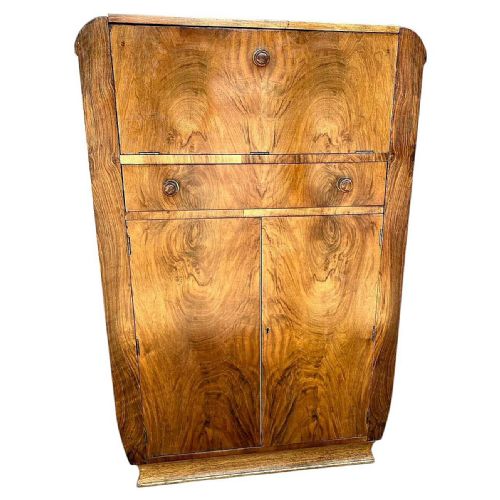
A 1930s walnut bar cabinet is a specialised piece of furniture designed for entertaining, combining interior storage for bottles and glassware with a dedicated preparation surface. Most examples encountered on this page belong to the Art Deco style, favouring streamlined silhouettes or bold architectural shapes.
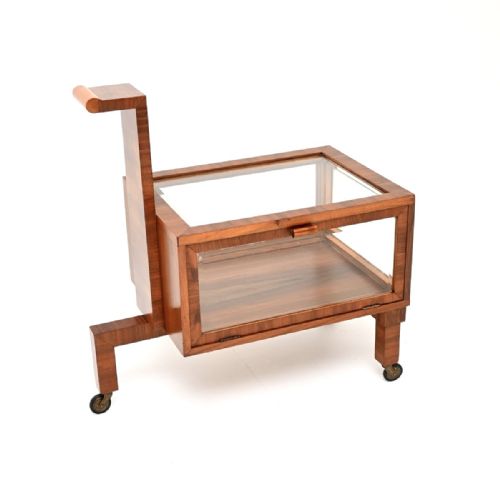
These pieces primarily originate from the 1930 period, with occasional variations dating back to 1920. Forms range from dedicated upright cocktail cabinets and dry bars to side tables, serving carts, and drinks trolleys.
Makers and workshops of the era focused on creating practical entertaining hubs that doubled as striking decorative furniture. Buyers will find both freestanding cabinets with drop-down serving flaps and mobile trolleys designed for serving drinks.
How they were made
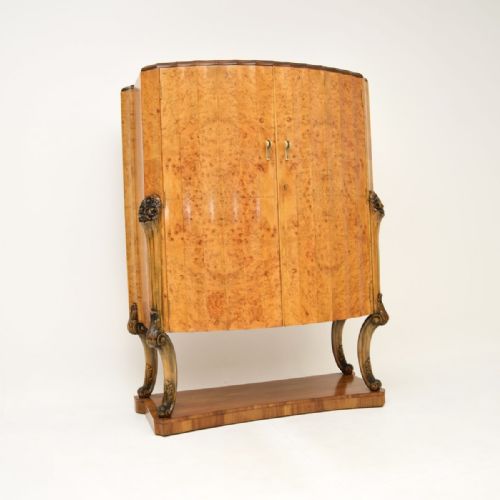
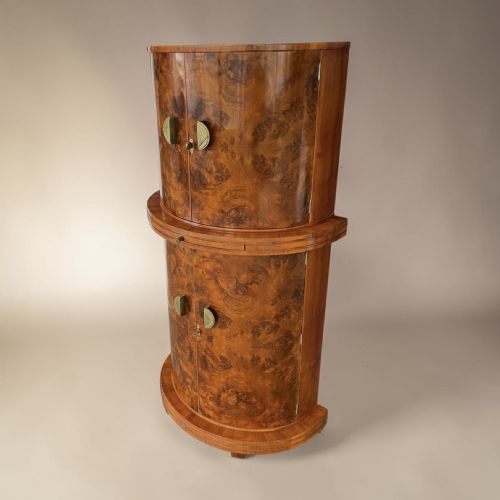
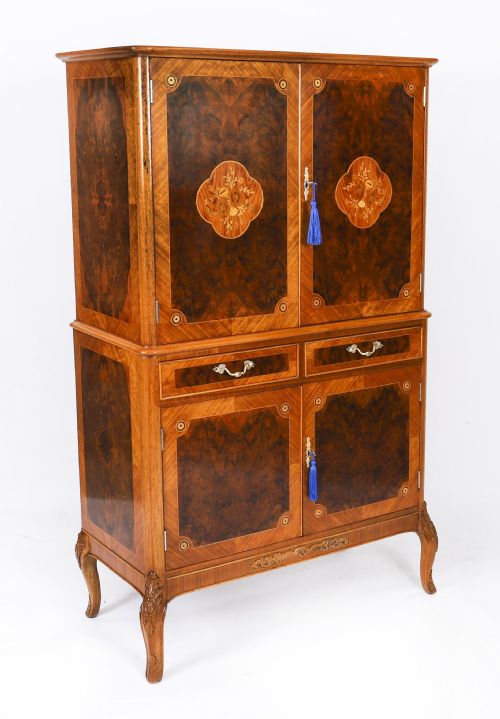
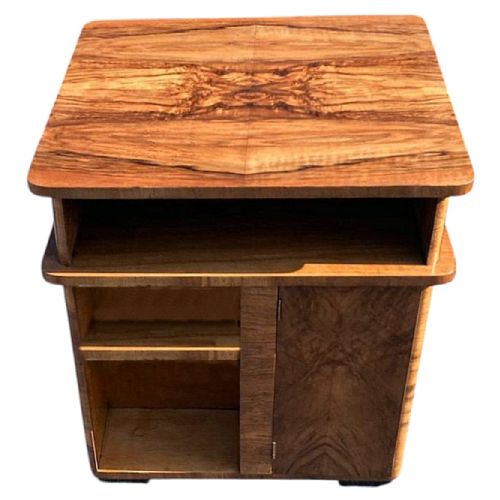
Cabinet makers utilised walnut and burr walnut veneers laid over solid carcases to achieve striking natural grain patterns across the exterior doors and panels. Marquetry details frequently adorn the surfaces, adding geometric or floral ornamentation typical of the period.
Interior compartments often incorporated glass, mirror backing, and brass or chrome hardware to reflect light and display glassware. These reflective materials contrasted with the dark wood exterior, enhancing the theatrical experience of opening the cabinet.
Listings combine walnut, burr walnut, brass, glass, mirror, and chrome across pieces dated to the 1920 and 1930 periods.
What varies in quality
The distinction between standard production items and top-tier pieces rests largely on the choice of veneer and the skill of the cabinet maker. Highly figured burr walnut and intricate marquetry indicate workshop construction of superior ambition, whereas plain walnut denotes simpler commercial output.
Internal engineering also separates different tiers of manufacture, particularly in cabinets with pop-up mechanisms or complex folding doors. Pieces by renowned makers display robust interior fittings, quality mirrors, and precise joinery that withstands frequent use.
Epstein·Hille·Incorporall·Harry and Lou Epstein·Epstein and Co Furniture
The 1930s Walnut Bar Cabinet Glossary
- Burr walnut
- A wood veneer taken from the growth knots of a walnut tree, producing highly twisted and swirling grain patterns. It was favoured by cabinet makers for decorative exterior surfaces.
- Marquetry
- Pieces of contrasting wood veneer assembled to form decorative patterns or pictures on a furniture surface. This technique requires considerable precision from the maker.
- Art Deco
- A design style spanning the 1920s and 1930s characterised by sleek geometric shapes, stylised motifs, and modern industrial materials. It strongly influences the silhouettes of these drinks cabinets.
- Cocktail cabinet
- A specialised piece of furniture designed to store bottles, shakers, and glasses, usually featuring a drop-down flap that serves as a mixing shelf.
- Dry bar
- An entertaining cabinet equipped for holding glassware and unchilled spirits without refrigeration facilities. These units rely on interior mirror panels and dedicated bottle racks.
1930s Walnut Bar Cabinet: Frequently Asked Questions
What is the difference between a cocktail cabinet and a drinks trolley?
A cocktail cabinet is a stationary piece of furniture with enclosed storage, doors, and a fold-down preparation shelf. It functions as a substantial architectural feature within a room.
A drinks trolley is a mobile serving cart equipped with wheels, designed to transport bottles and glassware between rooms during gatherings.
How do drop-down bar flaps work?
The drop-down flap is hinged at the lower edge and held level by folding metal arms or desk chains when opened. This creates an instant serving shelf lined with glass, mirror, or laminate for mixing drinks.
When closed, the mechanism conceals the preparation area and secures the bottles behind locking doors.
Are these cabinets suitable for modern bottles?
Most interiors accommodate standard spirit bottles on the base shelves or door racks, though very tall bottles may require placement on the main pull-out surface. Adjustable wooden shelving is sometimes present to alter compartment heights.
Buyers should examine the internal clearance if they intend to store unusually shaped modern decanters.
How do I identify a Queen Anne Revival piece?
Queen Anne Revival furniture incorporates characteristic elements from the early eighteenth century, such as cabriole legs and pad feet, executed with twentieth-century timber. This style appears alongside mainstream Art Deco designs in the selection.
These pieces offer a more traditional silhouette compared to the geometric lines of standard Deco cabinets.