







Epstein Art Deco Furniture
Epstein art deco furniture brings monumental forms and lavish wood grains into modern interiors with unmistakable presence.

Epstein Art Deco Furniture
Epstein art deco furniture encompasses striking cocktail cabinets, substantial sideboards, nesting tables, and upholstered seating designed in the twentieth century. These pieces define a bold interior aesthetic through generous proportions and confident scaling.
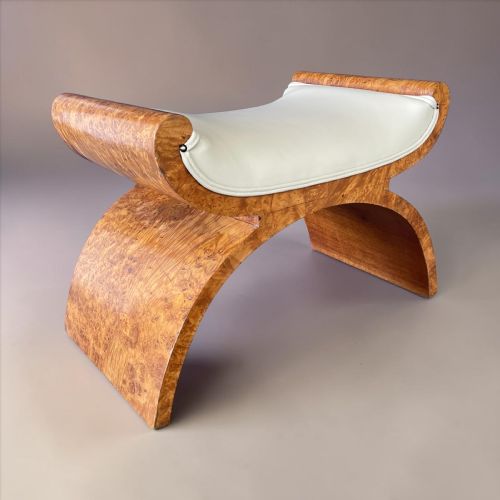
Burr walnut and figured veneers dominate the forms seen here, frequently paired with maple, satinwood, and contrasting black lacquer. Pieces range from bedside tables and dressing stools to complete dining suites and cloud lounge suites.
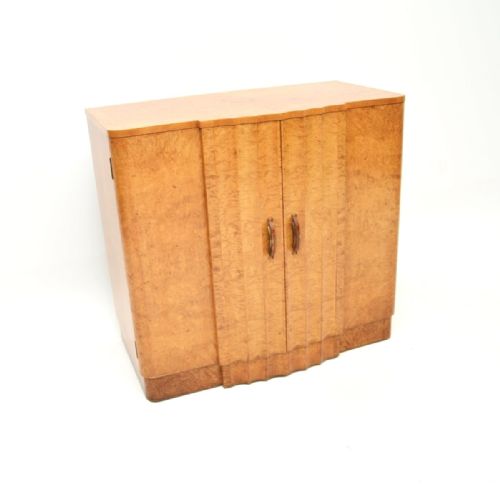
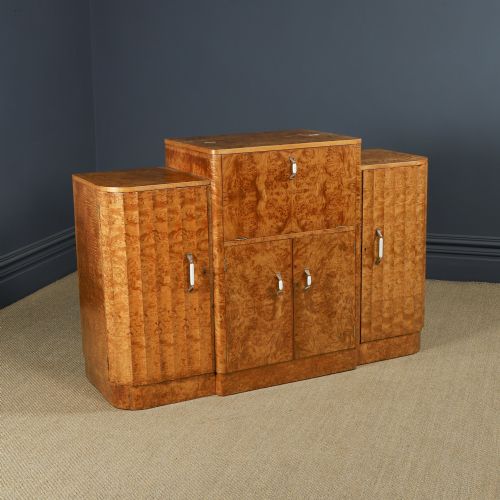
The most prevalent examples on this page are cocktail cabinets and sideboards rendered in burr walnut. These functional items showcase dramatic grain patterns that serve as the primary visual decoration of the piece.
Materials and Construction
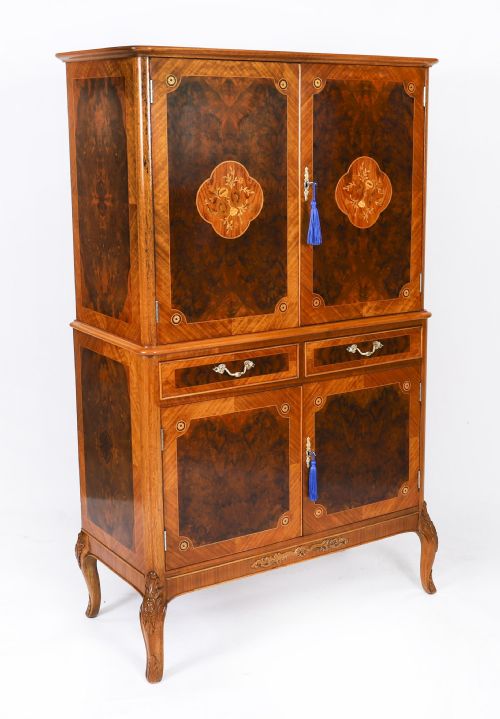
Makers applied rich burr walnut and maple veneers over solid wood carcases, arranging the grain patterns symmetrically to create arresting geometric patterns on doors and tabletops. Marquetry details and contrasting black lacquer provide sharp linear boundaries against the warm wood tones.
Functional hardware integrates brass fittings and bakelite elements, while glass tops protect delicate veneered surfaces on cocktail bars and serving tables. Upholstered lounge suites and dining chairs incorporate supportive internal frames paired with leather and fabric coverings.
Epstein Art Deco Furniture Retail Price Guide 2026
Typical asking prices for epstein art deco furniture among the pieces listed under this phrase on Sellingantiques today, from the lower quarter to the upper quarter. They describe what is for sale here now, not the wider market.
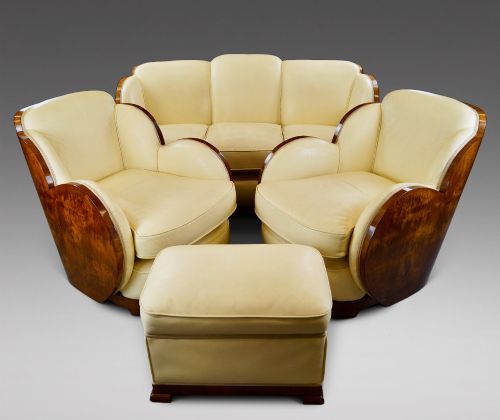
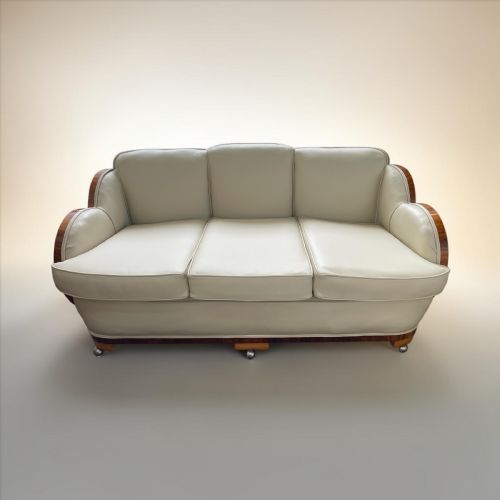
Cloud suites invite guests to sink so deeply into the cushioning that escaping their embrace requires genuine determination.
Assessing Quality and Execution
Quality rests primarily on the selection and bookmatching of the wood veneer, where superior examples display symmetrical, highly figured burr walnut across wide expanses. The handling of secondary woods and the precision of inlaid marquetry further separate standard production from exceptional studio output.
The architectural ambition of the form dictates distinction, separating simpler bedside pieces from monumental cloud suites and fitted cocktail cabinets with elaborate internal lighting and glass storage. Structural integrity in heavy wardrobes and dining tables ensures the piece maintains its commanding stance.
Harry and Lou Epstein·Epstein and Co
The Epstein Art Deco Furniture Glossary
- Art Deco
- A design style characterised by sleek geometric shapes, streamlined forms, and lavish materials that dominated the interwar period. This aesthetic prioritised modernity and glamour in domestic furnishings.
- Burr Walnut
- A wood harvested from the abnormal growth of a walnut tree, yielding intricate, swirling grain patterns. Cabinet makers prize this material for its decorative visual impact on prominent surfaces.
- Marquetry
- The art of applying pieces of veneer to a structure to form decorative patterns and pictures. Craftsmen assemble different wood tones to create contrasting geometric motifs.
- Bakelite
- An early form of synthetic plastic utilised for handles and decorative accents. Its durability and smooth finish suited the industrial innovations of the era.
- Cloud Suite
- A distinct style of upholstered seating featuring rounded, voluminous padded backs and arms that resemble cumulus clouds. These substantial lounge suites anchor spacious reception rooms with heavy comfort.
Epstein Art Deco Furniture: Frequently Asked Questions
How do I identify a cloud suite?
A cloud suite is distinguished by its heavy, rounded upholstered forms with deep cushioning that mimics the shape of clouds. These lounge sofas and chairs offer an imposing, enveloping silhouette.
They represent the more experimental, curving side of the maker's output during the period.
Where should I place a nest of tables?
A nest of five tables fits neatly beside a sofa or in a reception room corner, ready to be separated when entertaining guests. Their graduated sizes allow them to stack compactly under one another when not in use.
They introduce rich wood grains to smaller spaces without dominating the room.
What woods were used in these items?
Makers relied heavily on burr walnut for its dramatic figure, alongside blonde maple, satinwood, and contrasting black lacquer. Secondary timbers support the robust internal construction of large sideboards and wardrobes.
Glass and brass provide functional surfaces and decorative trim throughout the range.