It was listed by Chalfont Clocks. Sold pieces stay on Sellingantiques as a record of what has passed through, and the next one is rarely far away.
Chalfont Clocks has dated this Twin Fusee Balloon Clock to the Georgian era.
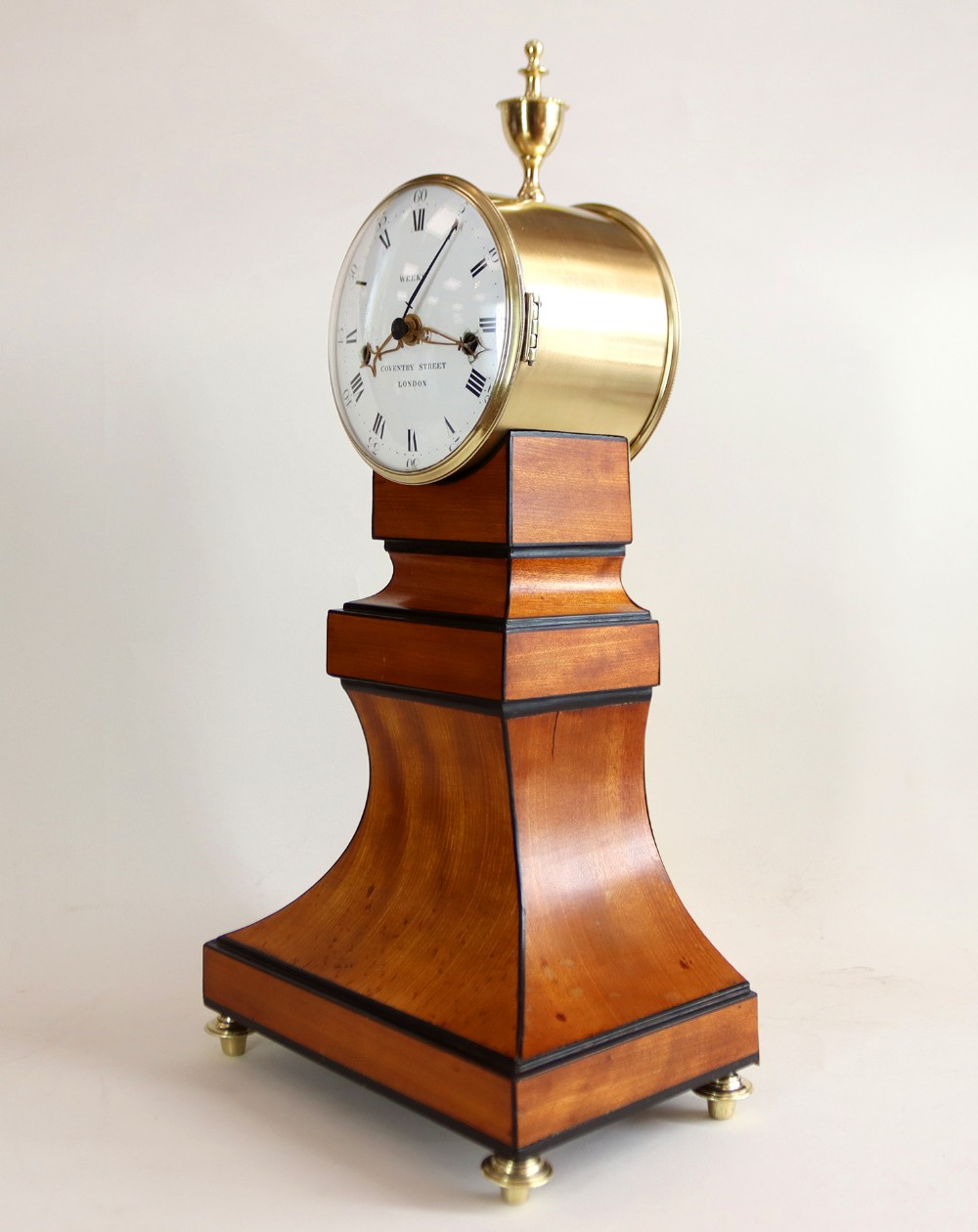
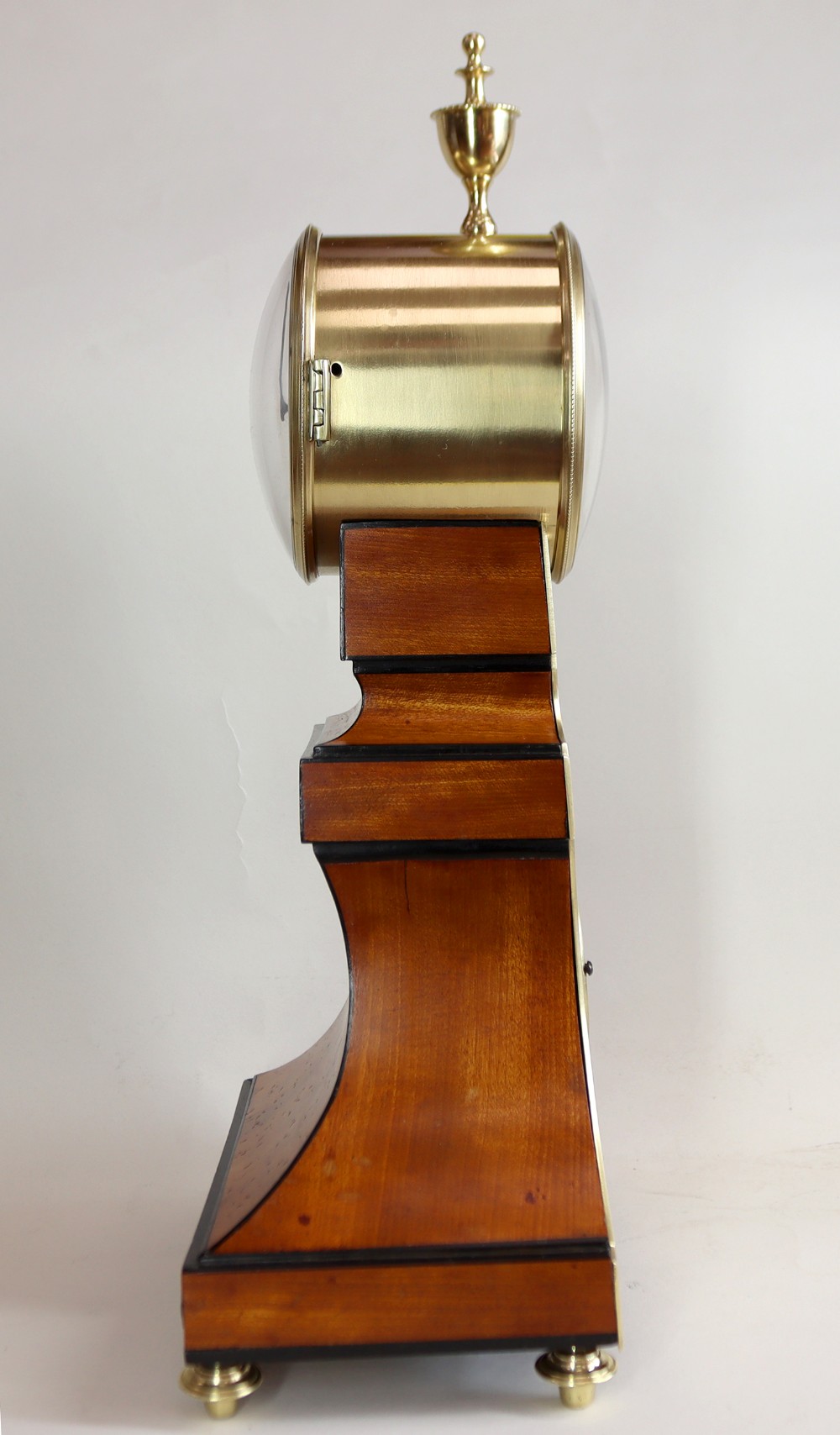
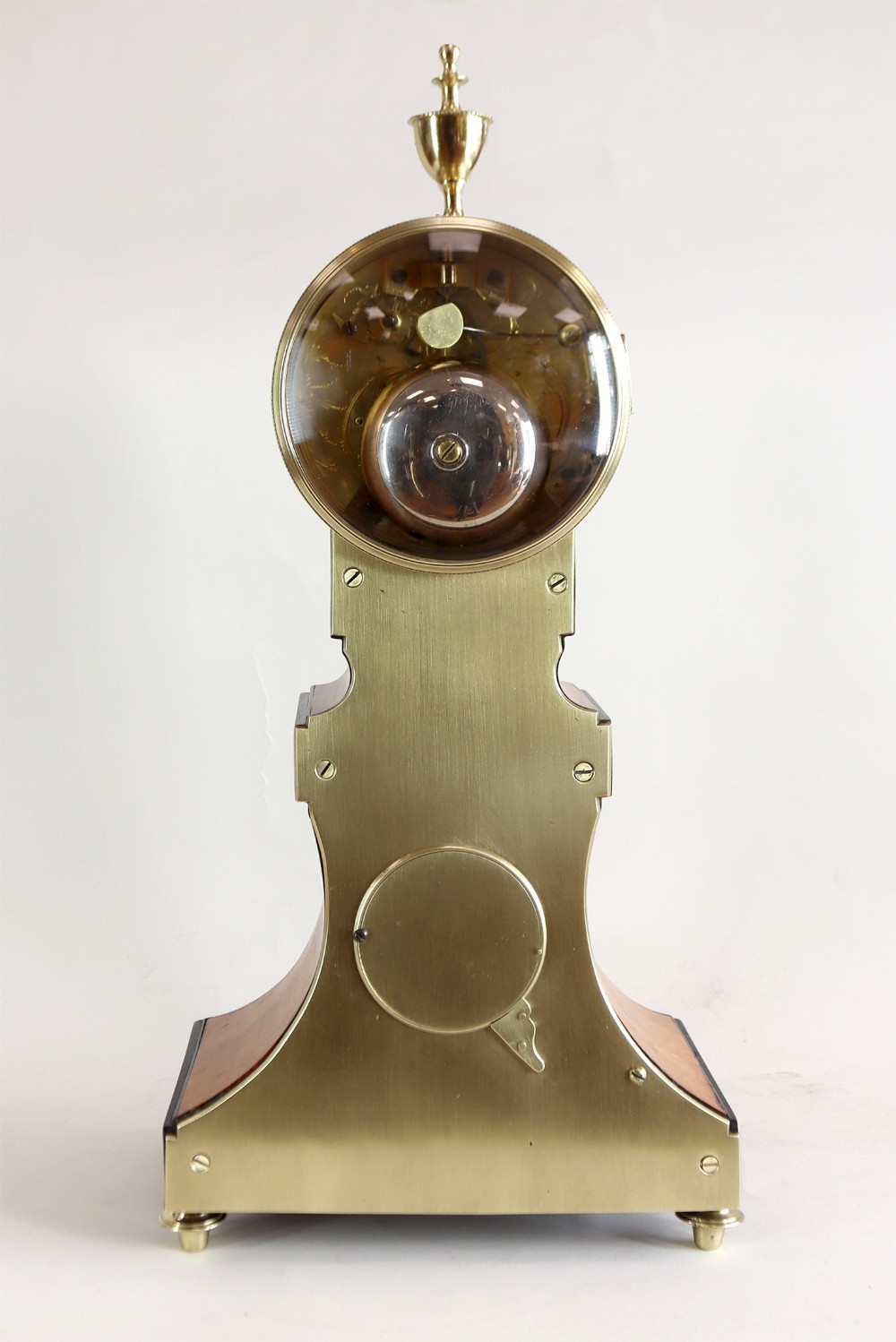
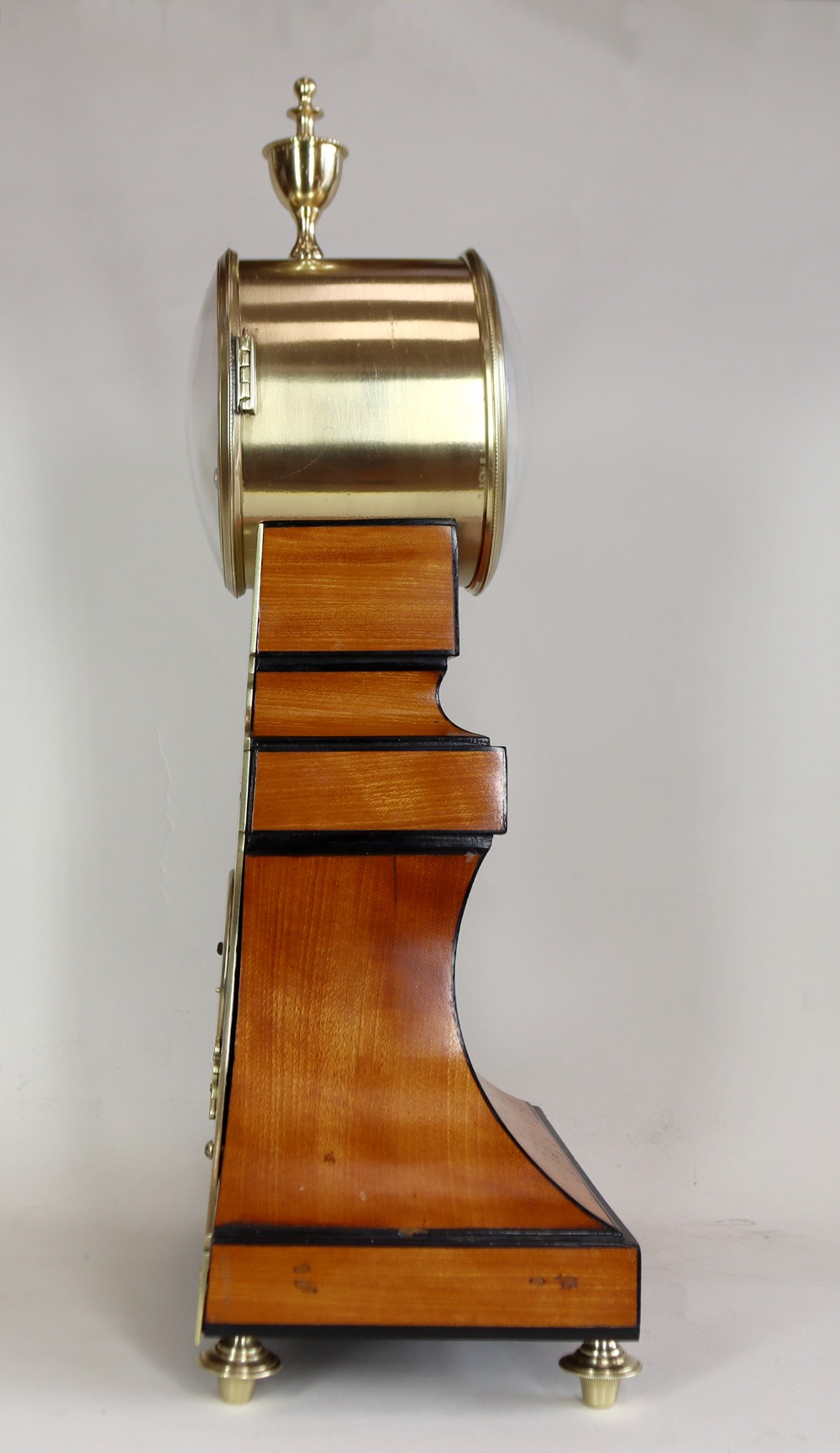
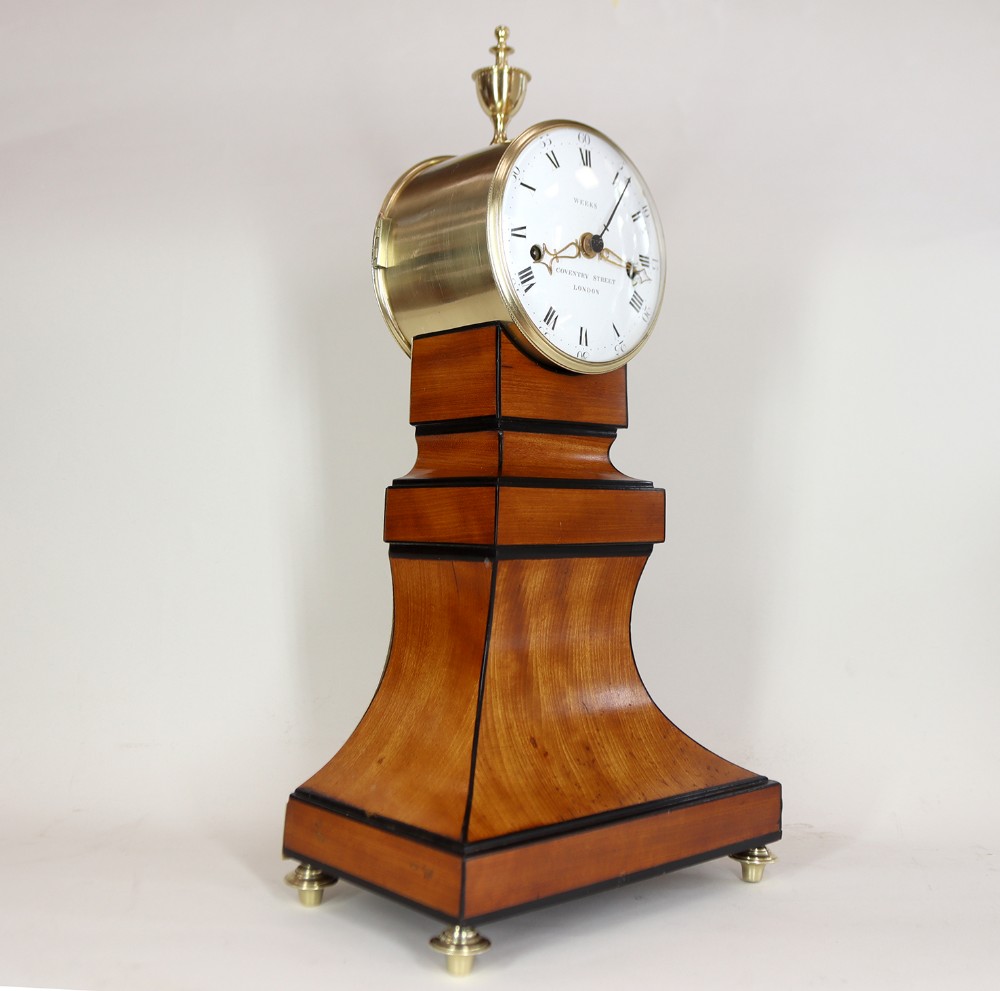
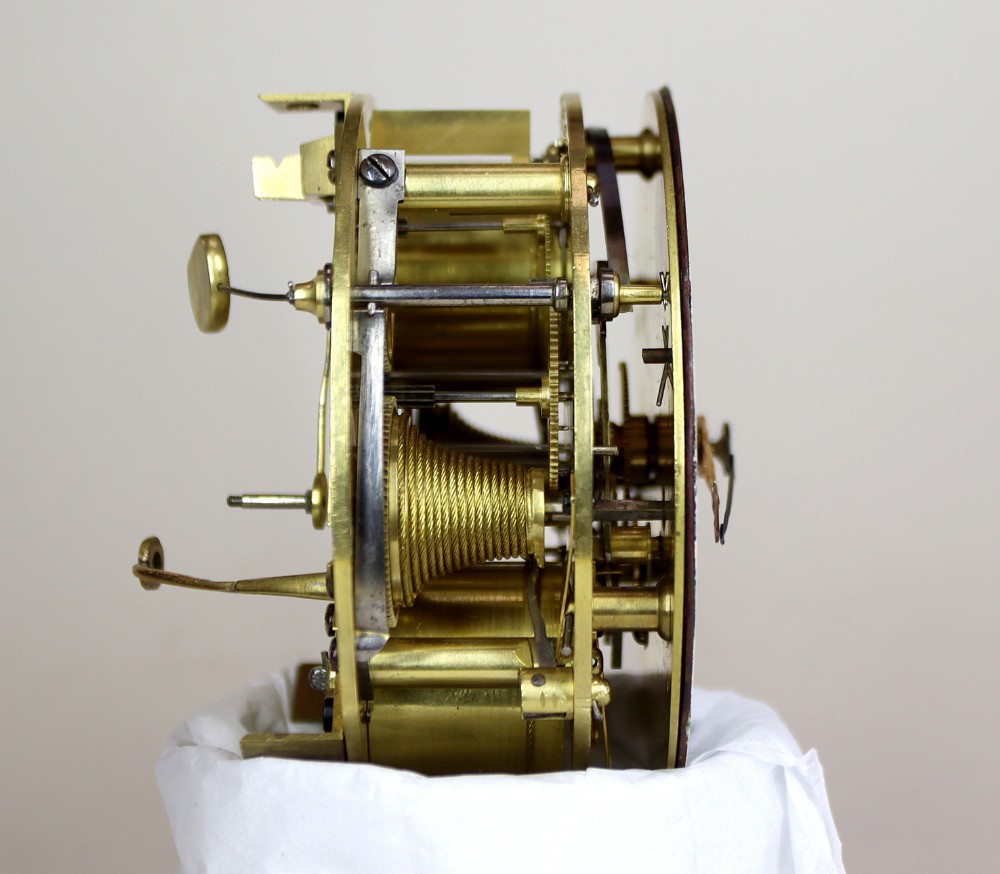
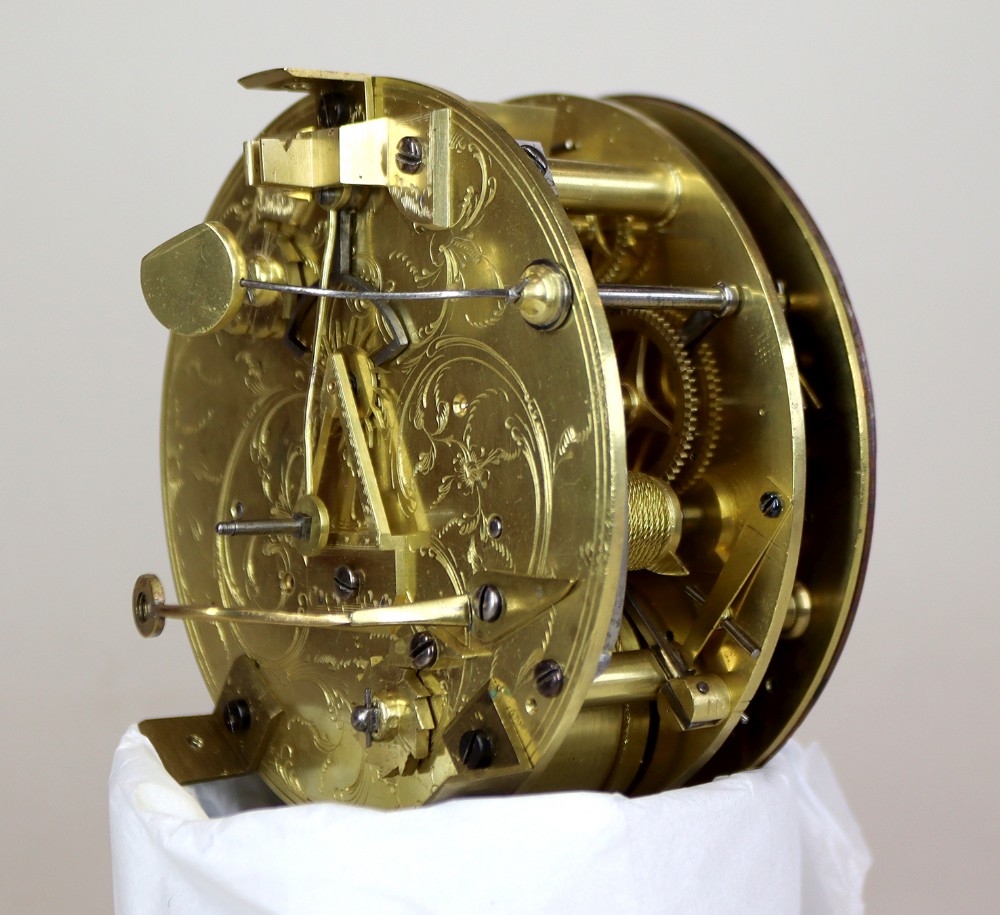
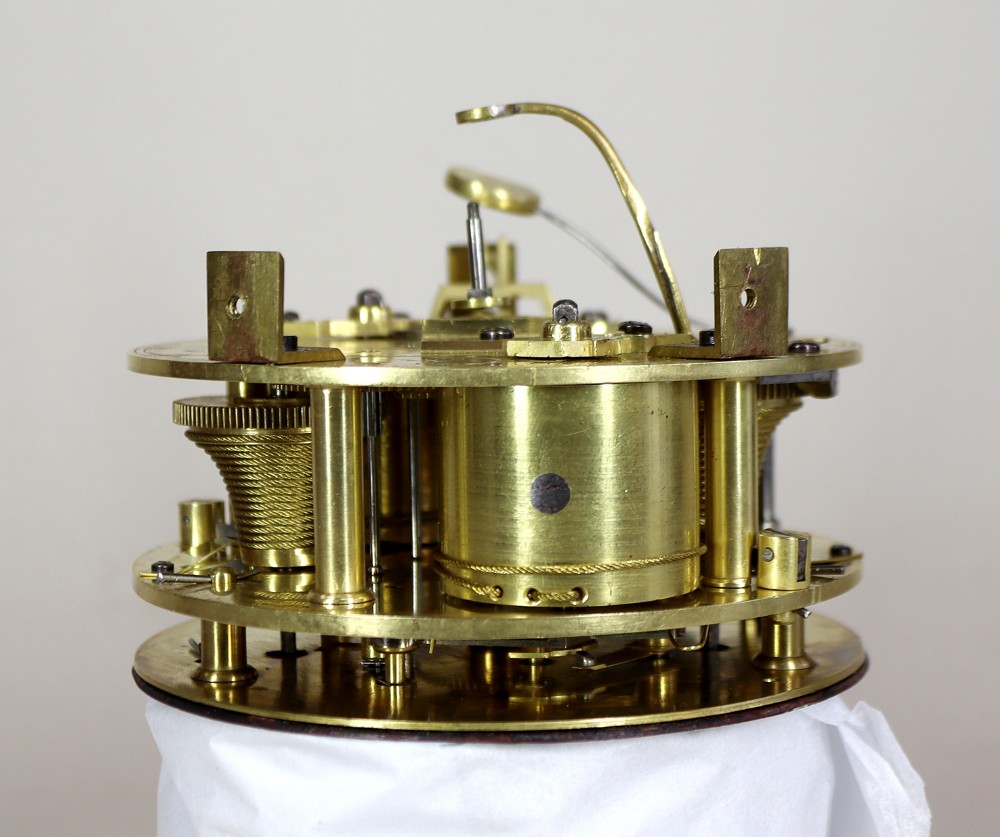
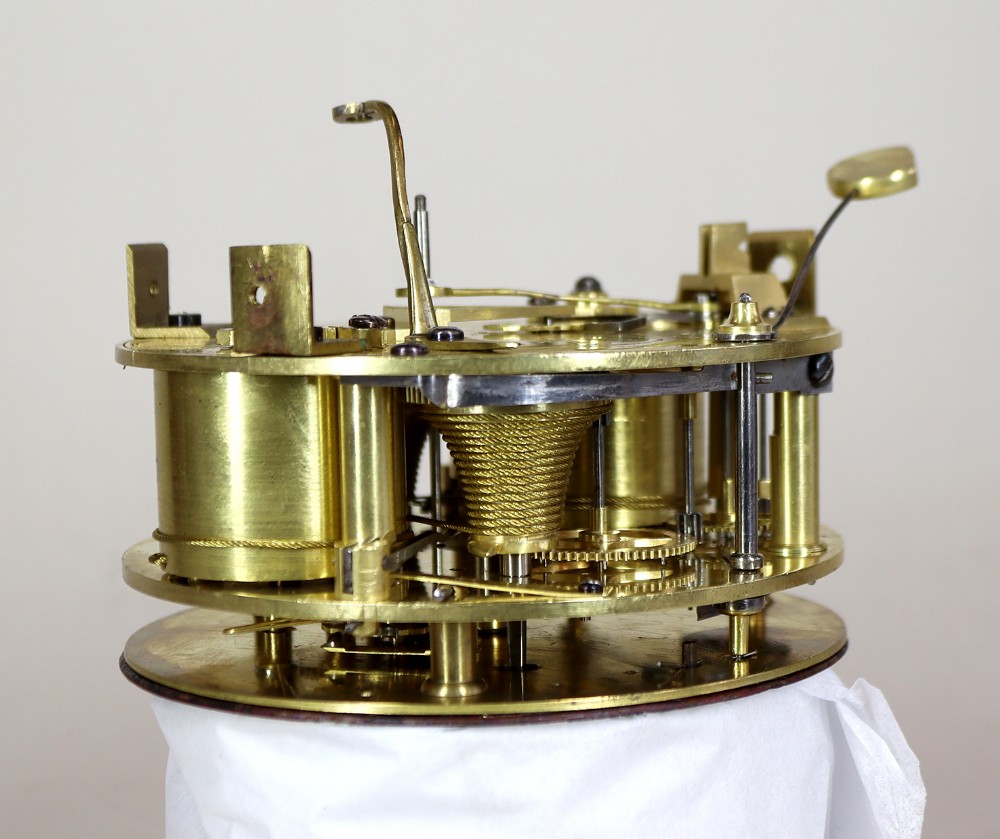
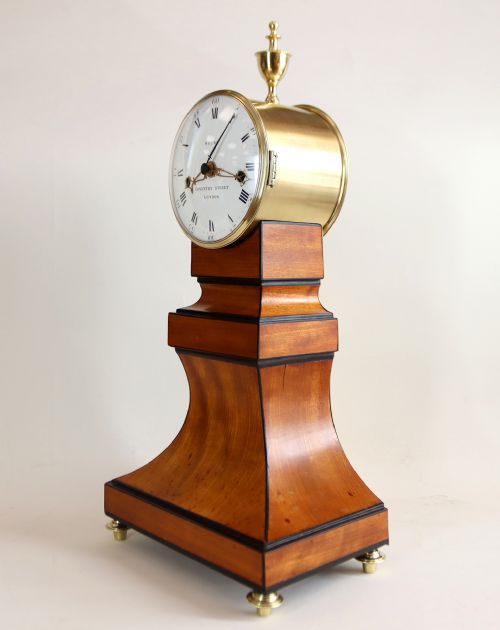
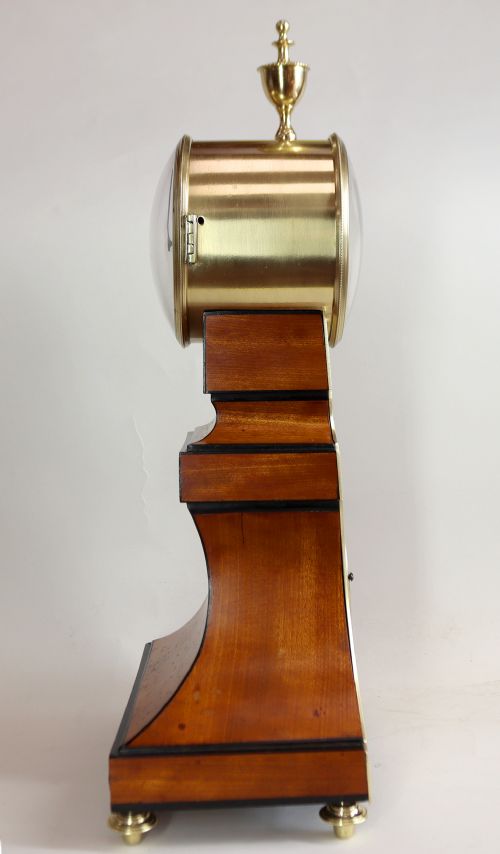
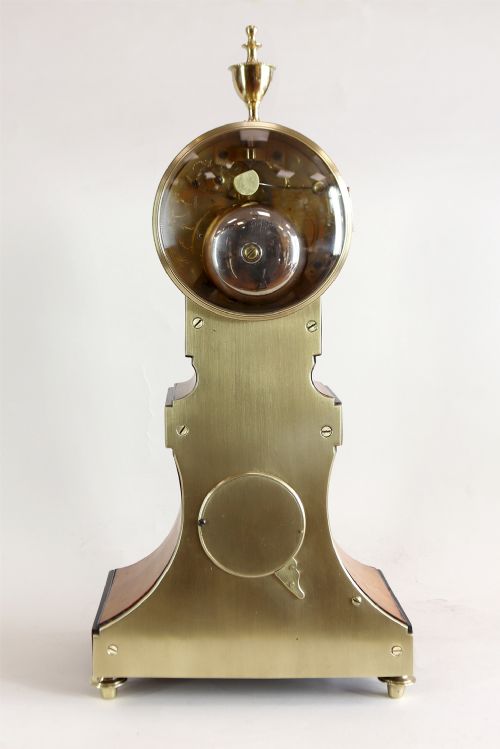
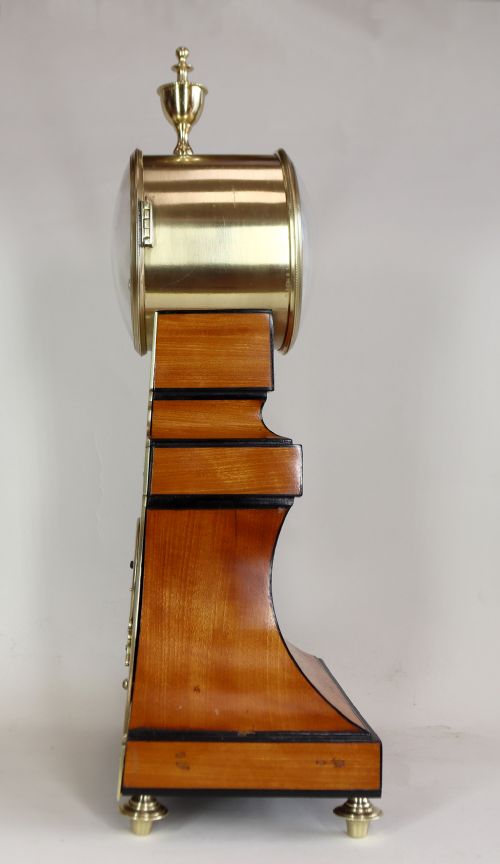
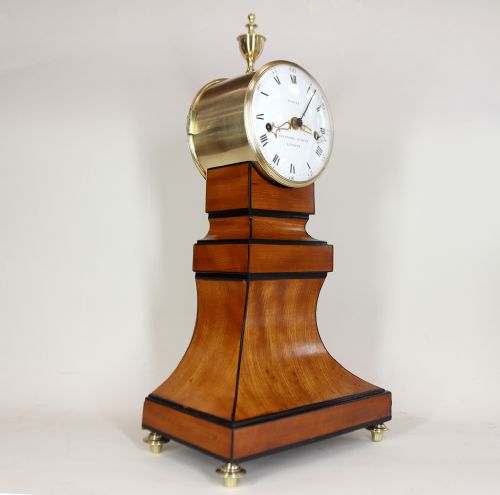
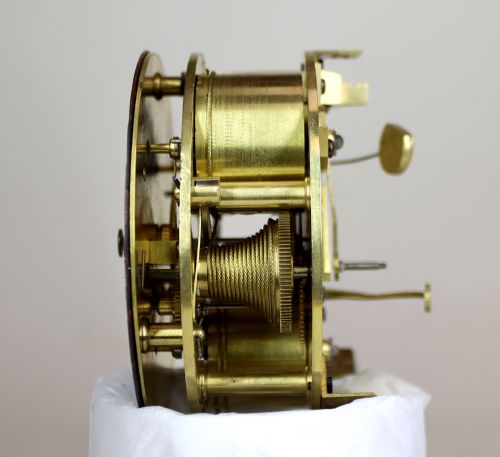
The movement is housed in a polished brass drum with convex glass doors to the front and back of the clock the bezels with millegrain detail to the edges, surmounted by a brass urn finial also with millegrain detail. The white enamel roman dial signed Weeks, Coventry Street London with pierced brass hands and a blued steel centre seconds hand.

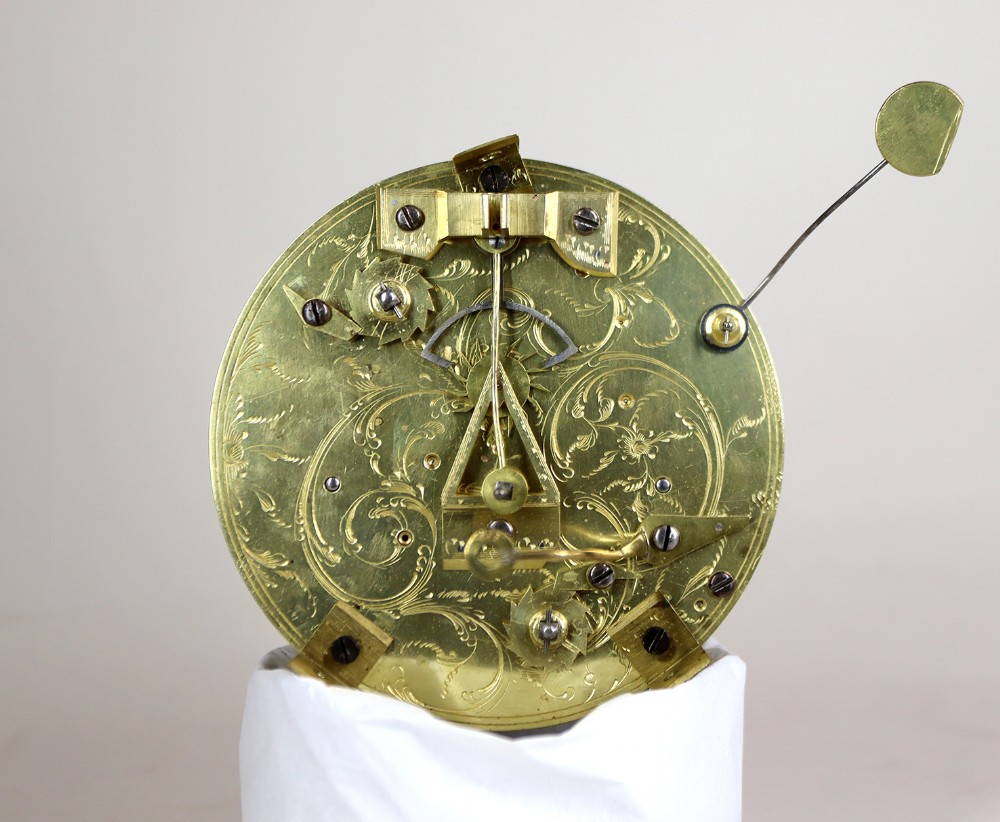
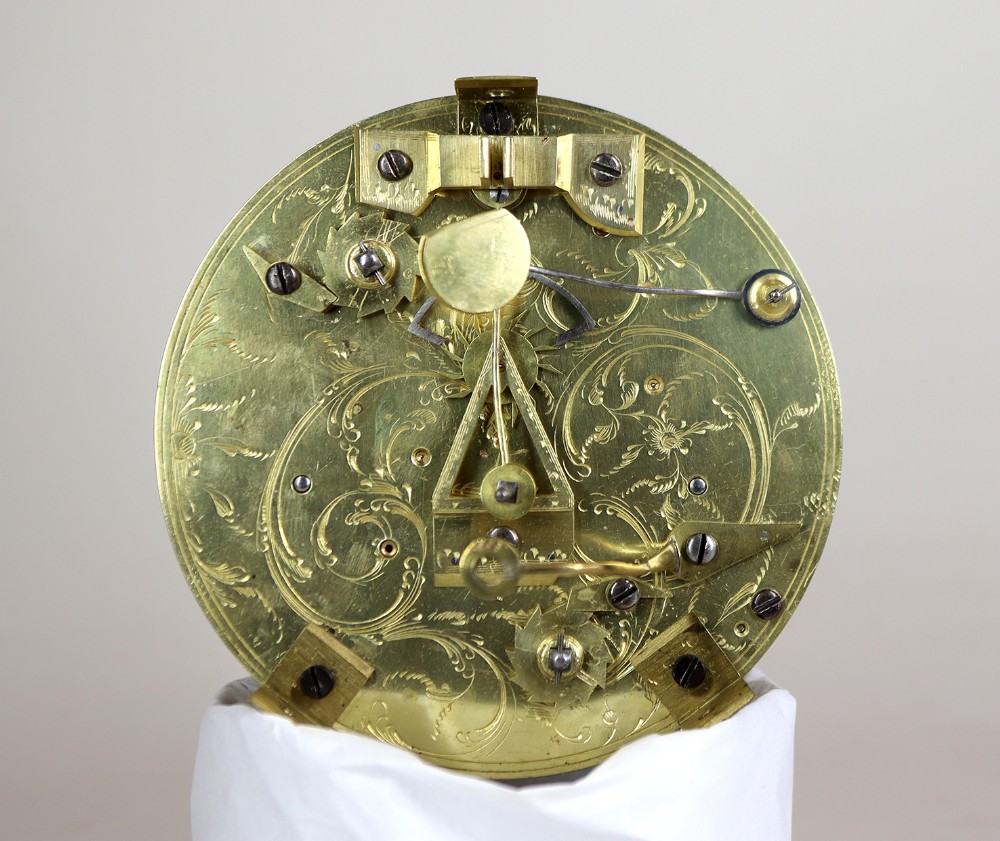
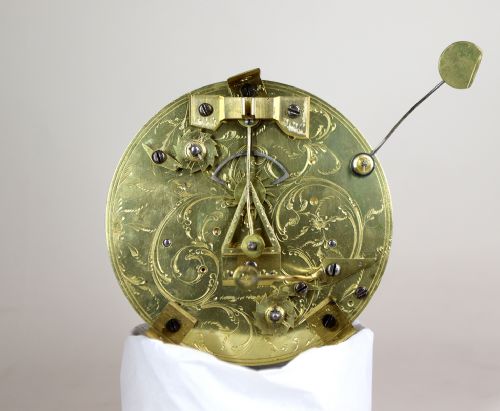
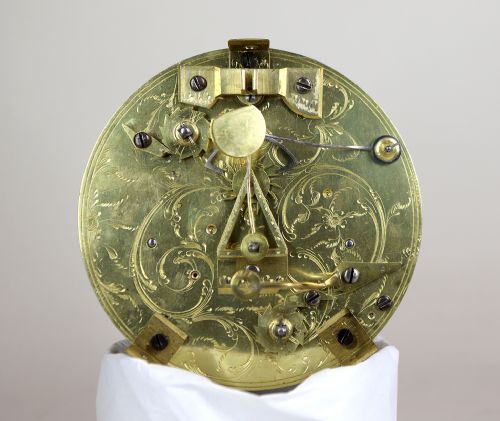
The unusual pendulum is of particular note shaped to swing in the very narrow space afforded by wasted satinwood case, complete with hold fast, the pendulum can be secured in the case by the circular brass hatch on the back of the clock.
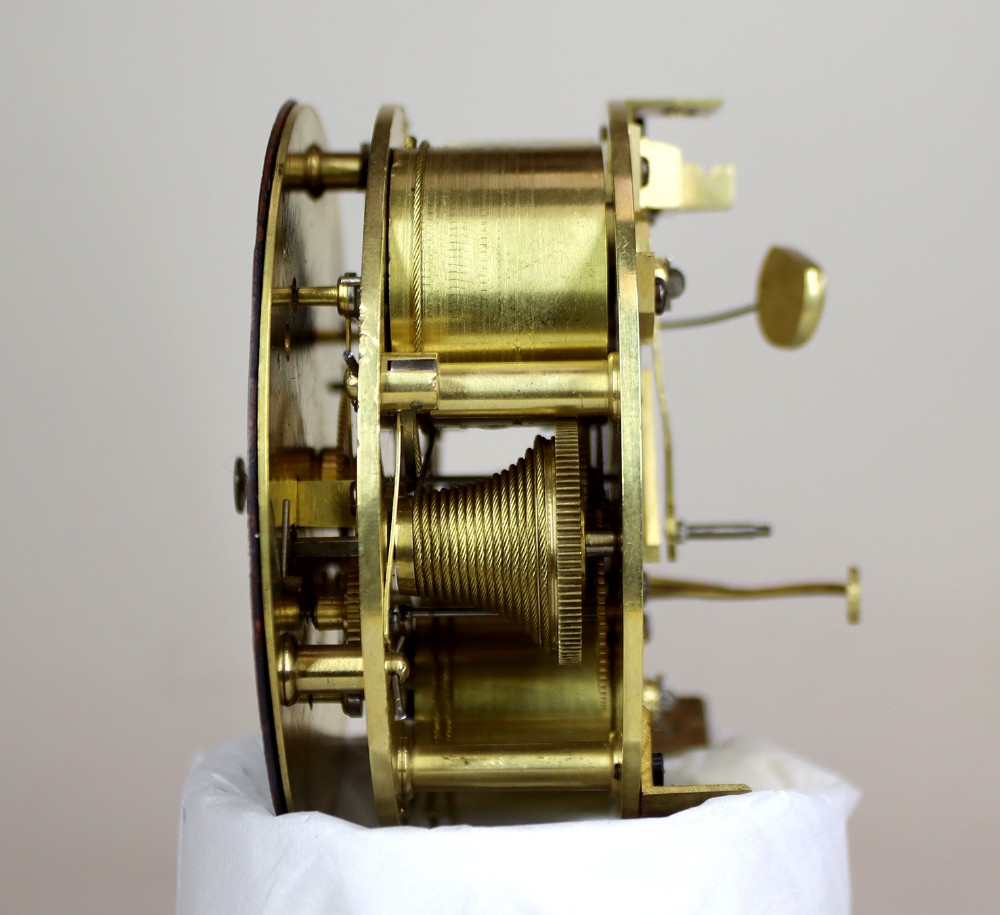
All other examples of this style of clock by Weeks that we know of are single fusee timepieces. The deadbeat escapement allows for the addition of the centre seconds complication, something Weeks may have developed from the work of James Cox for the Chinese market.
This clock was almost certainly commissioned by William Courtenay, 9th Earl of Devon during an extensive refurbishment of Powderham Castle, in preparation for his 21st Birthday in 1789. We recently acquired it from William Courtney’s descendants and it has been at Powderham Castle since it was made in the 18th century.
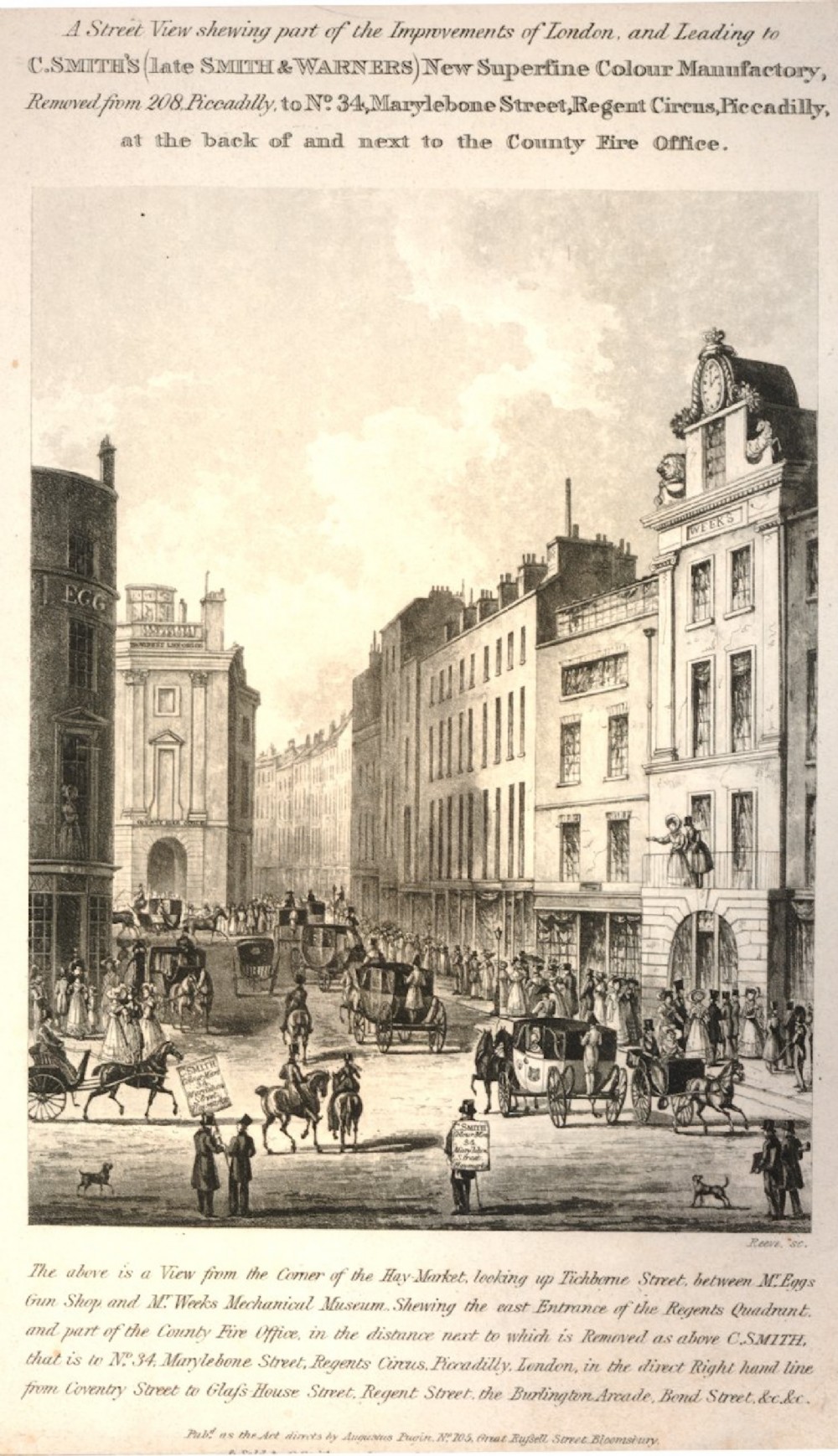
The celebrated Haymarket emporium established by the clockmaker & jeweller Thomas Weeks (1743-1834) was titled 'The Royal Mechanical Museum' from 1788. Weeks followed the fashion established by James Cox (d. 1788) and Henri Maillardet of the Swiss/French company of Jaquet Droz for exhibiting highly ornamental automaton clocks as part of London's great trade attractions.
Derek Roberts (Mystery, Novelty and Fantasy Clocks, Atglen, 1999, p.169) notes that when James Cox disposed of his museum by lottery in 1775 a number of pieces, including an automaton silver swan, now at the Bowes Museum, Barnard Castle, were purchased by Thomas Weeks who subsequently exhibited them in his own museum. According to 'The Picture of London 1802', 'The grand room, which is 107 feet long, and 30 feet high, is covered entirely with blue satin, and contains a variety of figures, which exhibit the effects of mechanism in an astonishing manner.'
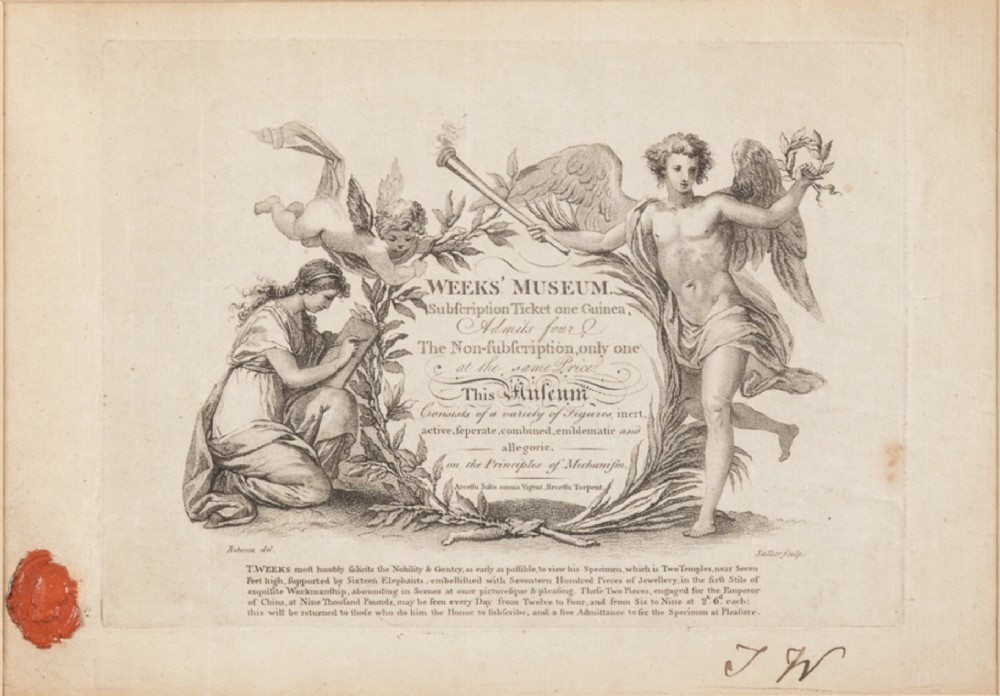
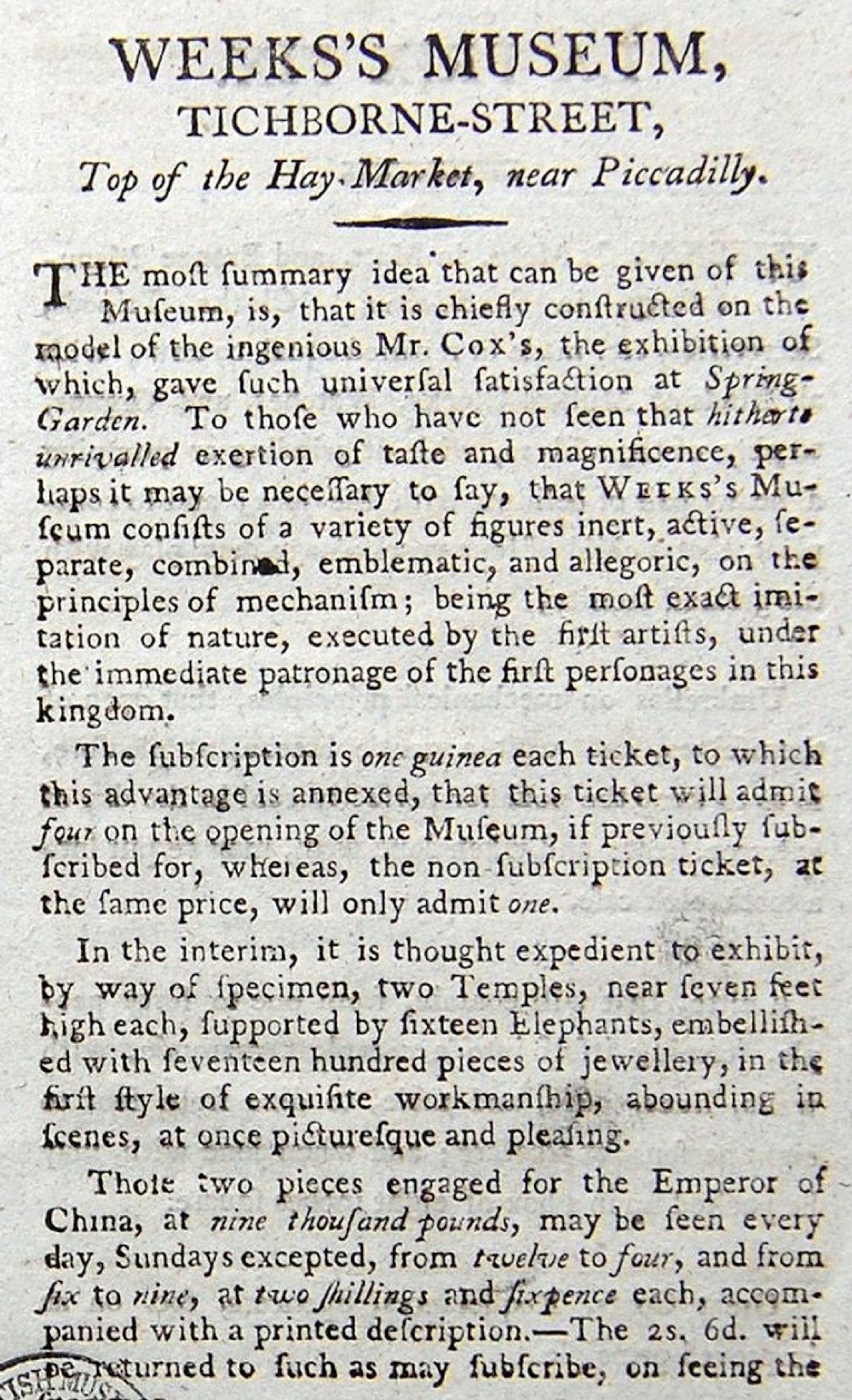
The Weeks museum was in effect a very exclusive showroom, the public were required to subscribe to the museum at exorbitant cost; prior subscription would admit four people at the cost of 1 Guinea or if no prior subscription had been purchased it would cost one guinea on the door (roughly equivalent to £200 in today’s money) The tickets were directed specifically at the upper end of 18th century London society and were printed with the following;
“T.Weeks most humbly felicits the Nobility & Gentry, as early as possible to view his Specimen, which is Two Temples, near seven feet high, supported by Sixteen Elephants, embellished with Seventeen Hundred pieces of jewellery, in the first stile (sic) of exquisite Workmanship, abounding in Scenes at once picturesque and pleasing. These two pieces, engaged for the Emperor of China at Nine Thousand Pounds, may be seen every day from Twelve to Four and from Six to Nine at 2s 6d each.”
Weeks’ museum was a famous attraction in central London and operated as showroom for his and the Late James Cox’s work. Visitors could buy small luxury items like ink stands and telescopic silver toasting forks or commission more elaborate pieces such as secretaire bureaus with barrel organs fitted into the bases or in this case a clock.
William Courtney 9th Earl of Devon, known as Kitty to his friends, was an extravagant entertainer, known for his beauty and his acute artistic sensibility, Courtenay was a notable figure in Regency society.
Chalfont Clocks has dated this Twin Fusee Balloon Clock to the Georgian era.
Specialists in antique clocks and their restoration.
You can view the stock and full dealer information on the Chalfont Clocks Profile Page
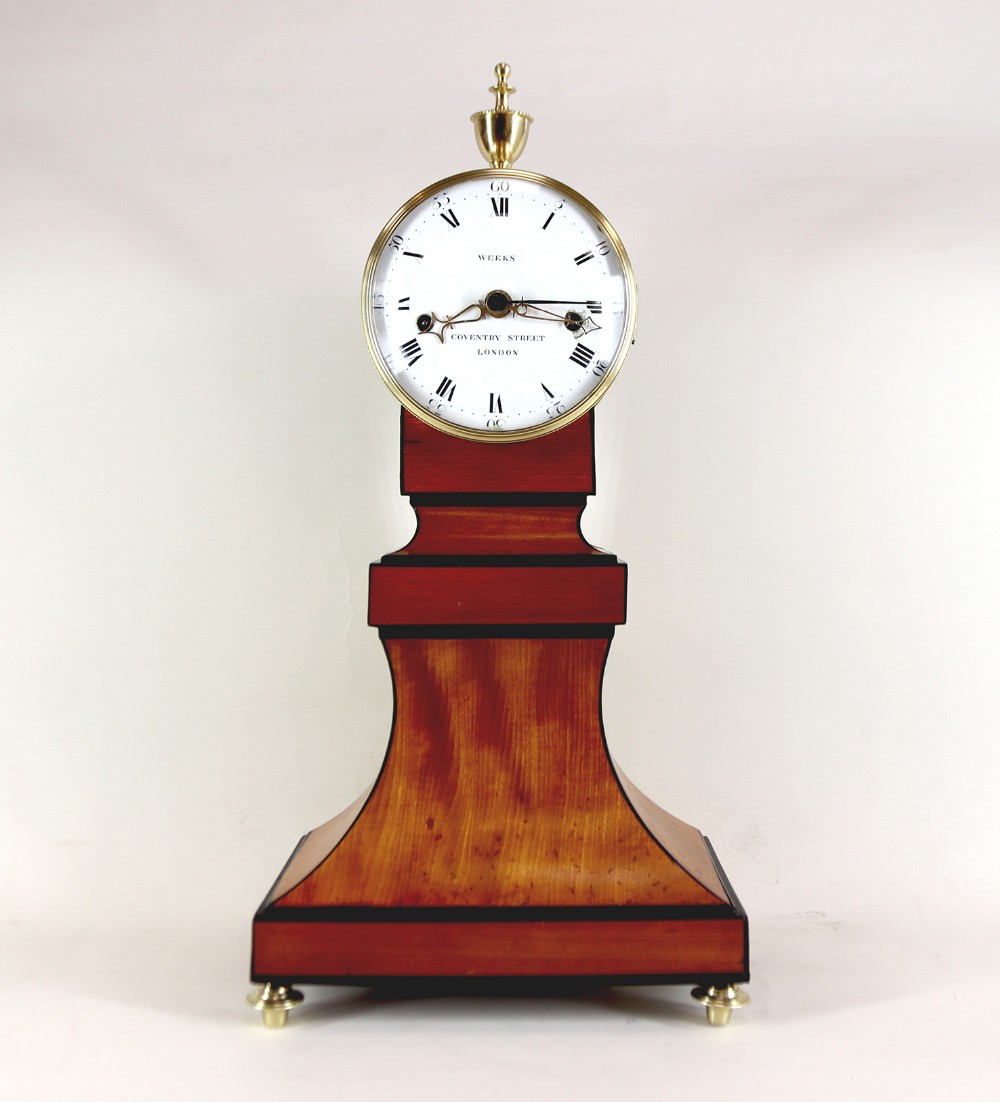
A Rare Thomas Weeks Twin Fusee Striking Balloon Clock with Exceptional Provenance.