28,330  PAGES BROWSED TODAY PAGES TODAY • 105 ANTIQUES UPLOADED TODAYNEW ARRIVALS
GIFTS
105 ITEMS ADDED TODAY
Sort Order
Items Per Page
Antiques dealer?
Join as a Seller
Browse Categories
Sort order
Relevant Links
Items per page
sold SA1121331
Sorry, but this item has been sold.
Regent Antiques

Regent Antiques

Sellingantiques Verified Since Sep 2016
Browse dealers 639 items
  • About Us
    We specialise in english and continental furniture, silver, porcelain and decorative items.
  • Trade Associations
    Regent Antiques is a registered member of LAPADA  CINOA
Id #SA1121331
SHARE
SAVE

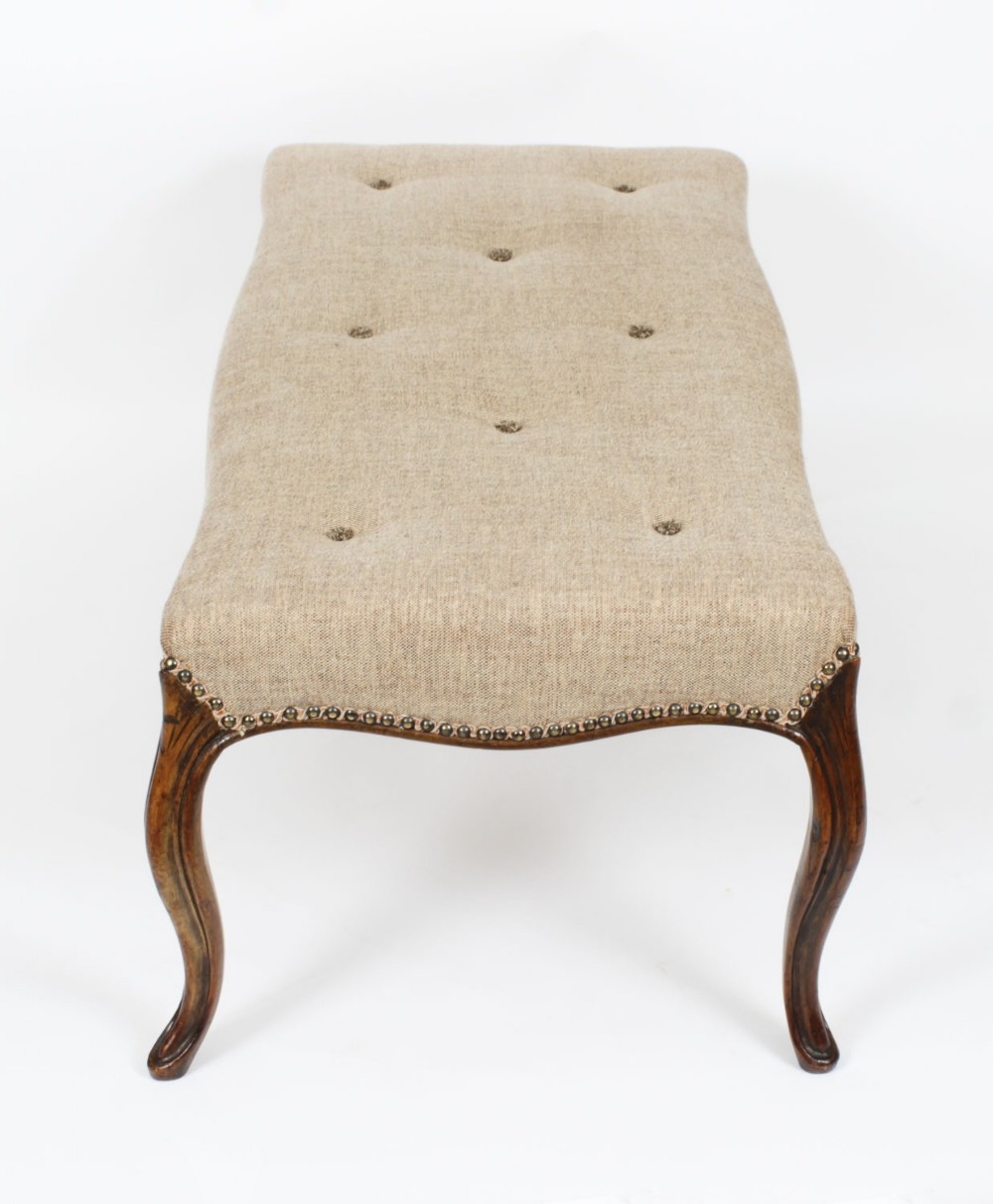
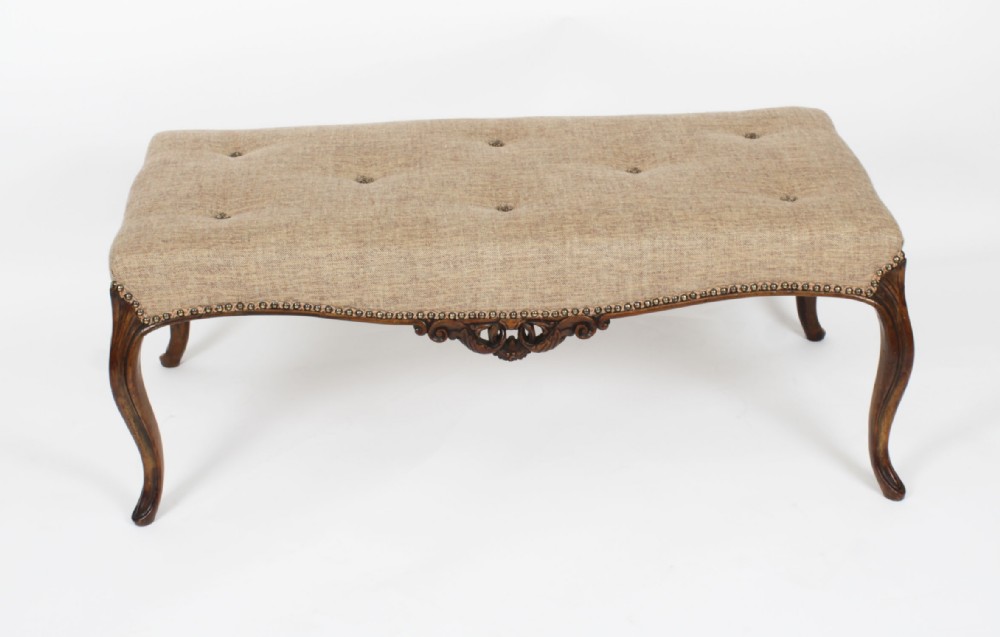
Antique French Walnut Stool 19th Century

19th century
Sold 31 January 2025 · Regent Antiques
This “Antique French Walnut Stool 19th Century” found a buyer.

It was listed by Regent Antiques. Sold pieces stay on Sellingantiques as a record of what has passed through, and the next one is rarely far away.

Description

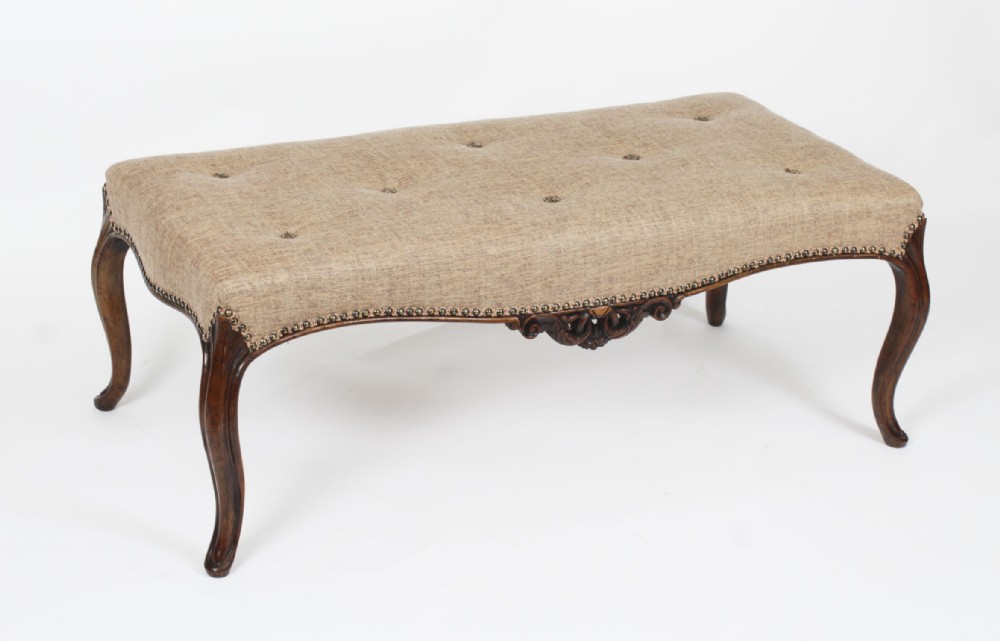
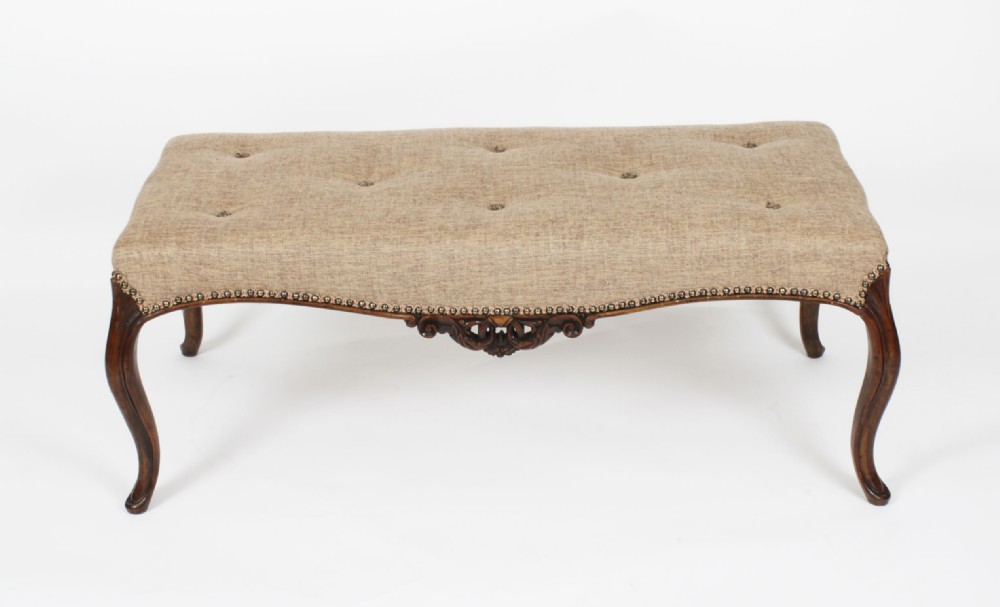
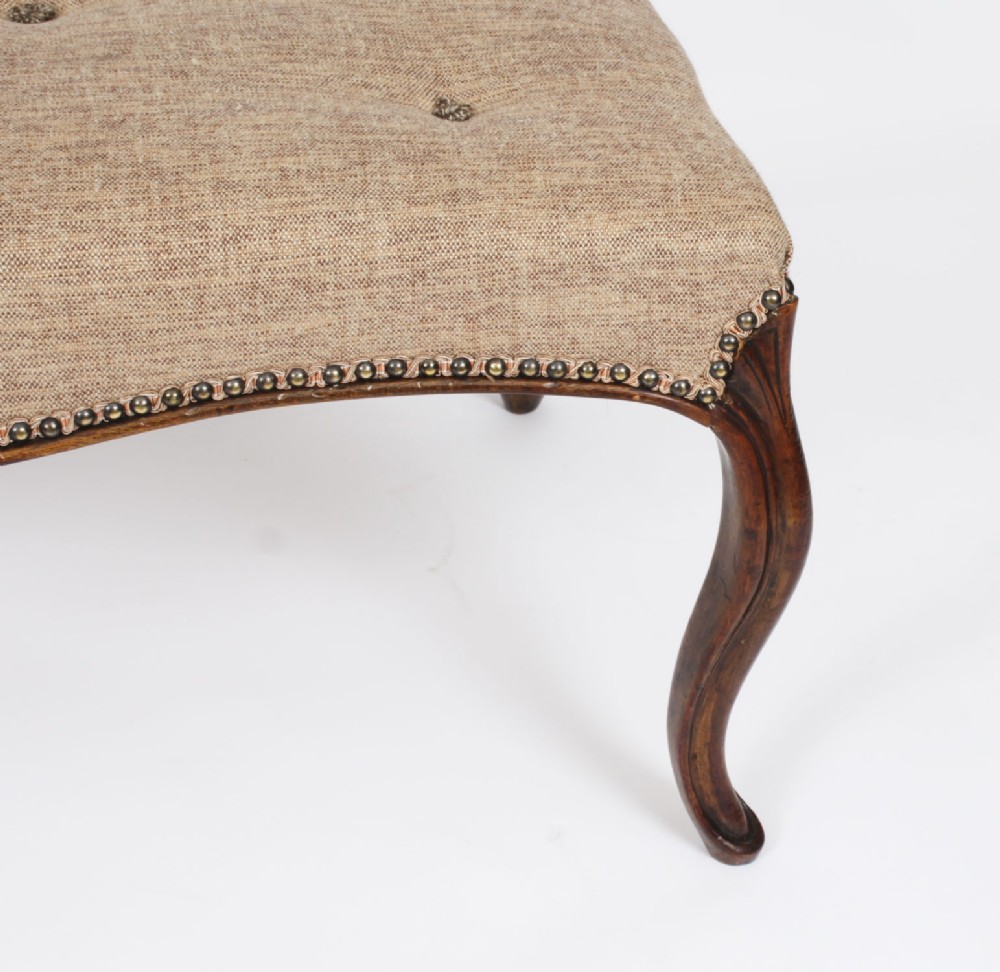
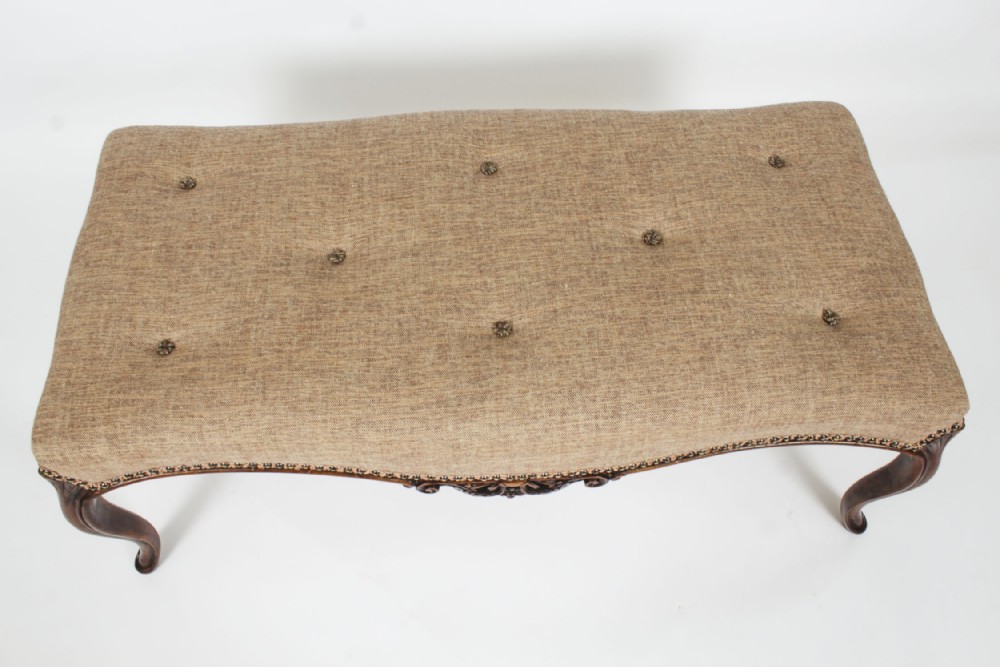
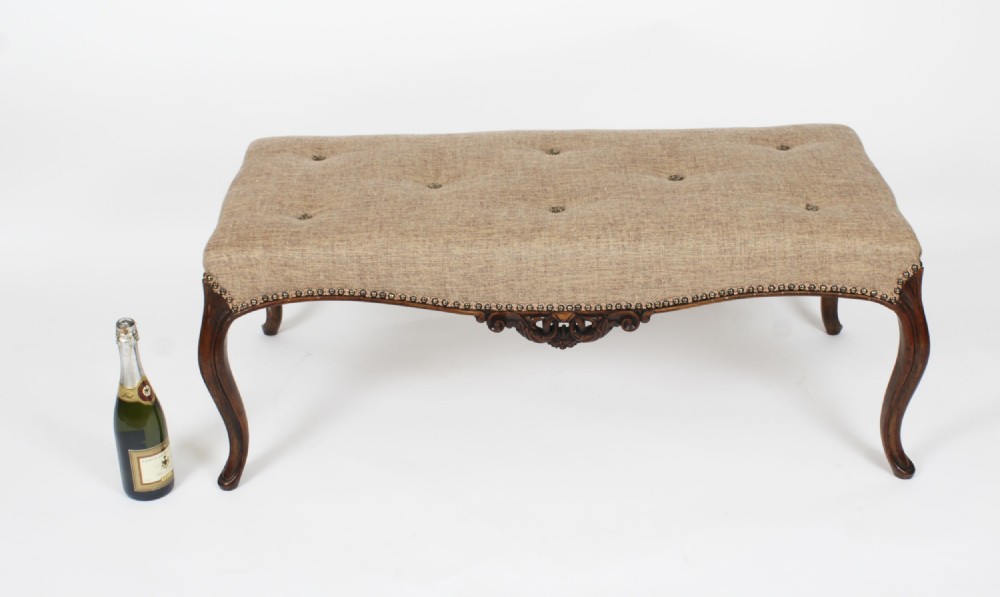
This is a very handsome antique French walnut window seat / ottoman, Circa 1890 in date.

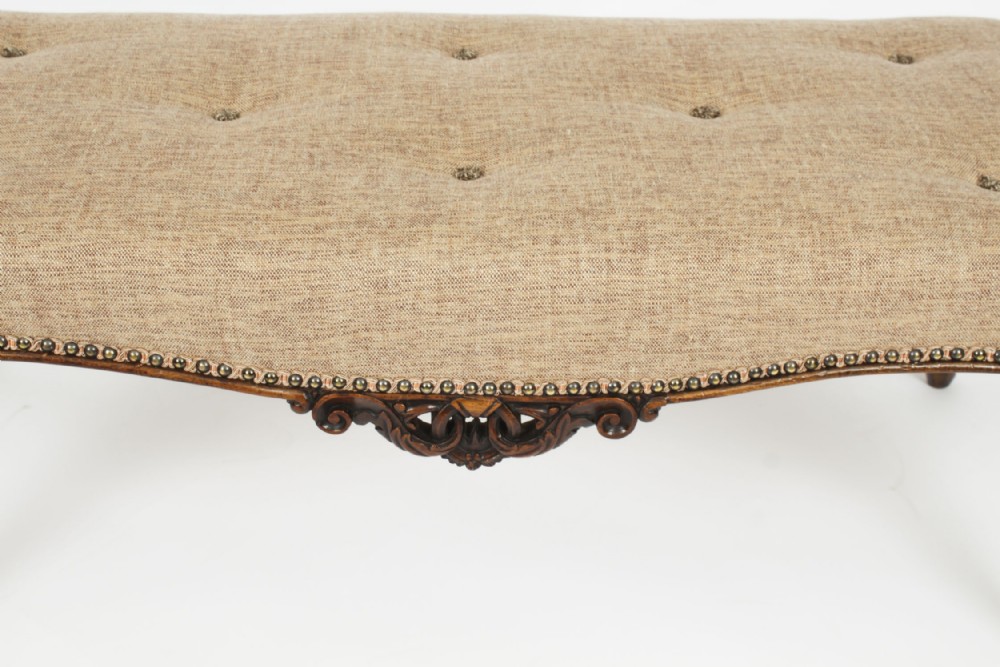
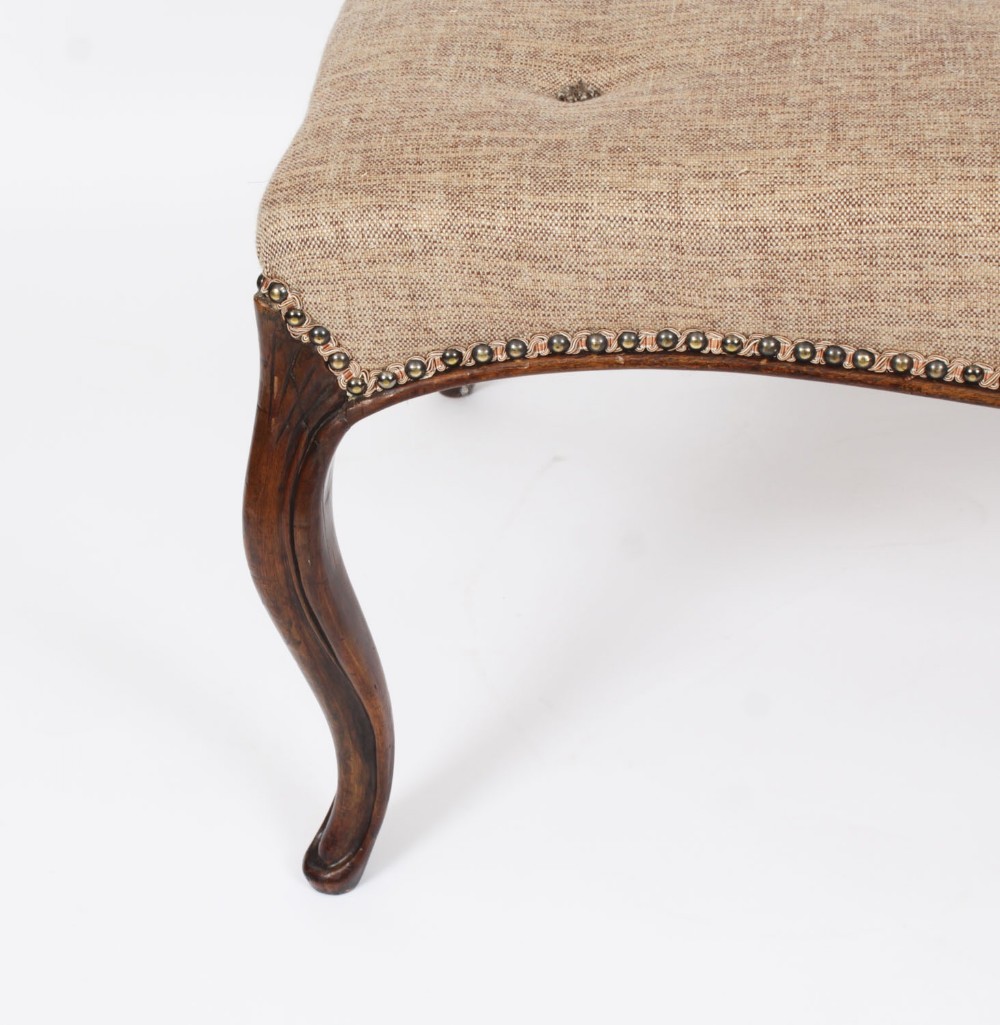
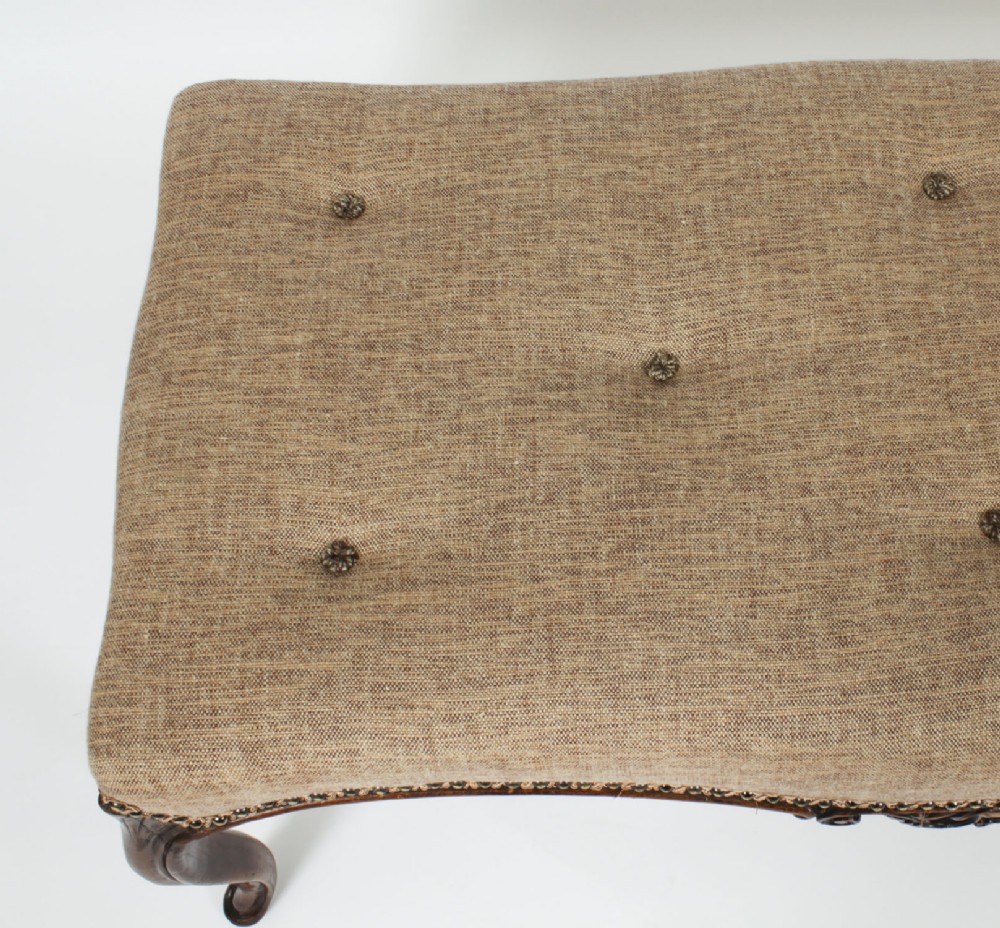
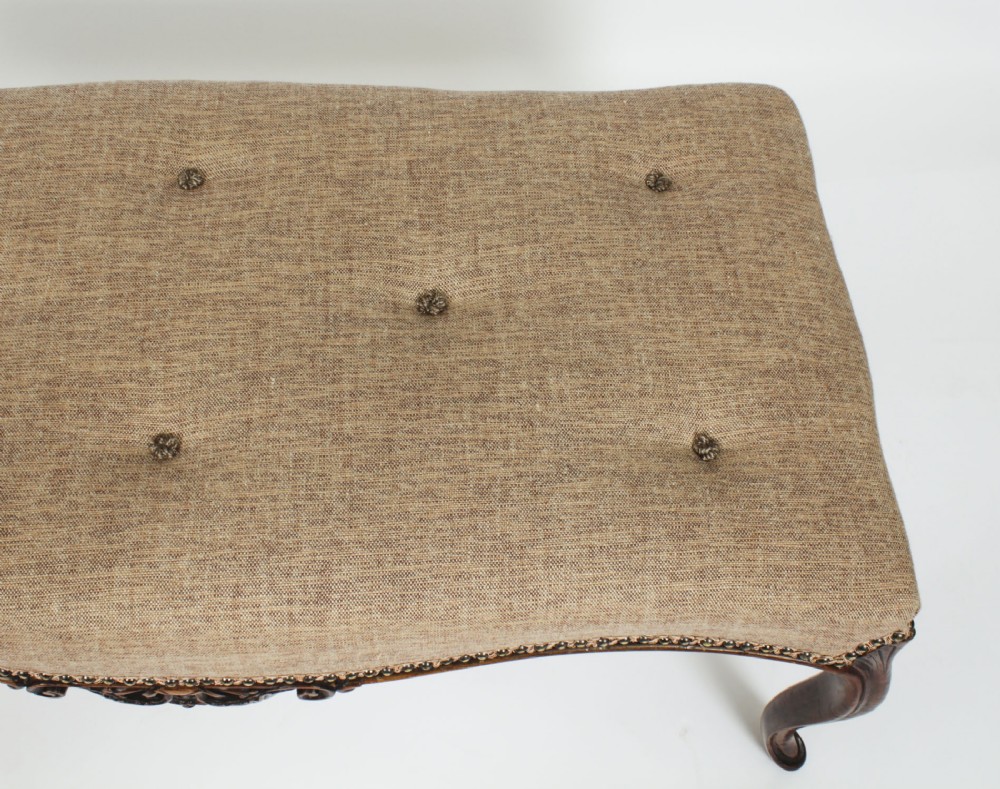
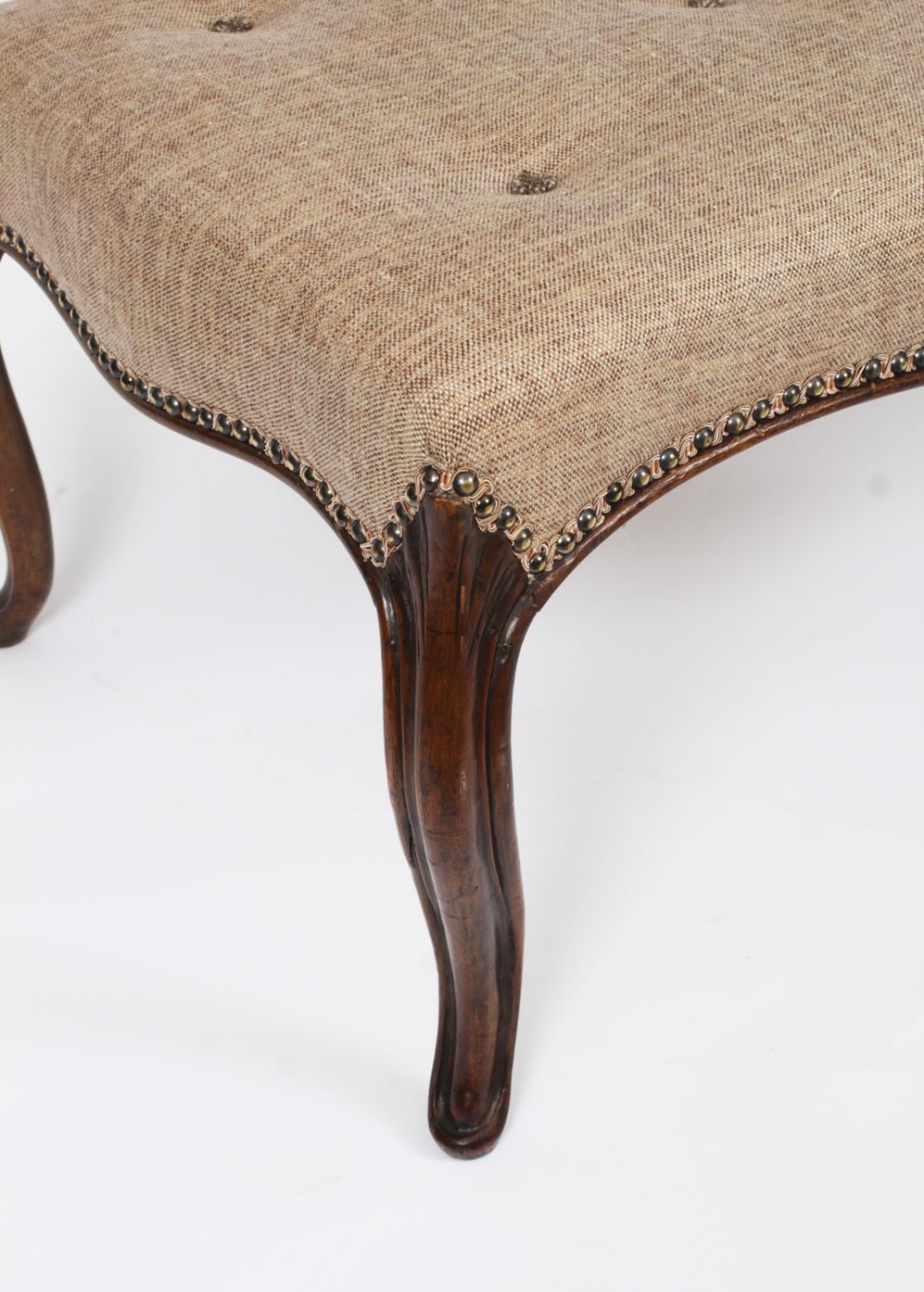
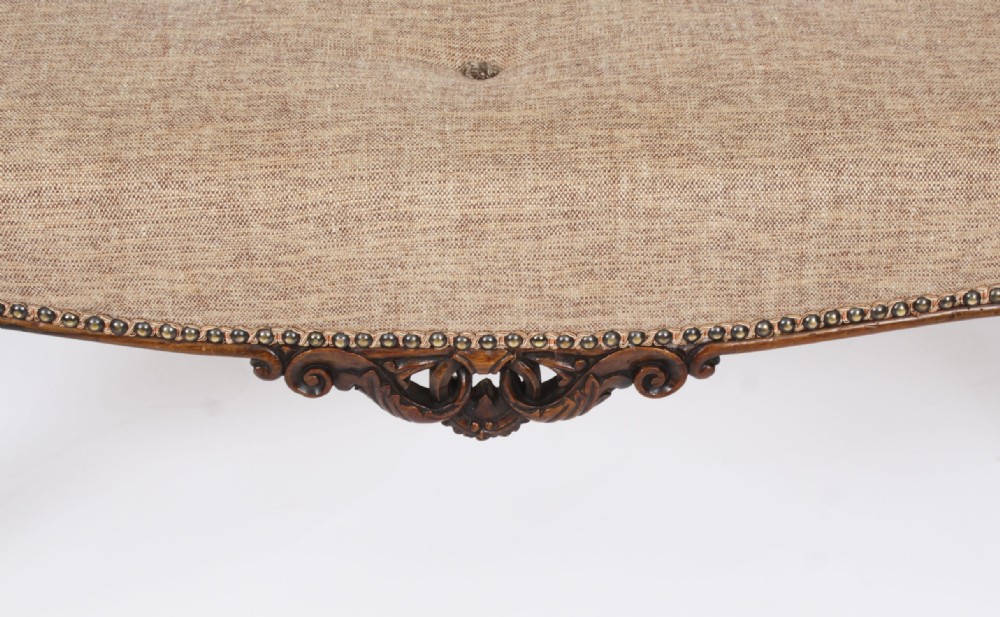
It is upholstered in close-nailed and buttoned pink and brown tweed, the serpentine seat rail is centred by a pierced C scroll apron, and it is raised on elegant cabriole legs

Condition:

In excellent condition having been reupholstered in our workshops, please see photos for confirmation.

Dimensions in cm:

Height 44 cm x Width 117 cm x Depth 57 cm

Dimensions in inches:

Height 1 foot, 5 inches x Width 3 foot, 10 inches x Depth 1 foot, 10 inches

Walnut & Burr Walnut

Walnut is a hard, dense, tight- grained wood that polishes to a very smooth finish. It is a popular and attractive wood whose colour ranges from near white in the sapwood to a dark hew in the heartwood. When dried in a kiln, walnut wood tends to develop a dull brown colour, but when air-dried can become a rich purplish-brown. Because of its colour, hardness and grain, it is a prized furniture and carving wood. Walnut veneer was highly priced and the cost would reflect the ‘fanciness’ of the veneer – the more decorative, then the more expensive and desirable.

Burr walnut refers to the swirling figure present in nearly all walnut when cut and polished, and especially in the wood taken from the base of the tree where it joins the roots. However the true burr is a rare growth on the tree where hundreds of tiny branches have started to grow. Burr walnut produces some of the most complex and beautiful figuring you can find.

Ottoman 

is a piece of furniture consisting of a padded, upholstered seat or bench, usually having neither a back nor arms, often used as a stool or footstool Ottomans are often sold as coordinating furniture with armchairs or gliders.

The first known use of the word ottoman was in 1605. The ottoman was brought to Europe from Turkey in the late 18th century. In Turkey, an ottoman was the central piece of family seating, and was piled with cushions. 

In Europe, the ottoman was first designed as a piece of fitted furniture that wrapped around three walls of a room. The ottoman evolved into a smaller version that fit into the corner of a room.

Ottomans took on a circular or octagonal shape through the 19th century, with seating divided in the center by arms or a central, padded column that might hold a plant or statue. 

George Bernard Shaw referred to an ottoman in this passage from his novel Pygmalion; "In the middle of the room there is a big ottoman; and this, with the carpet, the Morris wall-papers, and the Morris chintz window curtains and brocade covers of the ottoman and its cushions, supply all the ornament, and are much too handsome to be hidden by odds and ends of useless things."

Our reference: A4293

Date of Manufacture

Regent Antiques has dated this Antique Walnut Stool to the 1890s.

Physical Dimensions
Height
44cm (17.32")
Width
117cm (46.06")
Depth
57cm (22.44")
Reference Numbers
Sellingantiques Reference
SA1121331
Dealers Internal Reference
A4293
An antique walnut stool featuring a button-tufted upholstered top, cabriole legs, and carved apron detailing with nailhead trim.Detail view 1Detail view 2Detail view 3Detail view 4Detail view 5Detail view 6Detail view 7Detail view 8Detail view 9Detail view 10Detail view 11Detail view 12
SOLD6+ MONTHS AGO
1 / 13
1890s · SA1121331
Antique French Walnut Stool 19th Century
Sorry, but this item has been sold.
Description
This is a very handsome antique French walnut window seat / ottoman, Circa 1890 in date.

It is upholstered in close-nailed and buttoned pink and brown tweed, the serpentine seat rail is centred by a pierced C scroll apron, and it is raised on elegant cabriole legs

Condition:

In excellent condition having been reupholstered in our workshops, please see photos for confirmation.

Dimensions in cm:

Height 44 cm x Width 117 cm x Depth 57 cm

Dimensions in inches:

Height 1 foot, 5 inches x Width 3 foot, 10 inches x Depth 1 foot, 10 inches

Walnut & Burr Walnut

Walnut is a hard, dense, tight- grained wood that polishes to a very smooth finish. It is a popular and attractive wood whose colour ranges from near white in the sapwood to a dark hew in the heartwood. When dried in a kiln, walnut wood tends to develop a dull brown colour, but when air-dried can become a rich purplish-brown. Because of its colour, hardness and grain, it is a prized furniture and carving wood. Walnut veneer was highly priced and the cost would reflect the ‘fanciness’ of the veneer – the more decorative, then the more expensive and desirable.

Burr walnut refers to the swirling figure present in nearly all walnut when cut and polished, and especially in the wood taken from the base of the tree where it joins the roots. However the true burr is a rare growth on the tree where hundreds of tiny branches have started to grow. Burr walnut produces some of the most complex and beautiful figuring you can find.

Ottoman 

is a piece of furniture consisting of a padded, upholstered seat or bench, usually having neither a back nor arms, often used as a stool or footstool Ottomans are often sold as coordinating furniture with armchairs or gliders.

The first known use of the word ottoman was in 1605. The ottoman was brought to Europe from Turkey in the late 18th century. In Turkey, an ottoman was the central piece of family seating, and was piled with cushions. 

In Europe, the ottoman was first designed as a piece of fitted furniture that wrapped around three walls of a room. The ottoman evolved into a smaller version that fit into the corner of a room.

Ottomans took on a circular or octagonal shape through the 19th century, with seating divided in the center by arms or a central, padded column that might hold a plant or statue. 

George Bernard Shaw referred to an ottoman in this passage from his novel Pygmalion; "In the middle of the room there is a big ottoman; and this, with the carpet, the Morris wall-papers, and the Morris chintz window curtains and brocade covers of the ottoman and its cushions, supply all the ornament, and are much too handsome to be hidden by odds and ends of useless things."

Our reference: A4293
Date1890s
Height44cm (17.32")
Width117cm (46.06")
Depth57cm (22.44")
ReferenceSA1121331
Dealer's referenceA4293
Regent Antiques
Regent AntiquesSellingantiques verified since Sep 2016

We specialise in english and continental furniture, silver, porcelain and decorative items.

Member of LAPADA CINOA

SHARE
SAVE
Archive I An antique walnut stool featuring a button-tufted upholstered top, cabriole legs, and carved apron detailing with nailhead trim. SOLD6+ MONTHS AGO

Antique French Walnut Stool 19th Century

Archive II An antique walnut stool featuring a button-tufted upholstered top, cabriole legs, and carved apron detailing with nailhead trim. View II
Archive III An antique walnut stool featuring a button-tufted upholstered top, cabriole legs, and carved apron detailing with nailhead trim. View III
Archive IV An antique walnut stool featuring a button-tufted upholstered top, cabriole legs, and carved apron detailing with nailhead trim. View IV
Archive V An antique walnut stool featuring a button-tufted upholstered top, cabriole legs, and carved apron detailing with nailhead trim. View V
Archive VI An antique walnut stool featuring a button-tufted upholstered top, cabriole legs, and carved apron detailing with nailhead trim. View VI
Archive VII An antique walnut stool featuring a button-tufted upholstered top, cabriole legs, and carved apron detailing with nailhead trim. View VII
Archive VIII An antique walnut stool featuring a button-tufted upholstered top, cabriole legs, and carved apron detailing with nailhead trim. View VIII
Archive IX An antique walnut stool featuring a button-tufted upholstered top, cabriole legs, and carved apron detailing with nailhead trim. View IX
Archive X An antique walnut stool featuring a button-tufted upholstered top, cabriole legs, and carved apron detailing with nailhead trim. View X
Archive XI An antique walnut stool featuring a button-tufted upholstered top, cabriole legs, and carved apron detailing with nailhead trim. View XI
Archive XII An antique walnut stool featuring a button-tufted upholstered top, cabriole legs, and carved apron detailing with nailhead trim. View XII
Archive XIII An antique walnut stool featuring a button-tufted upholstered top, cabriole legs, and carved apron detailing with nailhead trim. View XIII
Enlarged Archival View
Location
Manor Warehouse
318 Green Lanes
London
N4 1BX
United Kingdom
Verified Since Sep 2016
Items For Sale 639
Items Sold 2,756
Regent Antiques
Regent Antiques
Verified Since Sep 2016
View Dealer Info
Location: Manor Warehouse, 318 Green Lanes, London, N4 1BX, United Kingdom
Verified
Sep 2016
For Sale
639
Sold
2,756
An antique walnut stool featuring a button-tufted upholstered top, cabriole legs, and carved apron detailing with nailhead trim.
Antique French Walnut Stool 19th Century
Ref: SA1121331
An antique walnut stool featuring a button-tufted upholstered top, cabriole legs, and carved apron detailing with nailhead trim.
Detail View 1
Detail View 2
Detail View 3
Detail View 4
Detail View 5
Detail View 6
Detail View 7
Detail View 8
Detail View 9
Detail View 10
Detail View 11
Detail View 12
Archival Detail
Every single antique dealer on our platform is individually approved by our internal team. We verify their professional trade history, ethical standards, and photographic quality to ensure a secure, high-standard buying environment. Upon joining, every dealer agrees to a strict 9-point code of conduct. While issues can occasionally arise, our dealers typically resolve them swiftly and directly with the buyer. In fact, since our founding in 2002, Sellingantiques has only had to step in to help resolve an issue on roughly five occasions—a true testament to the quality of our dealers and their dedication to your happiness.
Our dealers are highly experienced in packing and shipping fragile, high-value antiques. Because you are in direct contact with the dealer, you will be able to easily go through all available shipping and insurance options together to ensure your item arrives safely.
Antiques are the ultimate green purchase. By choosing historical pieces over newly manufactured goods, you completely eliminate the carbon footprint of modern mass production while preserving exceptional, timeless craftsmanship.
Written by Sellingantiques from the dealer’s photographs and listing
  • ObjectStools and Benches
  • Period19th century
  • StyleFrench Country
  • MaterialWalnut, Fabric, Brass
  • ColourWarm Brown
  • MotifsCabriole legs, Button tufting, Carved apron, Nailhead trim
  • SizeH 44 cm (17 in) x W 117 cm (46 in) x D 57 cm (22 in)

An antique stool can serve as an unexpected accent piece at the foot of a bed, beneath a console table, or as flexible seating in a living room, contrasting historical texture against modern minimalist architecture.

Preservation requires maintaining stable indoor humidity and temperature levels away from direct sunlight and radiators, applying occasional microcrystalline wax to nourish the wood, and using gentle, dry methods for textile upkeep.

Authenticity is determined by examining hand-cut joinery, the presence of aged patina on the wood, tool marks from hand-carving, and period-appropriate textile attachments such as hand-hammered tacks.

Authentic pieces are typically constructed from solid hardwoods such as walnut or beech, joined using traditional mortise and tenon methods, and finished with hand-carved detailing and horsehair or cotton stuffing beneath the upholstery.

Nineteenth-century French seating frequently draws inspiration from earlier Rococo and Neoclassical periods, characterised by graceful curved lines, elaborate hand-carved ornamentation, and refined proportions designed for both utility and salon display.
items
Add keywords to the filter
Price
£100
£250000
Era
Period
Style
Material
Origin
Stock Location
Recently Added
Online Payments
Categories