

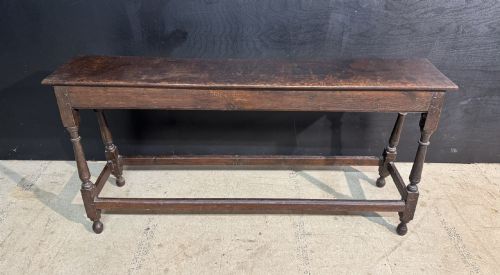
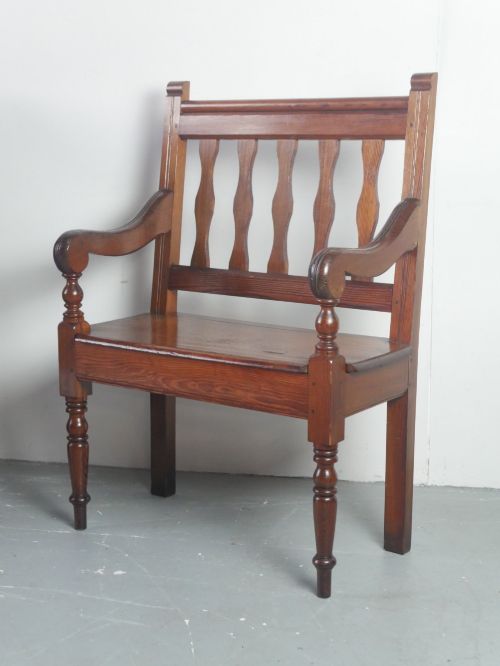
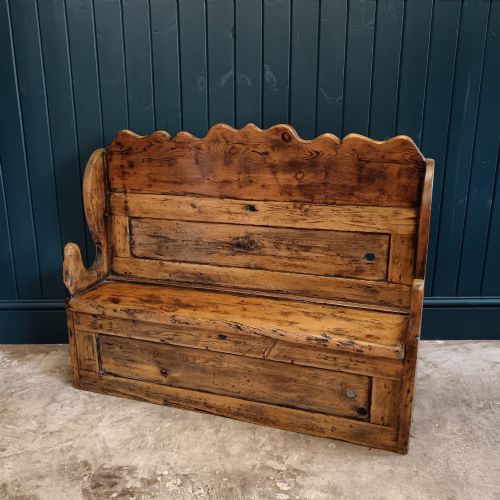
Traditional Bench Seat
A traditional bench seat brings honest craftsmanship and centuries of practical utility straight into a hallway, garden or living space.
Traditional Bench Seat
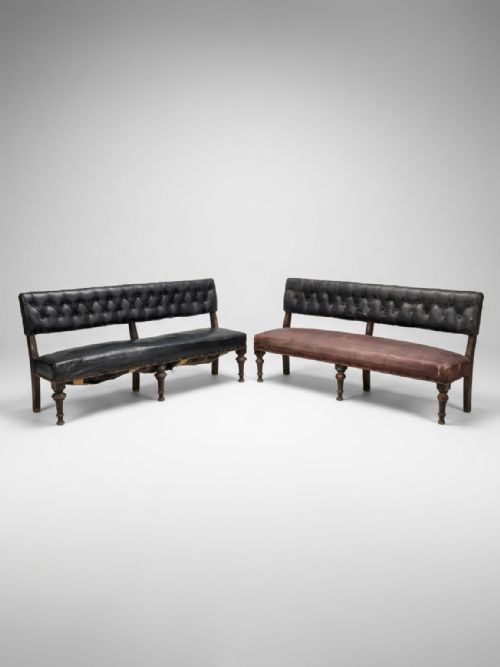
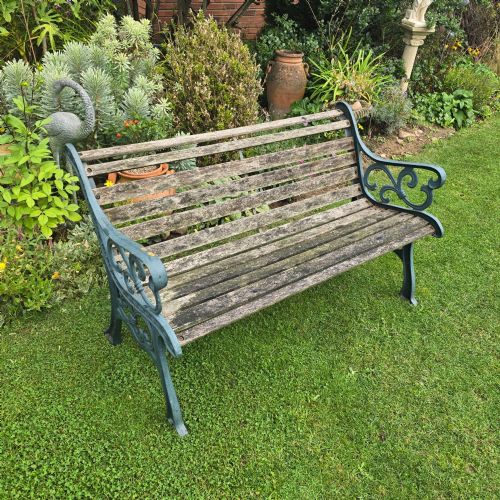
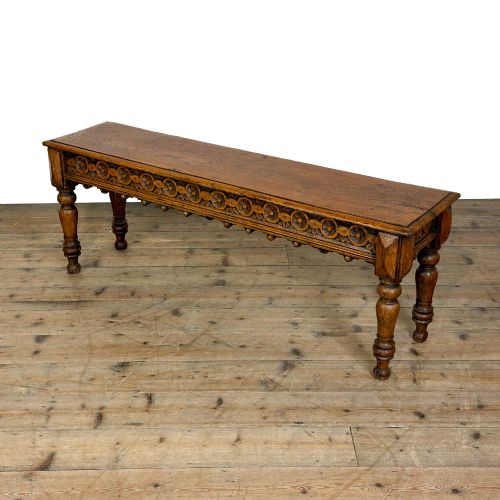
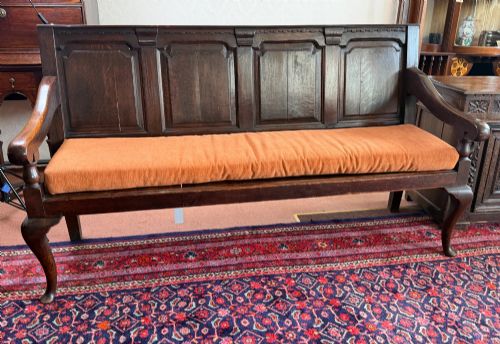
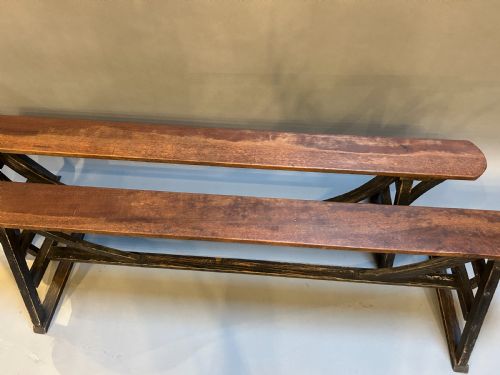
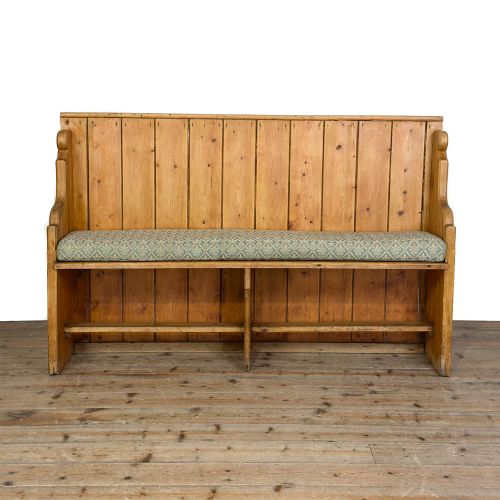
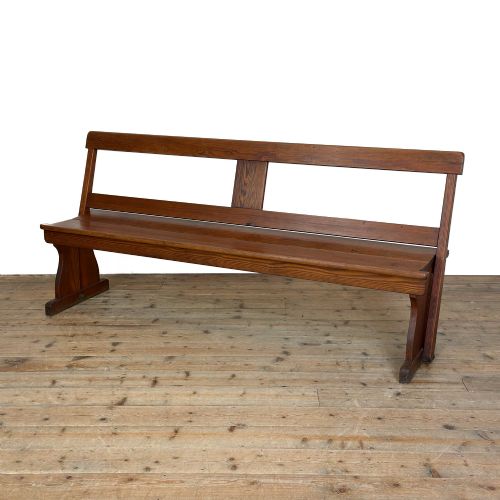
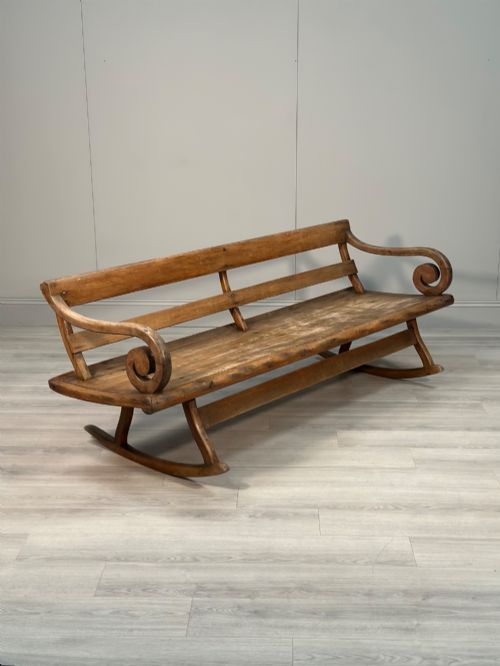
A traditional bench seat encompasses robust oak settles, cast iron garden benches, pine church pews and mahogany window seats spanning several centuries. These pieces originate from domestic dwellings, public houses, churches and gardens where durable seating was an absolute necessity.
The versions most frequently met on this page include sturdy oak hall settles with panelled backs, rustic pine church pews, and heavy cast iron garden benches. Each form reflects the specific domestic or outdoor environment for which makers originally built them.
Materials and construction
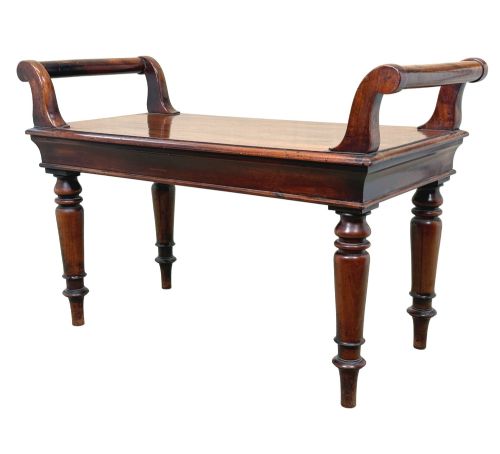
Makers relied heavily on native hardwoods such as oak, mahogany, elm and pine, often joining structural components with traditional methods like pegging or dovetailing. Metal variations incorporate cast iron and wrought iron strap work for enduring outdoor resilience.
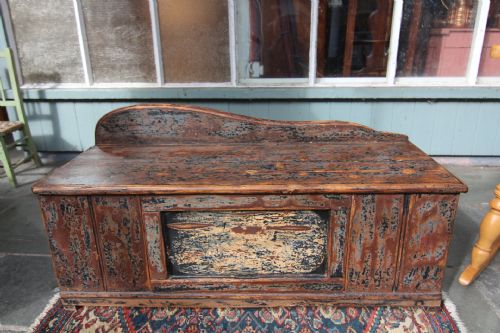
Surfaces exhibit varying treatments from waxed and polished finishes to original painted polychrome schemes and weathered patinas accumulated over decades of everyday use.
Current listings feature diverse periods spanning the 18th, 19th and early 20th centuries, utilising oak, pine, mahogany, cast iron and brass.
Judging the standard
Quality rests in the integrity of the timber selection, the crispness of any hand-carved ornamentation, and whether structural elements remain entirely original to the period. Examples retaining their untouched board seats or early surface finishes command deeper historical interest.
The refinement of joinery separates standard utility pieces from exceptional examples, where precise proportions and thoughtful architectural details elevate the furniture beyond simple everyday seating.
The Traditional Bench Seat Glossary
- Settle
- A wooden bench with a high panelled back, solid arms and often a box seat underneath for storage. This form kept draughts away from occupants in older domestic interiors.
- Hall bench
- A narrow seat designed specifically for placement in entranceways, frequently incorporating lift-up lids or coat-hanging stands. These pieces provided practical storage for outer garments.
- Joint stool
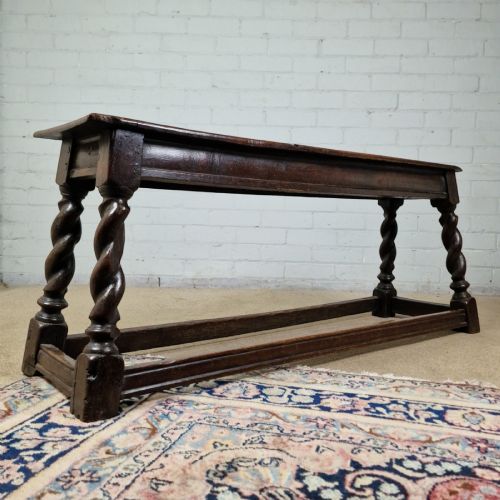
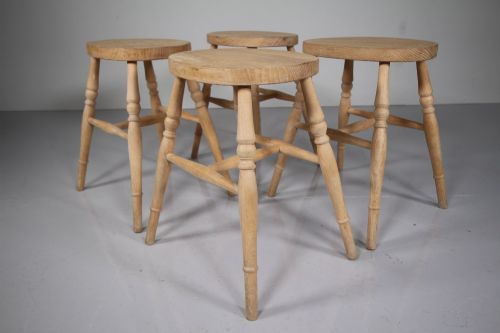
- An early form of wooden stool constructed using mortise and tenon joints held together with wooden pegs. They predate widespread chair usage in many households.
- Club fender
- A low, upholstered-top metal frame surrounding a fireplace hearth to provide comfortable seated warmth. Brass and leather variations appear commonly in period settings.
- Windsor bench
- A seating form featuring turned spindles and a solid carved wooden seat supported by splayed legs. This construction draws directly from traditional Windsor chair techniques.
Traditional Bench Seat: Frequently Asked Questions
Where should I place a traditional bench seat?
These pieces suit narrow hallways, boot rooms, dining tables or gardens depending on their original material and construction.
Outdoor iron or teak variants withstand the elements, while indoor oak settles and pine pews anchor interior spaces effectively.
How do I care for wooden bench seats?
Maintain finished timber surfaces by applying appropriate natural waxes periodically to preserve the grain and moisture content.
Avoid placing antique wooden furniture near direct heat sources or in areas with excessive humidity fluctuations.
Can I use church pews indoors?
Church pews adapt easily into domestic dining rooms, kitchens or large hallways to provide linear seating.
Their generous lengths accommodate multiple people comfortably while adding distinct architectural character to a room.