9,489  PAGES BROWSED TODAY PAGES TODAY • 0 ANTIQUES UPLOADED TODAYNEW ARRIVALS
GIFTS
LATEST STOCK
Sort Order
Items Per Page
Browse Categories
Sort order
Relevant Links
Items per page
ID #SA1093389
SOLD
Email Phone
Save
Antique Handpainted Bud Vases, Satsuma, Signed by Gyokushu, Meiji Period (1868-1912).
Sold by Gillers Antiques Ltd
sold SA1093389
Sorry, but this item has been sold.
Gillers Antiques Ltd

Gillers Antiques Ltd

Sellingantiques Verified Since Mar 2023
Browse dealers 400 items
Id #SA1093389
PDF SHARE
SAVE

Antique Handpainted Bud Vases, Satsuma, Signed by Gyokushu, Meiji Period (1868-1912).

19th century
Sold 2 March 2025 · Gillers Antiques Ltd
This “Antique Handpainted Bud Vases, Satsuma, Signed by Gyokushu, Meiji Period (1868-1912)” found a buyer.

It was listed by Gillers Antiques Ltd. Sold pieces stay on Sellingantiques as a record of what has passed through, and the next one is rarely far away.

Description

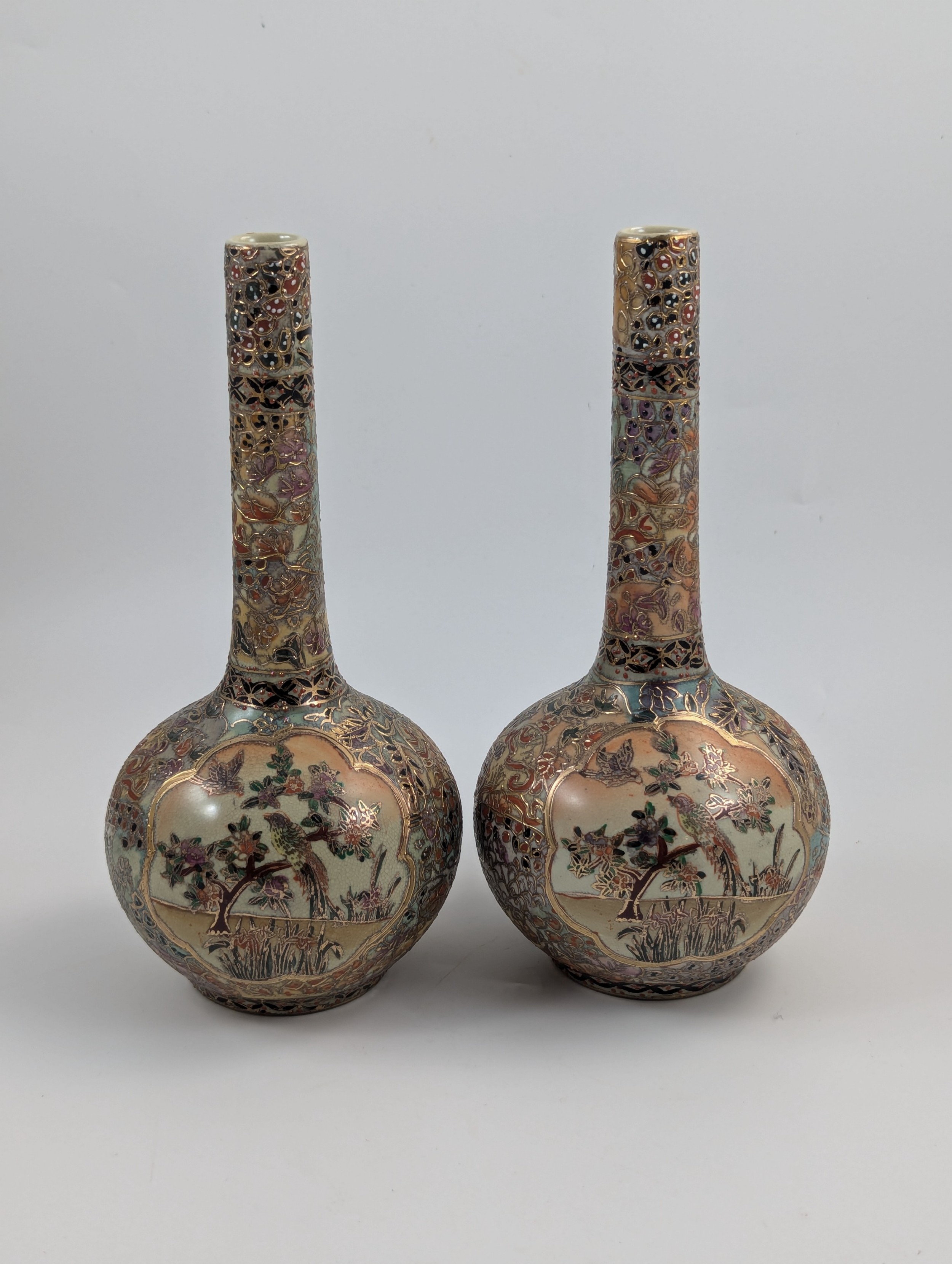
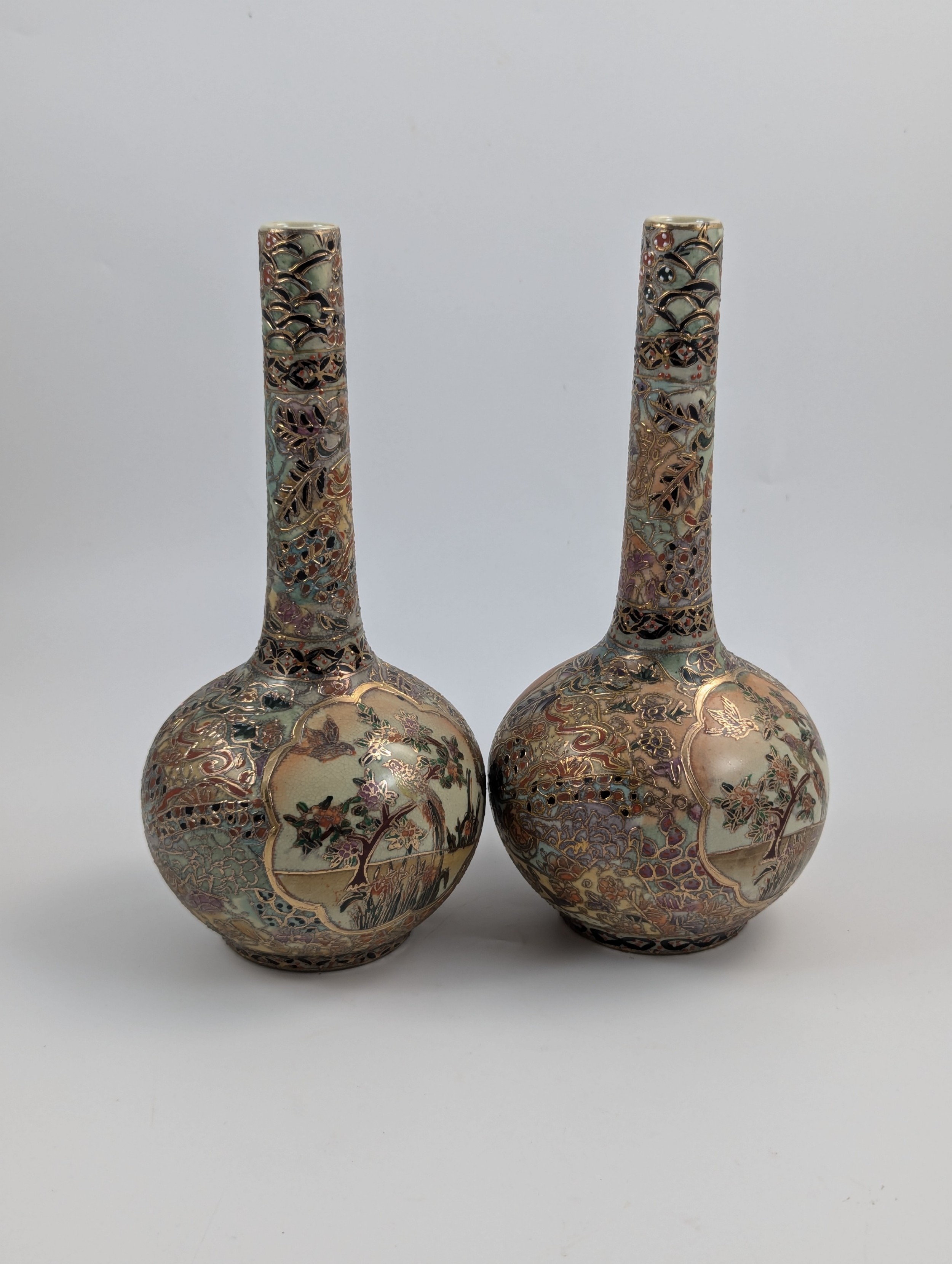
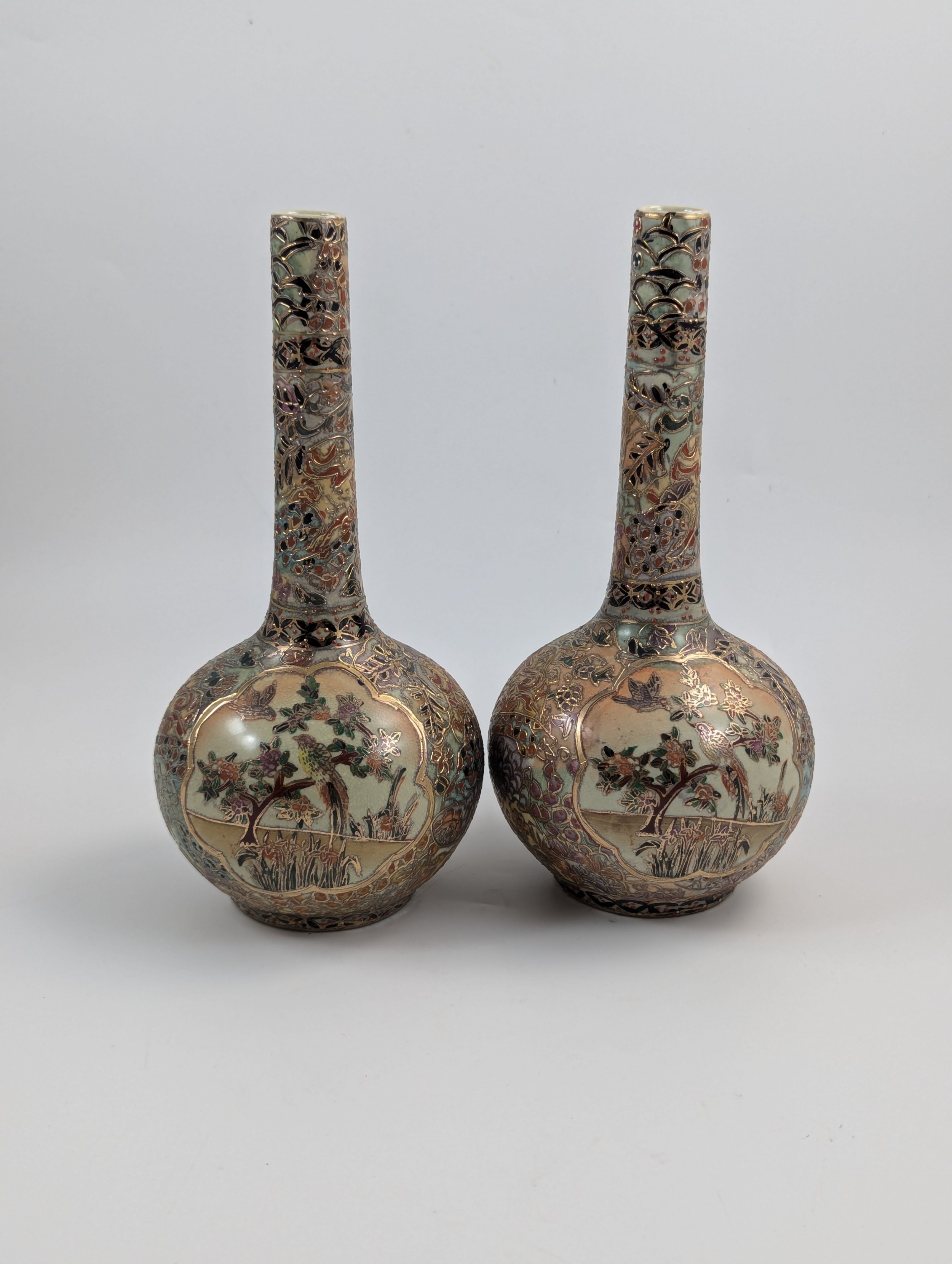
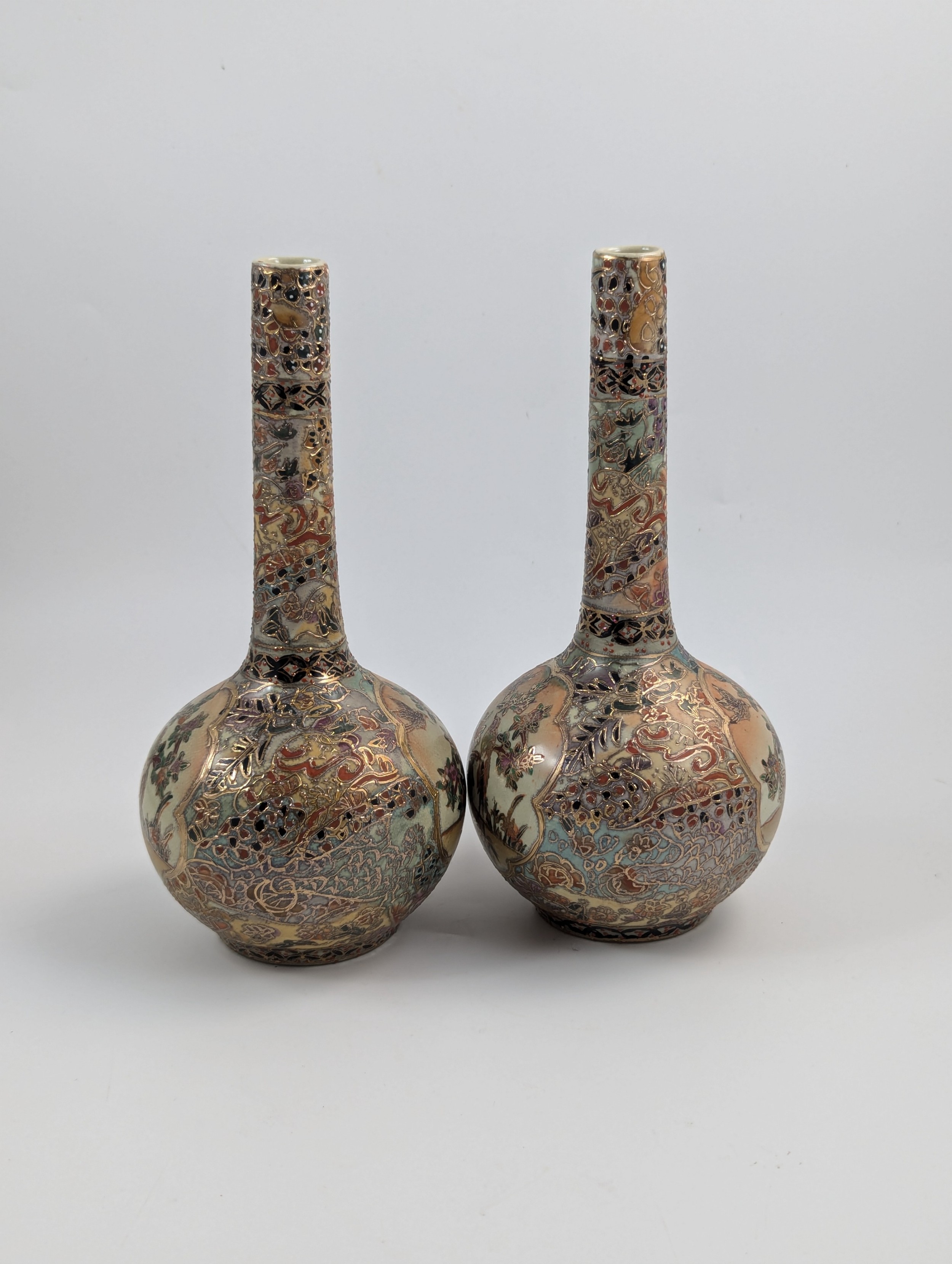
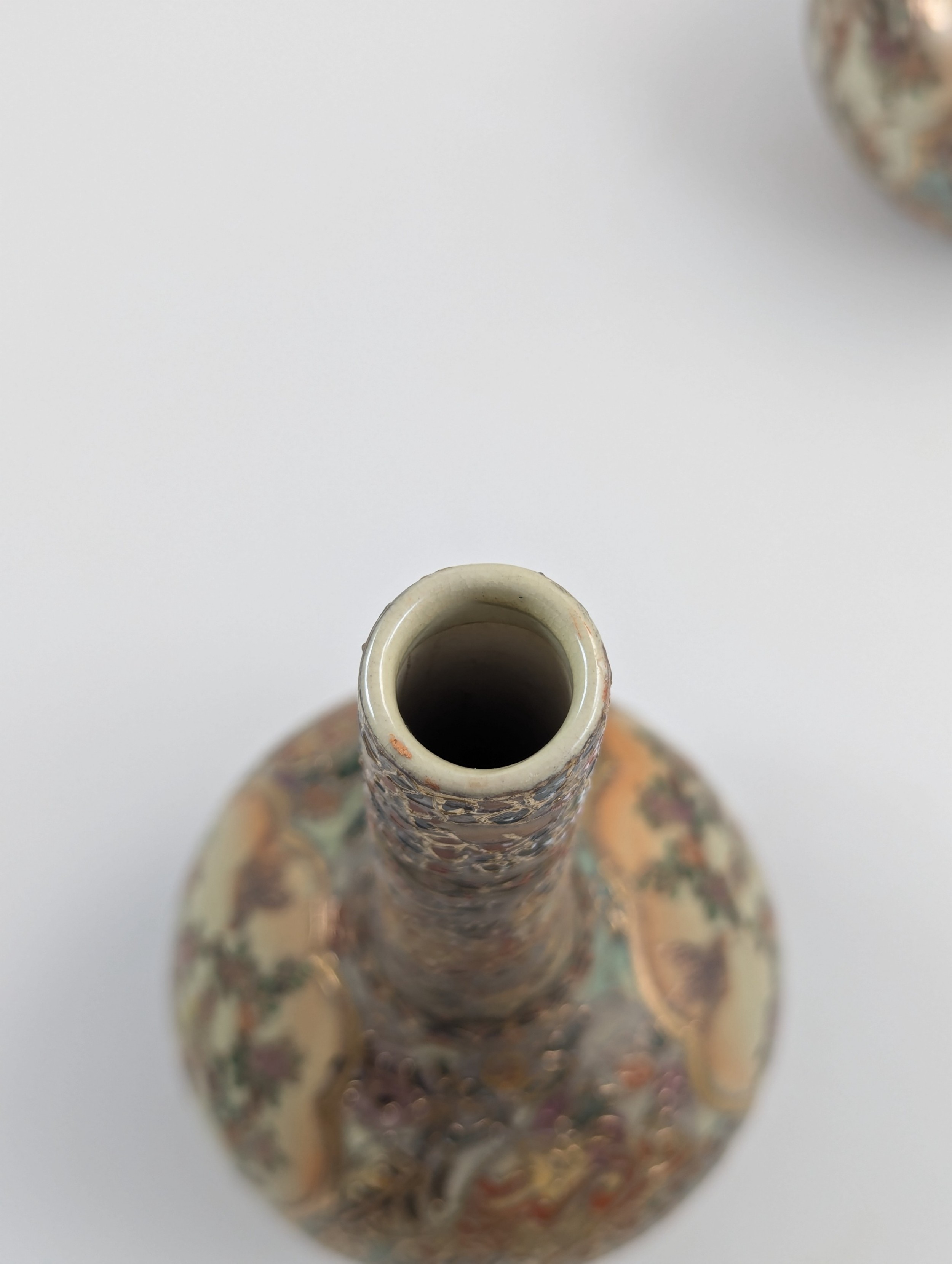
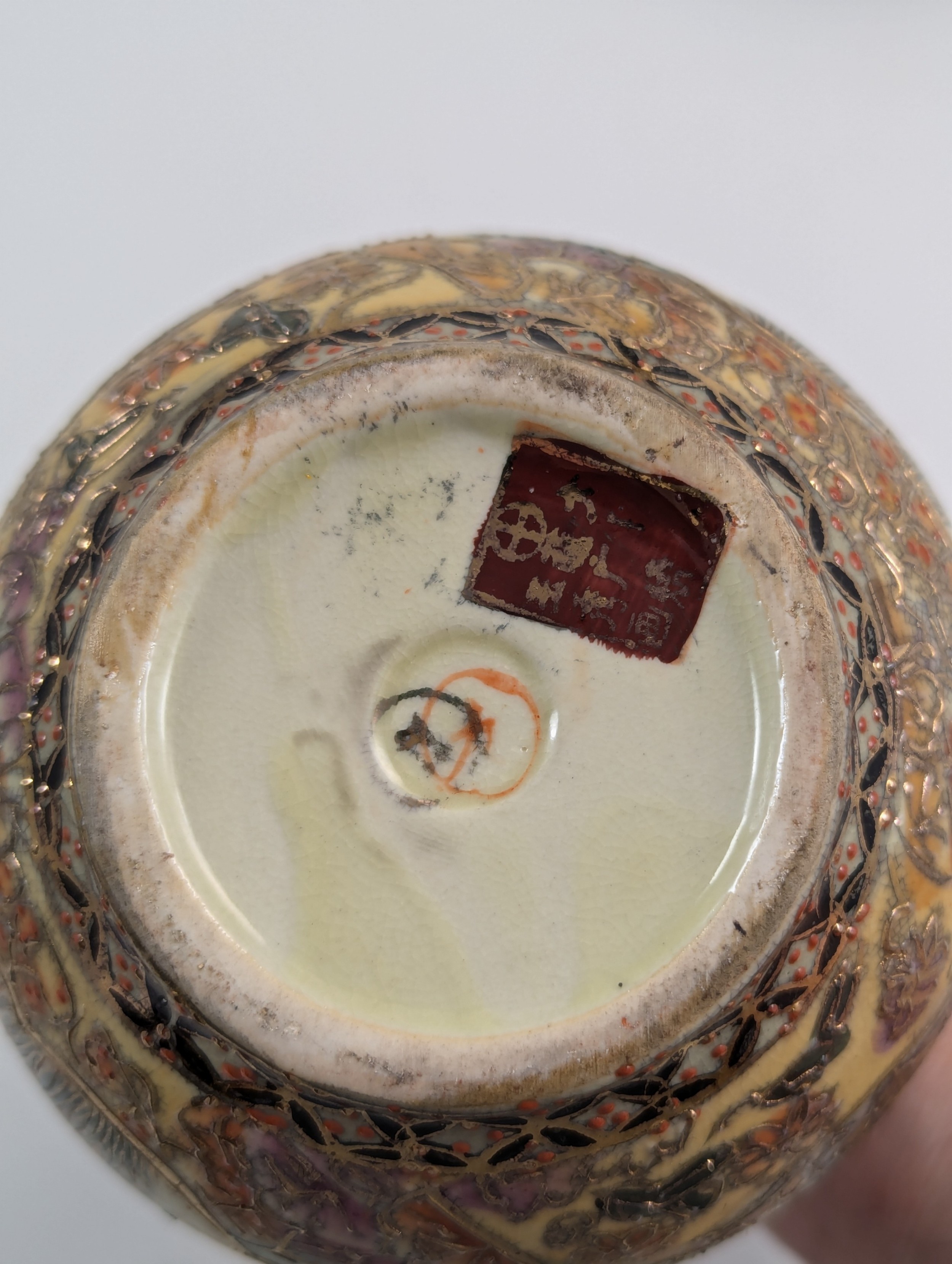
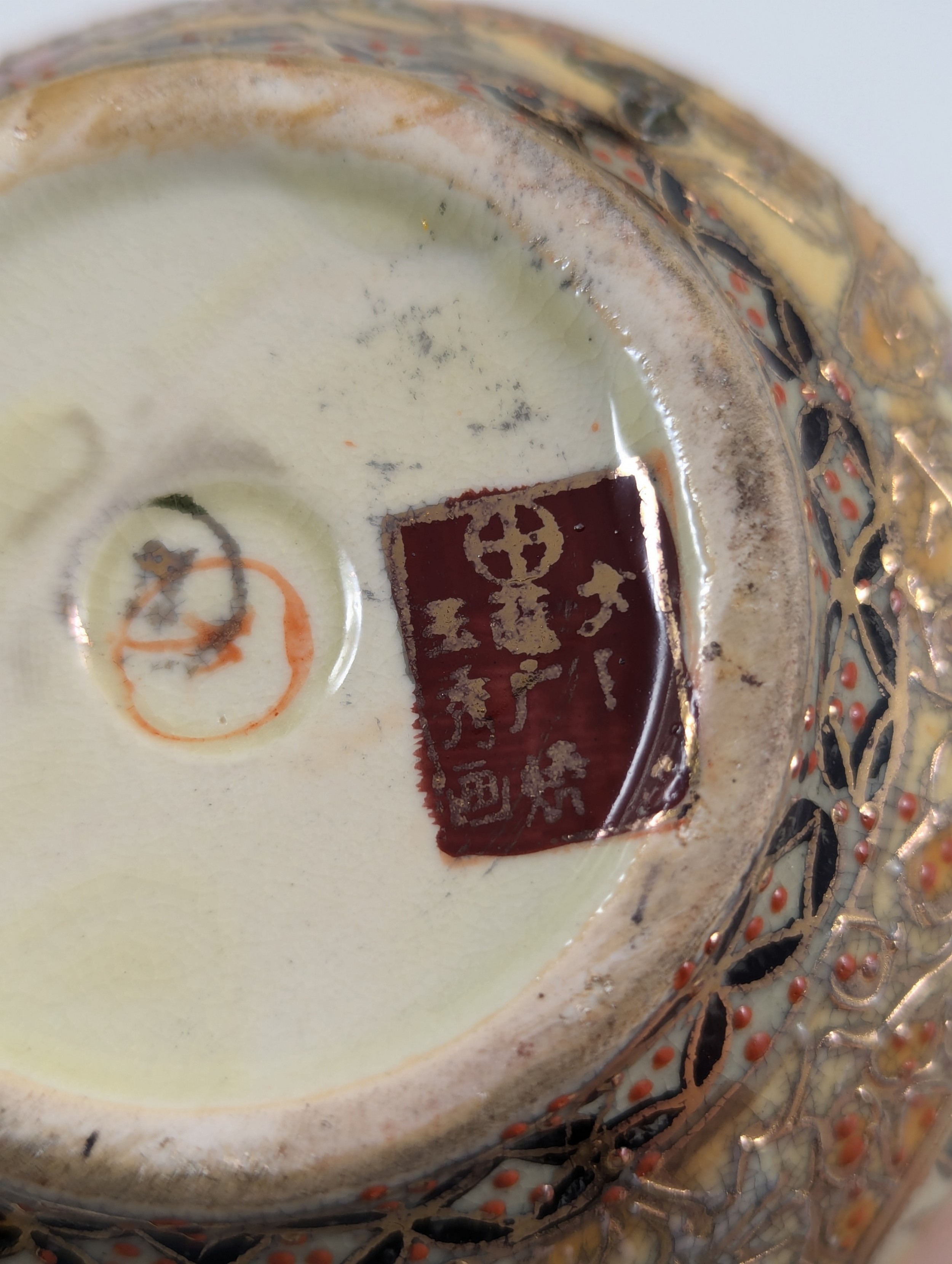
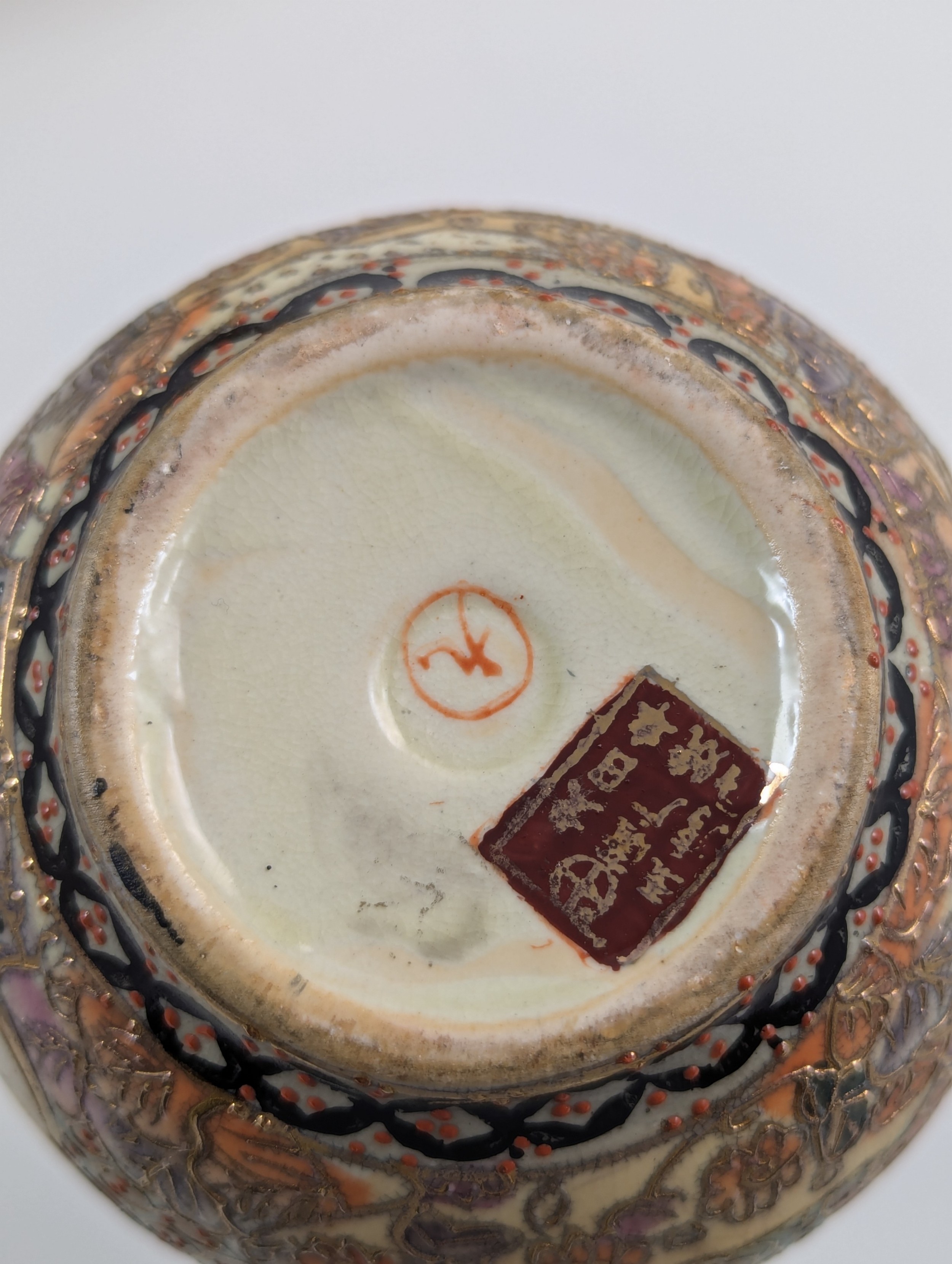
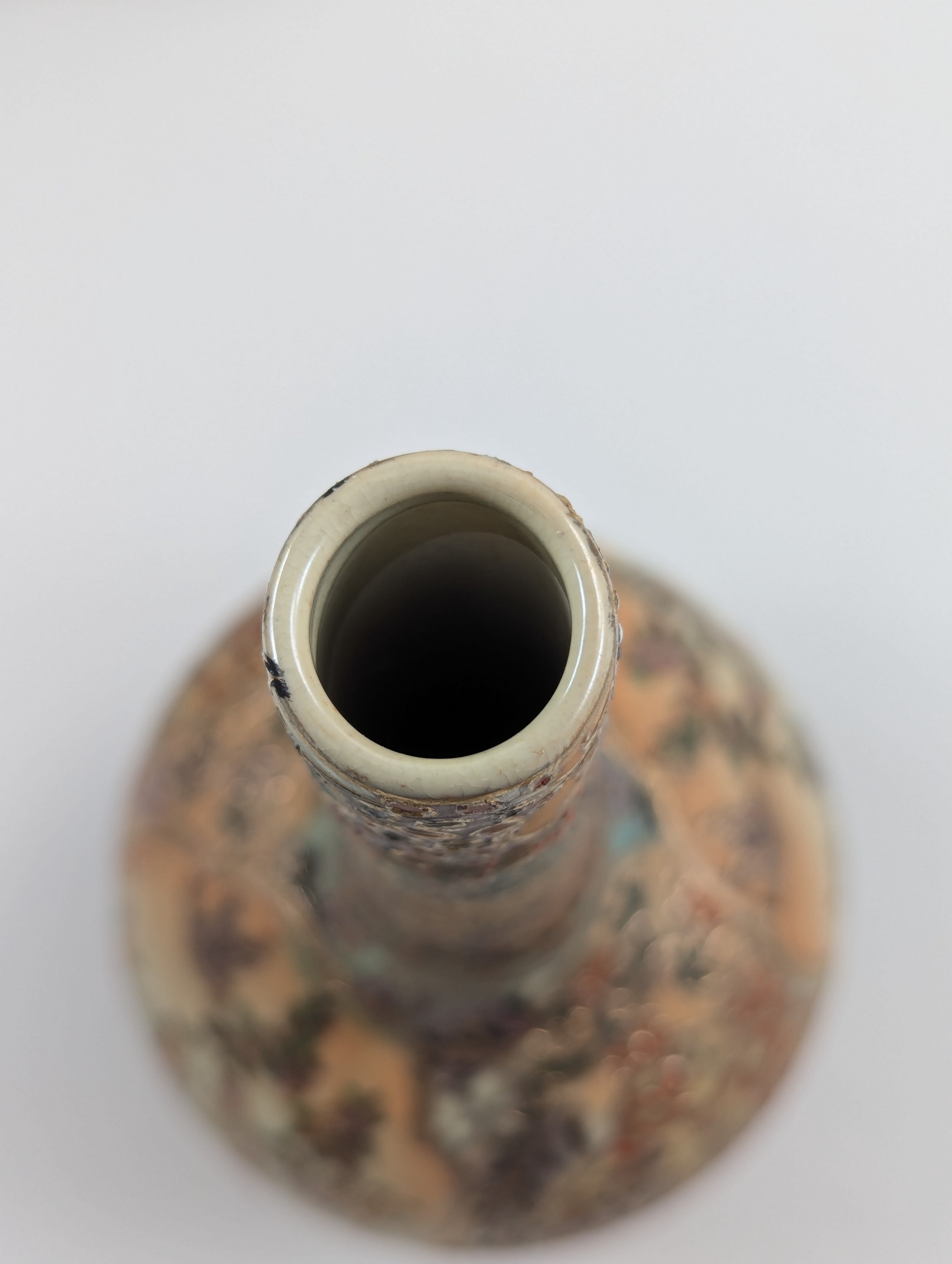
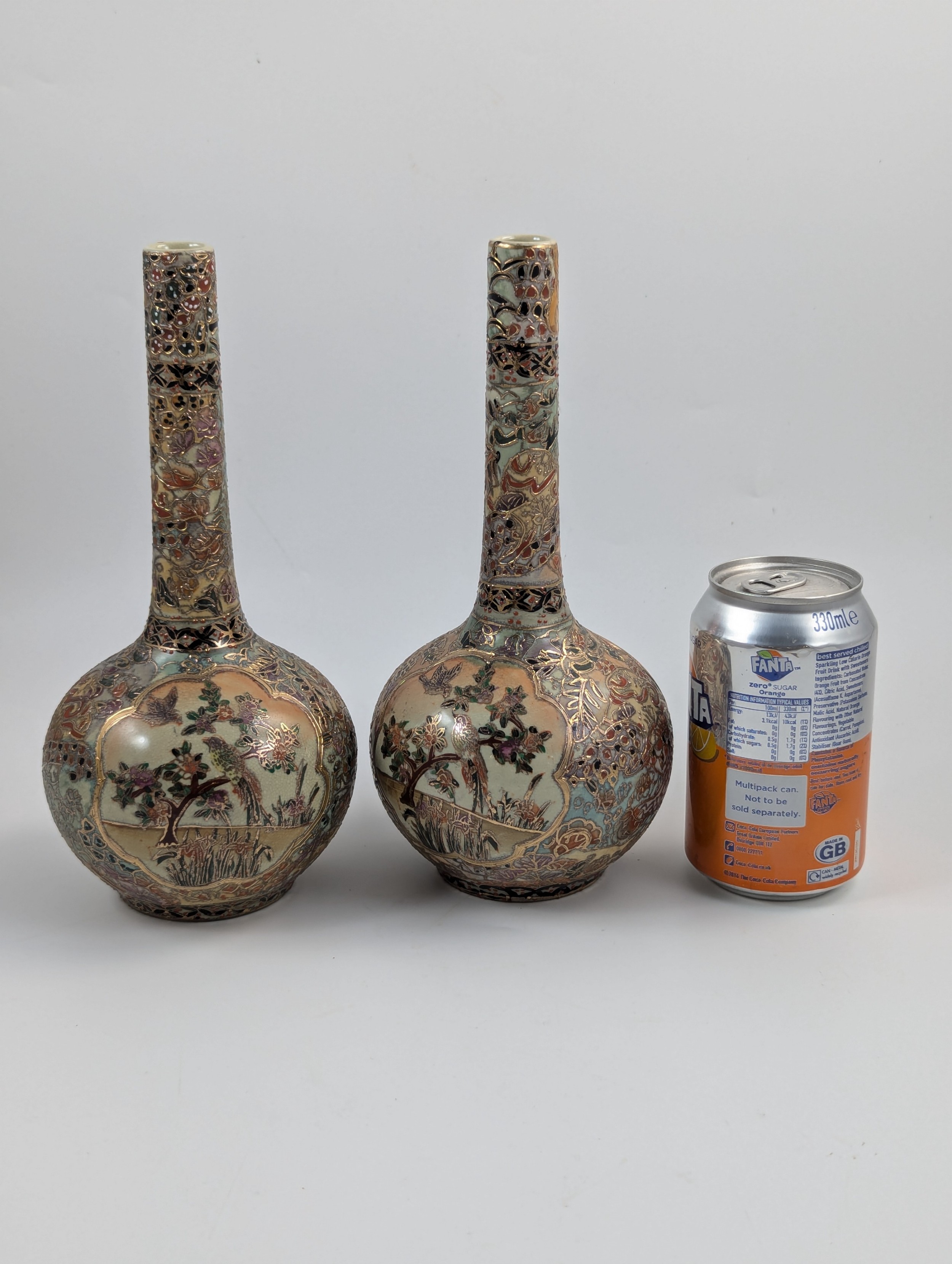
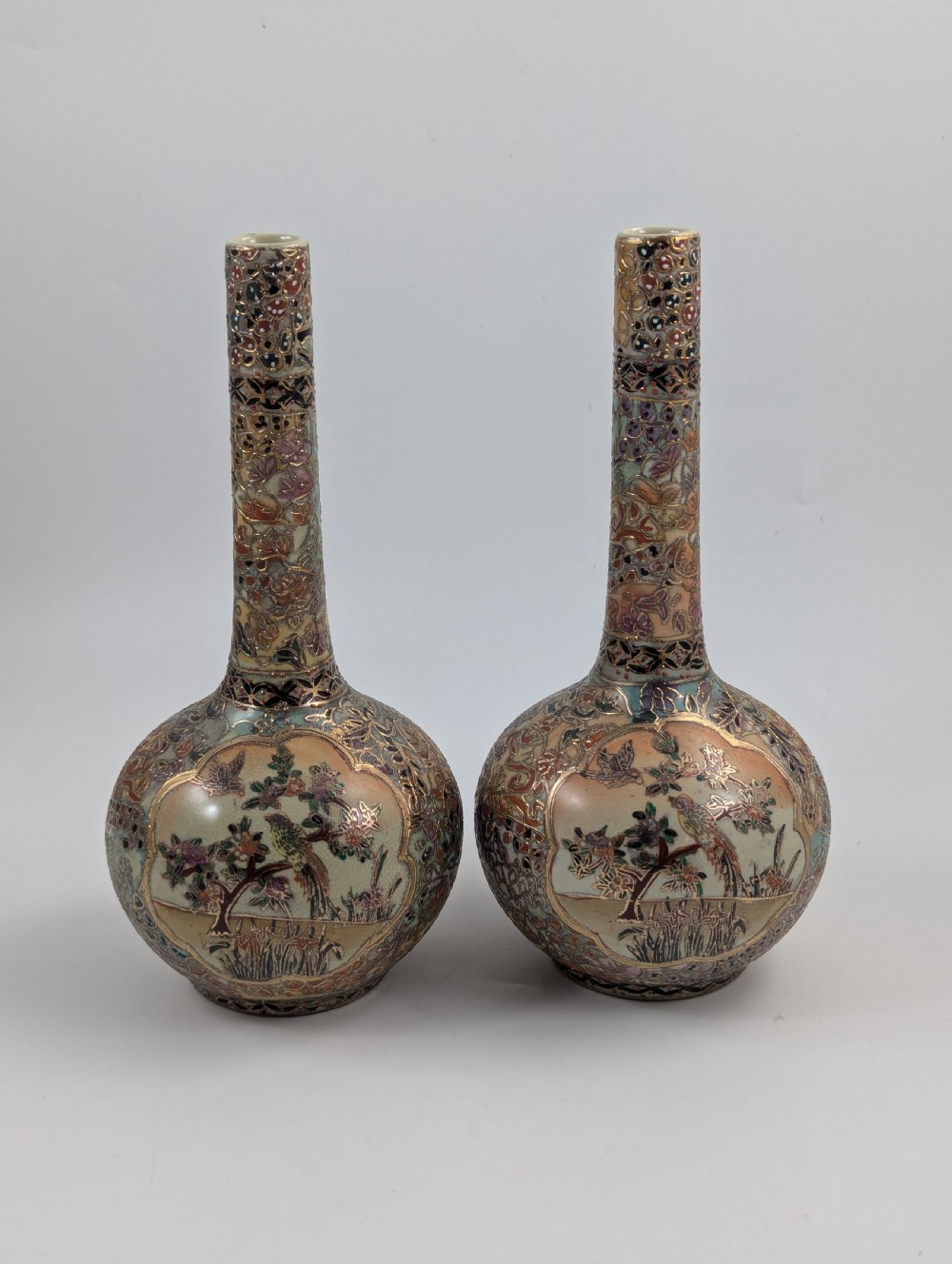
This antique pair of hand-painted Japanese bud vases, featuring long necks, was created by the Satsuma and painted by the renowned artist Gyokushu, who worked for Satsuma during the Meiji period. Gyokushu became well-known for painting landscapes, battle scenes, and decorative pieces. The vases are adorned in golden-brown muted tones with identical depictions on opposite sides—two on each vase—showcasing serene natural landscapes, including a bird perched on a flowering tree. The vases were crafted using the traditional Satsuma technique of applied enamel and gilding on a glazed background, a hallmark of Satsuma’s style. The light brown base color of the vases is decorated with ornate gilded motifs in an oriental style, and the artist’s signature appears on the pieces, making them a unique addition to any collection. Dating back to the 19th century, these antique vases are a true treasure. Their beautiful design and craftsmanship reflect the high level of skill possessed by the Japanese artisans who created them. Inscriptions on the bottom of the vases confirm their authenticity: "Great Japan," "Satsuma ware," "Painted by Gyokushu," along with the Shimazu family crest.
Each vase was meticulously handcrafted, a long and painstaking process that enhances their uniqueness and desirability among collectors worldwide. Eastern antiques are characterized by their sophistication and refinement, blending the cultures of many Asian peoples, and are considered highly valuable. Antique vases, especially those from Japan, are among the most sought-after collectibles due to their rich history and elegant appearance. Japanese vases differ significantly from their European counterparts, with oriental decor easily recognizable by intricate carvings, patterns, and vibrant paintings that often tell stories. Satsuma ware originated in the 17th century in the southern regions of Kyushu, Japan, under the Shimazu clan's control (Satsuma-han, now officially Kagoshima and the surrounding areas). The early Satsuma pottery, which dates back to around 1600, was typically plain and made from dark clay, a stark contrast to the highly ornate and colorful 19th-century pieces produced for export to the West.
Dimensions: height 23.5 cm, diameter 11.3 cm, weight 661 grams both

Condition: Excellent

Please study the accompanying photographs carefully as they form an integral part of this description. The item will be shipped with full tracking and insurance. It is important to note that shipping costs include labour, packaging and postage.

Date of Manufacture

Gillers Antiques Ltd has dated these Antique Satsuma Bud Vases to the 19th Century.

Reference Numbers
Sellingantiques Reference
SA1093389
Description
This antique pair of hand-painted Japanese bud vases, featuring long necks, was created by the Satsuma and painted by the renowned artist Gyokushu, who worked for Satsuma during the Meiji period. Gyokushu became well-known for painting landscapes, battle scenes, and decorative pieces.
“
The vases are adorned in golden-brown muted tones with identical depictions on opposite sides—two on each vase—showcasing serene natural landscapes, including a bird perched on a flowering tree.
Gillers Antiques Ltd

The vases were crafted using the traditional Satsuma technique of applied enamel and gilding on a glazed background, a hallmark of Satsuma’s style. The light brown base color of the vases is decorated with ornate gilded motifs in an oriental style, and the artist’s signature appears on the pieces, making them a unique addition to any collection. Dating back to the 19th century, these antique vases are a true treasure. Their beautiful design and craftsmanship reflect the high level of skill possessed by the Japanese artisans who created them. Inscriptions on the bottom of the vases confirm their authenticity: "Great Japan," "Satsuma ware," "Painted by Gyokushu," along with the Shimazu family crest.

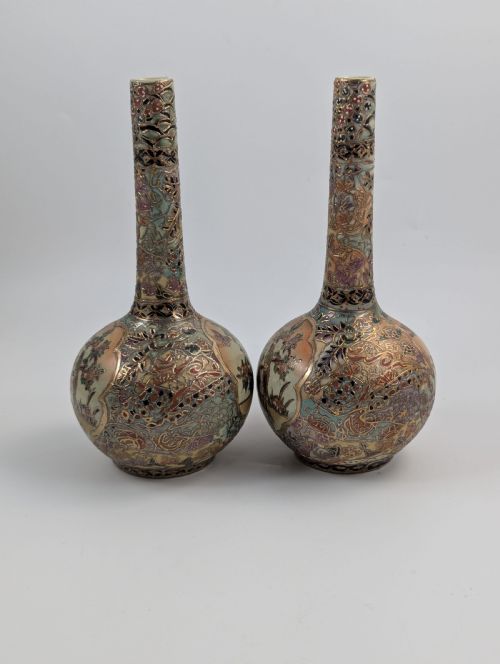
fig 1. Two antique Japanese Satsuma bud vases featuring slender necks, bulbous bodies, and intricate handpainted polychrome and gilt floral and avian motifs.
fig 1. Antique Handpainted Bud Vases, Satsuma, Signed by Gyokushu, Meiji Period (1868-1912).

Each vase was meticulously handcrafted, a long and painstaking process that enhances their uniqueness and desirability among collectors worldwide. Eastern antiques are characterized by their sophistication and refinement, blending the cultures of many Asian peoples, and are considered highly valuable. Antique vases, especially those from Japan, are among the most sought-after collectibles due to their rich history and elegant appearance. Japanese vases differ significantly from their European counterparts, with oriental decor easily recognizable by intricate carvings, patterns, and vibrant paintings that often tell stories. Satsuma ware originated in the 17th century in the southern regions of Kyushu, Japan, under the Shimazu clan's control (Satsuma-han, now officially Kagoshima and the surrounding areas). The early Satsuma pottery, which dates back to around 1600, was typically plain and made from dark clay, a stark contrast to the highly ornate and colorful 19th-century pieces produced for export to the West.

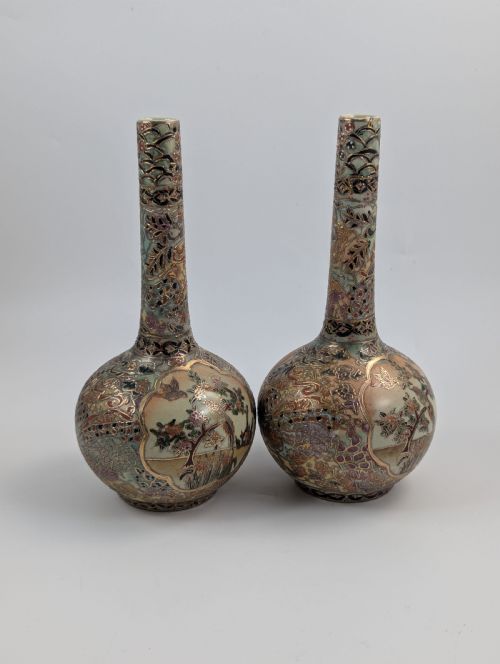
fig 2. Two antique Japanese Satsuma bud vases featuring slender necks, bulbous bodies, and intricate handpainted polychrome and gilt floral and avian motifs.
fig 2. Antique Handpainted Bud Vases, Satsuma, Signed by Gyokushu, Meiji Period (1868-1912).

Dimensions: height 23.5 cm, diameter 11.3 cm, weight 661 grams both

Condition: Excellent

Please study the accompanying photographs carefully as they form an integral part of this description. The item will be shipped with full tracking and insurance. It is important to note that shipping costs include labour, packaging and postage.

Date of Manufacture

Gillers Antiques Ltd has dated these Antique Satsuma Bud Vases to the 19th Century.

Reference Numbers
Sellingantiques Ref
SA1093389
Gillers Antiques Ltd
Sellingantiques verified Since Mar 2023
Dealer Profile

You can view the stock and full dealer information on the Gillers Antiques Ltd Profile Page
PDF SHARE
SAVE
Two antique Japanese Satsuma bud vases featuring slender necks, bulbous bodies, and intricate handpainted polychrome and gilt floral and avian motifs. SOLD6+ MONTHS AGO
1 / 11
Archive I Two antique Japanese Satsuma bud vases featuring slender necks, bulbous bodies, and intricate handpainted polychrome and gilt floral and avian motifs. SOLD6+ MONTHS AGO

Antique Handpainted Bud Vases, Satsuma, Signed by Gyokushu, Meiji Period (1868-1912).
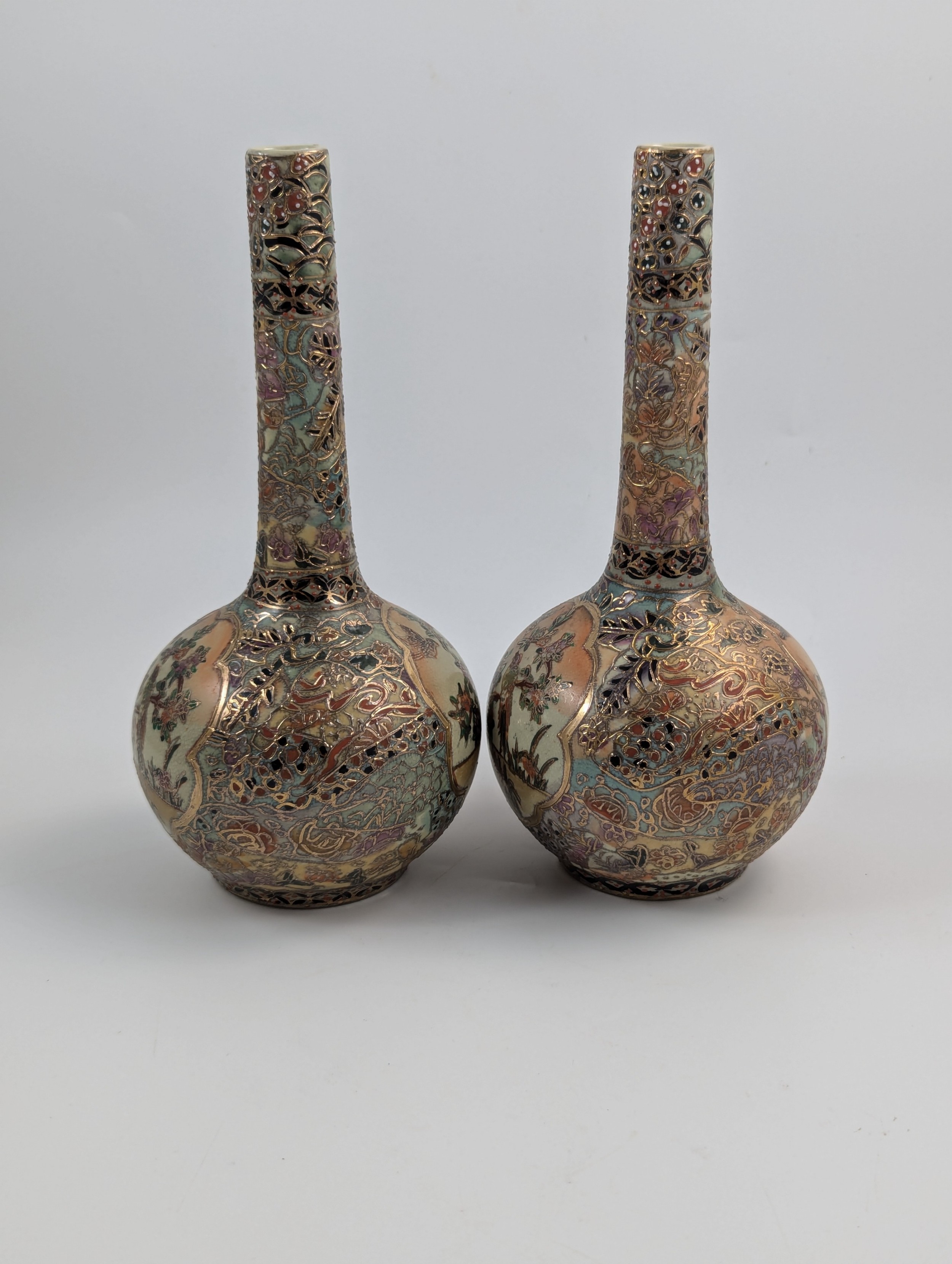
Archive II Two antique Japanese Satsuma bud vases featuring slender necks, bulbous bodies, and intricate handpainted polychrome and gilt floral and avian motifs. View II
Archive III Two antique Japanese Satsuma bud vases featuring slender necks, bulbous bodies, and intricate handpainted polychrome and gilt floral and avian motifs. View III
Archive IV Two antique Japanese Satsuma bud vases featuring slender necks, bulbous bodies, and intricate handpainted polychrome and gilt floral and avian motifs. View IV
Archive V Two antique Japanese Satsuma bud vases featuring slender necks, bulbous bodies, and intricate handpainted polychrome and gilt floral and avian motifs. View V
Archive VI Two antique Japanese Satsuma bud vases featuring slender necks, bulbous bodies, and intricate handpainted polychrome and gilt floral and avian motifs. View VI
Archive VII Two antique Japanese Satsuma bud vases featuring slender necks, bulbous bodies, and intricate handpainted polychrome and gilt floral and avian motifs. View VII
Archive VIII Two antique Japanese Satsuma bud vases featuring slender necks, bulbous bodies, and intricate handpainted polychrome and gilt floral and avian motifs. View VIII
Archive IX Two antique Japanese Satsuma bud vases featuring slender necks, bulbous bodies, and intricate handpainted polychrome and gilt floral and avian motifs. View IX
Archive X Two antique Japanese Satsuma bud vases featuring slender necks, bulbous bodies, and intricate handpainted polychrome and gilt floral and avian motifs. View X
Archive XI Two antique Japanese Satsuma bud vases featuring slender necks, bulbous bodies, and intricate handpainted polychrome and gilt floral and avian motifs. View XI
Enlarged Archival View
Telephone 07738 009924
Location
Buckland House
Buntingford
Hertfordshire
SG9 0PY
United Kingdom
Verified Since Mar 2023
Items For Sale 400
Items Sold 581
Gillers Antiques Ltd
Verified Since Mar 2023
View Dealer Info
Location: Buckland House, Buntingford, Hertfordshire, SG9 0PY, United Kingdom
Verified
Mar 2023
For Sale
400
Sold
581
Two antique Japanese Satsuma bud vases featuring slender necks, bulbous bodies, and intricate handpainted polychrome and gilt floral and avian motifs.
Antique Handpainted Bud Vases, Satsuma, signed by Gyokushu, Meiji period (1868-1912).
Ref: SA1093389
Two antique Japanese Satsuma bud vases featuring slender necks, bulbous bodies, and intricate handpainted polychrome and gilt floral and avian motifs.
Detail View 1
Detail View 2
Detail View 3
Detail View 4
Detail View 5
Detail View 6
Detail View 7
Detail View 8
Detail View 9
Detail View 10
Archival Detail
Every single antique dealer on our platform is individually approved by our internal team. We verify their professional trade history, ethical standards, and photographic quality to ensure a secure, high-standard buying environment. Upon joining, every dealer agrees to a strict 9-point code of conduct. While issues can occasionally arise, our dealers typically resolve them swiftly and directly with the buyer. In fact, since our founding in 2002, Sellingantiques has only had to step in to help resolve an issue on roughly five occasions—a true testament to the quality of our dealers and their dedication to your happiness.
Our dealers are highly experienced in packing and shipping fragile, high-value antiques. Because you are in direct contact with the dealer, you will be able to easily go through all available shipping and insurance options together to ensure your item arrives safely.
Antiques are the ultimate green purchase. By choosing historical pieces over newly manufactured goods, you completely eliminate the carbon footprint of modern mass production while preserving exceptional, timeless craftsmanship.
Written by Sellingantiques from the dealer’s photographs and listing
  • ObjectVases
  • Period19th century
  • StyleMeiji Period
  • MaterialCeramic, Porcelain, Gold Gilt
  • ColourMulticoloured
  • MotifsHandpainted birds, Floral arrangements, Gilt moriage, Geometric borders

Satsuma ware is a type of Japanese earthenware originating from Satsuma Province in Kyushu, traditionally characterised by an ivory-coloured, crackled glaze and detailed polychrome and gilt decoration. While production began earlier, the most sought-after pieces were created during the Meiji period (1868-1912) for export to Western markets.

Authentic pieces are crafted from clay with a finely crackled transparent glaze, upon which artisans apply handpainted mineral pigments and intricate raised gold moriage work. Each piece requires multiple firings to set the complex enamel designs and the extensive gilding characteristic of the style.

Authenticity is determined by examining the fineness of the crackle in the glaze, the precision and depth of the handpainted enamels, and the presence of artist signatures or kiln mon (crests) on the base. Genuine Meiji items exhibit superior hand-drawn detail and substantial weight relative to their size compared to later reproductions.

These decorative objects work well placed on mantelpieces, bookshelves, or side tables where their intricate detailing can be appreciated up close. Pairing them with neutral backdrops allows the rich gold gilt and polychrome palette to stand out without visual clutter.

To preserve the delicate enamel and gilt decoration, these items should be kept out of direct sunlight to prevent fading and dusted gently with a soft, dry cloth. They should never be submerged in water or cleaned with chemical detergents, and water should not be placed inside antique earthenware due to the porous nature of the body.
items
Add keywords to the filter
Price
£100
£250000
Era
Period
Style
Material
Origin
Stock Location
Recently Added
Online Payments
Categories