

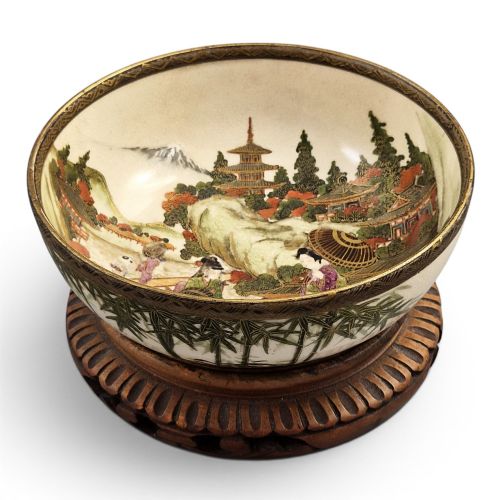
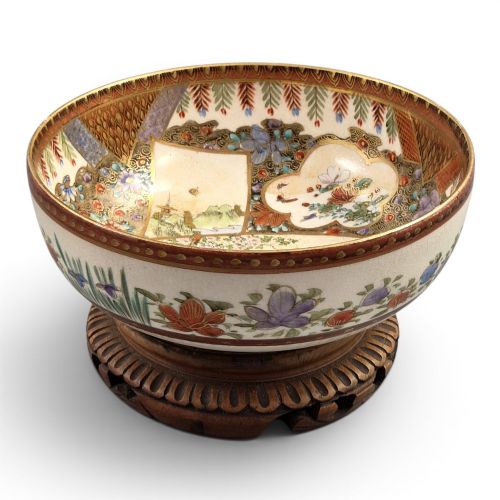
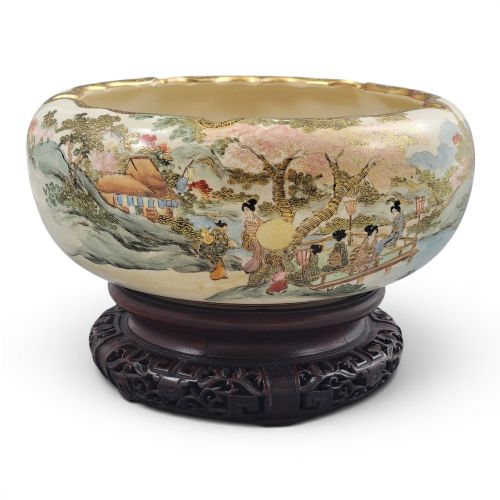


Signed Satsuma Porcelain
Signed satsuma porcelain brings intricate Meiji period earthenware into your home, offering master signatures and dense enamel work that reward close study.
Signed Satsuma Porcelain
When you search for signed satsuma porcelain, you are looking at finely painted Japanese earthenware objects bearing the marks of distinct artists and studios. The pieces appearing here span the nineteenth century, the Victorian era, and the Edwardian period.
You are most likely to meet decorative bowls, vases, and miniature vessels decorated with detailed pictorial scenes and botanical motifs. These forms range from small sugar bowls and miniature vases up to large ceremonial vessels and animal sculptures.
Originating from workshops in Kyoto and other centres, these ceramics reflect the intense artistic production of the Meiji period. Each item carries the distinct visual signature of makers who adapted traditional Japanese ceramic techniques for international collectors.
How signed satsuma porcelain was made
The foundation of these objects is a fine earthenware clay body, typically covered in a finely crackled creamy glaze that accepts detailed overglaze painting. Artisans built up complex pictorial surfaces using dense mineral enamels combined with generous applications of gold leaf and gilt work.
Signatures and atelier marks were carefully brushed or incised onto the base before the final firing stages, identifying the individual master or kiln responsible. Bronze mounts and carved wood elements sometimes complement the ceramic bodies, adding structural weight and contrasting textures.
Signed Satsuma Porcelain Retail Price Guide 2026
Typical asking prices for signed satsuma porcelain among the pieces listed under this phrase on Sellingantiques today, from the lower quarter to the upper quarter. They describe what is for sale here now, not the wider market.
Listings feature items from the Meiji period, incorporating materials such as earthenware, enamel, gold leaf, and bronze.
What varies in quality
The quality of signed satsuma porcelain rests on the precision of the brushwork and the complexity of the enamel composition. Finer examples display remarkably crisp figurative details and controlled gilding that remains sharp across intricate miniature surfaces.
The reputation of the studio or artist signing the piece also dictates its standing within the range. Pieces bearing clear attribution to known Meiji period makers demonstrate superior compositional balance compared to unmarked or hastily decorated commercial export ware.
Kozan·Shizan·Shuzan·Kinkozan·Kizan·Seiko-en Chokei·Yamashu·Nikko·Tagawa·Shozan
The Signed Satsuma Porcelain Glossary
- Satsuma
- A type of Japanese earthenware traditionally characterised by an ivory-coloured, crackled glaze that provides a canvas for polychrome enamel and gilt decoration.
- Okimono
- A Japanese decorative sculpture designed for display on a shelf or tokonoma alcove rather than for practical domestic use.
- Koro
- A traditional Japanese incense burner, usually fitted with a pierced cover to allow scented smoke to escape.
- Shimazu Crest
- The heraldic badge of the Shimazu clan, featuring a cross within a circle, frequently found on high-quality Satsuma ceramic pieces.
- Gilt
- A thin layer of gold applied to the surface of the ceramic to highlight borders, patterns, and pictorial motifs.
Signed Satsuma Porcelain: Frequently Asked Questions
How do I identify a signed satsuma piece?
Look underneath the base for painted or incised characters that name the artist, studio, or kiln. These signatures are often accompanied by the Shimazu clan crest.
Comparing the calligraphy and style to known Meiji period examples helps confirm the maker and origin of the ceramic.
What is the difference between earthenware and porcelain?
Satsuma wares are made from earthenware, meaning the clay body is porous and fired at lower temperatures than true porcelain. This creates the characteristic absorbent biscuit that holds the soft, crackled glaze.
Porcelain is vitrified and non-porous, whereas satsuma relies on its specialised glaze layer to seal the underlying clay.
How should I care for antique satsuma porcelain?
Keep these items out of direct sunlight to protect the delicate overglaze enamels and gold leaf details from fading over time. Dust them gently with a soft, dry cloth without using water or chemical cleaners.
Avoid displaying them in areas subject to sudden temperature changes, which can stress the historic glaze.
Why is the glaze on these pieces crackled?
The fine network of cracks, known as crackle or crazing, is an intentional feature of satsuma pottery. It results from the differential contraction of the clay body and the glaze during the cooling process.
Enamels and gold are subsequently painted over this crackled surface, which became a defining aesthetic of the style.