


Worcester Blush Ivory
When you search for worcester blush ivory, you enter a Victorian and Edwardian world of delicate ceramic wares defined by soft pastel grounds and gilt enrichment.
Worcester Blush Ivory
Worcester blush ivory pieces encompass a broad range of decorative and functional domestic objects created primarily during the late nineteenth and early twentieth centuries. A buyer searching this phrase encounters items spanning Victorian, Edwardian, and later periods up to the 1930s.
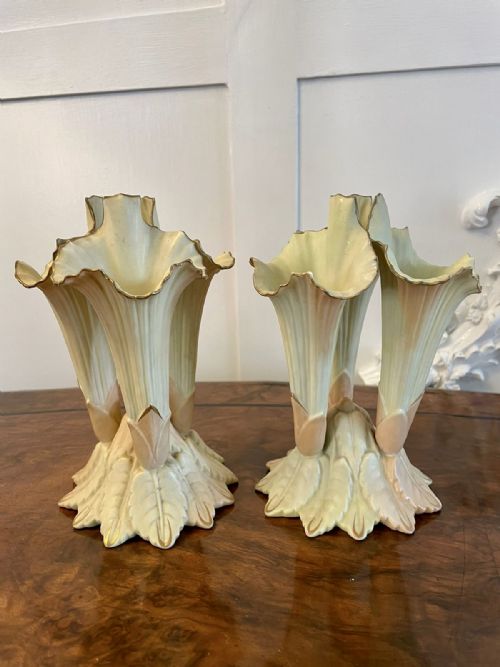
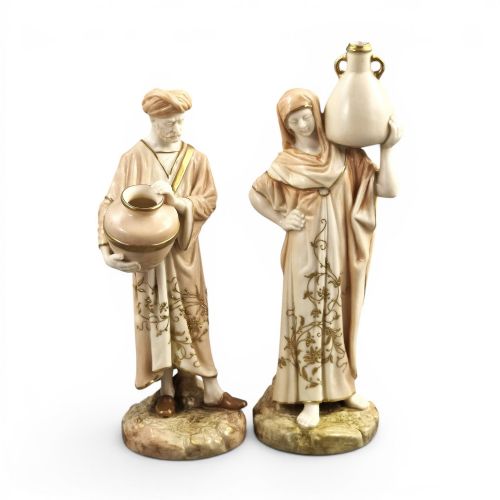
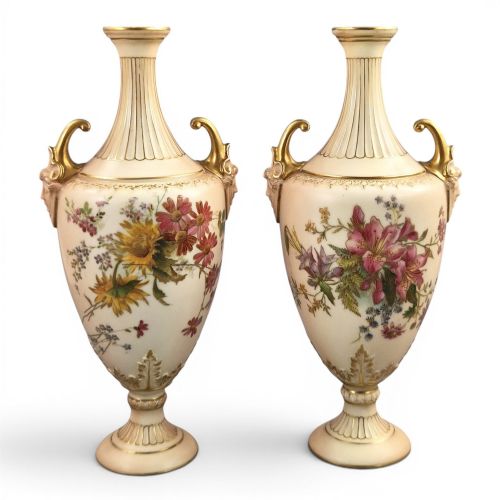
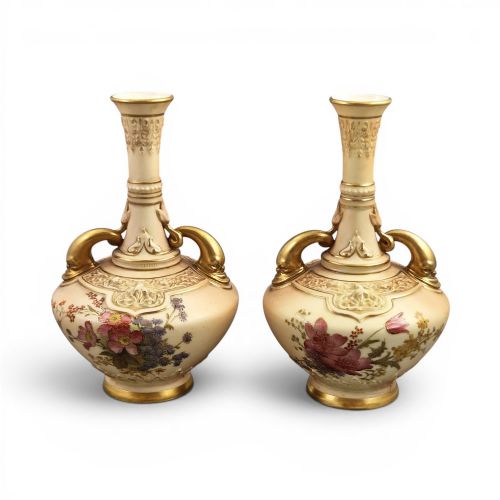
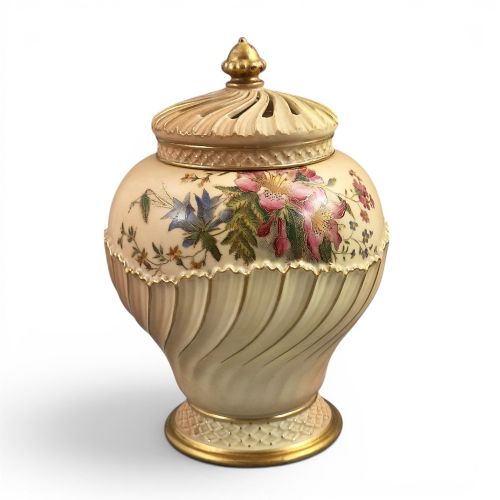
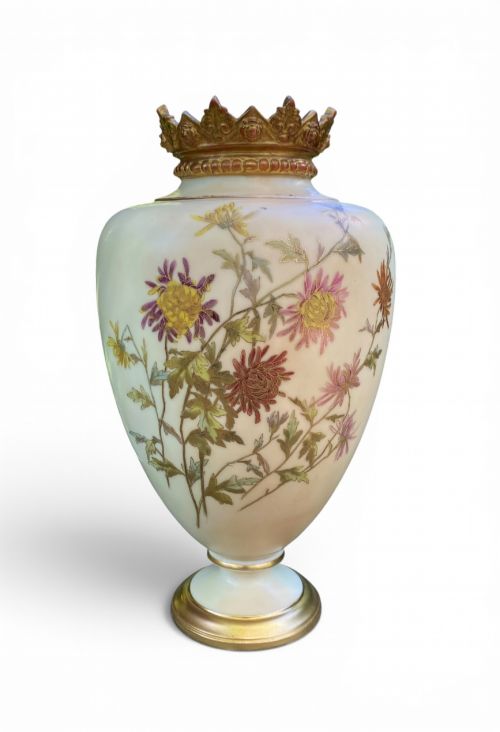
The domestic forms recorded in the evidence are remarkably varied, including ewers, vases, pot-pourri jars, jugs, candlesticks, teapots, and figural groups. Vases and ewers appear most frequently, often decorated with hand-painted floral sprays or orientalist figures.
The aesthetic movement and classical revivals strongly influence these designs, frequently integrating gilt edges, pierced handles, and intricate moulded details like dolphin or dragon motifs. The output captures a distinct era of ceramic artistry originating from the English Midlands.
Materials and Technique
The distinct visual characteristic relies on a soft ivory-tinted porcelain glaze applied to ceramic bodies, creating a matte or semi-matte background. Artisans then hand-painted naturalistic floral sprays or figurative scenes directly onto this tinted surface.
Gold leaf, gilding, and enamel enrich the painted porcelain bodies, accentuating moulded elements such as rims, handles, and low-relief floral stems. This combination of tinted glaze and metallic highlights defines the physical substance of the wares.
Worcester Blush Ivory Retail Price Guide 2026
Typical asking prices for worcester blush ivory among the pieces listed under this phrase on Sellingantiques today, from the lower quarter to the upper quarter. They describe what is for sale here now, not the wider market.
Several ewers feature spirited dragon handles that appear to be peering intently into the painted floral arrangements.
Judging Quality
Quality rests upon the delicacy and precision of the hand-painted decoration, where individual artistic skill elevates standard production pieces into notable works. Hand-painted botanical studies or complex figural subjects by known modellers show superior depth compared to simpler transfer-printed patterns.
The crispness of the porcelain moulding and the restraint of the gilding further divide the range, with finer examples exhibiting sharp relief and carefully applied gold leaf. Weight, presence, and condition of the delicate glaze complete the distinction between standard factory output and exceptional productions.
Locke & Co.·Royal Worcester·James Hadley
The Worcester Blush Ivory Glossary
- Blush Ivory
- A tinted ceramic glaze developed in the late nineteenth century that produces a soft, matte ivory background designed to imitate unglazed porcelain. This surface serves as the canvas for delicate hand-painted floral motifs.
- Ewer
- A large jug with a wide spout and elaborate handle, traditionally used for holding water but rendered here as a purely decorative object. These forms often feature sculptural handles shaped like dragons or classical figures.
- Pot-Pourri
- A covered jar or vase pierced with holes in the lid to allow scented dried plant material to perfume a room. Examples in this category frequently incorporate inner covers and richly decorated bodies.
- Cleft Jug
- A ceramic pouring vessel featuring a pinched or indented body shape that alters the traditional symmetrical silhouette. This specific moulding technique adds textural shadow beneath the glaze.
- Gilding
- The application of gold leaf or gold paint to ceramic surfaces to highlight rims, handles, and raised decorative elements. It provides a bright metallic contrast to the muted ivory background.
Worcester Blush Ivory: Frequently Asked Questions
What is blush ivory porcelain?
Blush ivory porcelain is a specific type of ceramic ware featuring a soft, tinted ivory glaze that provides a warm matte background for hand-painted decoration. The style originated in the late nineteenth century and became a hallmark of English ceramic production during the Victorian and Edwardian eras.
The surface was deliberately formulated to absorb light differently than standard glossy glazes, creating a subtle canvas that suited naturalistic floral painting and gilt highlights.
How do I date these pieces?
Dating these ceramic items typically relies on factory date codes stamped or painted on the underside, which use systems of dots, letters, or small symbols specific to the manufacturer. Stylistic clues such as Victorian aesthetic movement forms or Edwardian neoclassical shapes also narrow the production window.
Examining the style of the hand-painted signature or mark can further confirm whether an object dates from the late nineteenth century or the subsequent decades leading up to the 1930s.
Were these items used or displayed?
Most of these decorative pieces were acquired for display in domestic drawing rooms rather than for heavy practical use. Ewers, vases, and figural groups served as ornamental centerpieces that reflected the aesthetic tastes of Victorian and Edwardian collectors.
Even functional forms like teapots, cups, and saucers often functioned as part of decorative cabinet displays or specialised tea sets reserved for formal entertaining.
Who painted these ceramics?
Skilled artists and ceramic painters working within the factories decorated these wares by hand, often specialising in botanical studies, landscapes, or figures. Prominent modellers and designers also contributed specific sculptural forms that were subsequently produced in porcelain.
Some exceptional pieces bear the distinct touch or signature of recognised artists, distinguishing them from standard factory-painted output.