
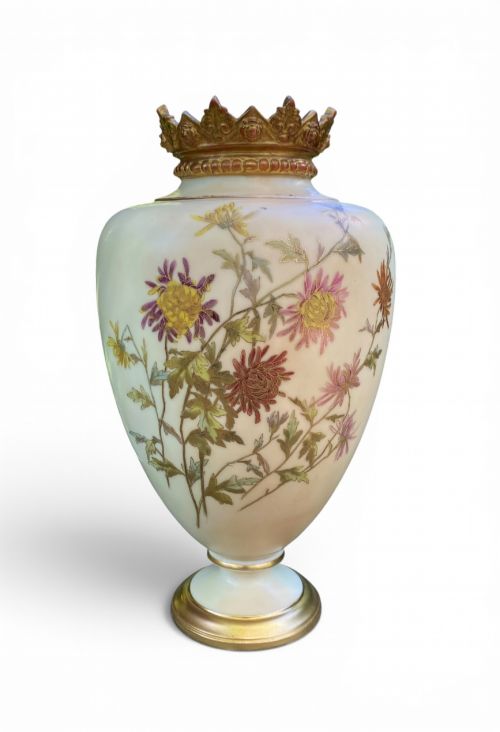


Blush Ivory Porcelain Vase
A blush ivory porcelain vase brings soft, creamy tones and delicate floral decoration into a room, offering a subtle charm that collectors prize.
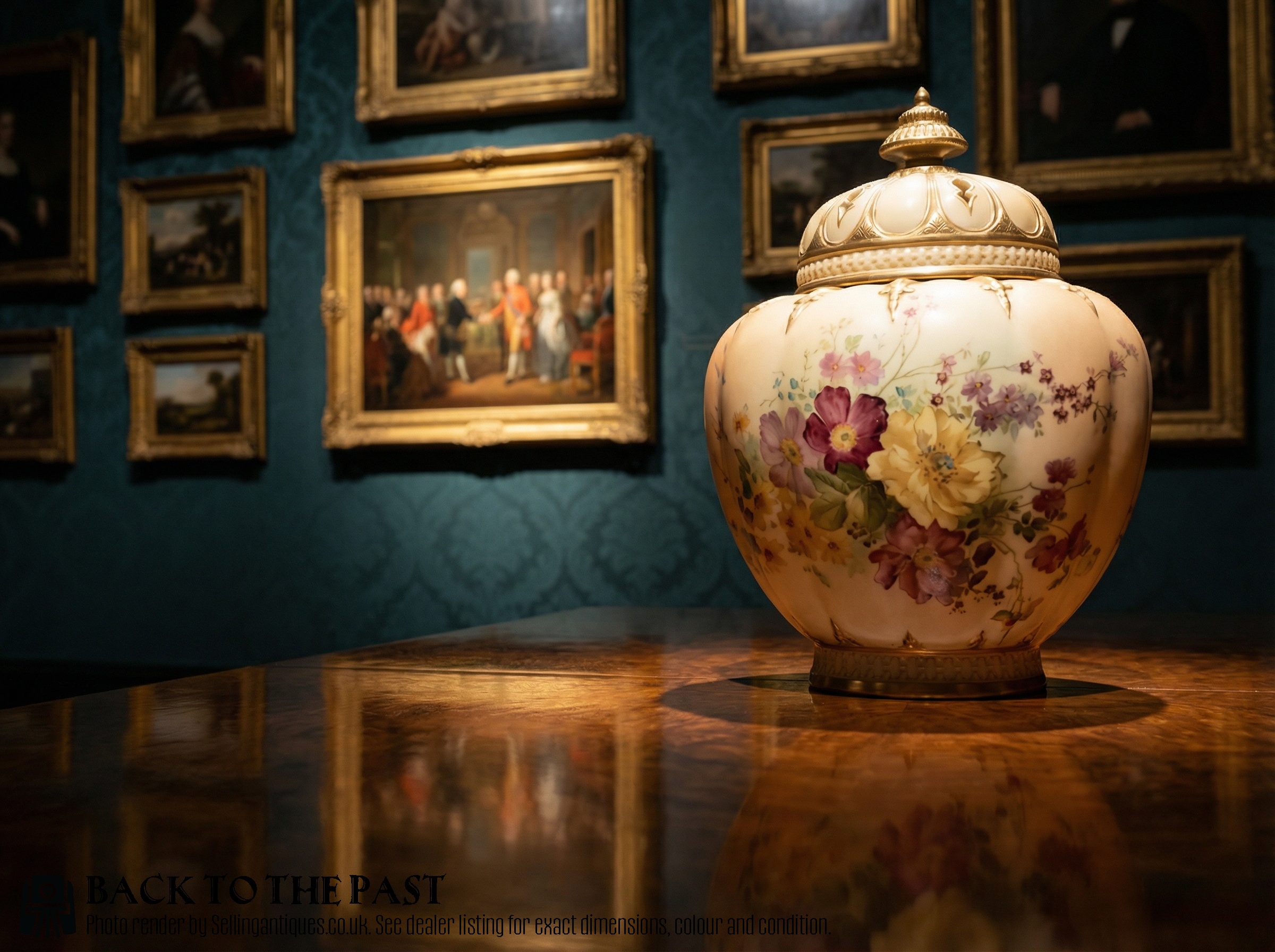
What a blush ivory porcelain vase is
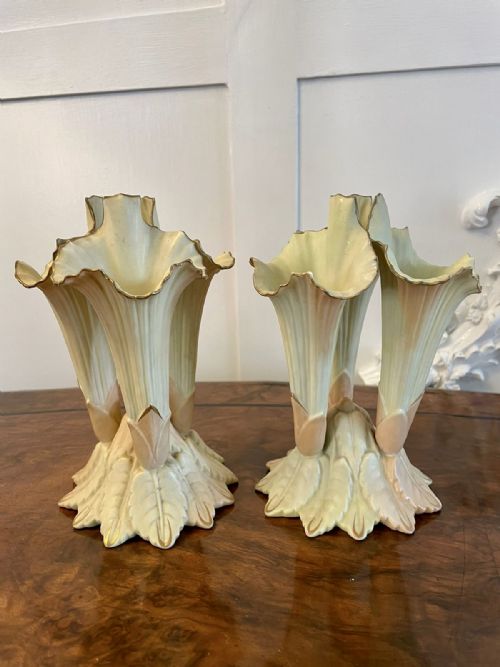
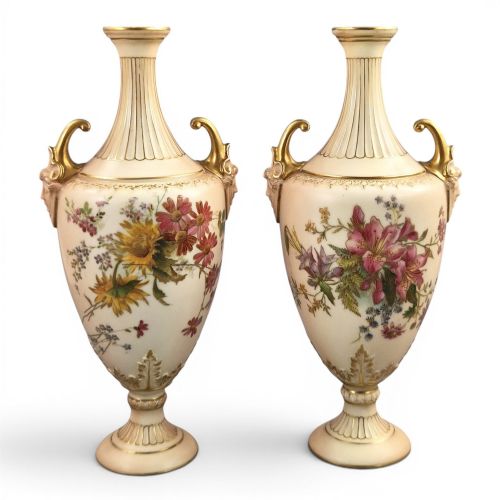
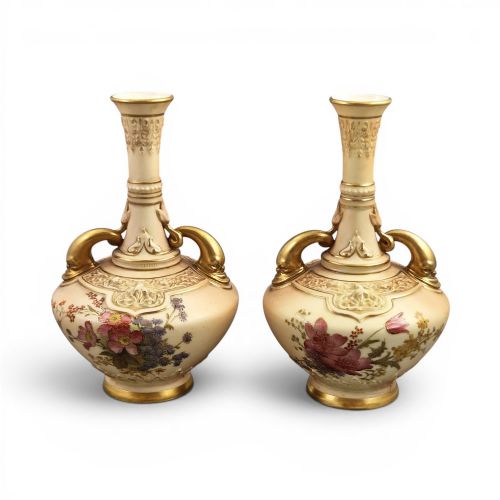
Most examples found here originate from the late nineteenth century and the early twentieth century, specifically from the 1890s through to 1912. Buyers will frequently encounter ovoid vases and pairs of decorative vases in this palette. The forms serve purely ornamental purposes, often designed to grace a mantelpiece or side table.
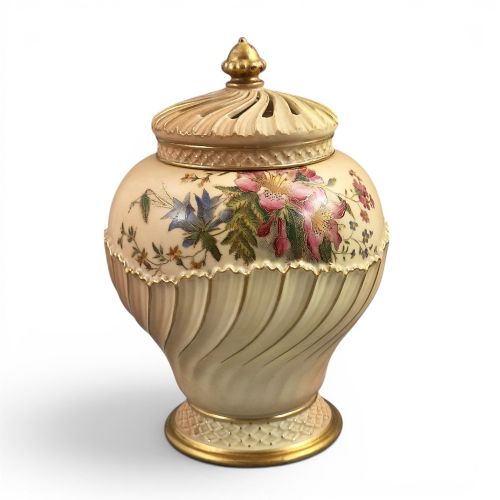
The aesthetic of a blush ivory porcelain vase relies on a matte or satin finish that mimics ivory, paired with subtle tints of pink and green beneath floral painting. Gilding frequently highlights the rims, handles, and bases of these pieces. They represent a distinct period of British ceramic production known for its refined pastel palette.

How they were made
These pieces are constructed from porcelain and finished with specialised ivory-tinted glazes. Artisans applied soft pastel colours directly onto the unfired or partially fired surface to achieve the characteristic blended blush effect. Hand-painting ensured that floral details appeared organic and integrated into the creamy body.
Gilding was applied by hand to accent structural elements such as rims and handles. This gold detailing added a layer of contrast against the matte porcelain ground. Firing processes fixed the delicate pigments and the metallic accents into the ceramic body.
Retail Price Guide 2026
Typical UK retail prices for blush ivory porcelain vase, calculated from the Sellingantiques database of over a million retail prices indexed since 2003. This retail price guide relies exclusively on Sellingantiques data; no external sources or auction records are used, so the figures do not describe the wider market.
Listings feature items from the 19th Century, 1890, 1900, 1910, and 1912, utilising porcelain and gilding.
What varies in quality
Quality in a blush ivory porcelain vase rests upon the precision and delicacy of the hand-painted floral decoration. Finer examples display meticulous brushwork with subtle shading that mimics natural flora, whereas simpler pieces feature more repetitive or mechanical application. The nuance of the background tinting also separates standard production from finer work.
The application and preservation of the gilding dictate a significant portion of the value and visual success of the piece. Crisp, intact gold accents that retain their original burnish elevate the object. The subtlety of the porcelain body's matte finish further distinguishes superior manufacturing.
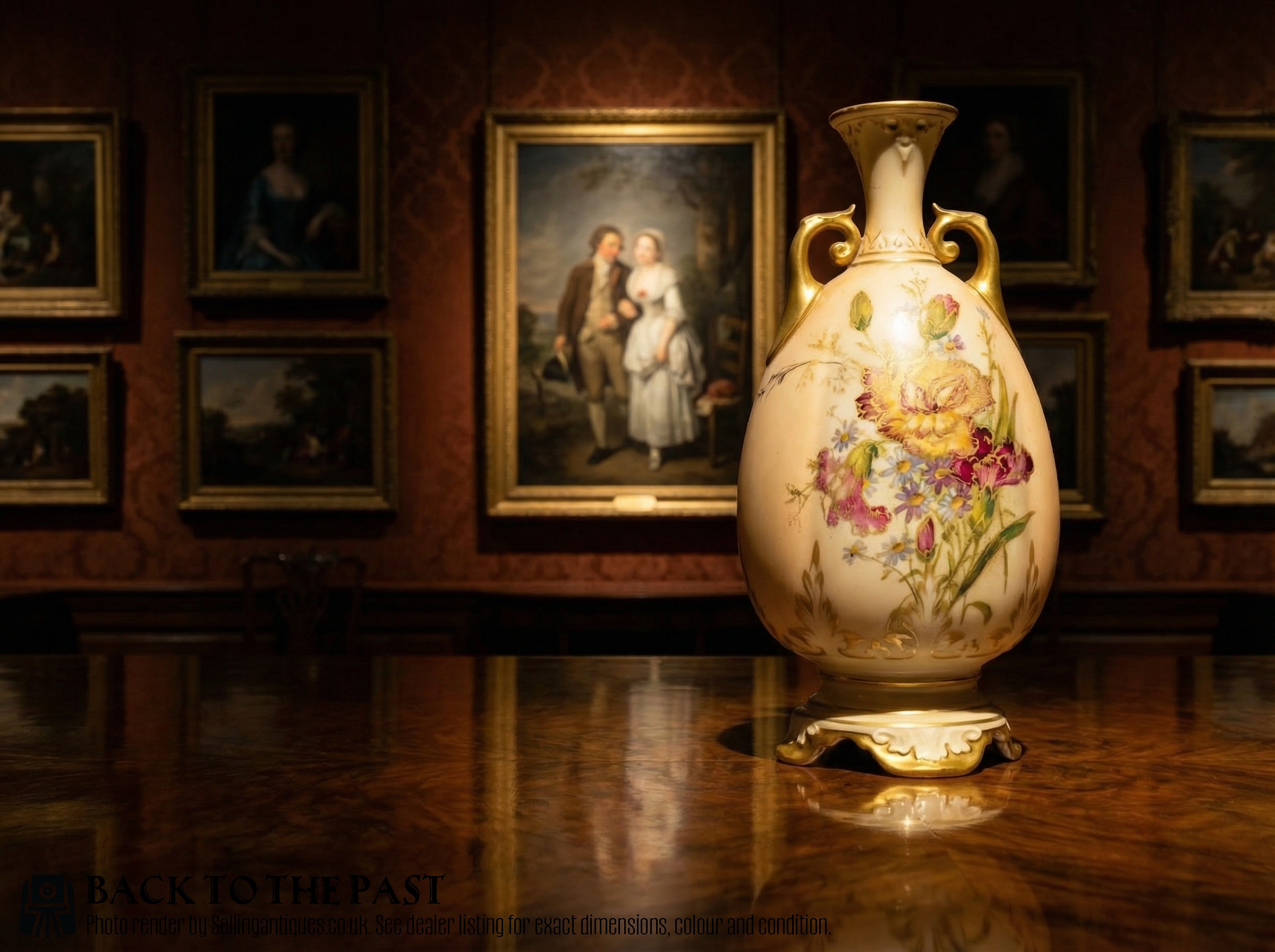
Royal Worcester·Locke And Co
The Blush Ivory Porcelain Vase Glossary
- Blush ivory
- A ceramic finish developed to resemble the warm, creamy tone of real elephant ivory, typically used as a ground for floral painting. It provides a soft, matte backdrop for pastel decoration.
- Ovoid
- An egg-shaped vessel form that swells gently in the centre before tapering towards the base and neck. This shape was frequently utilised for decorative porcelain pieces.
- Cachepot
- An ornamental flowerpot container designed to hold a plain plant pot and conceal its utilitarian appearance. These vessels often feature matching saucers or integrated bases.
- Spill vase
- A narrow, upright vessel historically used to hold wooden spills for lighting fires and candles. They became purely decorative mantelpiece ornaments in later periods.
- Gilt
- A thin layer of gold applied to the surface of the porcelain as a decorative accent. It is commonly found highlighting rims, handles, and moulded details.
Frequently Asked Questions
How do I date a blush ivory vase?
Dating relies heavily on manufacturer marks stamped on the base of the porcelain. Different symbols and numbers correspond to specific decades of production during the Victorian and Edwardian eras.
Stylistic elements like the style of floral painting and the presence of gilding also help narrow down the period of manufacture.
Were these vases used for flowers?
Many specific forms, such as cachepots and spill vases, had functional origins relating to plants or household fires. Over time, however, most served primarily as decorative ornaments.
Water can sometimes damage the interior glazes or older bodies of antique porcelain, so modern usage leans towards dry display.
How do I clean a porcelain vase?
Dusting gently with a soft, dry cloth is the safest method for maintaining the matte surface. Avoid using harsh chemical cleaners or abrasives that can wear away the delicate hand-painting.
Moisture should be kept away from gilt edges and painted areas to prevent accidental fading or loss of detail.
What styles match these vases?
These pieces fit naturally into traditional Victorian and Edwardian interior schemes. Their pastel tones and floral motifs complement period furniture and classic decor.
They also function well as accent pieces in eclectic settings that incorporate nineteenth-century ceramics.