




Royal Worcester Pot Pourri
Royal Worcester pot pourri pieces bring together delicate porcelain forms and painted botanical or animal scenes to scent and decorate traditional interiors.

Royal Worcester Pot Pourri
When you search for Royal Worcester pot pourri, you encounter decorative porcelain vessels designed to hold scented dried plant material. These pieces range from compact jars with pierced covers to large ovoid vases with crown lids.
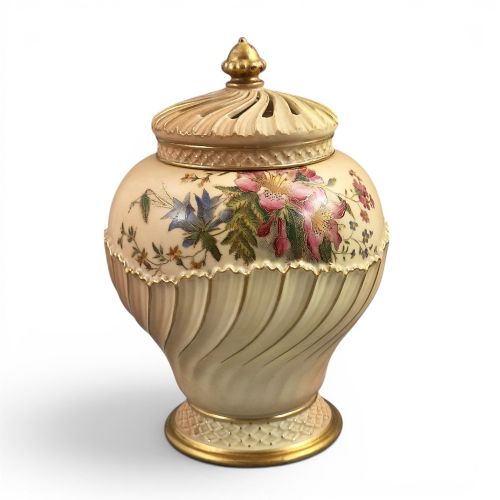
The pieces on this page span several decades from the Edwardian era through the mid-twentieth century. Blush ivory ground items and later painted fruit designs appear frequently among the listings.
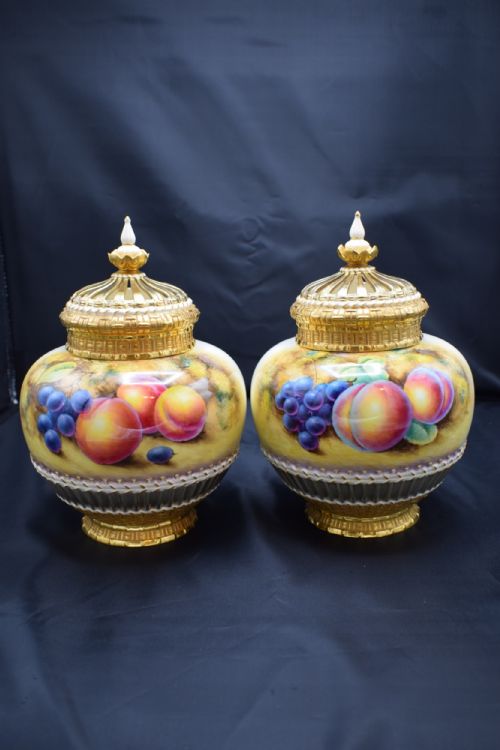
Forms include single jars, matched pairs and three-piece garniture sets. Many incorporate inner lids to contain the pot pourri while allowing the scent to disperse through pierced outer covers.
Materials and technique
Makers utilised fine porcelain, bone china and ceramic bodies as the foundation for these vessels. Artisans applied glazes and applied gold leaf, gilding and gilt accents to enrich the surface decoration.
Painting techniques combined delicate enamel work with hand-painted natural subjects such as fruit, roses, swans and highland cattle. Skilled artists signed their work directly onto the porcelain body before final firing.
Royal Worcester Pot Pourri Retail Price Guide 2026
Typical asking prices for royal worcester pot pourri among the pieces listed under this phrase on Sellingantiques today, from the lower quarter to the upper quarter. They describe what is for sale here now, not the wider market.
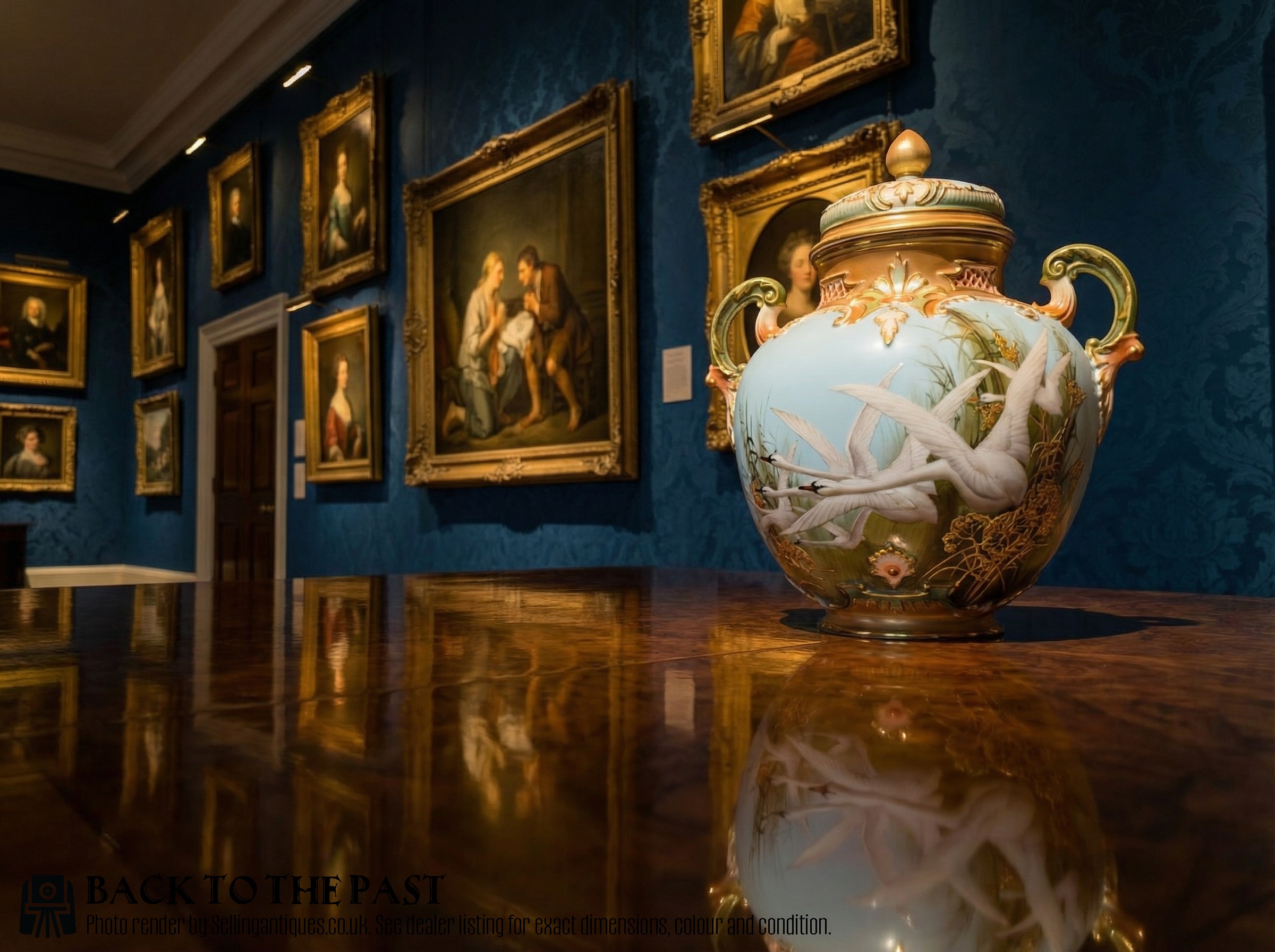
Artists occasionally painted soaring swans and highland cattle onto pot pourri jars, ensuring the fragrance came with wildlife.
Judging quality
The distinction between standard production and top-tier pieces rests on the identity of the artist and the complexity of the painted scene. Signed works by noted painters command greater attention than unsigned or generic floral decorations.
The crispness of the pierced work on the crown covers and the richness of the gilding also indicate the standard of manufacture. Well-preserved blush ivory surfaces with subtle shading represent superior examples of the factory's output.
Royal Worcester·Royal China Works Worcester·Hadley
The Royal Worcester Pot Pourri Glossary
- Blush ivory
- A soft matte cream-coloured porcelain ground used extensively by the factory. It provides a muted background for floral and gilt decoration.
- Crown cover
- A pierced or openwork lid shaped like a crown. It sits atop the pot pourri jar to allow scent to escape.
- Garniture
- A set of three matching vases or jars displayed together on a mantelpiece or sideboard. They typically feature a central vessel and two smaller matching pieces.
- Ovoid
- An egg-shaped vessel form common in pot pourri jar design. This rounded profile allows for expansive painted scenes across the body.
Royal Worcester Pot Pourri: Frequently Asked Questions
What is a royal worcester pot pourri vase?
These are ceramic and porcelain vessels created to hold fragrant dried petals and plant materials. They typically feature pierced lids or crown covers designed to release scent into a room.
Production spans various periods, featuring finishes from blush ivory grounds to detailed hand-painted fruit and animal scenes.
How do you date a royal worcester pot pourri?
Dating relies on factory marks stamped to the underside of the porcelain, alongside the prevailing artistic style of the piece. Edwardian and Victorian examples often display blush ivory finishes, while mid-century items favour painted fruit.
Comparing the specific signature of the artist or the pattern shape number helps narrow down the year of manufacture.
How were pot pourri jars used originally?
In period interiors, these vessels functioned as practical air fresheners for drawing rooms and parlours. The inner lid contained the dried botanical mixture while the pierced outer cover diffused the fragrance.
Over time, their decorative qualities took precedence, leading to prominent placement on mantelpieces and display cabinets.
Are painted fruit pieces different from blush ivory?
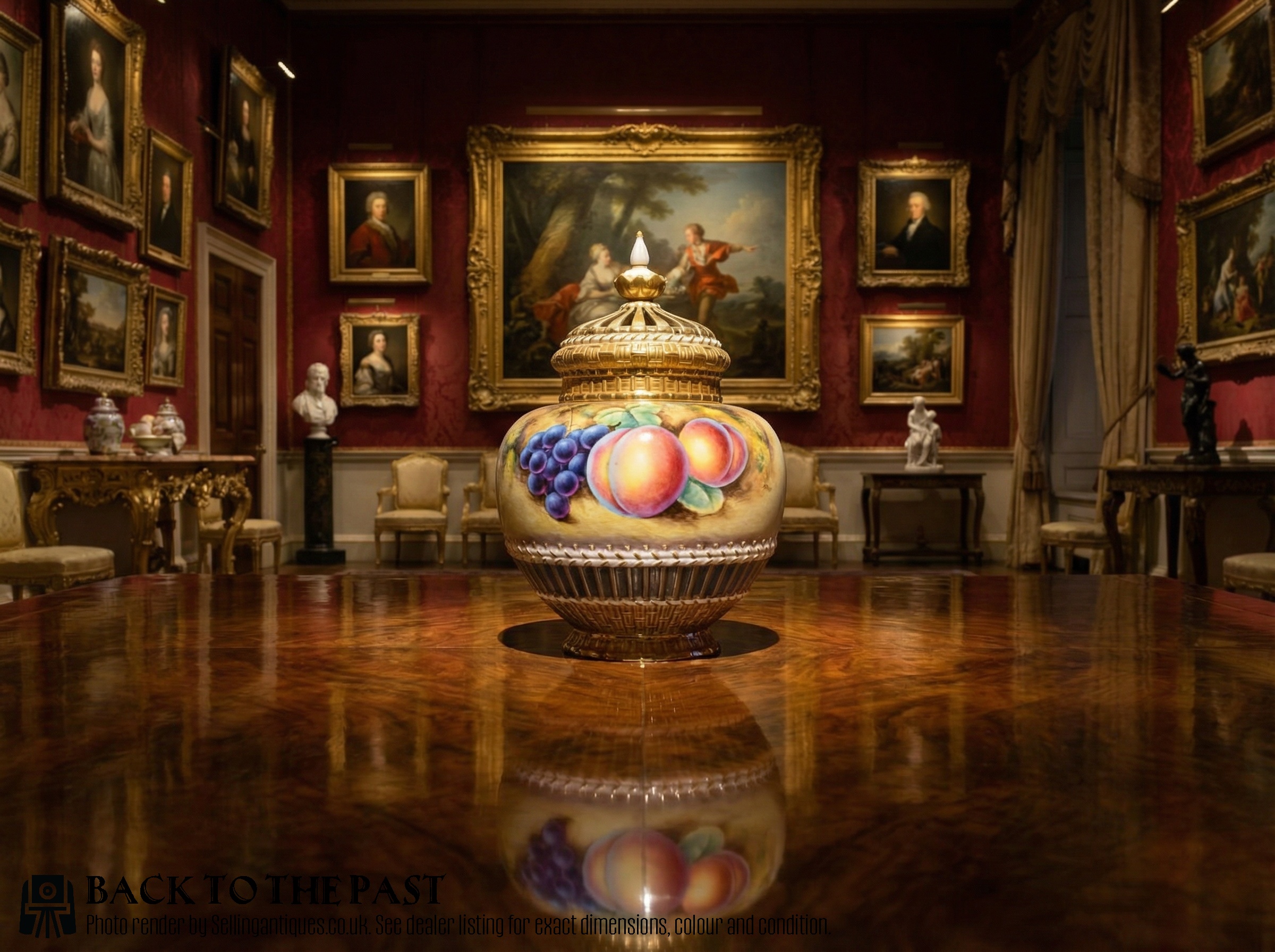
Painted fruit pieces represent a distinct decorative style where artists covered the porcelain surface with detailed studies of autumn fruits and berries. These often feature rich gilding and prominent artist signatures.
Blush ivory pieces rely on softer, transfer-printed or lightly tinted floral motifs against a matte cream ceramic ground.