


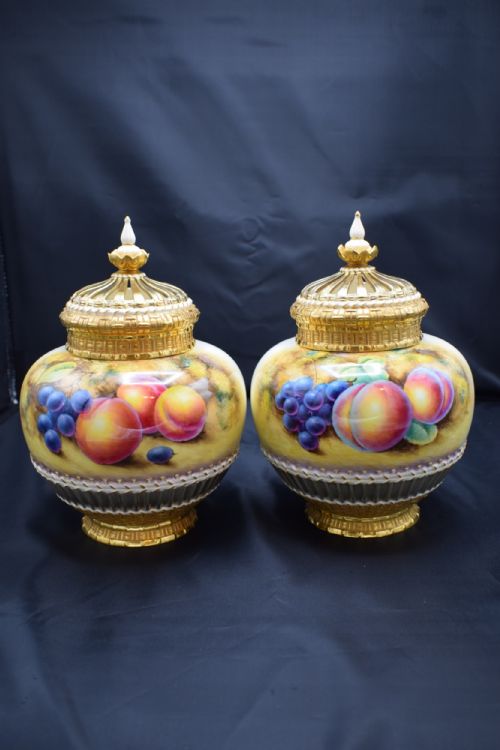


Painted Fruit Porcelain Urn
These painted fruit porcelain urn vessels bring remarkable hand-painted botanical detail and rich gilding directly to a mantelpiece or side table.
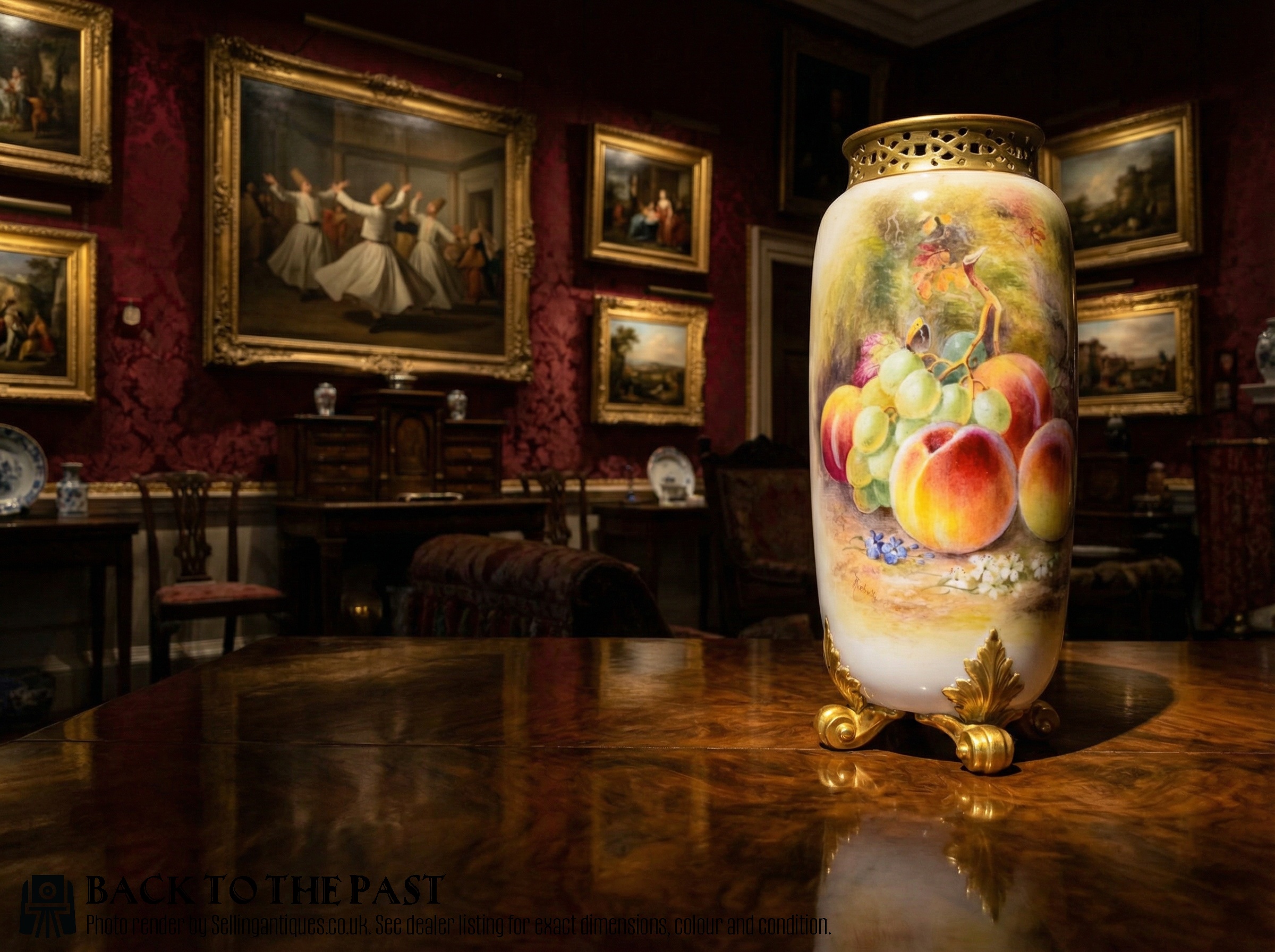
Painted Fruit Porcelain Urn
When you search for a painted fruit porcelain urn, you encounter vessels designed for both decoration and utility, ranging from pot pourri vases and ginger jars to ice pails and decorative ewers. The majority of these pieces originate from the twentieth century, alongside select examples from the Victorian and Regency periods.
Makers such as Royal Worcester dominate the selection, frequently presenting classic forms enriched with detailed studies of autumn fruits and berries. These objects showcase traditional English porcelain craftsmanship, alongside occasional French Rococo Revival influences and Sevres style pieces.
The assortment spans traditional pot pourri vases with pierced covers, large rose jars, and matched pairs of ewers. Each piece relies on the juxtaposition of lush fruit against soft neutrals or dark backgrounds to command attention in a room.
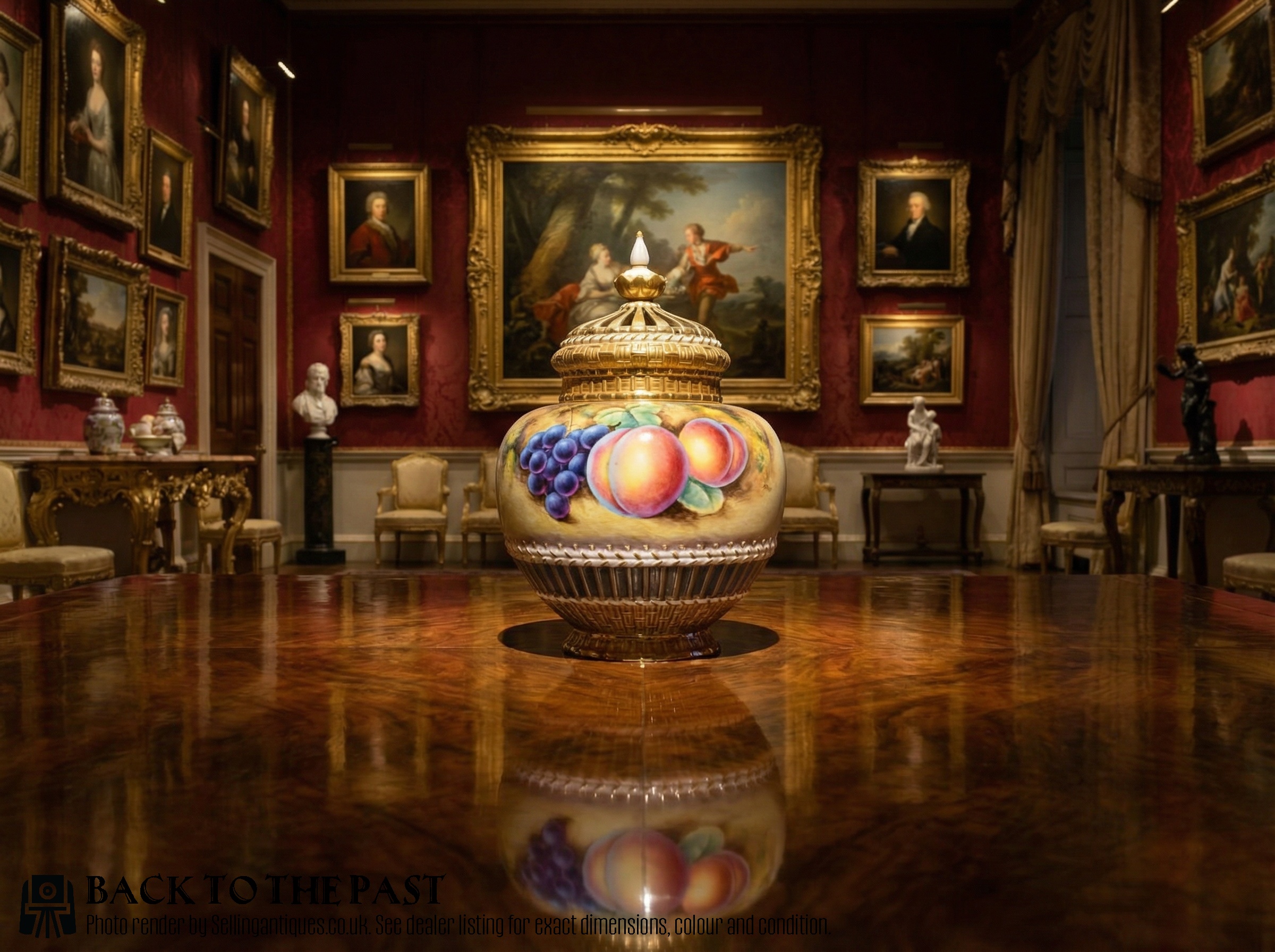
What varies in quality
The artistic merit of the painted fruit decoration dictates the standing of each piece, distinguishing factory work from the celebrated output of named artists. Pieces signed by established painters command attention for their precise brushwork and nuanced colour blending.
The application and preservation of the gilding further separate standard items from superior examples. Heavy, clean gold leaf detailing that remains intact without rubbing indicates a higher grade of original production and careful subsequent handling.
Several pieces preserve the exact brush signatures of artists like Kitty Blake, who apparently painted roses and fruit while listening to the radio.
Royal Worcester·Coalport·Flight Barr And Barr
The Painted Fruit Porcelain Urn Glossary
- Pot pourri vase
- A decorative vessel featuring a pierced or perforated cover designed to allow scented dried plant materials to fragrance a room. These often include internal liners.
- Ewer
- A large jug with a wide spout and elaborate handle, traditionally used for water but produced here purely for decorative display. They frequently appear in matched pairs.
- Bone china
- A type of soft-paste porcelain containing bone ash, noted for its high strength, chip resistance, and translucent white body. It serves as the standard canvas for fine English painting.
- Ormolu
- Gilded bronze used for mounts, handles, and feet on decorative porcelain objects. It adds structural weight and a bright metallic contrast to the ceramic body.
- Gilding
- The application of gold leaf or gold powder to the surface of porcelain. It highlights rims, handles, and panel borders.
Painted Fruit Porcelain Urn: Frequently Asked Questions
How do I date a painted fruit urn?
Examine the factory backstamp on the underside of the porcelain base, as manufacturers altered their marks through the Victorian and twentieth-century periods. Stylistic details like heavy ormolu mounts or specific artist signatures also help narrow down the decade of production.
Compare the form and gilding style with documented pieces from makers such as Royal Worcester or Coalport to confirm the era. Regency and Victorian examples typically display different paste weights and handle configurations compared to mid-twentieth-century items.
Were these urns used for pot pourri?
Many vessels designed with pierced or removable covers served as functional containers for dried scented herbs and petals. The perforations allowed fragrance to disperse gently into the principal rooms of a house.
Other variations, such as ginger jars, ewers, and ice pails, had entirely different original functions before becoming purely decorative display items. The presence of internal liners often confirms genuine pot pourri use.
Who painted the fruit on these pieces?
Factories employed skilled specialist artists who signed their miniature fruit studies directly onto the porcelain body. Names such as Ricketts, Freeman, Chivers, and Ayrton appear frequently on mid-period and twentieth-century works.
These artists trained extensively in botanical and still-life painting before transferring to ceramic studios. Their signatures usually appear subtly near the base of the fruit composition.