
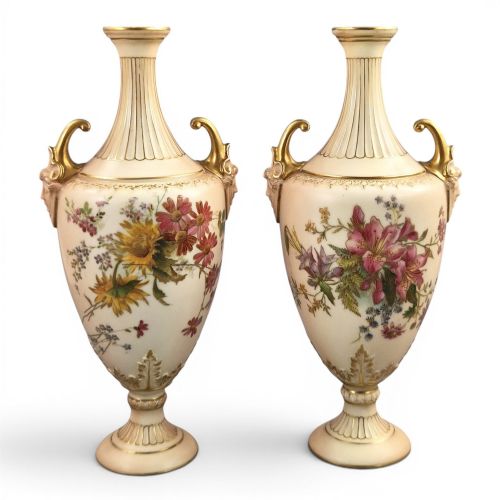
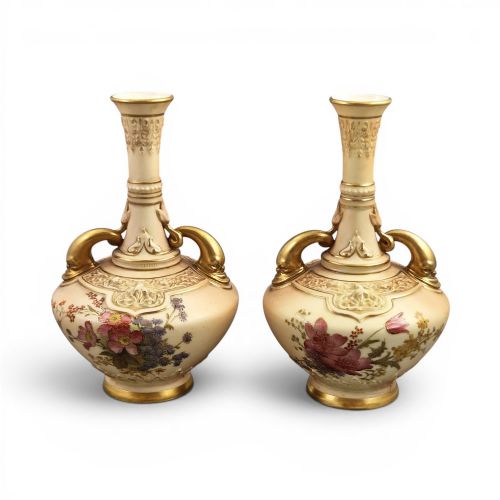
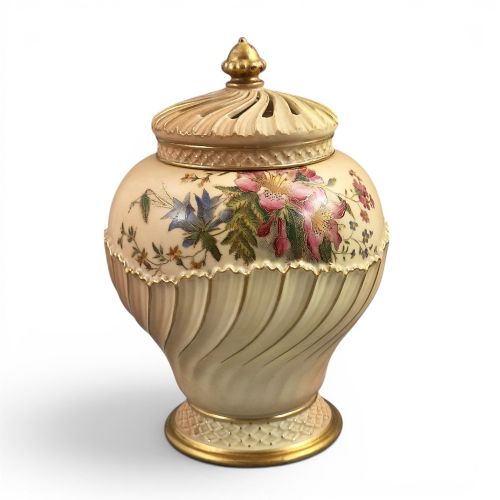
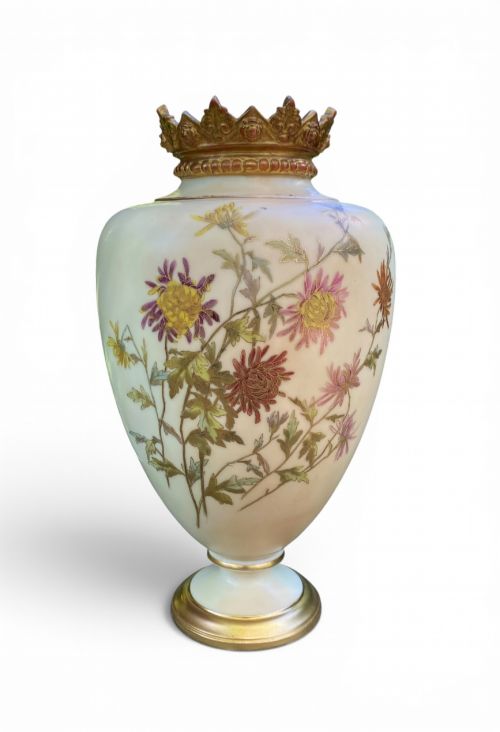


Edwardian Royal Worcester Vase
An Edwardian Royal Worcester vase brings together delicate porcelain and master painting from the turn of the twentieth century.
What these pieces are
The Edwardian Royal Worcester vase embodies the pinnacle of British ceramic artistry from the early twentieth century. Buyers seeking this phrase look for refined decorative vessels that showcase intricate hand-painted motifs and meticulous porcelain craftsmanship.
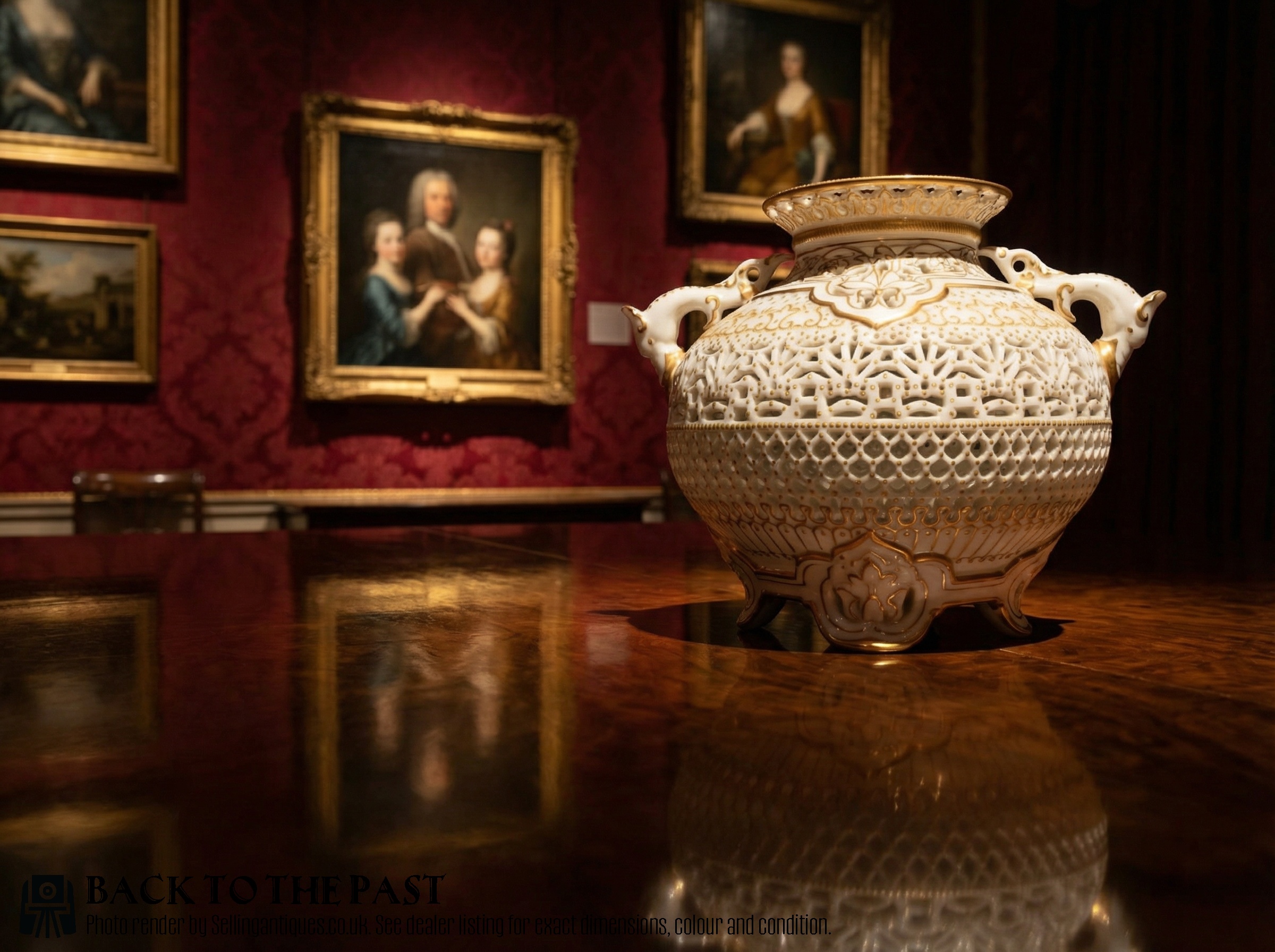
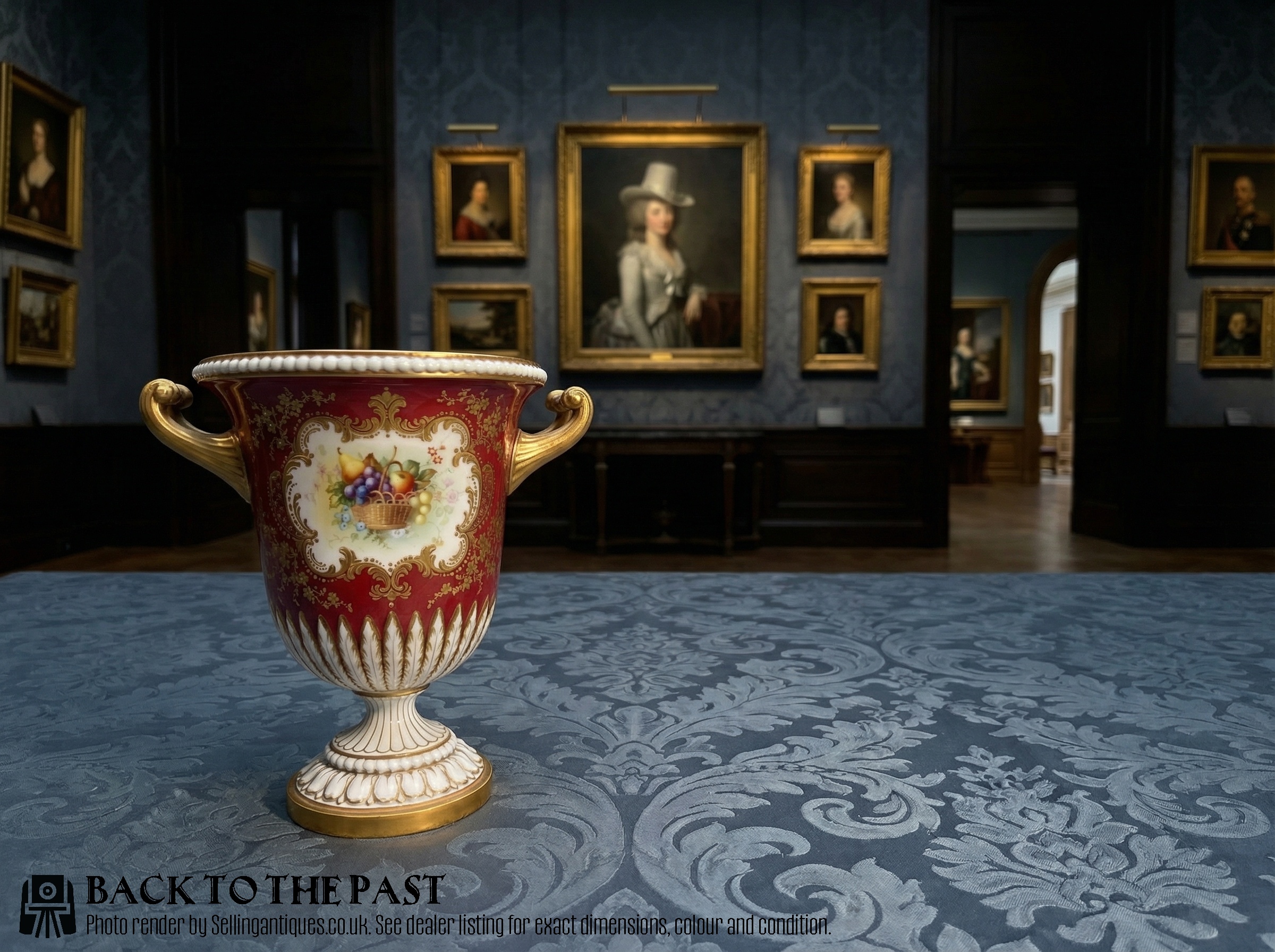
The versions most commonly met on this page span decorative vases, spill vases, pot pourri jars, and covered urns. These pieces frequently feature floral or fruit designs created by notable factory artists.
While the production periods extend across the twentieth century into the nineteen-forties and touch upon late Victorian origins, the core aesthetic remains rooted in the Edwardian era. Collectors appreciate both standard decorative forms and specialised reticulated pieces.
How they were made
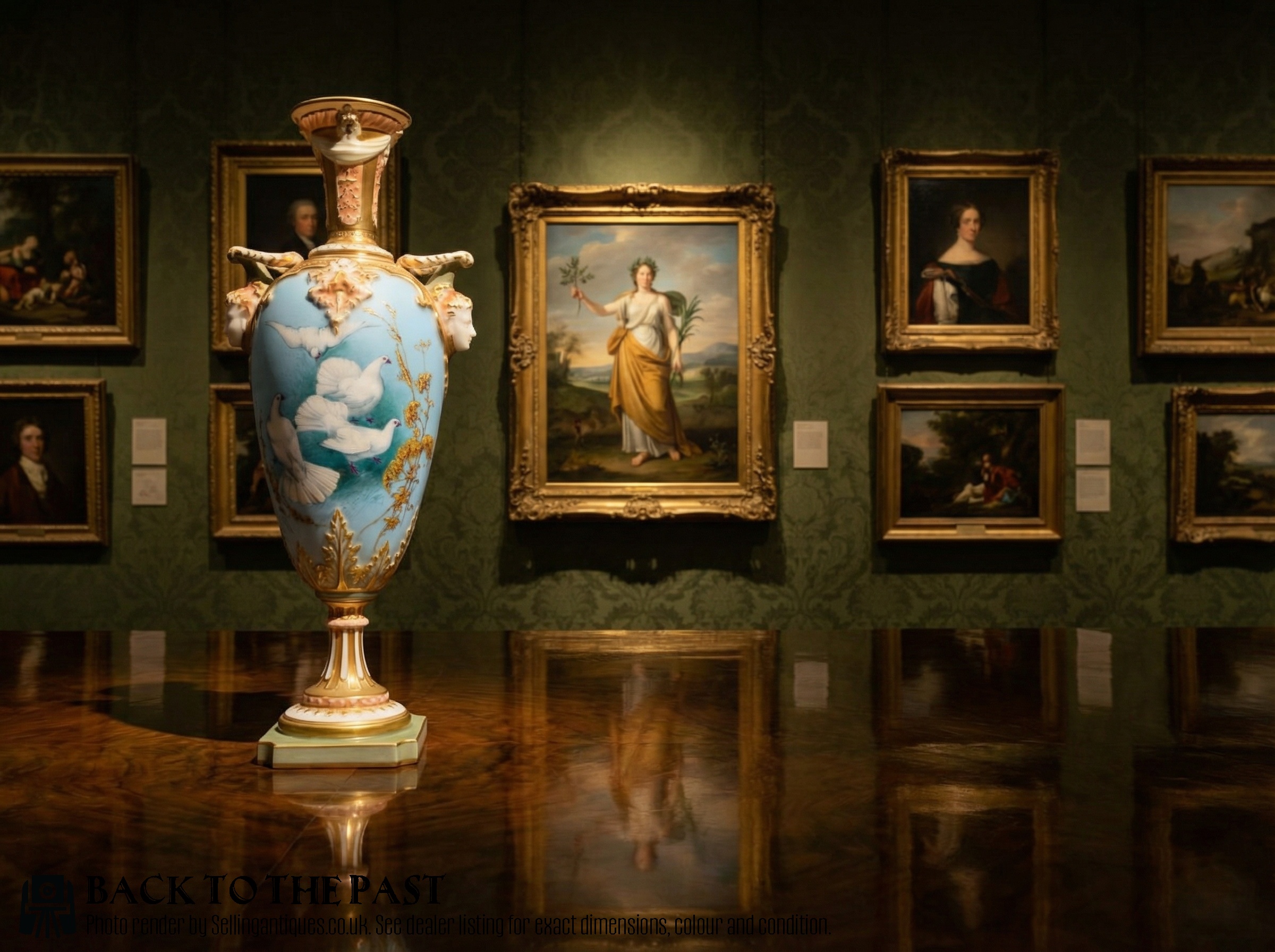
Potters shaped fine porcelain into graceful forms before applying detailed enamel colours and rich gilding. Artisans utilised gold leaf and gilt to highlight rims, handles, and intricate surface patterns.
Specialised techniques included delicate piercing known as reticulation, which required exceptional skill to cut through leather-hard clay without distortion. Surface decoration relied entirely on skilled hand-painting rather than transfer printing.
Retail Price Guide 2026
Typical UK retail prices for edwardian royal worcester vase, calculated from the Sellingantiques database of over a million retail prices indexed since 2003. This retail price guide relies exclusively on Sellingantiques data; no external sources or auction records are used, so the figures do not describe the wider market.
Listings feature porcelain forms spanning the Victorian era through the nineteen-forties, decorated with enamel, gold leaf, and gilt.
What varies in quality
Quality rests upon the identity of the artist and the complexity of the hand-painted subject matter. Vases bearing signed work by renowned painters command greater attention than standard floral patterns.
The technical ambition of the manufacturing process also defines the hierarchy. Pierced reticulation and elaborate covers demonstrate a higher degree of porcelain expertise than simpler spill vase forms.
The Edwardian Royal Worcester Vase Glossary
- Reticulated
- Pierced or openwork decoration cut into the clay before firing. This intricate technique demonstrates the highest level of potter skill.
- Spill vase
- A slender cylindrical container originally designed to hold wooden spills for lighting fires or candles. These smaller vessels often display delicate painted panels.
- Pot pourri
- A decorative jar with a pierced cover designed to diffuse dried scented flowers into a room. These lidded pieces frequently feature elaborate painted fruit or floral motifs.
- Gilding
- The application of gold leaf or gilt paint to ceramic surfaces. It provides rich metallic accents that frame the painted panels.
- Enamel
- Vitreous coloured glass fused to the porcelain surface through firing. This medium allows for the vibrant and permanent hues seen on floral and fruit subjects.
Frequently Asked Questions
What are these vases?
These pieces are fine porcelain decorative vessels produced by the Royal Worcester factory, primarily during the early twentieth century. They encompass various forms including spill vases, covered urns, and pot pourri jars.
Each item showcases traditional British ceramic manufacturing combined with hand-painted artistry. Collectors prize them for their distinct decorative styles and artist signatures.
How were they used?
Owners originally displayed these vases in formal drawing rooms and parlours as ornamental centrepieces rather than functional flower holders. Spill vases served the practical purpose of holding tapers for lighting lamps and hearths.
Lidded pieces such as pot pourri jars held dried scented botanicals to fragrance domestic interiors. Their primary role remained decorative, signalling taste and refinement.
How do I live with them?
Display these porcelain vessels away from direct sunlight and heavy foot traffic to protect their delicate enamel painting and gilding. Position them on stable surfaces where their painted details can be closely observed.
Cleaning requires only gentle dusting with a soft, dry cloth. Avoid using water or chemical cleaners on the gilded and painted surfaces.
How do I tell periods apart?
Differentiating production periods relies on examining factory date marks stamped on the ceramic base alongside stylistic shifts. Edwardian examples often feature naturalistic floral or fruit painting executed by named studio artists.
Later pieces from the nineteen-thirties and forties continue these traditional painting themes while reflecting changing modernist influences in their secondary ornamentation. Comparing artist signatures helps anchor pieces to specific decades.