




Gilded Worcester Porcelain Jar
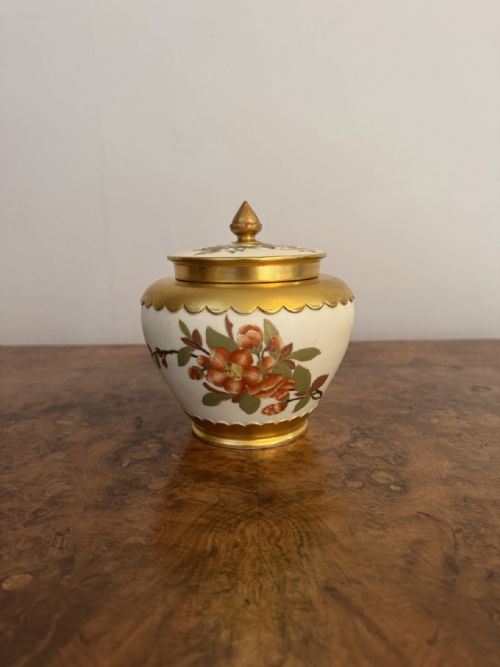
A gilded worcester porcelain jar brings brilliant English craft and painterly floral or avian scenes directly into a room.
Gilded Worcester Porcelain Jar
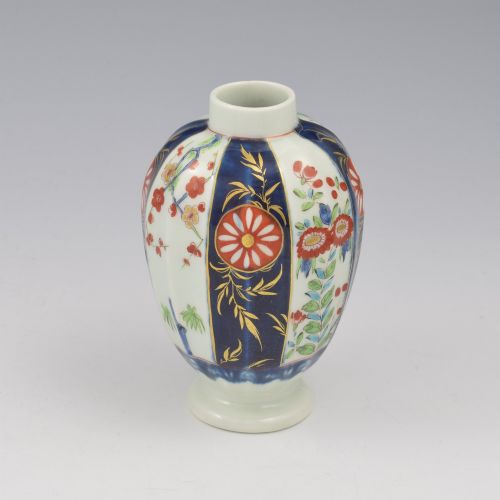
A gilded worcester porcelain jar encompasses a rich variety of lidded vessels, ginger jars, and potpourri pots produced across multiple centuries of English ceramic history. Collectors searching this phrase encounter everything from eighteenth-century soft-paste tea canisters and pommanders to twentieth-century blush ivory pedestal vases and painted fruit jars.
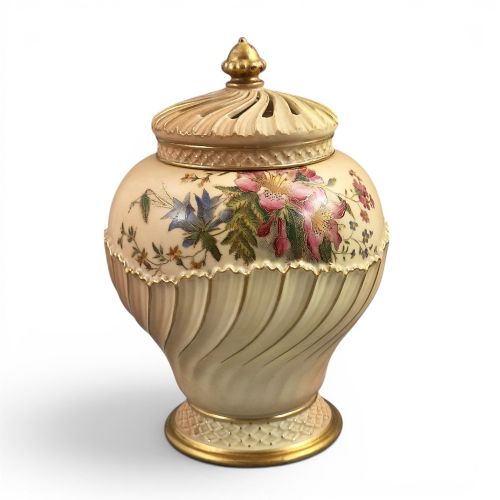
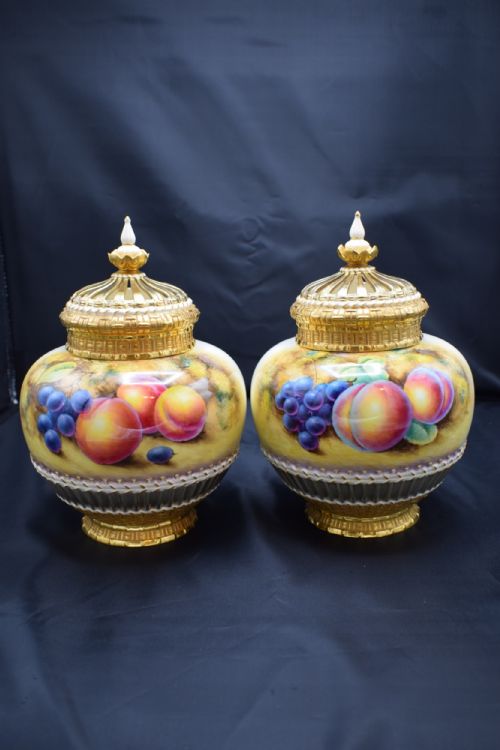
The nineteenth and twentieth centuries supply the majority of the items on this page, particularly Victorian and Edwardian blush ivory pieces alongside mid-century painted fruit and rose designs. Forms range from simple ovoid jars with crown covers to elaborate urns and multi-piece potpourri sets bearing the signatures of notable artists.
How they were made
Potters shaped these vessels using fine ceramic pastes, including soft-paste porcelain and fine bone china, before applying intricate enamel colours and metallic enrichment. Artisans utilised gold leaf, gilt, and heavy gilding to highlight handles, rims, and shoulders.
Skilled painters decorated the porcelain bodies by hand, producing detailed renderings of fruits, birds, and botanical subjects. Many pieces received a soft blush ivory ground before the final application of gilding and protective glaze.
Listings span periods from the eighteenth century through the 1960s, uniting soft-paste porcelain, blush ivory, and fine bone china.
What varies in quality
The nuance and precision of the hand-painted decoration dictate the standing of an individual piece. Works bearing the signatures of recognised factory artists display superior brushwork and depth compared to standard factory output.
The crispness of the moulded porcelain form and the preservation of the gold leaf or gilt enrichment determine desirability. Intact crown covers and matching multi-piece sets retain greater integrity than altered or incomplete vessels.
Dr Wall·Royal Worcester·Hadley Ware·Chamberlain Worcester
The Gilded Worcester Porcelain Jar Glossary
- Blush ivory
- A matte cream-coloured porcelain ground developed by Royal Worcester that mimics the appearance of ivory. It serves as a subtle backdrop for polychrome floral and animal painting.
- Potpourri jar
- A lidded vessel designed to hold dried scented plant materials. Perforated covers allow the fragrance to disperse while concealing the contents.
- Soft-paste porcelain
- An early ceramic composition fired at lower temperatures than hard-paste porcelain. It exhibits a warm, slightly translucent body common in eighteenth-century pieces.
- Gilt
- A thin layer of gold applied to the surface of the ceramic. It provides metallic highlights that contrast with the painted enamel colours.
- Tea canister
- A small lidded jar utilised for storing dry tea leaves. These early forms often feature delicate underglaze or enamelled decoration.
Gilded Worcester Porcelain Jar: Frequently Asked Questions
How do I date a piece?
Examine the factory marks stamped or painted on the underside of the ceramic base, which often use changing dots, letters, or crowns to indicate specific decades of production.
Style indicators such as Victorian blush ivory grounds or eighteenth-century soft-paste bodies also point toward particular eras.
What is blush ivory?
Blush ivory is a specialised matte cream glaze introduced during the late nineteenth century to give porcelain the warm texture of natural elephant tusk.
This surface acts as a soft foundation for delicate hand-painted floral sprays and gilded highlights.
How were potpourri jars used?
These vessels held dried flower petals mixed with spices to freshen the air in period sitting rooms and parlours.
The pierced crown covers allowed the aromatic scents to drift outward while keeping the dried mixtures contained inside.
Are painted fruit pieces genuine?
Factory artists signed many of the mid-century fruit and bird designs by hand on the exterior body or near the base.
Matching the painted signature against known factory records helps verify the authenticity of the decoration.