


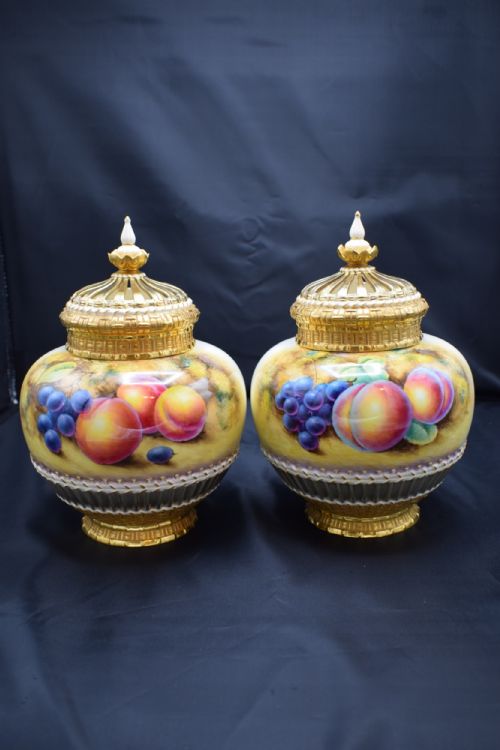


Painted Fruit Porcelain Vase
A painted fruit porcelain vase brings remarkable hand-painted botanical detail into a room through rich ceramic forms.
Painted Fruit Porcelain Vase
A painted fruit porcelain vase showcases detailed studies of orchard produce, typically featuring apples, pears, peaches, and berries against subtle backgrounds. These pieces appear in forms such as ginger jars, pot pourri vases, ewers, and spill vases.
The pieces on this page span the Victorian era through the mid-twentieth century, with notable representation from the 1920s, 1930s, 1950s, and 1960s. Collectors will encounter traditional English porcelain and bone china shapes decorated by recognised studio artists.
Vases and urns dominate the selection, often accompanied by covers, lids, or matched pairs. The forms range from miniature spill vases to large rose jars and two-handled decorative vessels.
Distinguishing quality across pieces
Quality rests significantly on the identity of the artist whose signature appears on the porcelain. Pieces bearing the work of established painters command particular attention from collectors.
The density and complexity of the fruit painting dictate the visual success of each piece. Skilled rendering of light, shadow, and natural bruising separates standard production items from masterworks.
The application of gilding and gold leaf influences the overall richness of the object. Weighty porcelain bodies and intact, matching covers on pot pourri jars also elevate the standing of a piece.
Painted Fruit Porcelain Vase Retail Price Guide 2026
Typical asking prices for painted fruit porcelain vase among the pieces listed under this phrase on Sellingantiques today, from the lower quarter to the upper quarter. They describe what is for sale here now, not the wider market.
Listings feature porcelain and bone china enhanced with enamel and gilding across the Victorian period and the twentieth century.
Royal Worcester·Coalport
The Painted Fruit Porcelain Vase Glossary
- Pot Pourri Vase
- A decorative vessel featuring a pierced cover designed to diffuse scented dried plant material into a room. These pieces often include inner lids beneath the main decorated top.
- Bone China
- A type of soft-paste porcelain incorporating bone ash, known for high mechanical strength and milky translucency. English potteries utilised this material extensively for fine decorative items.
- Gilding
- The application of gold leaf or gilt paint to ceramic surfaces for decorative emphasis. Artisans frequently applied this technique to handles, rims, and shoulders.
- Ewer
- A large jug with a wide spout and ornate handle, historically used for pouring water but produced here as a decorative ornamental form. These objects often display painted fruit scenes wrapping around the swollen body.
- Spill Vase
- A tall, slender vessel originally used to hold thin wax tapers for lighting fires or candles. They appear frequently in pairs decorated with botanical motifs.
Painted Fruit Porcelain Vase: Frequently Asked Questions
How do I identify the artist?
Painters typically signed their names directly onto the porcelain surface near the base of the fruit composition. A signature usually takes the form of a surname or initials written in dark pigment.
Collectors can cross-reference these signatures against factory records to confirm the painter's working period. Many notable artists worked exclusively for major potteries for decades.
What styles are common?
The selection reflects traditional English porcelain styles spanning Edwardian, Art Deco, and mid-century aesthetics. These designs favour naturalistic fruit arrangements framed by heavy gilding.
While the forms follow classical shapes like urns and ginger jars, the painted decoration remains firmly rooted in traditional English ceramic illustration.
How were pot pourri vases used?
These vessels held dried flower petals mixed with spices to scent Victorian and Edwardian rooms. The pierced covers allowed the fragrance to escape while concealing the contents inside.
Many survive with their original matching lids, which collectors prize for completeness.
Are pairs common?
Potteries frequently produced matching pairs of spill vases, ewers, and pot pourri jars for mantelpieces and side tables. These matched items share identical blank forms and complementary painted compositions.
Finding a complete pair substantially increases the desirability of the objects.