


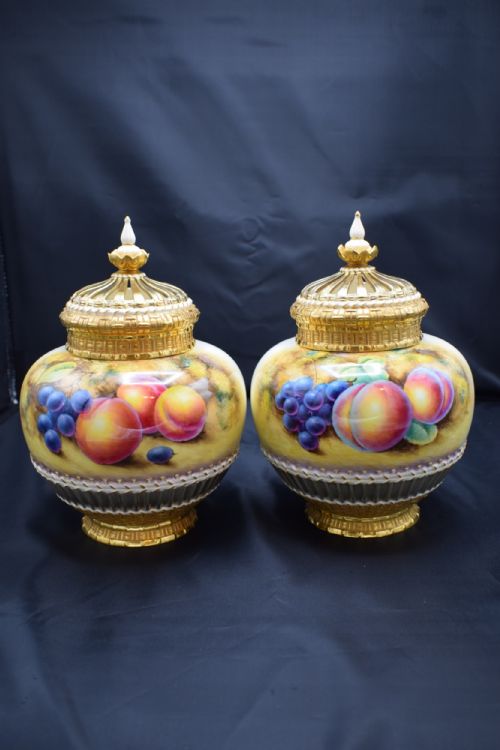


Hand Painted Fruit Jar
These hand painted fruit jar pieces are fine English porcelain and earthenware vessels adorned with orchard designs, offering both practical storage and vibrant display.
Hand Painted Fruit Jar
A hand painted fruit jar search reveals a collection of decorated storage vessels, preserve pots, and pot pourri vases originating from twentieth-century English potteries. These pieces combine utilitarian forms with intricate botanical artistry, showcasing detailed representations of apples, cherries, pears, and berries.
The versions most commonly met on this page include lidded ginger jars and pot pourri vases, predominantly produced by Royal Worcester during the 1950s and 1960s. Alongside these, buyers encounter jam pots and decorative jars from makers such as Plichta and Charlotte Rhead, spanning periods from the 1930s Art Deco era through the mid-century decades.
Assessing Quality
The standard of a hand painted fruit jar rests primarily upon the skill of the artist and the fidelity of the botanical painting. Pieces featuring named artists who rendered fruit with depth, natural shading, and botanical precision stand distinctly apart from simpler production work.
Quality also appears in the crispness of the porcelain or bone china moulding, the even application of the glaze, and the inclusion of fine gilding or gold leaf detailing. The presence of well-executed covers and matched pairs further elevates the standing of an individual piece.
Hand Painted Fruit Jar Retail Price Guide 2026
Typical asking prices for hand painted fruit jar among the pieces listed under this phrase on Sellingantiques today, from the lower quarter to the upper quarter. They describe what is for sale here now, not the wider market.
Fruit jars that once held sticky jam now sit quietly on mantelpieces, having successfully retired from pantry duty to pursue a glamorous career in fine art.
Royal Worcester·Plichta Pottery·Charlotte Rhead·Coalport
The Hand Painted Fruit Jar Glossary
- Pot pourri vase
- A decorative vessel featuring a pierced cover designed to diffuse scented dried flowers and plant materials into a room. These often include inner lids beneath the main perforated top.
- Ginger jar
- A ceramic container characterised by a wide-shouldered body and a domed cover, originally intended for storing spices but later adopted for ornamental use. The form provides an uninterrupted surface for large painted scenes.
- Preserve pot
- A small lidded jar meant for holding jams or conserves at the table, frequently modelled with cheerful fruit or berry patterns. They combine domestic utility with bright shelf appeal.
- Fine bone china
- A type of porcelain containing bone ash that yields a high degree of whiteness and translucency. This body allows delicate hand-painted enamel colours to appear particularly luminous.
- Gilding
- The application of gold leaf or powdered gold paint to ceramic surfaces, particularly around rims and finials. It provides a reflective edge that frames the central fruit artwork.
Hand Painted Fruit Jar: Frequently Asked Questions
What were hand painted fruit jars used for?
These vessels served various functions in the home, ranging from the containment of sweet preserves and ginger to the dispersion of pot pourri fragrances in principal rooms. Their decorative qualities meant they often sat on mantelpieces or side tables rather than remaining inside cupboards.
Over time, many of these lidded pots transitioned into purely ornamental display objects, prized for their colourful artistry rather than their original domestic utility. Collectors today display them to bring vibrant mid-century botanical imagery into interior spaces.
How do I identify a Royal Worcester piece?
Royal Worcester examples typically display factory backstamps underneath the base, alongside specific pattern designations or artist signatures written directly on the painted surface. Signatures such as Ayrton, John Smith, Freeman, or Kitty Blake indicate work by the factory's established fruit painters.
These pieces usually date from the 1940s, 1950s or 1960s, rendered on porcelain or bone china bodies with rich gilding. The naturalistic depiction of peaches, grapes, and berries against a shaded background serves as another strong indicator of origin.
How should I display my pot pourri vase?
Pot pourri vases look best placed where natural light can strike the enamel fruit painting and highlight the gilt or gold leaf trim. Because many include fitted pierced covers, they can still function as scent diffusers if filled with dried botanicals.
Grouping matched pairs or placing a ginger jar alongside smaller preserve pots creates a balanced arrangement on a sideboard or open shelf. Keeping them away from direct, harsh sunlight preserves the intensity of the hand-painted enamel colours over the years.
What is the difference between earthenware and porcelain?
Earthenware, such as glazed earthenware seen in preserve pots, is a porous ceramic fired at lower temperatures that requires an opaque glaze to remain watertight. Porcelain and bone china are denser, vitrified materials fired at higher heats, yielding a harder and sometimes translucent body.
Porcelain and bone china provide the refined, bright white surface preferred for detailed miniature fruit painting. Earthenware pieces often lean towards a more traditional or folk-art aesthetic, such as the Wemyss-inspired cherry patterns.