


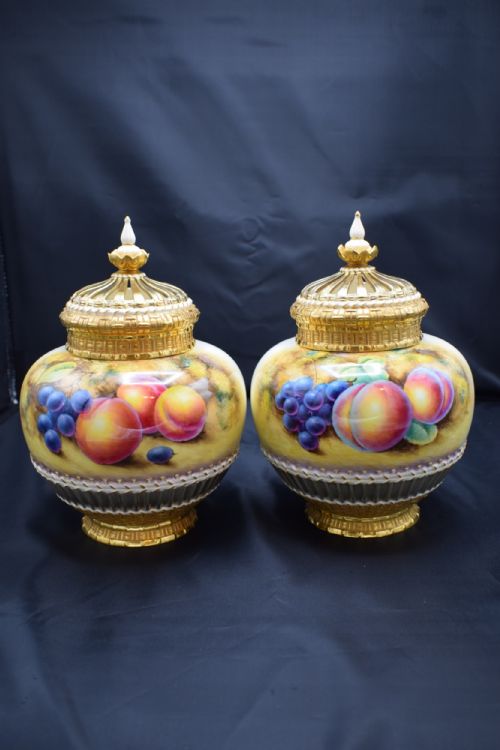


Worcester Painted Fruit Pot
These pieces of Worcester painted fruit pot span decades of porcelain craftsmanship, bringing delicate floral and botanical subjects into domestic spaces.
Worcester Painted Fruit Pot
The worcester painted fruit pot encompasses a range of ceramic vessels such as pot pourri jars, ginger jars, and vases produced across the twentieth century. These objects function primarily as decorative centrepieces, frequently featuring hand-painted fruit motifs executed by notable studio artists.
The most common formats on this page include pot pourri vases with covers and three-piece pot pourri sets dating from the nineteen-twenties to nineteen-sixty. Alongside these lidded jars, occasional coffee pots and tea services appear within the available selections.
The objects stem from English porcelain production traditions, exhibiting Edwardian and Art Deco stylistic influences across various decades of the twentieth century.
Materials and methods
These items utilise fine porcelain and bone china as their primary body materials, shaped into traditional vessel forms like urns, ginger jars, and vases. Artisans applied polychrome enamel pigments by hand to create realistic depictions of fruit and foliage.
Gilding, gold leaf, and traditional gilding techniques accentuate the rims, handles, and covers of the porcelain bodies, complementing the painted decoration with metallic highlights.
Artists sometimes concealed tiny caterpillars among the painted peaches and grapes just to surprise close observers.
Assessing quality
Quality in a worcester painted fruit pot rests largely upon the skill of the artist and the complexity of the painted composition. Pieces bearing signatures from recognised painters display superior brushwork and more intricate detail in the fruit clusters.
The presence of matching covers, multi-piece sets, and additional gilt enrichment distinguishes finer examples from simpler single vessels.
Royal Worcester·H Ayrton·John Smith·William Ricketts·Kitty Blake·Freeman·Moseley·Roberts
The Worcester Painted Fruit Pot Glossary
- Pot pourri vase
- A lidded ceramic vessel designed with pierced sections to allow dried scented plant material to perfume a room. These often feature an inner lid beneath a main decorative cover.
- Bone china
- A type of soft-paste porcelain incorporating bone ash, providing high strength and a bright white body suitable for detailed enamel painting.
- Enamel
- Vitreous coloured glass fused to the porcelain surface through firing, providing durable pigments for botanical and fruit illustration.
- Gilding
- The application of gold leaf or powdered gold to ceramic surfaces to ornament edges, handles, and borders.
Worcester Painted Fruit Pot: Frequently Asked Questions
What is a worcester painted fruit pot used for?
These vessels served primarily as ornamental display pieces in traditional English interiors, with specific forms designed to hold scented dried flower petals.
Over the decades, their role shifted towards cabinet display and collection as fine art porcelain.
How do I date a painted fruit piece?
Dating relies on recorded production periods spanning from the nineteen-twenties through to nineteen-sixty, alongside stylistic markers from the Edwardian era and Art Deco periods.
Maker marks and individual artist signatures further help narrow the specific decade of creation.
Are all pieces signed by the artist?
Many of the porcelain items feature signatures from specific painters like H Ayrton or John Smith, though unsigned examples also occur within the wider tradition.
Signed works generally indicate specific individual authorship from the factory's studio painters.
How should I care for gilded porcelain?
Gilt and enamel decorations require gentle handling, avoiding abrasive cleaning agents or harsh scrubbing that might damage the surface gilding.
Keeping the porcelain away from direct, harsh sunlight helps preserve the vibrancy of the hand-painted fruit enamels over time.