








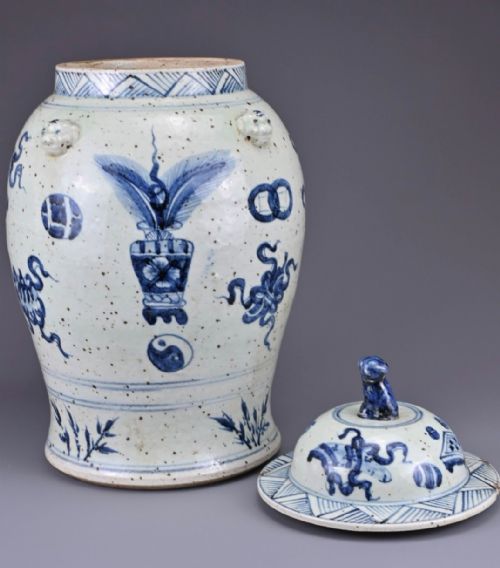
Porcelain Ginger Jar
A porcelain ginger jar brings centuries of quiet domestic history into a modern room through its robust form and painted surface.
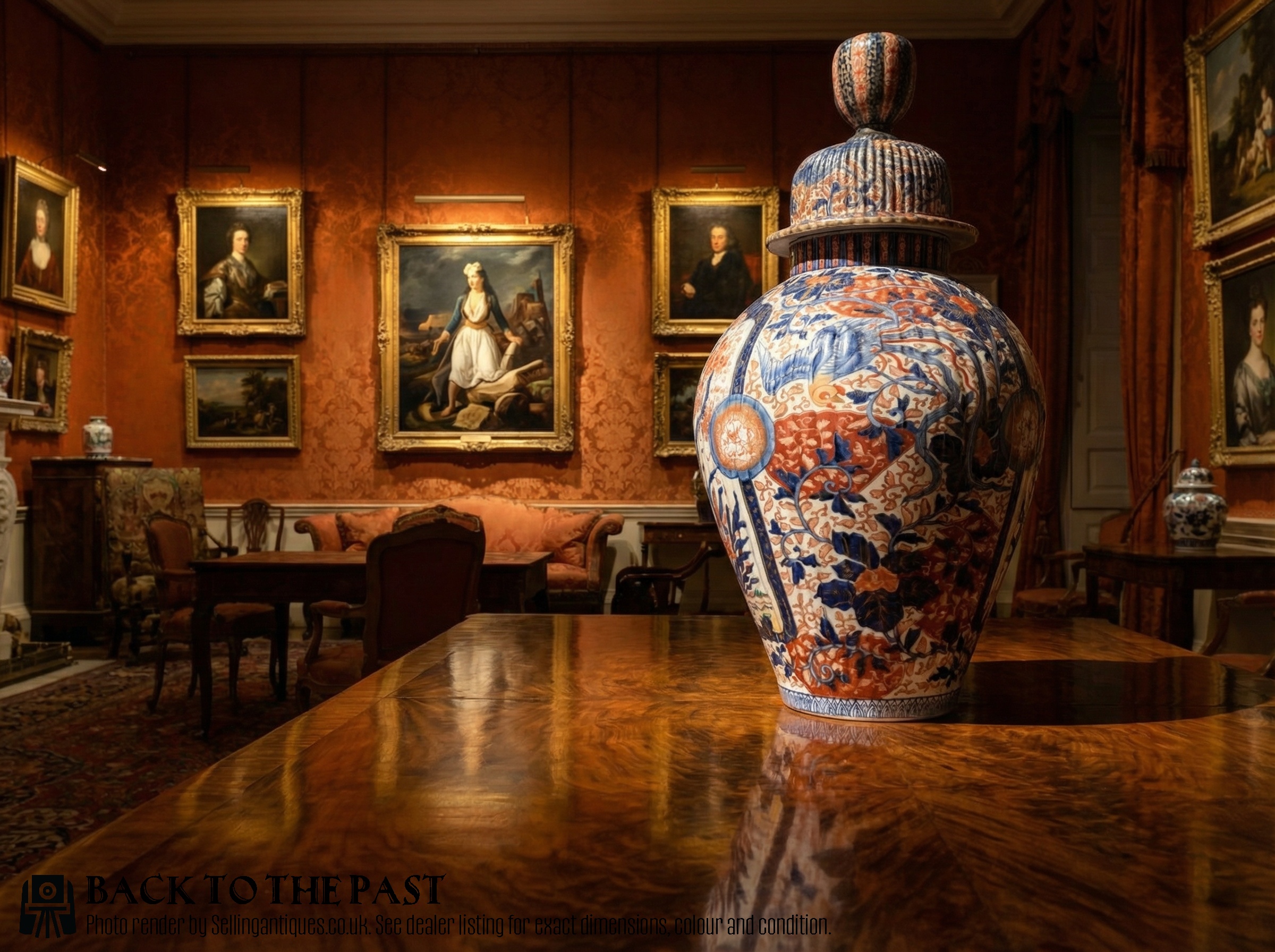
Porcelain Ginger Jar
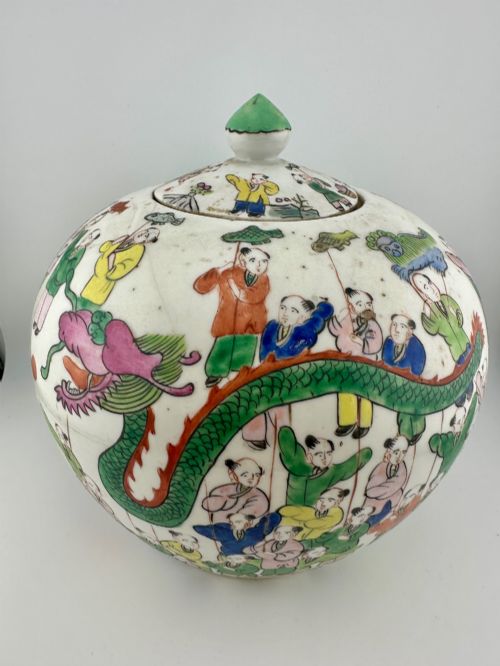
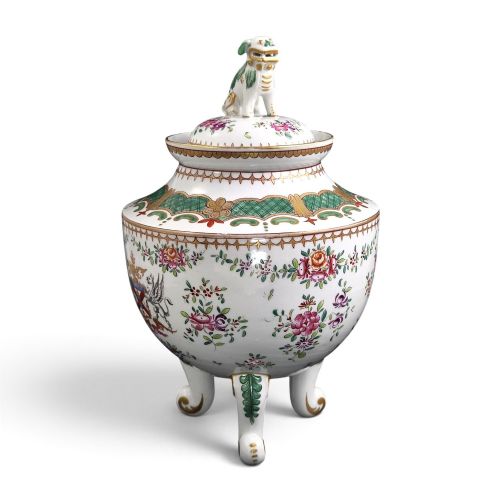
A porcelain ginger jar is a sturdy, bulbous storage vessel originally designed to hold spices, oils, or wine before evolving into a purely decorative interior object. When searching this phrase, a buyer meets traditional lidded forms spanning from the seventeenth century through to the mid-twentieth century, originating from Chinese kilns, Japanese centres of production, and European factories.
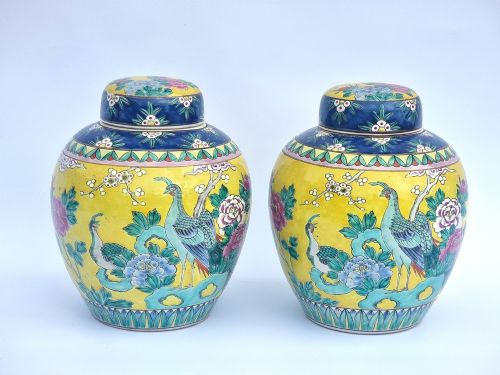
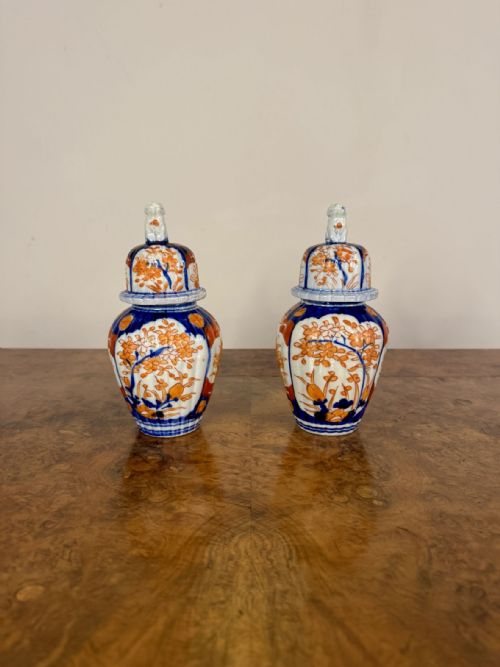
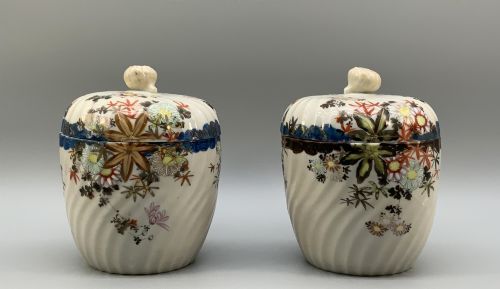
The most common examples on this page are nineteenth-century Chinese blue and white pieces and Japanese Imari or Satsuma wares from the Meiji period. These containers typically feature broad shoulders tapering downwards, paired with matching fitted or domed lids.
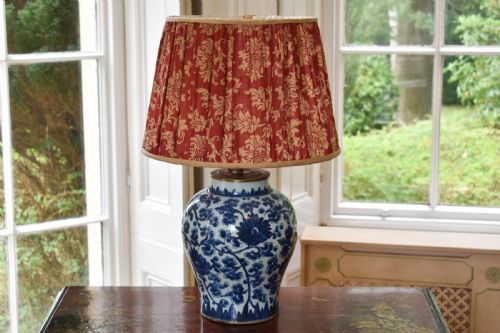
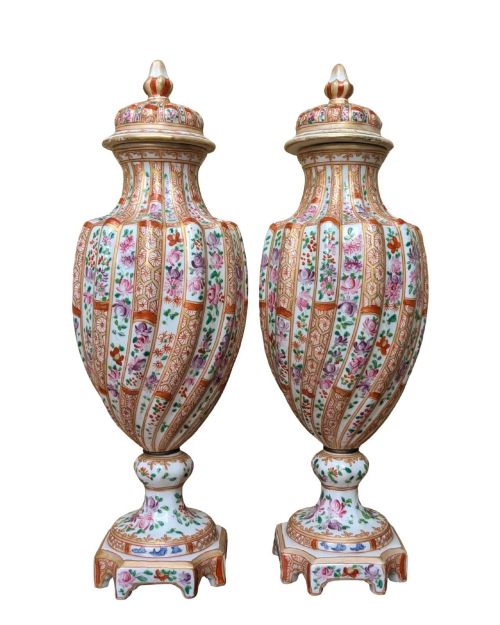
Makers across different continents adapted the silhouette, producing variations that range from utilitarian storage containers to grand garniture vases mounted with ormolu or adapted into table lamps.
Materials and construction methods
Potters shaped these vessels using fine ceramic pastes and porcelain clays, firing them at high temperatures to achieve a dense, impermeable body. Artisans then applied underglaze blue, vibrant enamel palettes, or gilding directly onto the surface before a secondary kiln firing fused the colours to the glaze.
Many items incorporate supplementary elements such as brass mounts, gold leaf accents, and delicate ormolu fittings to enhance their decorative presence. The integration of hand-painted floral motifs, landscapes, and pictorial scenes demonstrates the high level of technical skill employed by historical workshops.
Porcelain Ginger Jar Retail Price Guide 2026
Typical asking prices for porcelain ginger jar among the pieces listed under this phrase on Sellingantiques today, from the lower quarter to the upper quarter. They describe what is for sale here now, not the wider market.
Despite being called ginger jars, most spent their early lives holding salt or pickles rather than a single root of spice.
Distinctions in craftsmanship and origin
The distinction between standard commercial output and exceptional studio production lies in the precision of the hand-painting and the clarity of the glaze. Finer examples display confident, fluid brushwork on the porcelain body, whereas lesser pieces exhibit mechanical transfer printing or flat, uniform colouring.
The crispness of the moulded form, the successful execution of complex underglaze cobalt or rich enamel palettes, and the survival of the original matching lid heavily influence the standing of an individual jar within the broader market.
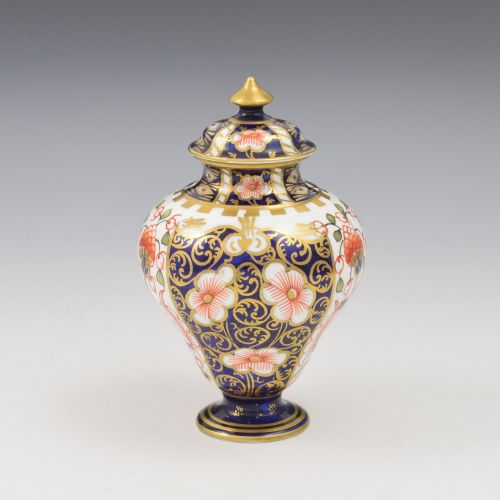
Royal Crown Derby·Samson Paris·Booths·Coalport·Royal Vienna
The Porcelain Ginger Jar Glossary
- Imari
- A style of Japanese porcelain decorated in underglaze blue, iron-red, and gold, named after the port from which these goods were shipped to Europe.
- Famille Rose
- A palette of Chinese porcelain decoration featuring an opaque pink enamel, introduced during the Qing dynasty and widely used through the nineteenth century.
- Baluster
- A vase shape with a rounded body that tapers towards the base, resembling the architectural baluster of a staircase.
- Satsuma
- An earthenware type from Japan featuring a crackled ivory glaze decorated with intricate polychrome enamel and gilt designs.
- Prunus
- A decorative motif depicting the blossoming branches of plum or cherry trees, frequently painted on blue and white storage jars.
Porcelain Ginger Jar: Frequently Asked Questions
What were ginger jars used for?
Historically, these ceramic vessels served as durable storage containers for bulk commodities such as salt, spices, oils, and preserved ginger traded across international shipping routes.
Over subsequent centuries, European collectors repurposed the lidded containers purely as ornamental mantelpiece ornaments or decorative centerpieces.
How do I date a porcelain jar?
Dating relies on examining the characteristics of the ceramic body, the formulation of the glaze, and the style of the painted motifs. Base marks, reign characters, and factory stamps offer definitive chronological markers when present.
Stylistic shifts between seventeenth-century blue and white compositions and later twentieth-century interpretations also provide clear clues to the period of manufacture.
Are the lids usually original?
Many surviving examples retain their matching original lids, which were fired alongside the main vessel body to ensure a consistent glaze and fit. Because lids are fragile and prone to loss over time, replacements or matched covers appear frequently in the antiques market.
How do I display them at home?
These jars anchor a room when placed in pairs on a sideboard, mantelpiece, or bookshelf, where their strong geometric silhouettes and detailed painted surfaces draw the eye. Many examples adapted as table lamps also bring traditional ceramic form into daily functional use within modern interiors.