
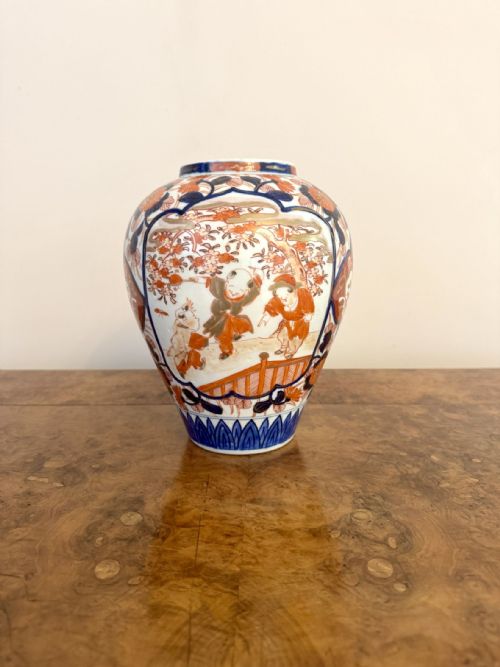
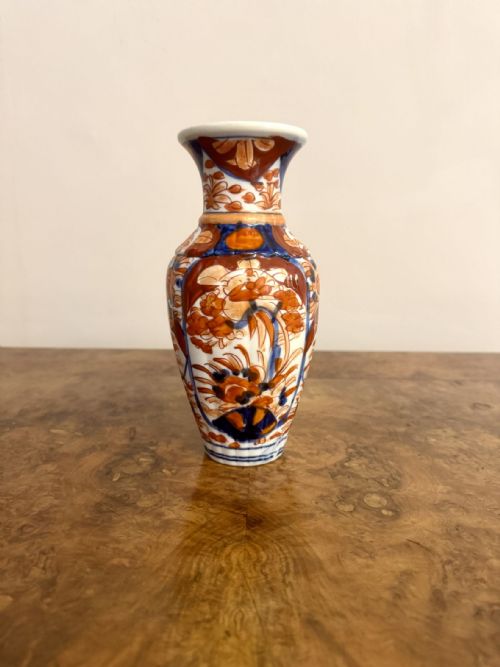
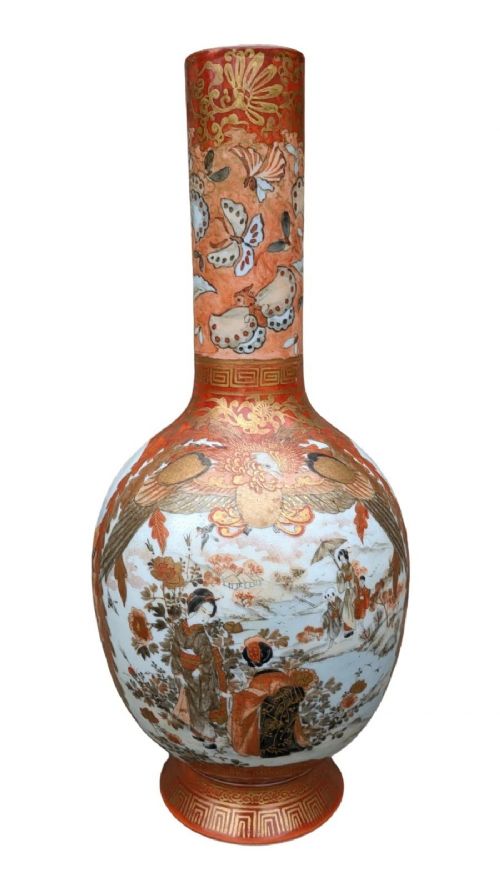
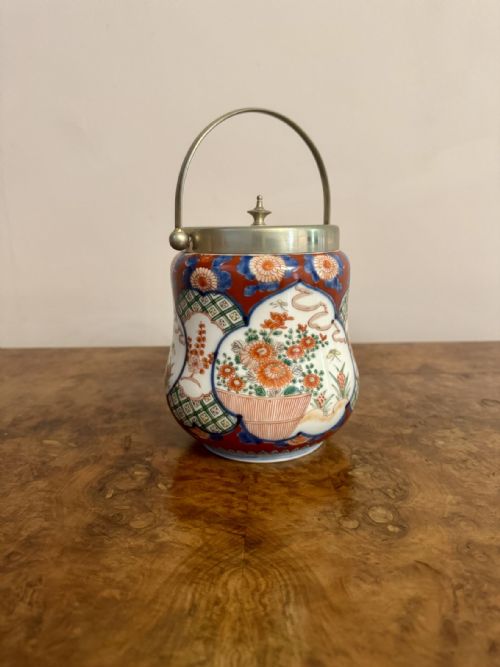
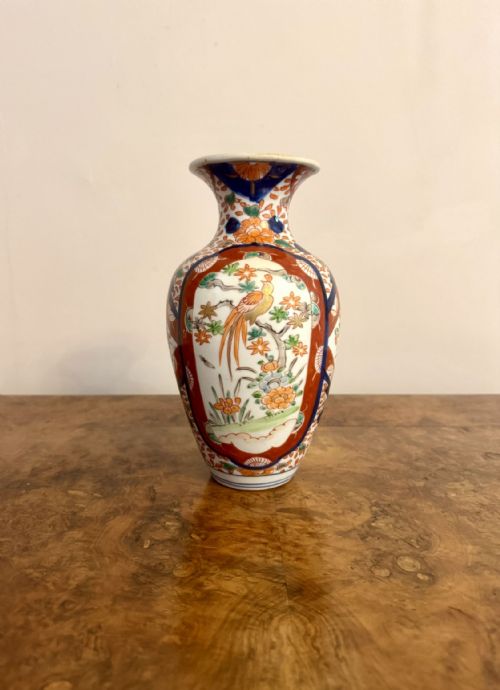
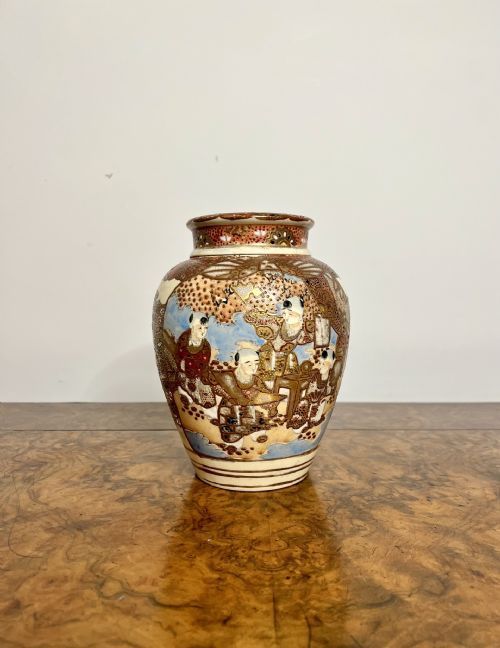
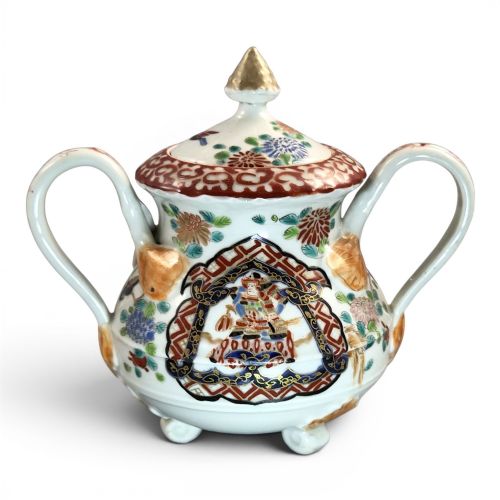


Meiji Porcelain Jar
A meiji porcelain jar brings nineteenth-century Japanese craft into a room through hand-painted palettes and robust ceramic forms.
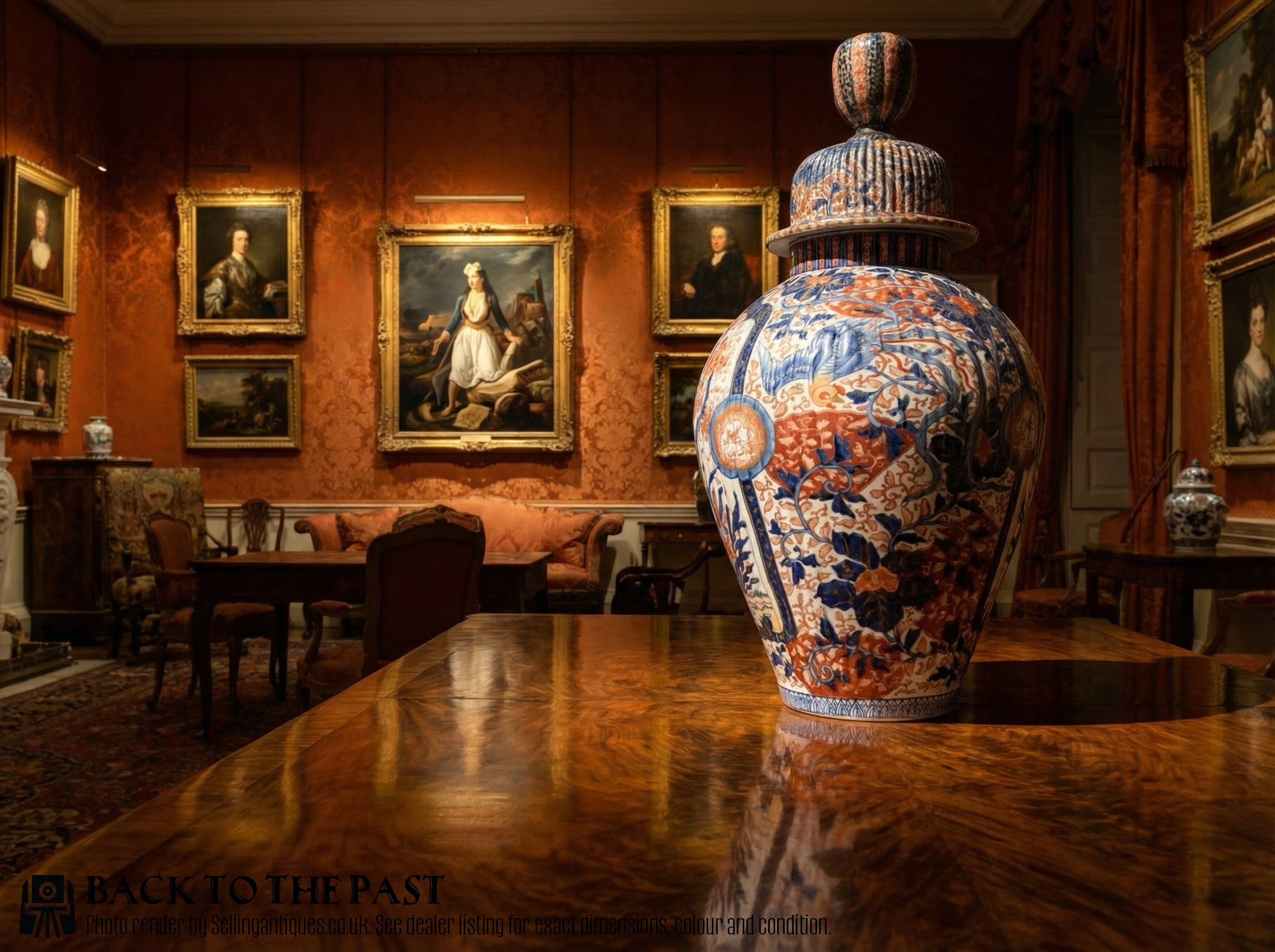
Meiji Porcelain Jar
When searching for a meiji porcelain jar, collectors encounter lidded vessels, ginger jars, and covered pots spanning the nineteenth century and early twentieth century. Japanese Imari dominates the selection alongside Satsuma and Kutani wares produced during the Meiji period.
Forms range from small tea jars and miniature vessels up to large floor-standing urns and baluster shapes. Many pieces retain their original covers, while others function as open vases, jardinières, or sugar bowls.
Originating from major ceramic centres like Arita, Kyoto, and Kaga, these containers reflect both domestic utility and export production tailored for Western interiors.
How they were made
Potters shaped the ceramic body on the wheel or moulded it into octagonal, fluted, and double gourd configurations before firing. Artisans then applied underglaze blue and overglaze enamel colours, frequently incorporating gold leaf and gilding.
Detailed hand-painting defined the decoration, using iron red and cobalt blue to create the distinctive Imari palette alongside densely populated Satsuma figural scenes.
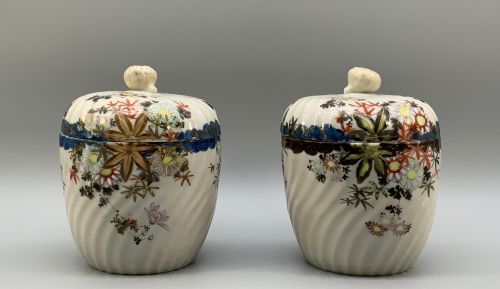
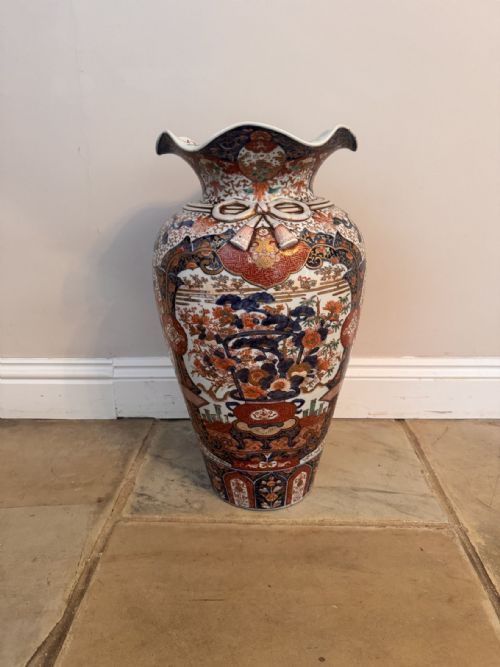
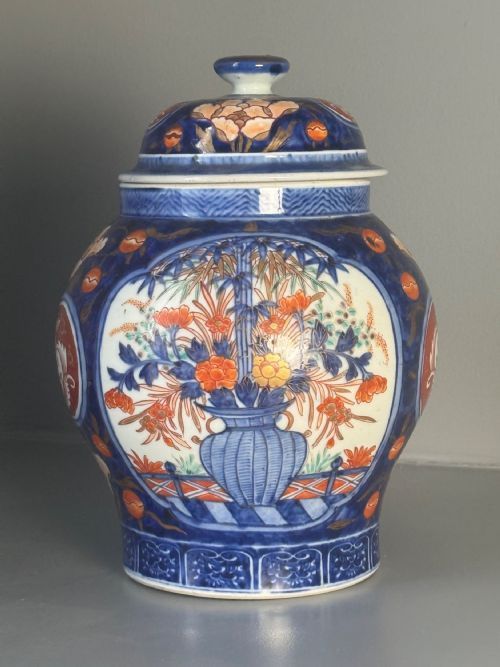
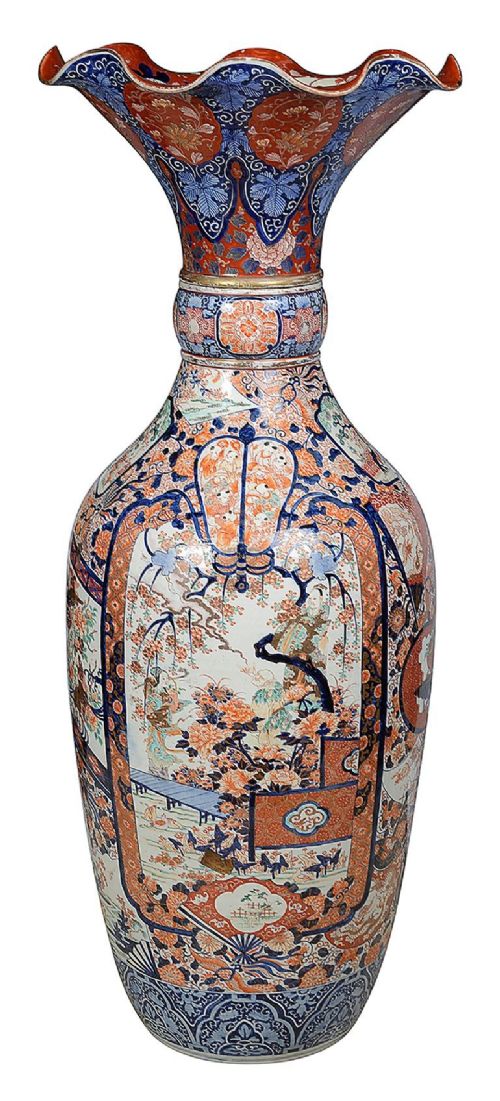
Object forms span lidded jars, ginger jars, sugar bowls, and floor-standing vases decorated in Japanese Imari and Satsuma styles.
What varies in quality
Quality rests on the crispness of the hand-painted brushwork, the precision of the overglaze enamels, and the richness of the applied gold leaf. Superior examples display balanced composition and finely controlled firing without distortion in the porcelain body.
Maker signatures and studio marks, such as those from Kyoto studios or recognised workshops, elevate a piece, whereas standard export items show more repetitive decoration and simpler potting.
Fukagawa Mark·Shuzan·Yamashu·Makuzu Kozan·Taizan·Kinrin Workshop·Shozan
The Meiji Porcelain Jar Glossary
- Imari
- A traditional Japanese decorative style originating from Arita, characterised by a palette of cobalt blue, iron red, and gilt over white porcelain. This style became immensely popular for nineteenth-century export.
- Satsuma
- An earthenware type with an ivory-crackled glaze, typically heavily decorated with polychrome enamels and raised gold. Pieces often feature detailed figural scenes of scholars, samurai, or immortals.
- Kutani
- Japanese porcelain and pottery originating from Kaga province, known for bold designs and strong colour schemes often dominated by greens, purples, and gold. The tradition includes both early wares and Meiji revival pieces.
- Baluster
- A vase shape with a rounded body that tapers toward the base and swells near the shoulder, frequently fitted with a domed cover. This form provides a stable surface for expansive painted panels.
- Gilding
- The application of gold leaf or gold paint to ceramic surfaces to highlight decorative motifs and borders. It provides textural contrast against the deep cobalt blue and iron red underglazes.
Meiji Porcelain Jar: Frequently Asked Questions
How do I identify a Meiji period jar?
Meiji period pieces date between eighteen sixty-eight and nineteen twelve, aligning with the reign of Emperor Meiji. Look for characteristic export styles such as Japanese Imari or Satsuma earthenware.
Examine the base for potter marks, studio signatures, or kiln stamps. The combination of dense hand-painted enamel decoration and traditional Japanese motifs helps confirm the era.
What is the difference between Imari and Satsuma?
Imari wares use porcelain with a blue and red colour palette enhanced by gold leaf. They feature crisp glazes and geometric or floral patterns.
Satsuma wares consist of cream-coloured earthenware with a finely crackled glaze. They are decorated with intricate figural scenes and raised gold work.
Were these jars meant for display or storage?
Many lidded jars and ginger jars originally held spices, tea, or dry goods for domestic use. Export pieces were predominantly created for decorative display in European and American interiors.
Larger vessels and floor vases functioned purely as ornamental centrepieces. Smaller covered jars retained their utility as sugar bowls and tea caddies.
How should I display a porcelain jar at home?
Place jars on stable surfaces where natural light illuminates the hand-painted enamel and gold leaf details. Avoid positioning them near extreme heat sources or direct sunlight.
Pair lidded jars on sideboards or mantelpieces to anchor symmetrical arrangements. Ensure larger floor vases sit safely away from heavy foot traffic.