
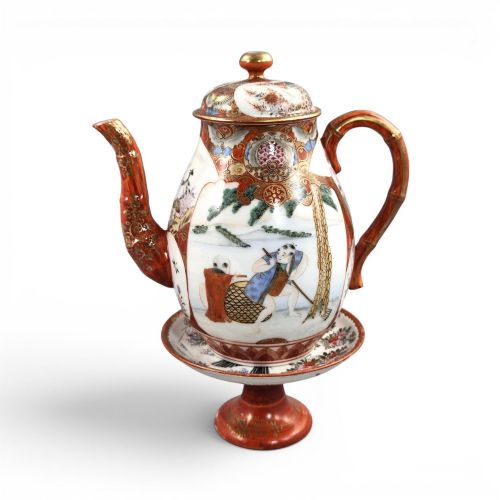


19th Century Kutani Vase
These 19th century kutani vase pieces are striking Japanese ceramics that bring vibrant enamelled colour and intricate decorative detail into a room.
19th Century Kutani Vase
A 19th century kutani vase is a Japanese ceramic vessel typically originating from the Meiji period, represented here in forms such as cylindrical vases, flared neck vessels, double gourd shapes, and larger display pieces. Many examples arrive paired or adapted into table lamps alongside their original porcelain bodies.
Buyers encounter these objects through listings that span specific decades like the eighteen-eighties and eighteen-nineties, alongside general nineteenth-century designations. The inventory includes specialised decorative variations featuring lion handles and raised moriage ornamentation.
How they were made
These items are constructed from porcelain and finished with glazed surfaces, detailed enamel work, and applied gold leaf accents. Makers utilised skilled brushwork and decorative layering to build up the intricate patterns characteristic of the ware.
Certain examples incorporate raised moriage techniques to create tactile, textured surface relief upon the ceramic body. Structural additions such as brass fittings or wooden stands often accompany lamps and display vases.
The site listings feature nineteenth-century porcelain, enamel, and gold leaf, alongside wood stands and brass lamp fittings.
What varies in quality
Quality in these ceramics rests upon the crispness of the enamel painting and the precision of the gilding applied across the porcelain surface. Finer examples display superior control in their detailed motifs and balanced proportions.
The complexity of the form and decorative elements, such as sculpted handles or intricate moriage work, distinguishes standard production from exceptional pieces. The overall preservation of the delicate surface decoration and original gilding dictates the standing of each item.
The 19th Century Kutani Vase Glossary
- Kutani
- A style of Japanese porcelain known for its colourful enamelled decoration and historical production centres. It encompasses various traditional palettes developed over centuries.
- Moriage
- A ceramic technique where clay is piped onto the surface to create raised, textured patterns before glazing and firing. This method adds a distinct three-dimensional quality to the decoration.
- Meiji Period
- The era in Japanese history spanning from eighteen sixty-eight to nineteen twelve, marked by extensive international trade and artistic output. Many pieces of this ware date from the later decades of this era.
- Double Gourd
- A traditional curved vase shape resembling two stacked spheres, symbolising good fortune in Japanese tradition. This silhouette appears in both standard vessels and lamp conversions.
19th Century Kutani Vase: Frequently Asked Questions
What is a kutani vase?
A kutani vase is a Japanese ceramic vessel decorated with distinctive colourful enamels and often gold leaf details.
These pieces were produced primarily during the nineteenth century and the Meiji period for both domestic use and export.
How do I identify a Meiji period piece?
Meiji period items are identified through specific stylistic markers, historical datings, and characteristic export markings from the late nineteenth century.
They typically display intricate enamel work, skilled porcelain throwing, and traditional Japanese decorative motifs.
Were these vases made into lamps?
Many nineteenth-century porcelain vessels were subsequently adapted to serve as table lamps using brass and fitted electrical components.
These conversions utilise the decorative body of the original vase while adding functional lighting to domestic interiors.
How should I clean porcelain and enamel?
Porcelain and enamel surfaces require gentle dusting with a soft, dry cloth to protect the delicate gilding and raised decoration.
Avoid using abrasive cleaning agents or harsh chemicals that might damage the historical glaze or enamel layers.