


Shishi Finial Jar
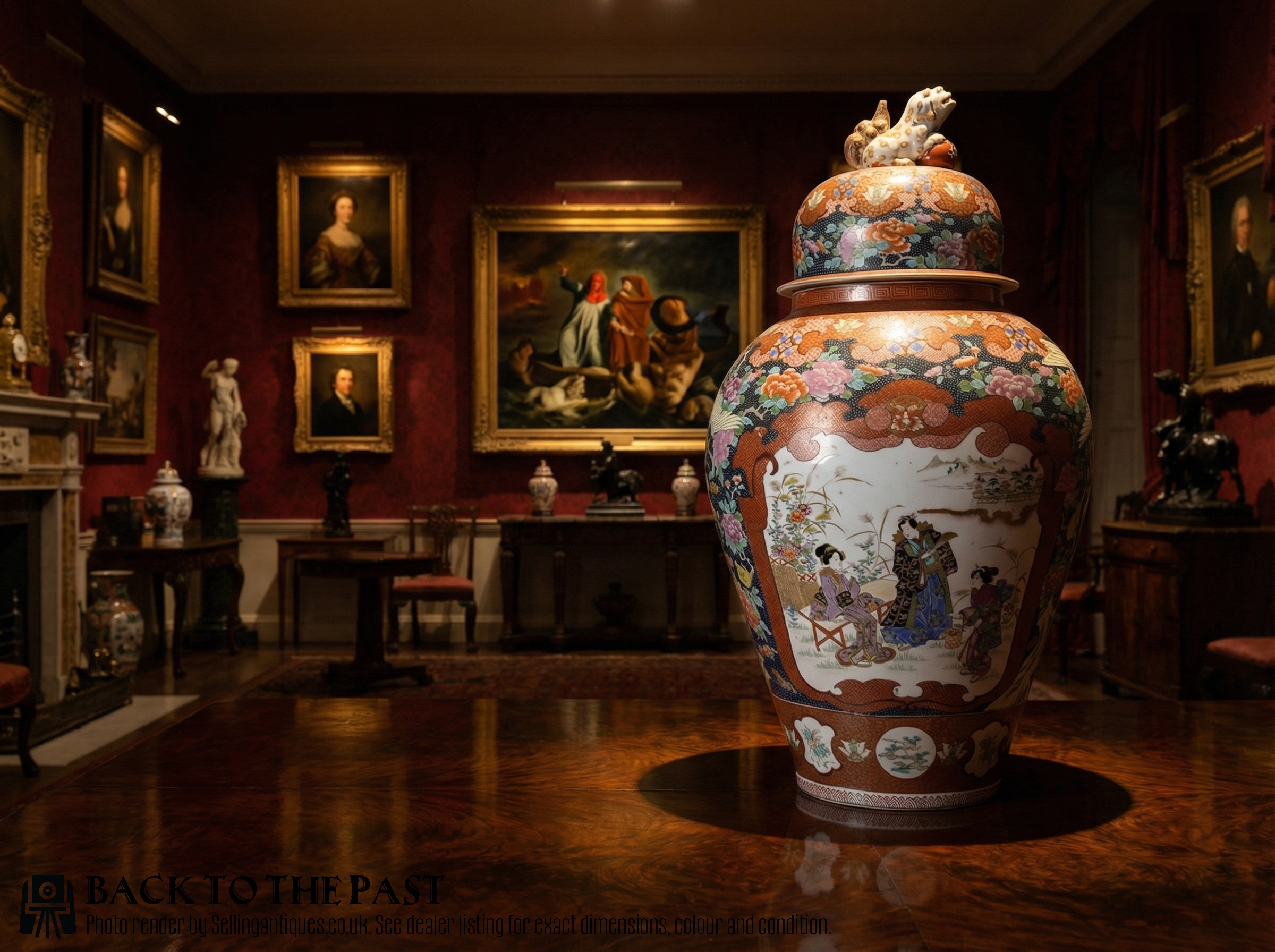
These shishi finial jar pieces are covered lidded vessels topped with mythical guardian lion figures, prized for their decorative presence and rich historic detail.
Shishi Finial Jar
A shishi finial jar is a ceramic vessel featuring a lid crowned by a sculpted shishi, the traditional guardian lion of East Asian iconography. When you search for a shishi finial jar, you encounter lidded vases and jars that combine sculptural lids with patterned bodies.
The examples found in these records typically span the 18th century, 19th century, and Edwardian periods. They frequently appear as Japanese Imari or Japanese Meiji period works, alongside European interpretations like Samson pieces made in the Japanese Imari style.
Most entries on this page take the form of large lidded vases, baluster vases, and fluted jars. They serve as striking mantel or cabinet pieces, often retaining their original matching covers and seated guardian figures.
Materials and construction
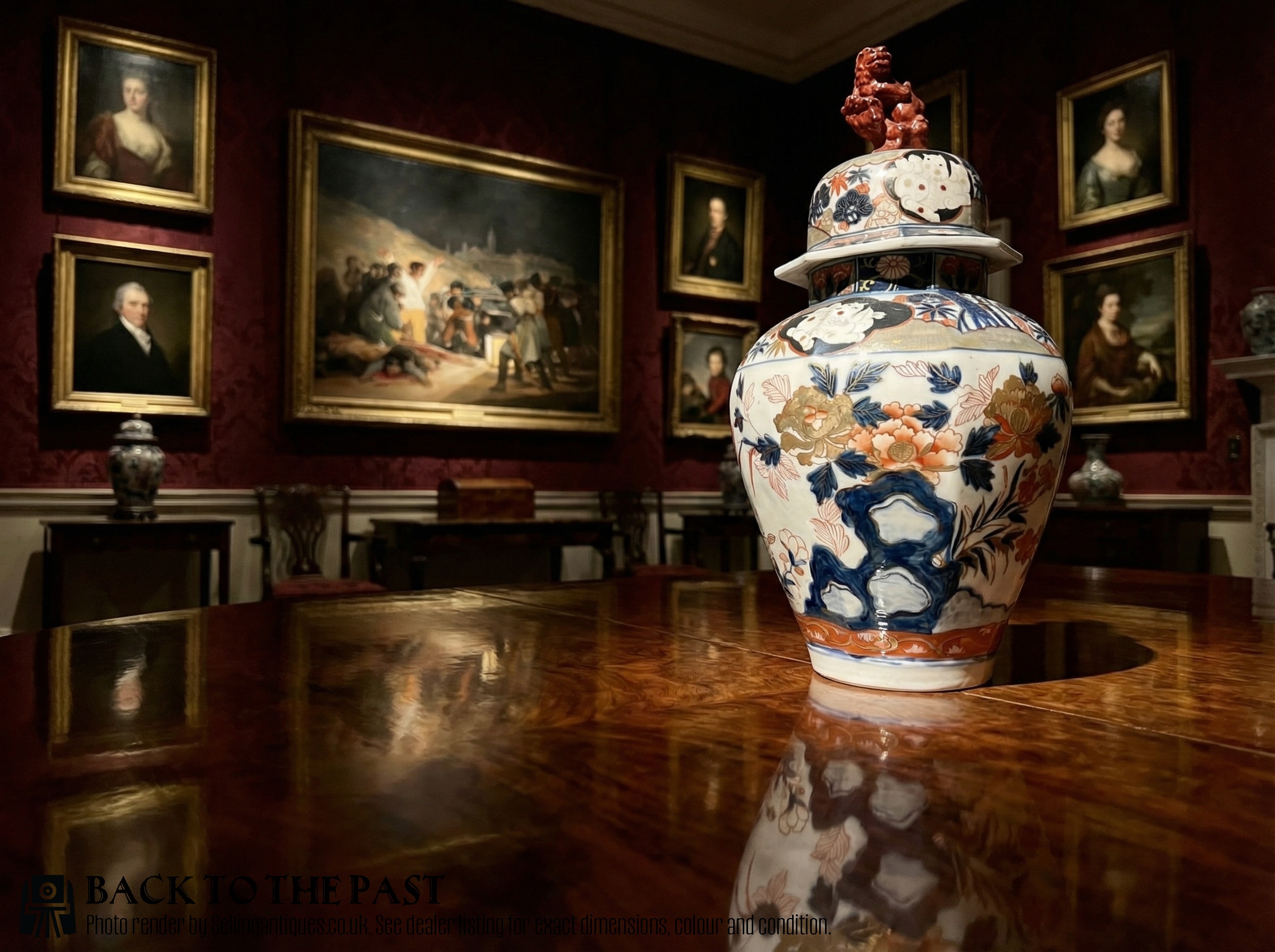
These vessels are primarily formed from porcelain and decorated using cobalt blue underglaze, cobalt enamel, and iron red enamel. Many items incorporate gold leaf, gilt, or gilding to highlight specific decorative borders and motifs.
Production techniques range from traditional Japanese hand-thrown pottery methods during the Edo and Meiji periods to European ceramic manufacturing in the 18th century. The shishi finials are modelled separately and attached to the lids before firing.
Every fierce guardian lion perched on a jar lid has its own distinct facial expression, ensuring no two mythical beasts keep watch in the exact same way.
Judging quality and execution
Quality in these jars rests on the crispness of the porcelain moulding and the detail in the hand-painted enamel work. Superior pieces display precise cobalt underglaze lines and carefully applied gold leaf rather than rushed, muddy pigment application.
Samson
The Shishi Finial Jar Glossary
- Shishi
- A mythical guardian lion or dog figure used widely in East Asian art and placed atop jar lids as a finial. These creatures symbolize protection and are often depicted with a playful or fierce expression.
- Imari
- A style of Japanese export porcelain characterised by a palette of cobalt blue, iron red, and gold. This decorative scheme originated in the Edo period and inspired imitations across Europe.
- Baluster
- A jar or vase form that swells gracefully toward the bottom before tapering at the base. This shape provides a stable and visually balanced foundation for the lidded top.
- Gilding
- The application of gold leaf or powdered gold to the surface of porcelain. It emphasises decorative panels and adds a reflective quality to the finished vessel.
- Underglaze
- A method of decorating pottery where pigments are applied directly to the unfired ceramic body before glazing and firing. This technique protects the blue colour beneath a glossy glass layer.
Shishi Finial Jar: Frequently Asked Questions
What is a shishi finial jar?
A shishi finial jar is a lidded ceramic vessel crowned with a sculpted guardian lion figure. These pieces function as decorative vases and urns.
They originate from various periods including the Edo, Meiji, and 19th century, as well as later European revivals. The form combines functional storage with prominent sculptural decoration.
Were these jars used for storage?
While technically lidded jars capable of holding dry goods, most surviving examples served primarily as decorative ornaments. Their elaborate painting and delicate porcelain construction made them display pieces.
They were placed on mantelpieces, sideboards, and cabinets in grand interiors during the 18th and 19th centuries.
How should I clean a porcelain jar?
Clean these delicate porcelain vessels gently using a soft, dry cloth to remove dust. Avoid using water or liquid cleaners, especially on surfaces with exposed gold leaf or enamel.
Keep the jar away from direct sunlight and areas subject to sudden temperature changes to protect the historic glaze.