
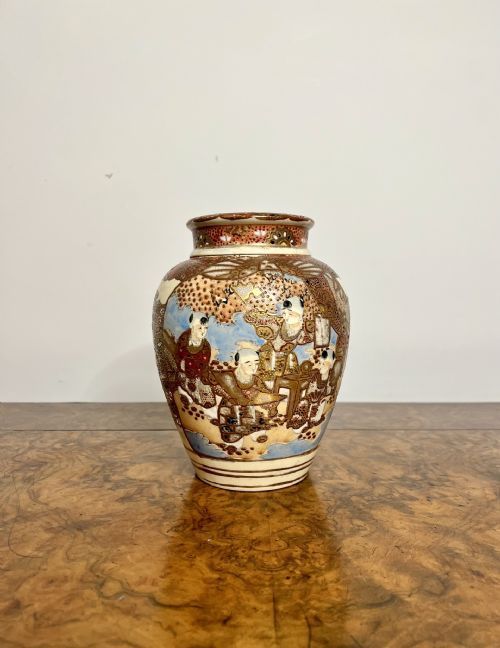


Japanese Covered Urn
These pieces of Japanese covered urn offer a distinct convergence of form and palette, sought after for their robust presence and historic decorative detail.
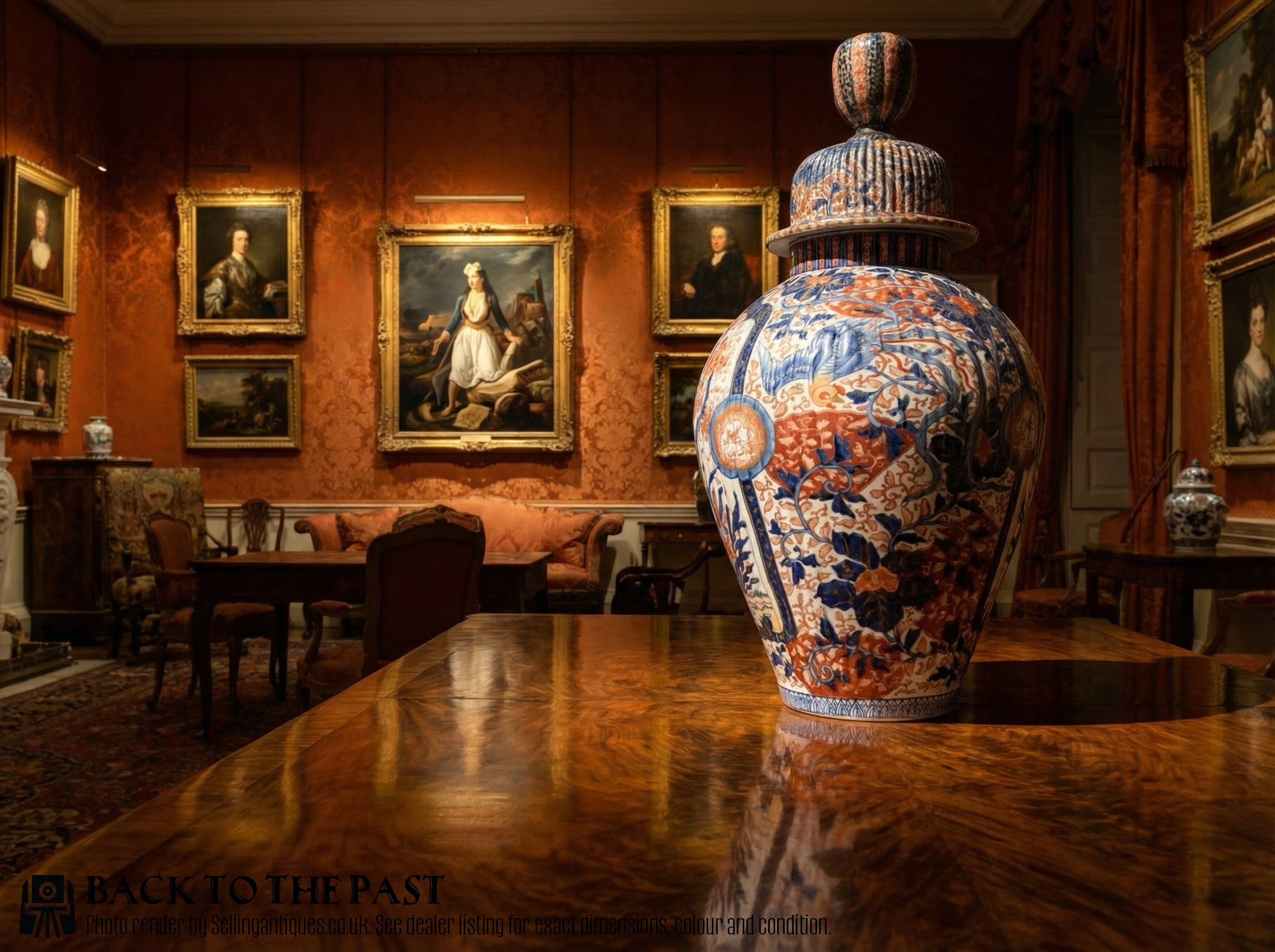
Japanese Covered Urn
A japanese covered urn brings together vessels designed with matching lids, spanning ginger jars, koro, and baluster vases originating from various historical periods.
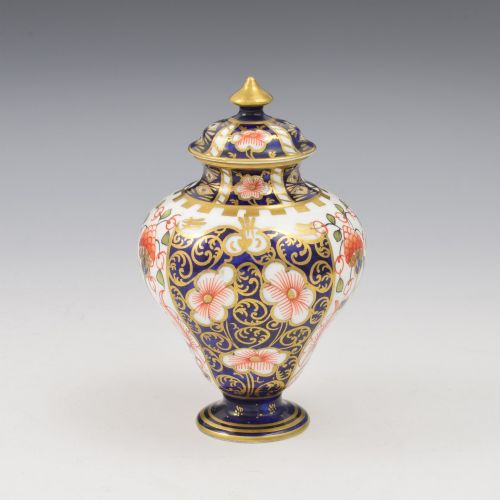
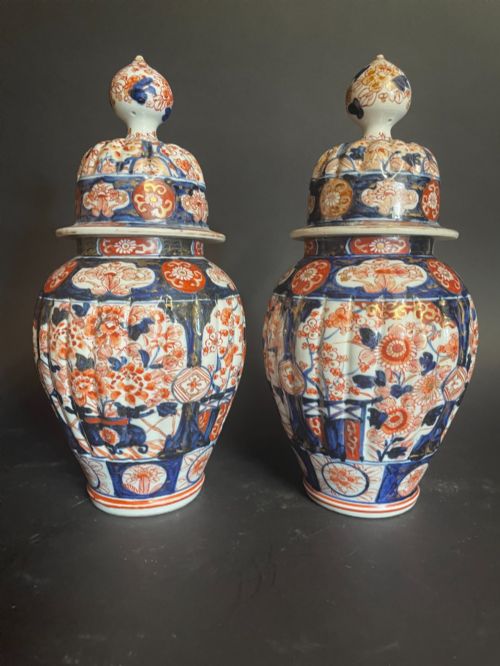
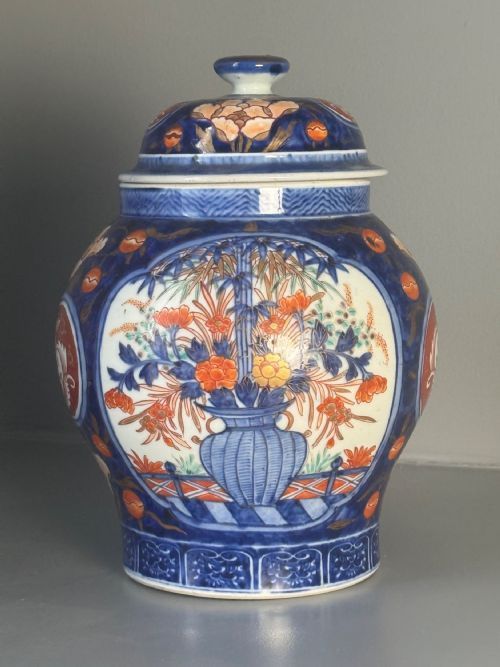
The material record shows a prevalence of porcelain and earthenware forms decorated in the Japanese Imari and Satsuma manners, often dating from the nineteenth century.
Buyers encounter examples ranging from large floor-standing vessels to miniature porcelain pieces, reflecting both export traditions and domestic production.
Materials and construction
Potters utilised clay bodies finished with glaze, enamel, and copper elements, sometimes incorporating gold leaf and gilding to accentuate the surface patterns.
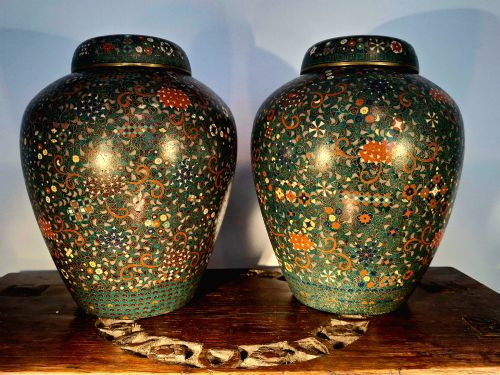
Techniques combine wheel-thrown or moulded ceramic construction with detailed hand-painted palettes in blue and iron-red, alongside cloisonne metalwork.
The listings span the Edo, Meiji, Victorian, and Edwardian periods, utilising porcelain, earthenware, enamel, and copper.
Assessing the execution
The standard of a japanese covered urn rests upon the crispness of the painted detail, the precision of the glaze application, and the harmony of the palette.
Superior examples demonstrate careful control during firing and painting, where motifs align neatly across the body and the fitting of the cover is exact.
Yamashu·Kizan·Royal Crown Derby·Samson
The Japanese Covered Urn Glossary
- Imari
- A traditional Japanese export porcelain style characterised by underglaze blue and overglaze iron-red and gold decoration. It originated in Arita and became widely imitated in Europe.
- Satsuma
- An earthenware ceramic type with a crackle-glaze finish, typically decorated with elaborate polychrome and gilt designs. It gained prominence during the Meiji period.
- Koro
- A traditional Japanese incense burner fitted with a pierced lid. These vessels often stand on small feet and serve decorative rather than practical functions.
- Cloisonne
- A metalwork technique where enamel paste is applied within compartments created by soldered wire. The piece is then fired and polished to a smooth finish.
- Baluster
- A vase shape with a rounded lower body that tapers towards the neck. This silhouette provides a stable base for detailed pictorial panels.
Japanese Covered Urn: Frequently Asked Questions
What is the difference between Imari and Satsuma?
Imari pieces are made of porcelain with a characteristic blue, red, and gold palette. They possess a resonant ring when tapped and a smooth glazed surface.
Satsuma pieces utilise an earthenware body covered in a fine crackle-glaze. They carry dense polychrome and gilt painting often depicting figures or landscapes.
How do I identify a koro?
A koro is specifically designed as an incense burner, featuring a pierced or vented cover to let smoke escape. They frequently rest on three or more small feet.
Standard jars and vases have solid, unperforated covers meant to seal the interior.
Are these pieces strictly antique?
The selection includes items produced across multiple centuries, stretching from the Edo period through the Victorian and Edwardian eras. Many date to the late nineteenth century during the Meiji period.
Each listing records its specific period based on style and manufacturing characteristics.
How should I display a lidded jar?
These vessels require a stable, level surface capable of supporting their weight, particularly the larger nineteenth-century examples. Placing them away from direct sunlight protects the enamel and gilding.
Keep the lid and base together as a matched set to preserve the historical integrity of the piece.