


Large Imari Jar Lid
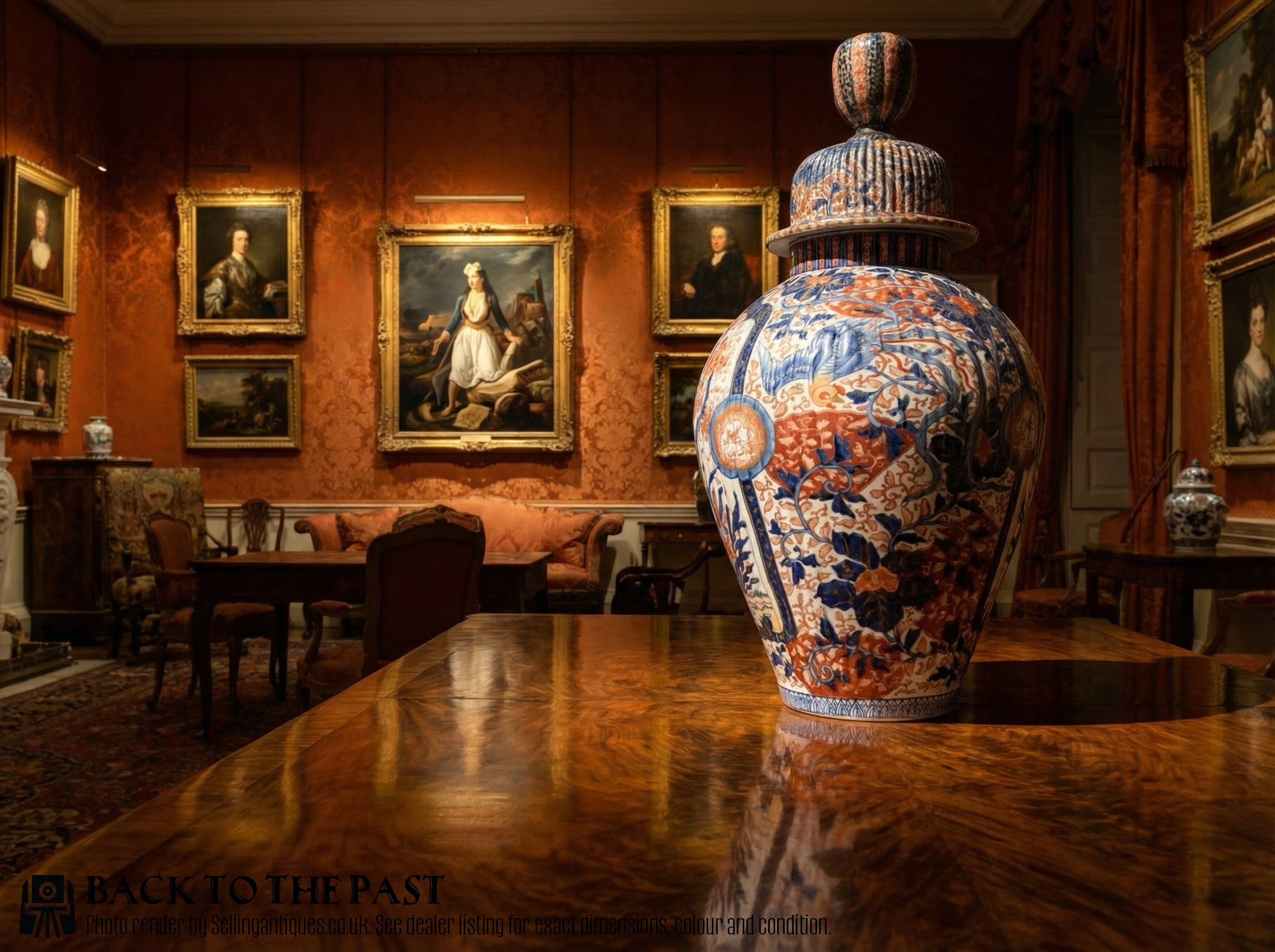
A large imari jar lid brings striking blue, red, and gold porcelain presence to a room, carrying the rich tradition of Japanese Imari style into your home.
Large Imari Jar Lid
When you search for a large imari jar lid, you are looking at substantial decorative porcelain components originating primarily from 19th-century Japanese Meiji and Edo traditions, as well as later European interpretations. These pieces typically accompany large lidded vases, ginger jars, and lidded urns, often surviving independently after the main body has been lost or separated over generations.
The items you are most likely to meet on this page date predominantly from the 19th century, specifically spanning decades like 1880, 1890, and 1900. They arrive in various forms including standard lidded vase covers, temple jar tops, and koro lids, reflecting the high demand for Japanese Imari aesthetics during the Victorian era and the Meiji period.
Many of these covers are associated with large Arita production or European copies made in the Imari style, such as pieces by Samson. They serve as key focal points for collectors seeking authentic ceramic history, matching historic vessels, or standalone examples of intricate oriental ornamentation.
Materials and Techniques
These lids are shaped from ceramic, porcelain, and ironstone, forming a durable clay body capable of holding heavy glaze and metallic detailing. The foundational white paste is fired at high temperatures before receiving its distinctive surface design.
Decoration relies heavily on the Imari palette, incorporating cobalt blue underglaze combined with overglaze iron red, enamel, and gold leaf or gilding. Some examples integrate ormolu mounts, adding structural metal elements to the ceramic rim or finial.
The hand-painted application requires multiple kiln firings to set the underglaze blue first, followed by the polychrome enamels and final gold leaf highlights. This layered technique creates the characteristic rich texture and reflective sheen seen across the surface.
Many a lonely jar base spends decades hoping its long-lost lid will finally wander back through the post.
Quality Variations
Quality rests upon the crispness of the hand-painted brushwork and the complexity of the Imari palette composition. Superior examples display sharply defined cobalt blue underglaze motifs paired with densely applied enamel and generous gold leaf highlights that remain vibrant and securely bonded.
The weight and refinement of the porcelain or ceramic body also separate standard production from superior pieces. Finer lids exhibit a thinner, more resonant body with precise potting and well-balanced finials, whereas lesser examples can feel heavier, coarser, or simpler in their moulded form.
Samson
The Large Imari Jar Lid Glossary
- Imari palette
- A traditional decorative scheme utilising deep cobalt blue, iron red, and gilt highlights. This distinctive combination defines the visual character of these ceramics.
- Meiji period
- A historic era in Japan spanning from 1868 to 1912, known for significant craft production and export ceramics. Pieces from this time often show exceptional decorative ambition.
- Koro
- A traditional Japanese incense burner featuring a perforated lid designed to release scented smoke. These items frequently appear among lidded vessel listings.
- Ironstone
- A heavy, durable type of earthenware developed in the 19th century as a robust alternative to porcelain. It provides a solid foundation for decorative enamel and gilding.
- Ormolu
- Gilt bronze mounts applied to ceramic pieces for decorative or structural enhancement. This French technique frequently appears on 19th-century decorative art.
Large Imari Jar Lid: Frequently Asked Questions
What is a large imari jar lid?
A large imari jar lid is a ceramic or porcelain cover designed for substantial decorative vessels like ginger jars, urns, and temple vases. These components showcase the traditional Imari palette of cobalt blue, red, and gold.
Most examples date from the 19th century and reflect either Japanese export manufacture from the Meiji period or European revival styles. They are collected both as replacement parts for historic vessels and as decorative objects in their own right.
How do I date a 19th-century jar lid?
Dating relies on examining the ceramic paste, the characteristics of the underglaze blue, and the style of the overglaze enamels and gilding. 19th-century pieces often display the characteristic weight and palette associated with Meiji period exports.
Comparing the potting technique and any underlying kiln marks helps differentiate genuine 19th-century items from later reproductions. Stylistic cues, such as the density of the gold leaf work, further narrow down the production era.
How do I care for antique porcelain lids?
Antique porcelain and enamel require gentle handling, ideally keeping them away from areas prone to accidental knocks or heavy vibrations. Dust them softly with a dry, lint-free cloth rather than using harsh cleaning agents.
Avoid submerging pieces with delicate gold leaf or overglaze gilding in water, as moisture can degrade historic enamels over time. Displaying them on stable, level surfaces ensures safety for fragile finials and rims.